Category Archives: Uncategorized

Hospitality a priority right down to the peanut butter!

Peanut butter

As noted previously, Fr. Bernie Rosinski is in the Philippines teaching English. We are grateful that while he is there he continues to write reflections for our province blog:

Hospitality comes in various forms. This blogger wrote earlier in these pages about his treatment by the SCJs of the Manila community and their kindness in showing him the beauties of Tagaytay and the mountain lake of Taal. His hosts, this time, were the SCJs of the Aluba community on the island of Mindanao, about 600 miles distant as the crow files. Their hospitality, too, was greatly appreciated but it took a more subtle form.

Imagine, if you can, a climate which is very humid and the daily temperature unvaryingly ranges between 85° and 95°, particularly if you come from a geographic area in which the four seasons prevail. Electric fans are always operating here in an attempt to moderate conditions and they work well so long as there are no power ‘brown-outs’ and the community can afford the electric bills. Airy building construction with many windows and doors open to the outdoors allow ocean breezes free access to baking bodies. I am sure that with time one can become accommodated and comfortable. Visitors to the Philippines, however, often do not have the time to acclimatize.

Then think what your feelings might be when you are led to a room which is to be your residence for the next six weeks and it turns out to be equipped with a Konin room ‘aircon’ (Filipino for air conditioner). You can just ‘taste’ the relief you will experience when you shut the door and turn the unit on.

What will your feelings be when, additionally, you discover that there are only three rooms in the entire seminary complex equipped with aircon and that your room is the only air-conditioned one for personal use? Is that not real hospitality and consideration? And I have experienced it.

Hospitality here extends itself even further in adding certain foods to the common table. Americans especially should know that a simple thing like peanut butter is hard to come by in a foreign land. I found it on our table!  And it can sometimes be a welcome substitute for a fish meal with the fish’s eyes staring at the consumer. This blogger’s preferred daily whisky ration is Scotch; it too can considerately be found in the liquor larder.

Now anyone that dislikes moralizing can skip these final words.  The Filipino SCJ community is very considerate of visitors from other lands and strives to ameliorate the elements that foreigners might find most troublesome: climate, food, drink. It is this consideration that speaks very loudly of their desire to be hospitable.  For our part as visitors, it is one great reason for repeating visits to this country, especially for service to the region: retreats, conferences, instruction and teaching. When the helper is made to feel welcome, help is immediately forthcoming.
 

Travel in the Philippines always an adventure!

Fr. Bernie and his fellow travelers

Fr. Bernie and his fellow travelers

As noted previously, Fr. Bernie Rosinski is in the Philippines assisting with English language instruction. In this post he writes about the adventure of travel in a nation made up of thousands of islands.

Travel in the Philippines is an adventure. The Philippines archipelago in Southeast Asia consists of more than 7,000 islands, of which, 800 or more are large enough to be inhabited.  Travel among the islands and within an island is extremely important for this nation.

Frs. Francis, Jacek, and I recently traveled from the largest island at the northernmost end of the archipelago, Luzon, to the largest island at the southernmost end, Mindanao, where the SCJs have a college level seminary and a novitiate. Fr. Francis is the regional superior of the Philippines and conducts business from his office there. Fr. Jacek, a psychologist, gave the first week’s series of presentations to the men from the four entities of Asia who are preparing to make their final vows in May and went to visit his SCJ friends. I went to offer instruction in the English language to college-level seminarians.

To avoid interminable traffic jams on the streets leading from Dehon House in Quezon City to the inter-island airport in Manila and catch our flight, we had to leave the residence at 1:30 a.m. to catch a 5:20 a.m. flight to Mindanao.

What makes travel among the islands such an adventure? Inter-island travel is conducted necessarily by plane or boat, both of which ferry people between the various islands. Such traffic permits commerce, government administration, and the continuance of strong family ties. The mere frequency with which ferry boats conduct their operations and the high level of fishing and marine traffic in the surrounding seas almost invariably leads to boating accidents, of which there have been a number in recent years. Plane travel permits safer, more rapid service and even daily commuting.

What makes travel within single islands such an adventure? Within-island travel is conducted by bus, car, light rail, jeepneys, motorcycles, motorbikes, bicycles. Sometimes these smaller units have attachments with seating arrangements to carry passengers. The result is that the units serve much like public transportation to move people about.  When all are traveling the same road (no matter how wide), these motorized devices travel at very uneven rates of speed. Furthermore, those units equipped for carrying passengers frequently halt rapidly and unexpectedly, putting great strain on their own safety from inattentive or speeding drivers. The possibility for tragedy increases greatly when, along with large trucks, pedestrians and draft animals are added to the traffic mix.

There are several expressways and toll roads that exclude all but trucks, buses, and autos. There are avenues and boulevards in Manila and its suburbs that permit six, even eight lanes of traffic. However, even these suffer from the constant threat of quick stops and starts by weaving buses, jeepneys, and passenger carriers. It seems to this foreigner and rank outsider that the only ingredient lacking to Filipino travel management is DISCIPLINE.

Preparing for final vows

A banner celebrates the members of the 2013 final vows program in the Philippines

A banner celebrates the members of the 2013 final vows program in the Philippines

As noted previously, Fr. Bernie Rosinski is in the Philippines assisting with English language studies. In this post he writes about the Asian final vows program which brings together students from the Philippines, Indonesia, Vietnam and India:

In the SCJ scheme of things, juridical districts and regions are entities that are not yet self-sustainable and independent. The SCJ Rule of Life establishes criteria which juridical entities, such as provinces, regions, and districts, all have to meet.

So how do some districts and regions manage? They pool their meager resources. This is what is taking place over the next four weeks in the Philippines. All SCJ Asian entities are sending their final vow candidates to Dehon House at Quezon City, a suburb of Manila.

The Asian zone comprises the province of Indonesia, the region of the Philippines, the district of India, and a community in Vietnam. These have sent their final vow candidates to profit by the wisdom and instruction of valued SCJ teachers and directors in the matter of how to live the vows of religious life.  India has sent two men, Indonesia five, Vietnam two, and the Philippines has sent four. One Brazilian seminarian seeking to serve in the Philippines has also joined this group, for a total of 14 final vow candidates this year in Southeast Asia. As a matter of practice, this program has been rotated among the participating entities over the years; last year it was held in India.

On Sunday, April 7, Fr. Francis Pupkowski, the regional superior of the Philippines, officially welcomed these men who seek to make their permanent commitment to the Congregation of the Priests of the Sacred Heart of Jesus (SCJs). His words of introduction included presenting the five men who are engaged in the program: these include the following SCJs: Fr. Jacek Lukasiewicz (Polish province), Fr. P. J. McGuire (US province), Fr. Rino Venturin (Vietnamese community), and Fr. Delio Ruiz (Philippines Region). Fr. Percy Bacani will also assist; he is a member of the Missionaries of Jesus.

Each presenter will have approximately one week to cover these major topics: (1) Psychological Growth: Personal Assessment of the Vows (Fr. Jacek) ; (2) Dehonian Spirituality:  Foundation of Availability, Community, Mission (Fr. P. J.); (3) Vatican II: Challenges of Enculturation and New Evangelization (Fr. Bacani). At the conclusion, Fr Venturin will preach the final vow retreat; and Fr. Delio will take care of processing and evaluating the four week experience.

Most men arrived at Dehon House in Quezon City during the course of Easter week, though some were already on hand. From an outsider’s perspective, they appear eager to begin the program. Evidence can be found in the number of candidates spending extra quiet time in chapel.  They already know each other by name and have played tennis and basketball together. It seems like every single one of the final vow candidates is a computer sophisticate, a great eater, and very, very friendly. I watched these men work together preparing meals and food and debating the best way to clean chickens for the hired cooks.


Always a welcoming spirit

San Roque in the Diocese of Novaliches, Philippines

San Roque in the Diocese of Novaliches, Philippines

“The people are so grateful to have their own parish church and two resident priests that their joy spills over into gracious hospitality.”

-Fr. Bernie Rosinski

Fr. Bernie Rosinski, SCJ, is back in the Philippines, teaching ESL as he did two years ago. He is periodically posting reflections during his time there; this was written on April 7:

Hospitality is frequently touted as a virtue that Christians should exercise. After all, the letters of Sts. Paul and Peter emphatically recommend it to their early Christian readers. However, those who are actually recipients of such hospitality know just how welcome it is, particularly when one is a stranger in a strange land and subject to all kinds of stresses and anxieties.

I was once again just such a hospitality recipient. This time the hospitality was not exercised by a large community of SCJ religious in a formation house where emphasis is placed on this virtue as part of the seminary training. Instead, it was exercised by a small, poor parish community run by two SCJ religious: San Roque Parish in the Diocese of Novaliches (a suburb of Manila) and found in Caloocan City. The parish was newly carved out two years ago in the midst of a squatters’ quarter. The people, however, are so grateful to have their own parish church and two resident priests that their joy spills over into gracious hospitality.

Note the logo on the van door

Official seminary transportation

The entire seminary community and staff were invited over from Quezon City, about an hour’s drive through metropolitan traffic congestion, to Caloocan City. We traveled in two conveyances, an SUV and a minibus nicely decorated with an SCJ logo. We were greeted by Frs. Nonong and Patrick, pastor and associate respectively, who made us feel very welcome as did the parishioners and neighbors who filled the narrow roadway onto the property upon our arrival.

Fr. Nonong invited us to his small office where he turned on a window air-conditioner (“aircon” as the Filipinos call it). The unit had been purchased only the day before and was not yet properly installed in the office window. It took the parishioners two years to save up enough money to make the purchase. The cool air was intended to make us feel comfortable and welcome, all part of hospitality.

The invitees spent about an hour visiting the parish church and its features, which included ‘Year of Faith’ banners proudly displayed and a statue of the Risen Christ triumphant. While we meandered about as some parishioners prepared two tables for our repast: pork, chicken, fish and an assortment of fruits and vegetables. Sprite, Coke, San Miguel beer, and water were there to quench our thirst. Like their American counterparts in summer, Filipinos make year round use of outdoor charcoal broilers. Here it is a matter of necessity as natural gas for cooking is unavailable in this area and electricity is at a premium.

Departing, we encountered some difficulty in leaving because a motorized tricycle was parked across from the narrow entrance to the parish grounds. Neither SUV nor minibus had space enough to exit. To make matters worse, the owner was not present and the unit was locked. It was siesta time. Some attentive neighbors assisted in moving the conveyance out of the way by brute force and all the invited guests managed to get home safely.

The streets of Caloocan

The streets of Caloocan

Enjoying SCJ hospitality

IMG_2326

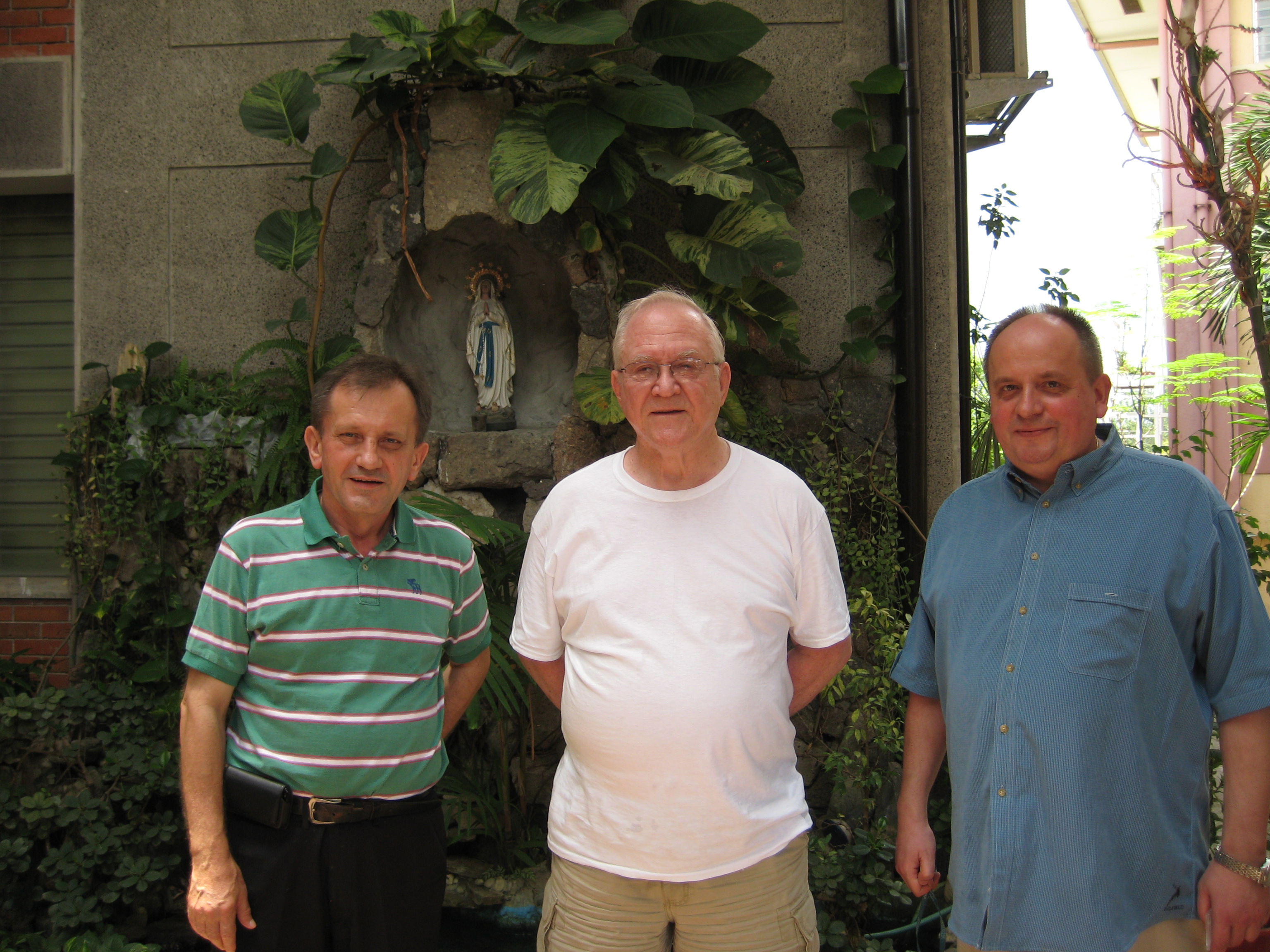
Fr. Bernie (right) with a few of his SCJ hosts in the Philippines

Fr. Bernie Rosinski, SCJ, is back in the Philippines, teaching ESL as he did two years ago. Yesterday he posted a story about celebrating the Easter Vigil near Manila. Today he reflects on being the recipient of SCJ hospitality:

SCJ hospitality has some recognizable forms. Particularly when a guest comes from a foreign land, its usual form is to take that person to see some visual delight, or historical place, or some politically significant setting.  On Tuesday, Fr. Al Back, SCJ, took me, along with some SCJ students from Dehon House in Quezon City, to Tagaytay, a resort area about 30 miles from greater Manila.  I was the guest and brothers Bhat, Phu, Ngoc (Vietnamese), Patro (Filipino), and Jonathan (Brazilian) acted as my hosts.

Tagaytay is a long, long city stretched out along the eastern rim of an extinct volcano.  Taal is the name of the volcano. There is a fresh water lake in the middle of the volcano crater and a number of islands protrude from the crater into the lake. The distance from the rim of the volcano to the lake down below is anywhere from 500-1000 feet, sometimes of sheer cliff and at others of sharply descending hills. After our visit when I got back I checked a large map of the Philippines in the seminary library and according to the scale on the map, the diameter of the lake is about 20-25 miles across. Before it blew its stack, this volcano must have been immense.

The People's Park near Tagaytay

The People’s Park near Tagaytay

Filipino hucksters on the rim carry signs offering boat rides on the lake below. The winding roads down to the lake along the face of the volcano rim are daunting enough to test one’s courage.

We chickened out, of course, and instead had breakfast at the only restaurant in Tagaytay that was open at 6:30am: a McDonalds.  I had hotcakes and sausage to go with my coffee and the others had eggs and rice with their coffee. I baulked at the notion of rice for breakfast.  Now, purist Americans might protest at our choice of restaurant but we were all glad to see it. Its very presence is an indicator of the tourist clientele at Tagaytay

Hotels and golf courses dot the perspective, especially in the plains near the lake and crater basin and I am told that it is a great favorite with European and Australian tourists because of the great security it offers along with spectacular views and tropical warmth. It is open year round and the lets and leases are rather inexpensive.

On the south end of the rim is a Peoples’ Park built by President Ferdinand Marcos. His construction resembles a World War II bunker made of concrete that is slowly deteriorating. When I saw the bunker construction all I could think of was that he must have known that his day was coming.  Jipneys take people from a parking lot to the top of a steep climb where the bunker restaurant, outdoor theatre, chapel, and tourist shop are located on a promontory.  A twelve foot bronze pineapple outside the bunker is a favorite setting for family photographs.

Prior to our departure our group stopped for the “pause that refreshes” at a small restaurant where most enjoyed coconuts, sipping its liquid through straws and then spooning out its nut-like meat to eat. During this break I saw some wild monkeys on the side of the cliff directly below the restaurant, a mother with its infant.  We evoked their curiosity but they kept their distance. The monkeys have a lot to learn about SCJ hospitality.

Easter vigil in the Philippines

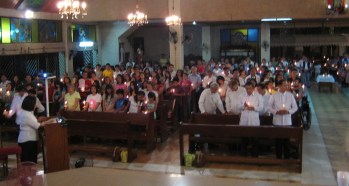
Easter vigil Mass near Manilla

Easter vigil Mass near Manilla

“The faithful sought the blessing of priests by taking the priest’s hand and touching it to their forehead”

-Fr. Bernie Rosinski, SCJ

Fr. Bernie Rosinski is back in the Philippines, teaching ESL as he did two years ago. A veteran of general and provincial administration, he has also been tapped as a resource to the young region as it gets its own administration in order. The following is a reflection he wrote about Holy Saturday near Manila: 

“Cast down fire from heaven!”  This biblical image was realized before our eyes at San Lorenzo Ruiz parish church in Quezon City, one among the many towns which constitute the great metropolis of Manila in the Philippines.  Several SCJs, including myself, were present for the Holy Saturday Vigil services in this parish. They began promptly at 8:00pm, long after dark which occurs promptly at 6:00pm in this equatorial region.

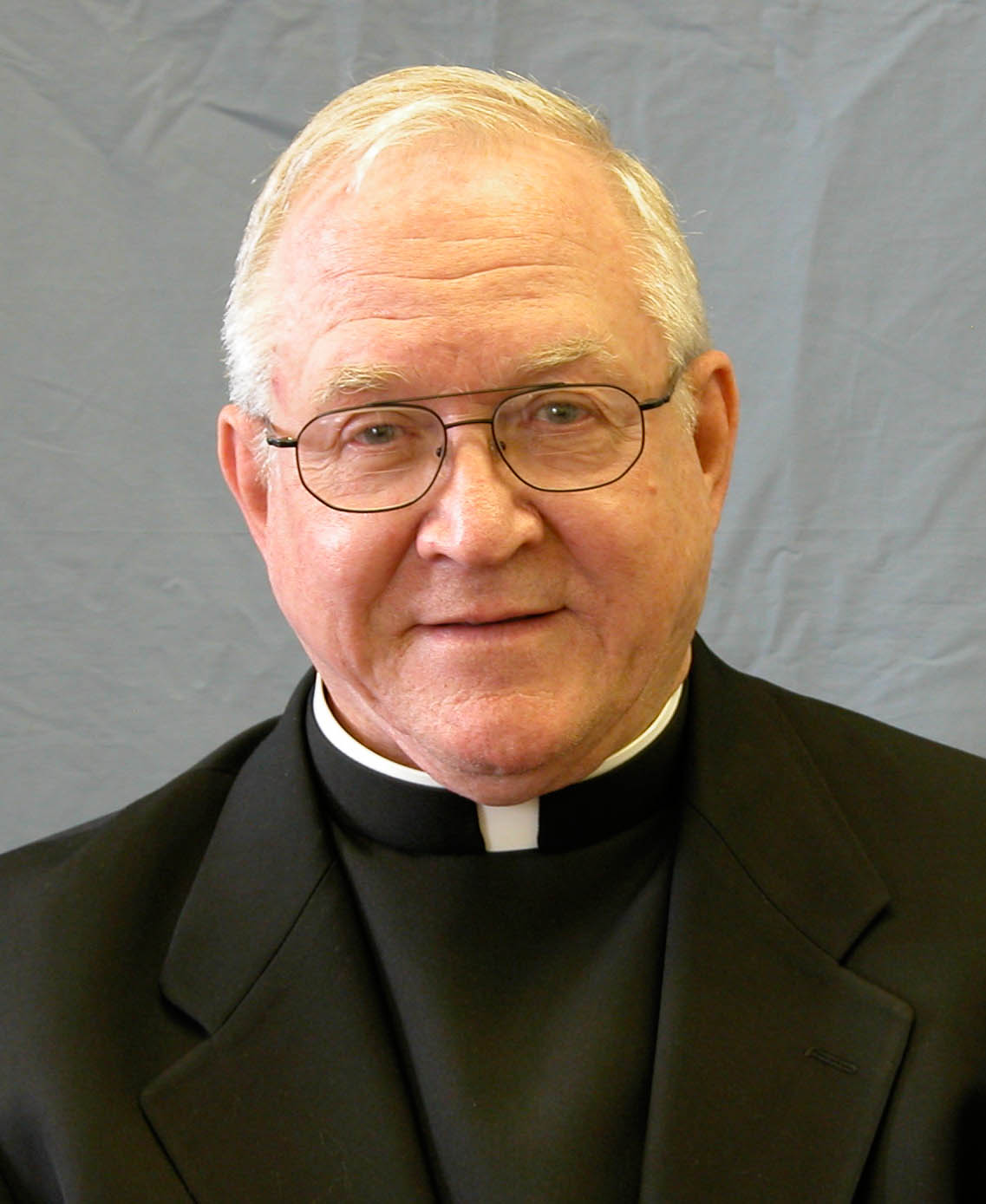
Fr. Bernie Rosinski

Fr. Bernie Rosinski

The local parish priest and we three SCJ priests assisting him proceeded to the place where the firewood for the “blessing of fire” had been prepared in a large public square about 200 feet from the entrance to the church. The church service attendants, about 400 in number, were gathered in the square and surrounded the fire pit.

At the precise hour, I heard a kind of explosion and witnessed a burning fire brand or fire pot rapidly descend laterally from a nearby roof and drop a vertical distance of about 50 feet and a horizontal distance of about 100 feet directly onto the firewood immediately causing it to begin burning (I think the wood had been soaked in kerosene). As the fire descended, I could see that it was confined to a device that had an eyehook and dropped along a wire leading from the rooftop to the fire pit. The arrangement was ingenious and evoked the mystery of fire as an Old Testament image of God. After this dramatic beginning, the ritual of blessing the fire and the Easter candle and procession into the parish church took its normal course. Each parishioner carried a small lit candle.

Inside the church, the pastor sang the Exultet (the hymn which celebrates the Risen Lord as the Light of the world) in Tagalog using modern music in place of the traditional Latin chant. After each portion the choir would sing a refrain. All was done in the dark; only the Easter candle itself was lit.  Two flashlights were used to assist the pastor.

The same two led flashlights were then used for the Liturgy of the Word in the Tagalog language which followed. One parishioner vested in a white robe would read; the reading would be followed by a psalm sung by another vested parishioner until the five selected readings had been completed, each by different persons. The verses of each psalm were modern musical compositions and the individual parishioners chosen to sing all had marvelous voices. The refrain was enthusiastically sung by the parishioners, men and women alike.

As the last reading was taking place, I was warned by a whispering SCJ priest to get ready for some dramatic moments and to be prepared to move away from the chairs reserved for the celebrating clergy. After witnessing the descending fire pot, I wondered “What next?”

As we dutifully moved to the lateral walls of the sanctuary in time, the Glory to God was intoned in Tagalog. At that moment, all the church lights came on, a huge purple cloth covering the image of the crucified came fluttering down to the ground right over where the clergy would have been standing and two huge banners with the words “Aleluya” on them were unveiled and remained suspended on the wall behind the altar.  A cluster of altar servers then helped furnish the altar with coverings, candles, and the articles need for the celebration of mass. But the dramatics were not over yet.

The New Testament reading was proclaimed, the Alleluias were sung, the gospel account of the women at the tomb not finding the body of Jesus was read. As the gospel was concluded, from a door that opened onto the sanctuary, two robust men, vested in white, rapidly and hurriedly, carried a statue of the Risen Savior to a display setting at the side of the main altar. Four pairs of girls quickly followed in procession directly behind. They closely resembled children who had just made their First Communion with white, flowered coronets on their heads. They carried baskets of rose petals and scattered them on the ground on which they walked and then upon the display of the Risen Savior.  This statue will remain on display during the entire course of the Easter season for the veneration of the people.

The Easter liturgy at San Lorenzo Ruiz church continued in the normal manner: baptismal water was blessed and used to baptize an adult woman convert and her kindergarten-aged son; she was confirmed and later received the Holy Eucharist. The people made their profession of faith and later swarmed to receive the Holy Eucharist.  Mass ended. The clergy had a hard time making their way out of   church because the faithful sought the blessing of priests by taking the priest’s hand and touching it to their forehead.

This display of faith by the Filipino parishioners of the parish of San Lorenzo Ruiz, himself a Filipino martyr missionary, executed at Nagasaki, Japan in the 1600s, impressed me greatly during this “Year of Faith.”  Theirs is a faith that is sustained by visual displays of the kind I witnessed. Filipino saints  like Lorenzo Ruiz and Pedro Calungsod have, in turn, witnessed to their faith by enduring martyrdom. Perhaps disparagingly I call such visual displays “dramatic.” But, hey, whatever works; It certainly moved me.

Bringing the Gospel to a secularized world

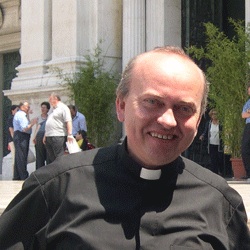
Fr. Wladysalw Mach

Fr. Wladysalw Mach

Fr. Wladyslaw Mach, an alumnus of our ESL program, is one of five SCJs who are a part of a new project in Berlin, Germany. He and another Pole join two Brazilian SCJs and a German who, as a community, offer a Dehonian presence in an increasingly secularized society. Fr. Wladyslaw’s primary ministry is as a chaplain in the emergency room of a nearby hospital. The following is from a reflection that he recently wrote about the new project: 

“How do we reach people?” is the question we ask of ourselves in all the areas where we serve. Young people of today go to the big city to take part in all that it offers. Life moves incredibly quick for them; trends and fashions are just a part of it.

Somehow, we have to find a way to insert ourselves into that life so that we can share the Gospel message. I must be open to new forms of preaching. Nowadays, that includes using all the technical possibilities, such as media.

But we must also must remember – most especially – the effect and role of grace.

I must at the same time be a good “manager” but act as a believer. It is not a way of ministry that necessarily shows its good effects very quickly.

It is challenging, but I believe that we have many opportunities in a big city, in the midst of a very secularized society, to be present. As a congregation we have the task of bringing the message of God’s love to the people, even in such a difficult and opaque environment.

Most young people in this city are moving here because they are looking for something and/or because they desire freedom. Although this “searching” or desire for “freedom” is understood differently than perhaps in a strictly religious context, it is a good precondition.

The Good News was and is for people who are searching. And that gives us hope that our mission here in Berlin has meaning, that it can grow and bear abundant fruit.

Our work in Berlin cannot be summed up so simply in numbers, facts, successes and visible effects. We meet no crowds. But such is the nature and character of preaching. We do not reach out to a group, we reach out to individuals just as God reaches out to each of us.

Preparing for deployment

Fr. Mark Mastin

Fr. Mark Mastin

Fr. Mark Mastin is a chaplain with the US Army stationed at Schoefield Barracks in Hawaii.  He and his fellow soldiers are preparing for an extended deployment overseas later this year. Fr. Mark writes the following:

I have been well, though since the moment I got back from my visit to Milwaukee, the intensity of pre-deployment training has increased, as well as our emotional levels. We have been in the field several times and in the classroom as well putting in long days from 4:30 a.m. to sometimes 10 p.m. In addition, I have been vaccinated for anthrax, small pox, and typhoid, etc. We have had other medical examinations as well.  I’ve been poked and prodded more than cattle!! We drew our special gear and uniforms recently.

It has rained nearly every day up here in the mountains since October.  Last week we had severe lightning and thunderstorms that brought severe flooding.  This has not stopped us from being in the field.  Training in mud is not fun.  It takes days to soak and get one’s uniform semi-clean from the deep red soil. 

I have become more appreciative of our young soldiers who have to spend long hours outside, particularly when they have to lay flat on the wet muddy ground with their weapons poised in defensive positions while the rain is pouring down on top of them.  It’s for that reason that I will walk around the parameters in the late nights and early mornings to talk with them to see how they are holding up; I try to sneak them some snacks too.  I have concluded that if they can make that sacrifice, so can I by staying up with them.

Sleep is at a premium. Just when you think you can grab 30 minutes of shut eye, gun fire or explosions go off.  Then, you have to think quickly about what action to take.  It is a good thing we practice these events often and that we have standard operating procedures in place that guide us on what task each of us are to perform.  It can be chaotic and perhaps confusing when engaged in these exercises, but we get use to it.  Every action we take becomes second nature.

Even though the chaplaincy has its own battle operational procedures, I have had to be creative in writing adaptive procedures

I was awarded the Army Achievement Medal for recent exercises that included teaching on the subjects of suicide prevention and intervention and my development of a presentation on sexual harassment and assault.

I likewise was privileged become an ethics advisor to one of our senior two star generals on the island, particularly in the area of being a Conscientious Objector.  He felt that we Catholics have quite a background and education in ethical and moral issues that would aid him in making decisions about our soldiers.

Aside from my primary duties and the battalion, I continue to teach RCIA.  We have quite a large group this year coming into the Church.  They are all so enthusiastic.  One of our elect had one of those rare conversion moments at a Mass she attended out of curiosity for the first time in her life.  This person, a well educated individual who had not been raised in the Christian faith, felt this flood of warmth and joy pour over her when the priest elevated the consecrated host; she said she had no idea what he was doing. 

 After this mystical experience, she was afraid to speak about it to her husband but became convinced that the Catholic Church was the church she needed to be part of. She asked me; “does this happen to other Catholics during the Mass?” I musingly said I wish all of us could experience these mystical feelings.  I told her that what she encountered was a special gift from God that should be cherished.  She and her entire family will receive all of the sacraments on Easter Vigil.

Going into harm’s way

Like all of us here, I have mixed emotions about our upcoming deployment. There is excitement and fear.  

I look at this deployment with the Dehonian mindset of oblation.  I have come to appreciate and redefine this attitude.  Scripture says that there is no greater love for another person than to lay down one’s life for a friend or another person.  I do not have a martyr’s complex.  I do enjoy living.

Oblation to me means availability and sacrifice.  As a religious, life should not always be comfortable or convenient.  It means being present with people in their sufferings, compassionate if you will.  It’s being a bridge of hope (GOD)to people, especially young people, who cannot make sense or find meaning in life.  As instruments of God’s mission, simple words of encouragement go a long way without ever having to mention anything spiritual or religious.  Saying that someone is doing a good job has the same effect.

I will be in harm’s way.   But Oblation, availability and presence can make a big difference to our soldiers, particularly in how they cope and manage their resiliency and emotions.  And so, I need to make the effort to meet them wherever they may be.  

However, I too need others to comfort me.  And so I ask all of my brothers and sisters to pray for me and our soldiers while I am gone.


Reflecting on ministry on the Great Plains

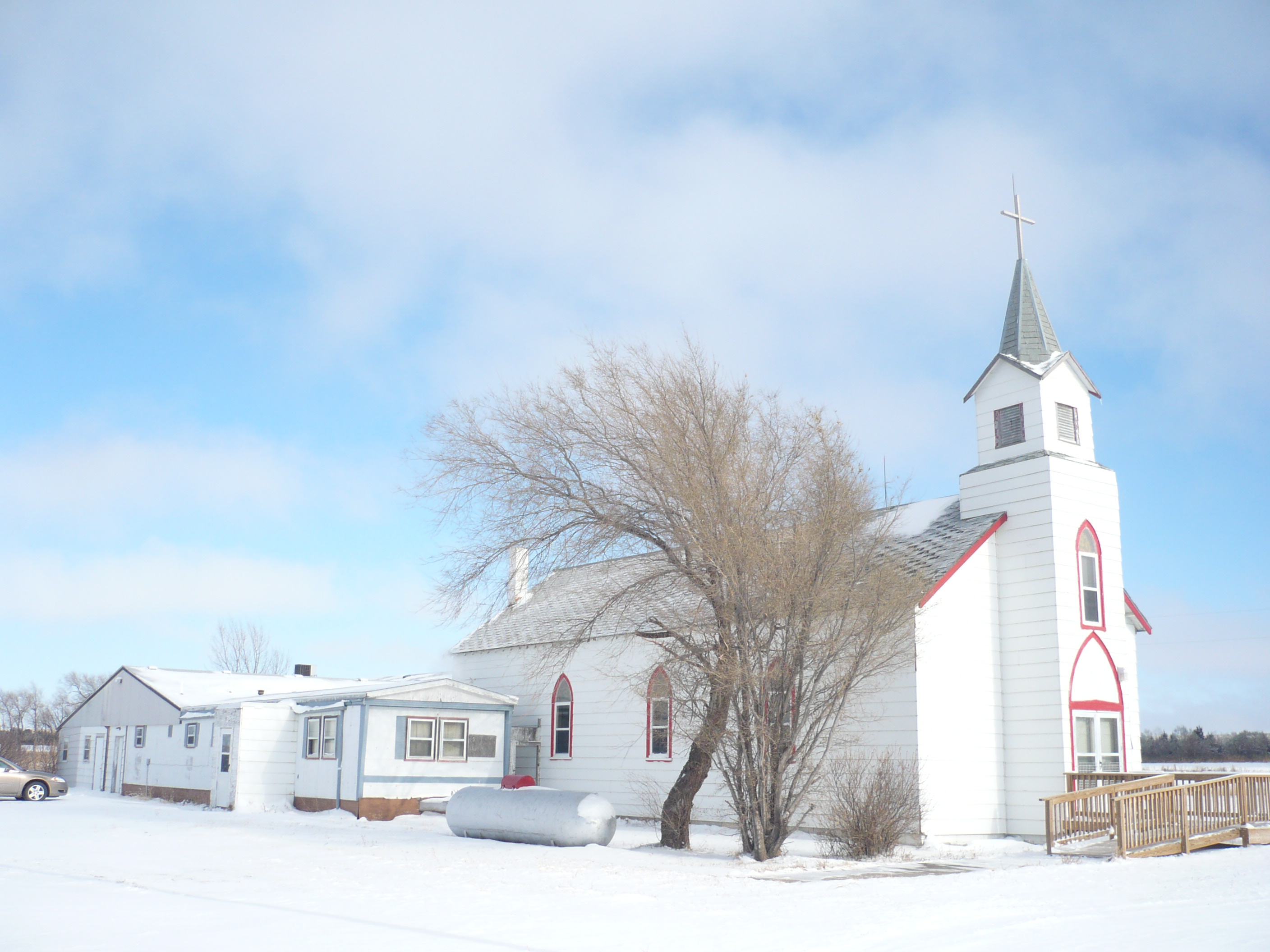
St. Catherine's Church in Big Bend, SD

St. Catherine’s Church in Big Bend, SD

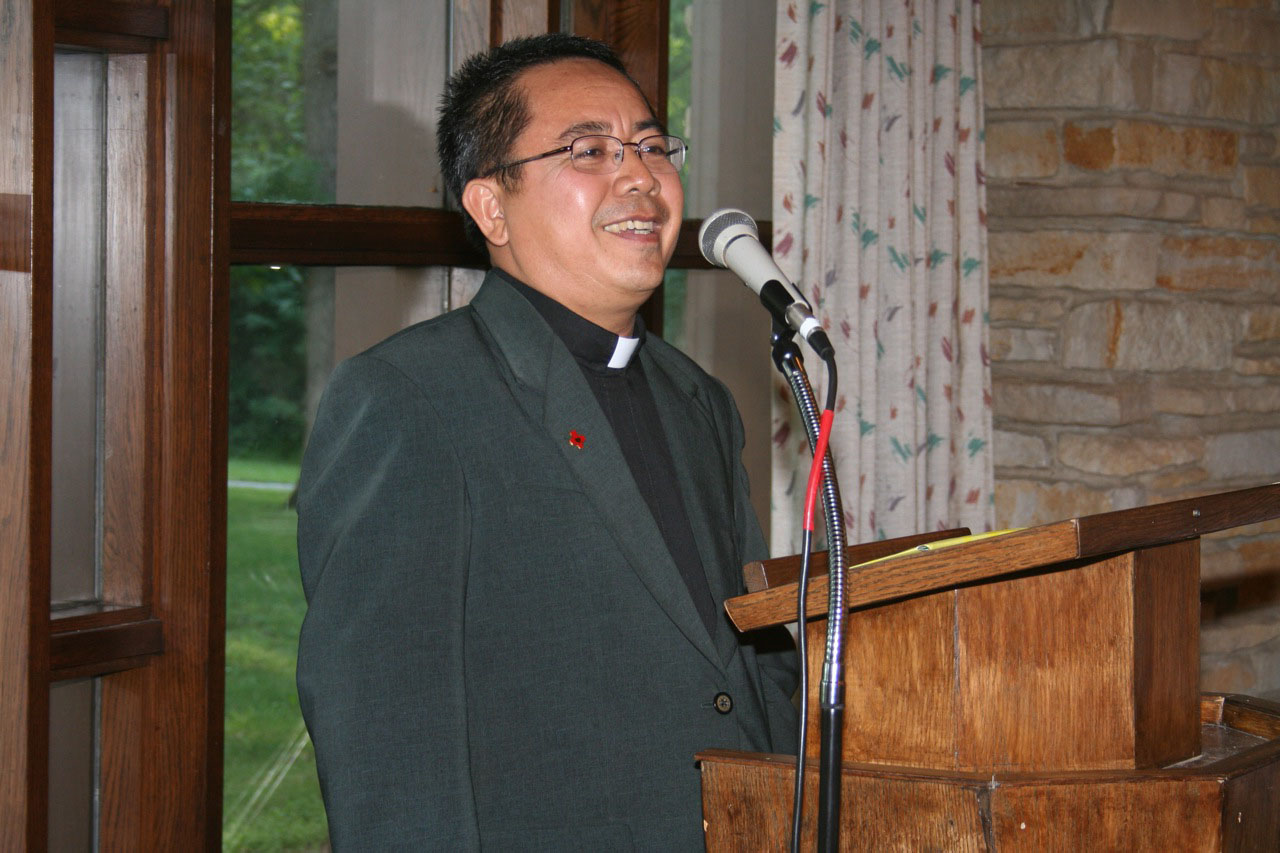
The following reflection was written by Fr. Vincent Suparman, an Indonesian SCJ who serves on the Lower Brule Pastoral Team in South Dakota:

One Sunday I was sitting behind the steering wheel on my way home from Big Bend, SD. The wind blew up to beat the band causing my car to sway. In no time at all, I underwent a “Great Plains” weather change. The confidence, pride, and affirmation of being an SCJ missionary were disturbed by unpredictable weather.  Yet, I often find myself in awe of seeing how God’s wonderful works are revealed through my life and ministry. No better word can I say than to be grateful to God for allowing me to grow spiritually here in the prairies and Great Plains. As I am living in the frontier, I have taken for granted listening to what is going on around me. I may be concerned about some issues but I don’t have to swallow whatever I am told. Instead, I need to be more attentive and listen to what information helps me work better.

Fr. Vincent

Fr. Vincent

In terms of spiritual growth, which is the goal of every human being and of those who are being reshaped by the Holy Spirit, I am often inspired by the farmers, especially here in South Dakota. If the crop doesn’t grow, the farmer is concerned about what goes wrong. Experts study the crops in the fields.  Tests are run. When a Christian stops growing, spiritual help is needed.  One of the missionary activities is – I am told – to preach and grow spiritually in order to meet the spiritual needs of the people I serve.

Having been in religious life for 26 years, I still have to constantly learn about spiritual and pastoral aspects that in turn will broaden my perspective of thinking and developing my pastoral ministry in the future. Instead of letting my energy be absorbed by any activity around me, I let myself be enlightened by the Holy Spirit so that I will be able to see clearly what I have been doing in the mission field. Reflecting on mission activities in the prairie, I come to realize that I am called to serve people with an open heart and mind. At the same time, I need to strengthen my inner spirit and keep my life on track. Once I was told by my spiritual director to start my daily activity with a good habit that perhaps I may have taken for granted: the habit of prayer. When trials come, there is no better way to endure them but by praying patiently and attentively in the presence of God. A simple prayer helps us not only to deepen our spiritual life, but also to stay connected with God, other people, and other creatures around us even though it is not necessary to get to know each one of them on a personal level.

Such a good habit – I describe above – needs to be accompanied by the personal habit of learning about particular subjects to improve our pastoral skills. Just think about eating at a restaurant. We may see people selecting their food from a salad bar.  They pick up their salad, but then they choose carefully their favorite vegetable. They seem to be very picky. No, they are not picky. But the point is that they select carefully the food they are about to eat. This is what actually happens in the process of spiritual growth. Finally, “to be aware of God’s presence” is one of the  few valuable efforts that cannot be neglected regarding spiritual growth. In my opinion, no one can stray from God and remain healthy. Let me borrow a term that sometimes is used when we talk about the Sacred Heart Spirituality. Through the Eucharist and adoration our life is nourished and transformed into a better quality of life. In turn, the community life becomes stronger and healthier. As a result, the community life bears fruits abundantly that is revealed through our life and ministry.

This is one of many ways to help the mission activities and the church come to life. Doing mission work is much broader than just re-evangelizing people and helping them take responsibility. In term of leadership, it is important to think about how to train them to be good fathers and mothers in their families. Everyone in the church should be invited to be part of the church activities until they feel comfortable being in the church while filtering the Word of God into their culture and family values. There is no need to use a controlling figure to bring the people back to the church. Instead, there is a need to bring them closer to one another so that they may be able to share the gifts of the Spirit. Talking about their talents will probably discourage them; this should be avoided. Encouragement would be appreciated if we talked about the human person and how valuable each person is in the community-building process.

Encouragement is a very important thing we can do to bring the people back to the church. Otherwise, they will stay away. The key is how to give them a chance to have a better future for their family, for the church, and for the pastoral ministry of the SCJs.

The people whom I serve do not need someone who runs the church as the manager runs a company. They need someone who keeps them moving to reach their better future.

Fr. Vincent Suparman, SCJ


Reflecting on the novitiate

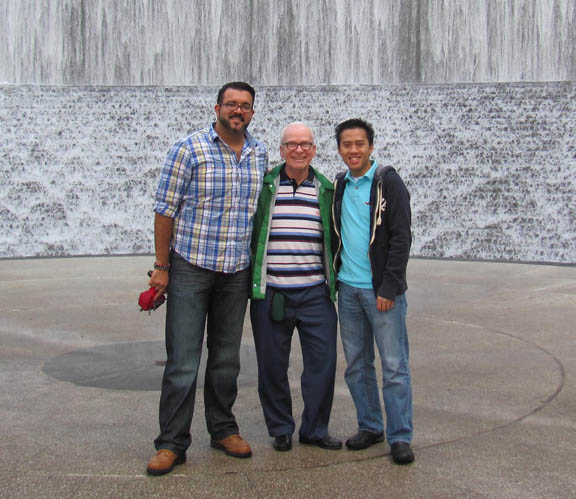
Novice Juan Carlos Castaneda Rojas, Fr. John Czyzynski (novice master) and James Nguyen at the Gerald D. Hines Waterwall Park in Houston

Novice Juan Carlos Castaneda Rojas, Fr. John Czyzynski (novice master) and James Nguyen at the Gerald D. Hines Waterwall Park in Houston

“God wrecked my life”

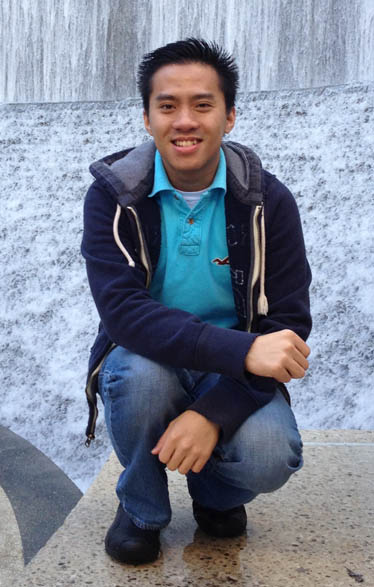
Novice James Nguyen is about halfway through his novitiate year. The following is his reflection on it:

God wrecked my life.  That may sound as shocking to you as it did for me.  But as I reflect back to the roots of my vocation this year, I have never been so convinced that God did wreck my life.  For the majority of my life, my dream was to climb that ladder of success to reach the top rung of security in wealth and happiness.  That meant getting through college, getting a job as a chemist, getting married, and having a loving family.  I was doing fine until God came and wrecked my life a little over halfway through college.  I have never been the same since.

Novice James Nguyen

Novice James Nguyen

I have not been the same since the first day of novitiate as well.  That great excitement during the Reception of Novices has settled into something that’s more manageable, that thrill of not having to go to school for a year has surprisingly disappeared, and the expectations I had in the beginning have yet to have gone my way.  Nonetheless, I am very grateful that things did not go as I planned or else I wouldn’t have the opportunity for self-discovery, growth and spiritual development that this experience has given me.  I have to admit that I was a bit nervous and anxious embracing the new transition.  Novitiate is an intense change and I was reluctant to let a part of my life go.  But overall, this year has given me the chance to look deeper and discover things I had never known about myself.  Although it wasn’t easy, I was able to open up and encounter my vulnerabilities, flaws and true-self through tools like the Myers-Briggs and Enneagram Personality Tests that we learned at the Intercommunity Novitiate in Techny.  That felt like being in a laboratory again doing experiments.  In a way, novitiate does feels like a lab where my vocation is being tested, tried and lived out on a daily basis.

There were times where I felt uncertainty, wondering “what have I got myself into?” as I was constantly wrestling with the “what if” scenarios.  But that in turn has challenged and stretched me in doing things I would not have considered before.  I have also had the privilege of visiting  places where SCJs minister and have meet struggling people with their incredible stories.  This and various other experiences have helped me listen and discern the movements of God in my life.

The silence and slow rhythm of novitiate has provided me an atmosphere to be more attentive to God’s love.  My journey began with the choice of love.  The origin of that choice is reminiscent of the faith conviction of Fr. Dehon, that Christ loved him first.  Love, I believe, will lead me to the place where God is calling me to be as I approach the last half of novitiate.

God indeed wrecked my life, and shattered it into pieces.  It will take a lot of time, effort and persistence to be able to put it all back together again, but I have learned not to do it myself.  I have been picking up the shattered pieces and handing them over to God one by one, day by day.  This is because I know that only God can change something so broken into something so beautiful.  That knowledge has brought me great joy, a joy that I am unable to explain, but what I simply call, “Rambunctious Joy.”