Category Archives: Uncategorized

St. Valentine of Brazil?

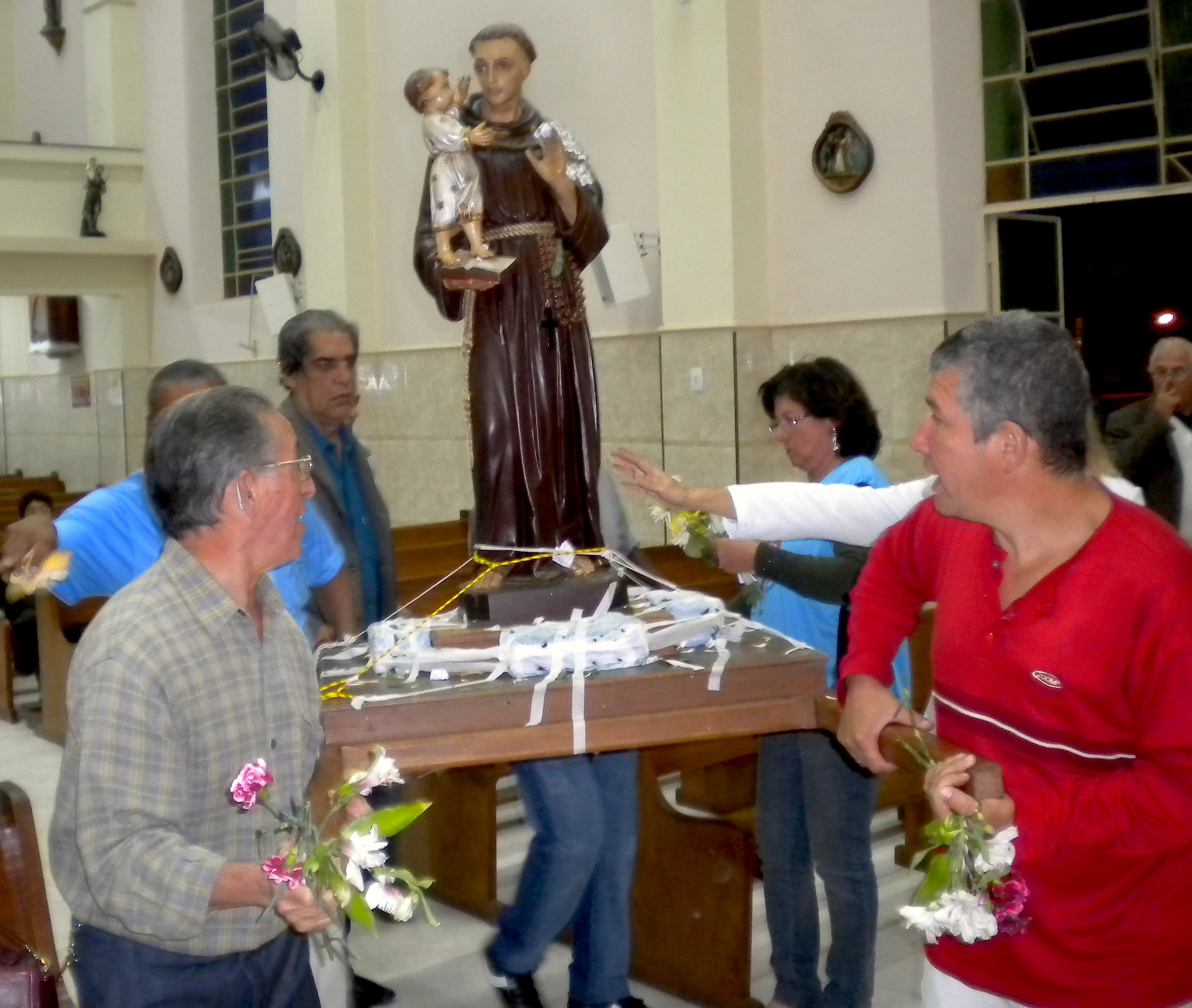
The statue of St. Anthony of Padua is brought from a church for an outdoor procession.

As noted previously, Fr. Tim Gray, SCJ, is spending the last part of his sabbatical in South America, living and ministering with our SCJ communities there. This week he writes the following:

Wednesday night was the final night of the novena of prayer dedicated to St. Anthony of Padua, a very popular local saint (note: I think St. Valentine got lost crossing the equator because in this part of the world lovers choose June 12 to exchange cards and flowers, and to dedicate songs on the radio; youth were praying to St. Anthony to send them someone to love).

Pedro Paulo, the seminarian spending his pastoral year at the parish, asked me if I wanted to participate in the procession. I said “Yes! Of course!”  I really did say that, in English, because he wants to practice his English with me (and he needs all the practice he can get). He led me six blocks to St. Anthony church, while it was getting dark (at 6 PM – it’s winter here), where a crowd was gathering. The rosary was being prayed and pastoral assistants were scrambling around, getting everything ready.

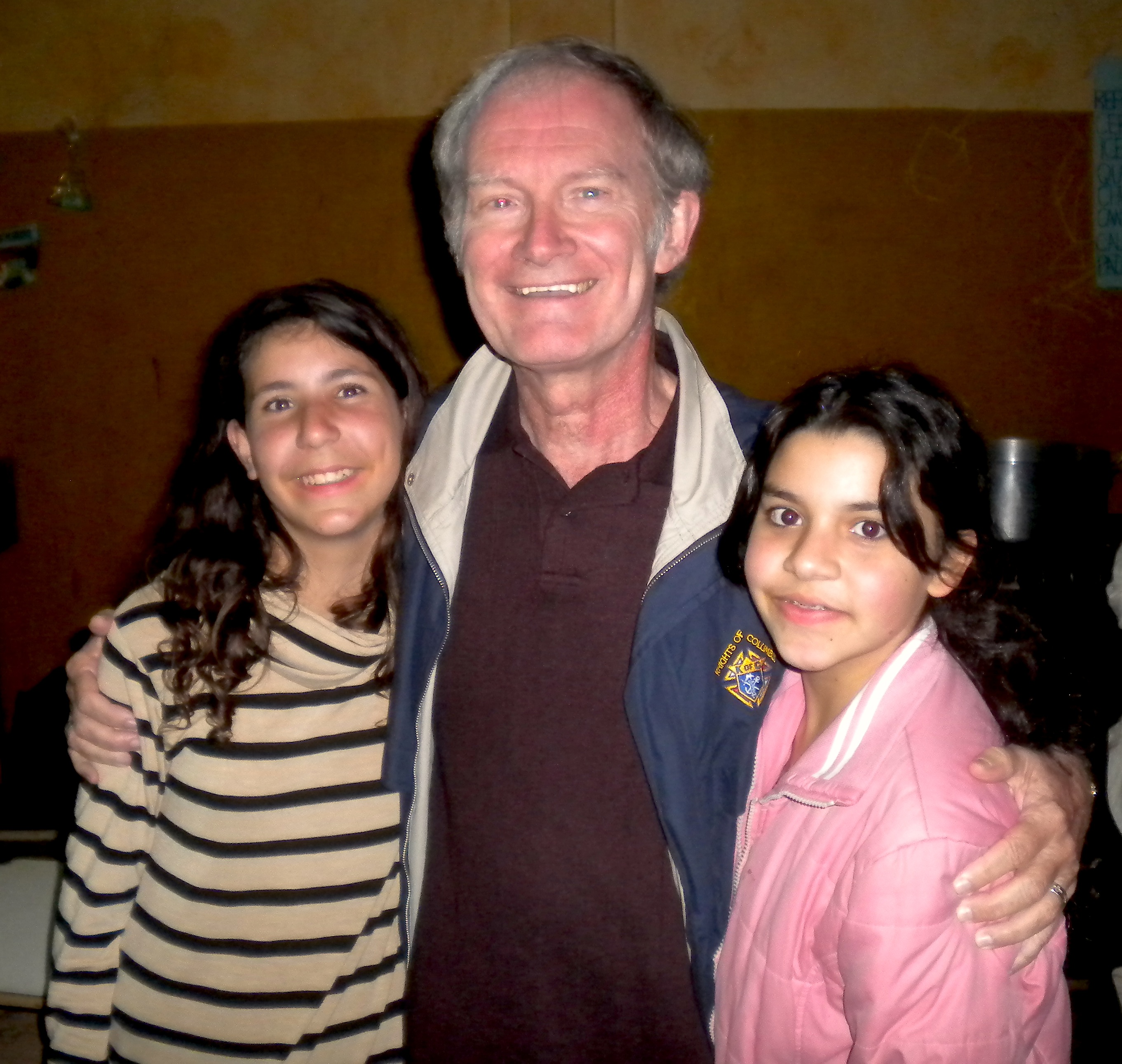
Fr. Tim with a couple of young parishioners

We set out in procession pretty close to 7 PM. Four men and four women lifted a small portable platform on which was carried the statue of St. Anthony. A car pulled up behind with a sound system installed so that the priest could lead the prayers. A pretty good-sized and talented musical group led the singing, and we set out over the streets of Lavras. I recognized some of the songs which were written by our own SCJ priest-composer Fr. Zezhino. Some people opened up their windows and doors and waved as we passed by.

So far, this procession was very similar to rituals I have participated in in Latin America, East Chicago, or Houston — religiosidad popular.  When we returned to the church, after about 45 minutes, an altar was set on the steps (about 20 feet above the street level) and another musical group, heavily electrified, began to play very upbeat music.

When we got to the altar and turned around I was amazed to see that the crowd had tripled in size! They filled up the whole street in front of the church. The celebrant, Fr. Antonio Marcos, who works in a center to heal drug addicts, began to stir up the crowd in a very charismatic style, aided by musical riffs from the keyboard and guitar. He called the people to conversion, to turn their lives over to God, and to put their faith into practice. Suddenly I realized that Brazil has a different flavor to its rituals.

The SCJs here in the parishes have kept up all the traditional practices of the faith while challenging people to study and learn more and put their faith into practice. The church in the US had the same opportunity after the Second Vatican Council but we for the most part chose to cast aside our popular devotions, and I think that is a shame. I’m glad I will have a couple weeks to see how the blending of popular devotion and faith formation is works in practice.

-Fr. Tim Gray, SCJ

Feast day in Brazil

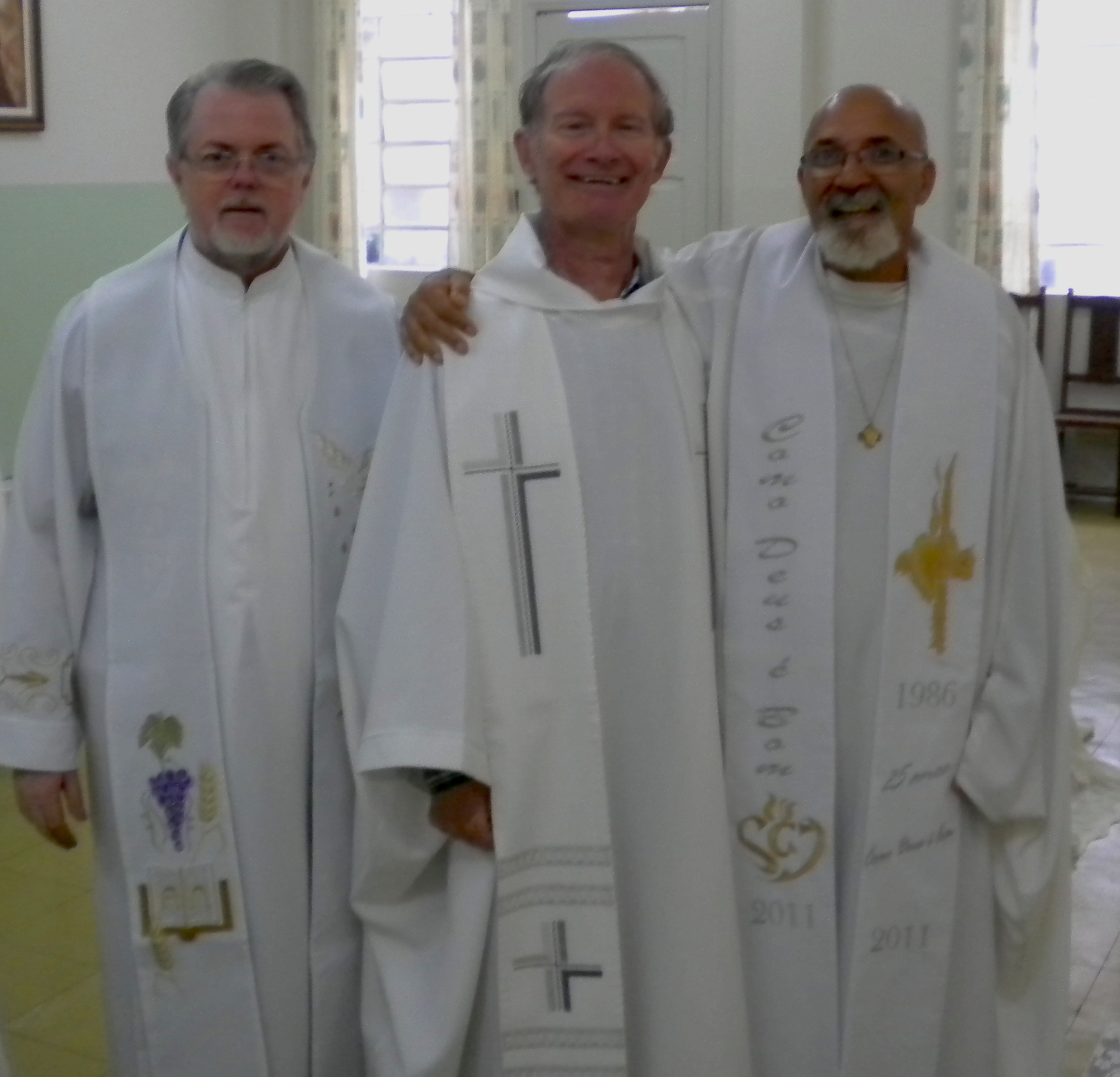
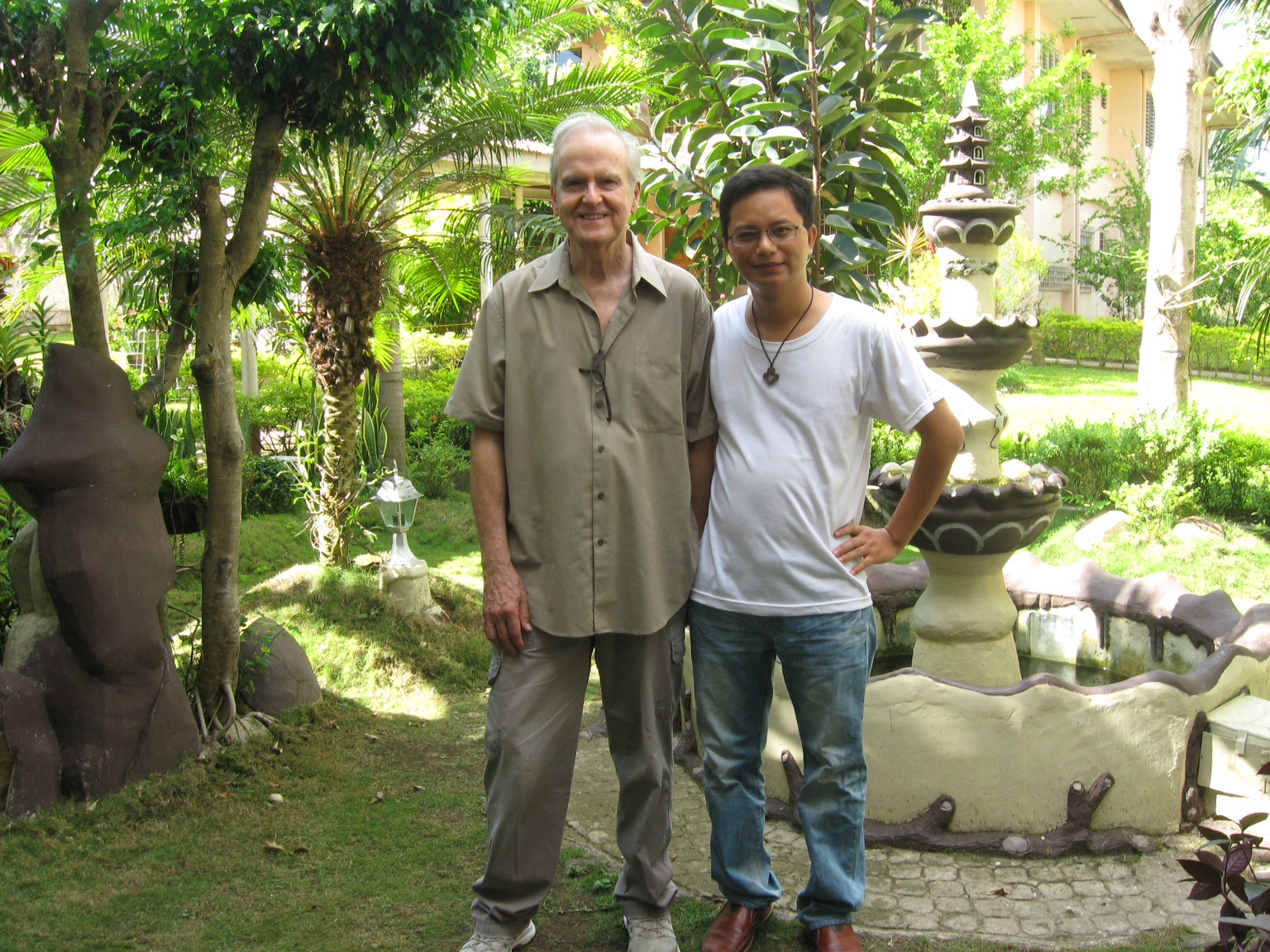
Fr. Tim (center) with Fr. Sebastian Pitz and Fr. Aurelio Pereira

As noted previously, Fr. Tim Gray is spending the last part of his sabbatical in South America, living and ministering with our SCJ communities there. He writes the following:

Vivat Cor Jesu!” “Per Cor Mariae!” The old Latin greetings (Latin as in Rome, not Latin America) rang out as SCJs from all around the area came through the doors of Dehon Seminary in Lavras to celebrate the feast of the Sacred Heart. Joined in spirit by SCJs throughout the world, 20 priests, five seminarians and a brother celebrated the Mass of the Sacred Heart and renewed their vows.  We were joined by about 30 lay Dehonians, and also by the 15 high school seminarians, who supplied the music for the Mass.

It is difficult to describe the joyful solemnity of the liturgies I have participated in here. I have lived in Mexico and have ministered with people from other Latin American cultures, so I am comfortable with the traditional religious expressions of piety common to those cultures. At the same time, at the liturgies I have participated in in Brazil, I am impressed with the way the liturgy forms community and (at least with SCJs) challenges people to move beyond piety to action.

I enjoyed singing the sign of the cross and the penitential rite, and other parts of the Mass. I noted that the entire Eucharistic prayer is a dialogue, with the assembly responding ten times during the prayer. But my favorite exchange is this: (Celebrant) “The Lord be with you!” (Assembly) “Yes, God in our midst!” To be honest, I received better catechesis on liturgy and ecclesiology from attending one liturgy here than I did during the year of preparation that led up to the new Missal in the USA. I can’t speak for the whole country of Brazil, but so far I have been very impressed at the way the SCJs place the liturgy as the summit and font of their pastoral activity.

In other circumstances, I would consider 22 weekend Masses and 22 more Masses during the week (in ten locations, plus home Masses for the base communities) to be an excessive work load for four priests. However, if the liturgy does what it is supposed to do, it is well worth it. I am glad to have the opportunity to stay here for four weeks so I can experience how this works out in practice. (They have already put me in the pastoral schedule– I am being inflicted on a smaller rural community, but a deacon will accompany me to preach). I also want to find out more about how the lay Dehonian groups function. So stay tuned.

And, on a lighter note:  I was walking back to the parish office when I heard a shout: “Chin O Chee!” I continued walking, and a car pulled up alongside, and I saw the photographer who had taken pictures at the Mass and gathering. He shouted again “Chin O Chee!” I guess that will be my name for the duration, because Portuguese does something which, oddly enough, English does as well. A “T” followed by “I” is pronounced “ch” so there go the T’s in my name. We do the same thing in words like “nation” and wonder why English is so hard to learn.

Enjoy the summer. It’s in the 60s and 70s here — very comfortable.

-Fr. Tim Gray, SCJ

From the Holy Land to Brazil

The large Brazilian city of Sao Paolo, the first stop on Fr. Tim Gray’s journey visiting SCJ communities in the country.

The last time we heard from Fr. Tim Gray he was writing about his visit to the Holy Land. From one end of the world to the other, he is now writing from Brazil where he is spending the last part of his sabbatical learning about SCJ ministries and communities in South America.

June 7, 2012: Here I am, in São Paulo, Brasil. The flight was uneventful. I left Chicago at 3 p.m., changed planes in Miami, and arrived at 7 a.m. Fr. Mariano was waiting for me, and took me back to the house where he lives with four other SCJ priests. It’s a cloudy, rainy, 60-degree early winter day; the weather here is very similar to Houston, so that was one thing I did expect.

What did I NOT expect? I was surprised to see it was pitch dark at 6 a.m. I’ve gotten used to summer in the United States, where now the birds start singing at 4 a.m. Guess I’ll have to go to Rio for some sunshine. I was also shocked that we were scooting along on nearly deserted highways! I had forgotten that today was Corpus Christi, and the country still takes most religious holidays off. That was nice!

We arrived back at the house at 8:30, just in time for breakfast. So it was a great chance to meet the other priests in the community. Time to shower and shave, and then meet for cocktails at 11 a.m. Really! Then to a Brazilian barbecue.

This is just a note to let you know I arrived — more news to follow.

And here’s the “more news to follow:” I am finishing the third day of my two-month pilgrimage through Brazil. Almost everything has gone very well: the travel, my welcome here by Fr. Mariano (the provincial superior), and the community. Actually, there is very little that has surprised me! Sao Paulo looks and feels like a Latin American version of Houston; a very good place for business, an OK place to live and work, but a place no tourist would want to stay. Sometimes it seems they outsourced the design of their skyscrapers to East Germany.

Fr. Tim Gray

The weather is also like Houston in winter: lots of rain and temps in the 50s and 60s. But I was prepared for that. As I move further north, the weather will get warmer. A pleasant surprise for me has been the communication; it has been very good considering that I speak Spanish, not Portuguese. About half the time I will sit in the middle of a conversation, like I am floating in a pond, hearing words and phrases go by, sometimes catching the drift of the conversation. Then suddenly, there will be a jerk, like a tow rope pulling me, and I am up on top, water skiing! I am speaking Spanish, but I let words and accents from the Portuguese language tapes I have been studying creep in. The others speak slowly and clearly enough, using lots of Spanish words and phrases themselves.

Tonight I had a long discussion with Fr. Celson, a priest I met ten years ago in Recife. It was a typical late night discussion of religion and politics, and although a lot of what we shared was kind of sad and discouraging, it was exactly what I hoped for on this trip — to cross barriers of language and culture and to share what we have in common.

Tomorrow we go to the sanctuary of St. Jude. The only word to describe it is “humongous.” They receive a million visitors a year and have many social outreach programs, including an orphanage. The guidebook that describes their activities is 88 pages long. Ten priests work there. I’m especially interested in the small communities which are the basis of the parish.

Monday, I will visit the seminary in Taubate. Every year they ordain between five and ten priests, enough to maintain their work and send missionaries out. That was the way it was with us in the United States 50 years ago. We changed. What is happening in Brazil, a country nearly as secularized as the United States? Fascinating.

Tuesday I will go to Sta. Ana in Lavras, a much smaller city of 100,000 people. That will be another culture shock for me. I will send this note out while I still have good internet access.

-Fr. Tim Gray

Getting ready to head home

Fr. Johnny’s students thank him and wish him well as he gets ready to leave the Philippines.

As noted previously, Fr. Johnny Klingler, SCJ, spent much of April and May teaching English in the Philippines. He is now in Manila, preparing for his departure. Before returning to the States, he will make a stop in Korea to visit a friend: a Maryknoll missionary whom he met during his days in the Army. This is his last blog post from the Philippines.

I have almost been in the Philippines for two months. The  time passed quickly as my days were full. It was a very good experience. I saw the progress that  the students made which made all of us happy. I will never forget these fine young men. They were special in so many ways. They were eager to learn and after six weeks we could all see their improvement. Most importantly,  they were kind and gentle and made my task so much easier.  It was a joy to be with them.

The afternoon of our last day a simple graduation took place. They received their certificates from me and from co-teacher, Mrs. Josephine Visande. They honored us with gifts and a presentation. At times I used popular songs in my teaching. One of them was ” I Can’t Smile Without You.” They sang it karaoke style,  and  they did it so well. It was very touching. Our graduation ended with the largest pizza pie I ever saw with ice-cream on the side. That surely was a unique combination for me.

Last night the professed community took me out for, yes, pizza. It was delicious. They thanked me  for coming from so far away and for so many weeks  to teach their  student candidates. They and the staff were so good to me. I am grateful  for all the kindness and care they gave me.

I left Cagayan de Oro City this morning, May 28th. I am at our community house on the outskirts of Manila. The theology students are now returning from summer ministry and vacation. There are 20 students  in residence for the coming school year. The day is hot and the house is humid. The wet season is just starting. I will do some sightseeing the next two days and Thursday, I will prepare for my visit to Busan, Korea, on June 1st.  I will  visit a friend, Fr. Hank Beninati, a Maryknoll Missionary, whom I got to know while serving in the Army in Korea.  We have corresponded for the past 54 years. I saw him once, 28 years ago in Boston, when he was on a home visit and I was on sabbatical. I will be with him four days and then leave for Milwaukee on June 6th. It will be a long journey, I will be in the air 18 hours.

-Fr. Johnny Klingler, SCJ

Click on the link below to view a few photos from Fr. Johnny’s weeks in the Philippines:

http://www.slideflickr.com/slide/MER3Qp5E

Spending time with the Holy Land’s “living stones”

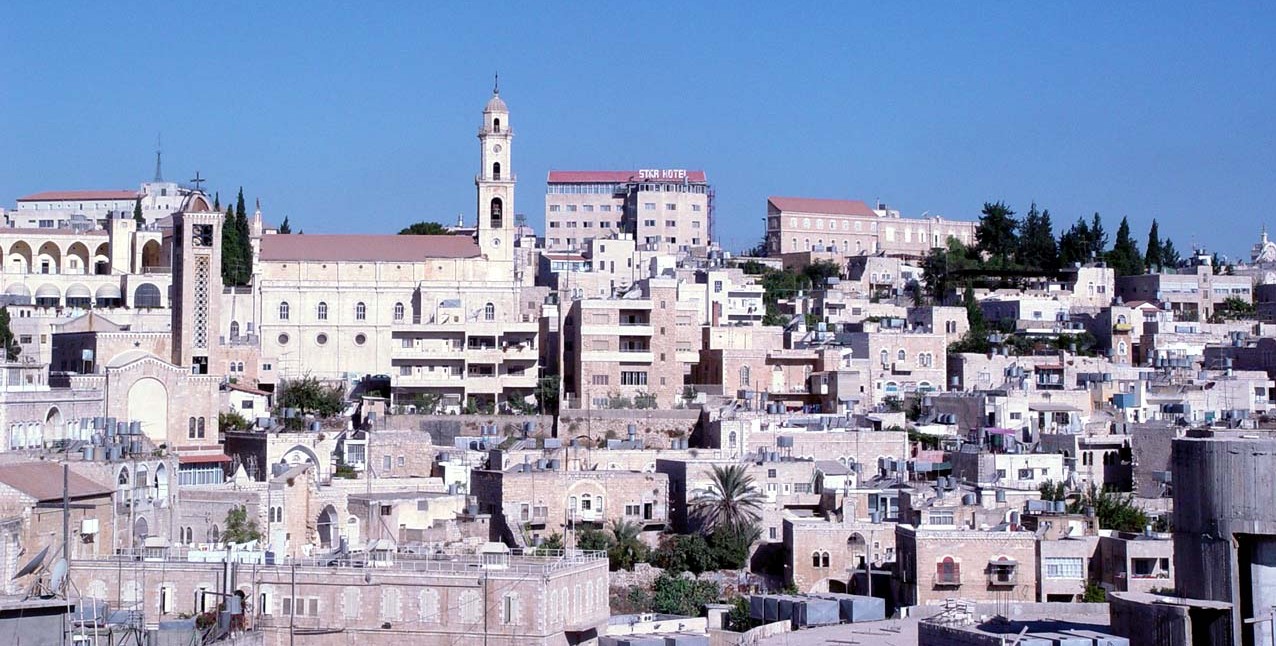
Modern Bethlehem

On May 14 Fr. Tim Gray, SCJ posted a piece about his April visit to the Holy Land. Here, he shares further impressions of his trip. Click here to read the original entry.

My first note about the Holy Land could have been written after almost any religious pilgrimage. However, the group I traveled with had another specific purpose. In the words of Fr. Alex, it was not only to visit churches and sites, but to spend time with the “living stones,” the Arab Christians, both Catholic and Orthodox, who are the descendents of the original Christian communities of the first century.

Of course, it would take books to describe the social, political, religious and military history of this part of the world. It is such a tragedy that war and religion have always been linked here. Judaism entered with a military conquest of the land in the 13th century BC. Islam entered with a military conquest in the 7th century AD. Christianity, which had been present since its founding in the first century, was superimposed in a European militant form by the Crusaders in the 12th century. Islam once again became dominant after the re-conquest by the Turks in the 14th century. In our own era, Judaism has been reestablished in a European form by military conquest. The reason why the sacred sites are composed of layers of churches and shrines one on top of the other is because conquests often resulted in wholesale destruction.

Fr. Tim Gray

Because the media tends to present the situation in the Middle East as a two-sided conflict, the Palestinian Christians are usually forgotten. As Palestinians, many of them were driven off their land when the state of Israel was created and they continue to suffer from the consequences. As Christians, they are a minority in a heavily Muslim area.

What we personally experienced during our visit to a Catholic community near Bethlehem was a small example of this situation. Bethlehem is one of the few areas where Christians make up a considerable size of the community. After touring the ancient sites, the field of the angels and the Church of the Nativity, we met with the pastor of the local Catholic Church who explained to us some of the history and the present situation of the Catholic community. Those of us pilgrims who chose to stay were put up overnight with local families so they would have an opportunity to talk and share a bit of their daily life.

The priests in our group (four of us) stayed with Fr. Fawid, the pastor.  It was fascinating to me how his life reflected both the ordinary responsibilities of a parish pastor, and the tensions created by the political and social situation. After welcoming us, he kept being interrupted by visitors and phone calls until about 10 p.m., when we finally had some time to talk. He described his efforts to draw attention to the plight of his people, both by visits and correspondence with Church officials, and attendance at conferences.

The next morning we attended the Sunday parish Mass, in Arabic of course. I was fascinated by the music. Since this community, like   Catholics around the world, had to find music in their own vernacular tongue after Vatican II, they adopted a mixture of music, some drawn from local culture, other songs to melodies familiar to me from the U.S. and Mexico.  In his parish, Fr. Fawid likes to play popular Christian music (most of it from Lebanon) at high volume on speakers around the church compound as a response to the equally loud calls to prayer from the mosque next door.

After the Mass, Father announced that he was going to bless a home and invited us along. It is customary to bless a home three times; once when the foundation is laid, once when the roof is completed, and a third time when it is ready to be moved into. This time we were blessing the roof. We arrived at the house, to the sound of a large cement mixer sending the cement up to where it was being poured into the forms on the roof. Since there was no ladder, we scrambled up piles of rubble to a partially completed staircase up the side of the house. Fr. Fawid walked all over the roof, between the workers pouring concrete, sprinkling holy water liberally all over the roof. In the midst of so much history and conflict, life goes on.

We could see how “life goes on” in a much different sense when we went to visit “the wall” which is being built to separate Israel and protect it from terrorist attacks. While in this report I am not going to enter into the discussion about whether Israel has a right to protect itself, this particular 30-foot-tall concrete barrier we saw was built to protect new Israeli settlements. These settlements are new Israeli towns built in Palestinian areas, on land taken from Palestinians, with walls to protect them. This particular wall runs right through Bethlehem, past city streets and houses, and reminds me very much of the Berlin Wall. It separates people from relatives, from their farms, and places of work, in effect putting them in different countries.

While the main purpose of our trip was not political education or action, what we learned by visiting the real Arab Christians is that they are caught in the middle of this conflict. The Christian population of Palestine has dropped from eight percent in 1947 to TWO percent at present, and the only future most of the young people see is emigration. The history of past conquests is being repeated in our day.

The next day we had an audience with the Patriarch of the Catholic Church, in the Middle East, Patriarch Fuad. Quick lesson: the Catholic Church is composed of 16 different rites, one of which is the Latin Rite, presided over by the pope, whose other name is the Patriarch of the West. Ninety-five percent of Catholics worldwide belong to the Latin Rite. Each of the other rites has its own patriarch, who presides over the churches of that rite. They acknowledge the Pope as “first among equals” and head of the whole Church. On the other hand, Orthodox rites look at the pope as one patriarch among many and so do not submit to his authority, so they are not part of the Catholic Church.

The patriarch was a wonderful, kind, very spiritual man who also described the situation of the Church. The one comment he made, in response to a question about evangelization and the RCIA, that left a deep impression on me was the fact that he felt that evangelization of Muslims is impractical. A Muslim who converted would be ostracized by his or her family and community, he told us.

As he said this, I realized that the social and religious world these people live in is what we in the West experienced hundreds of years ago – where isolation and excommunication were the most effective way to keep intact boundaries between people. So the Christian community in the Holy Land is in reality dying out – not through violence or overt persecution, but by being marginalized and caught in a much larger conflict. It seems that its main role is to remain faithful.

So these are some of my impressions of my visit to the place we call the Holy Land – holy for three of the world’s great religions, and fought over as well. While I experienced much during those two weeks, it shook me up and made me think and pray a lot more. I now hear the news about what is happening in that part of the world from a different perspective.

-Fr. Tim Gray, SCJ

Celebrations, youth ministry and final week of teaching

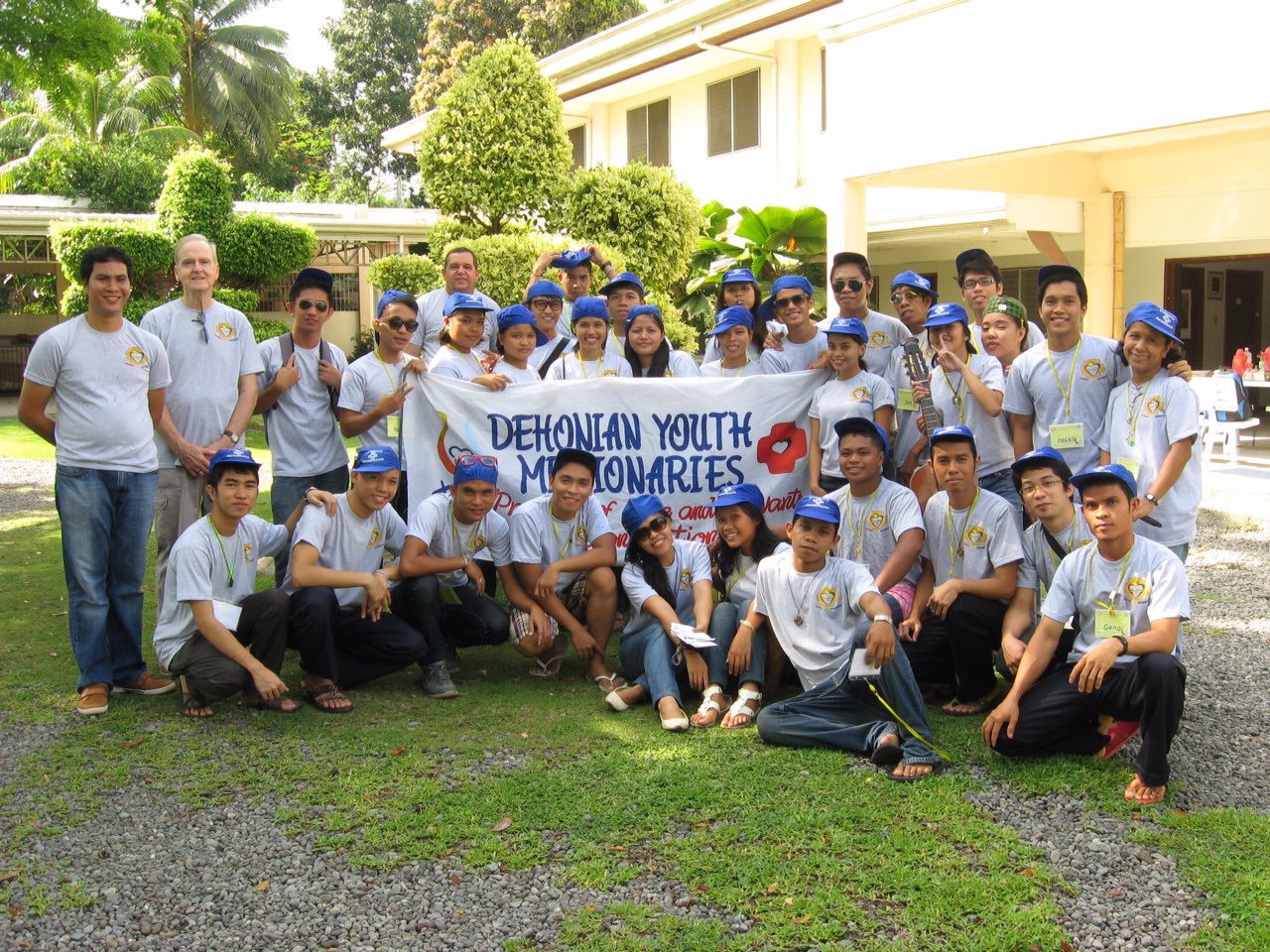
A group picture before Dehonian Youth Missionaries leave for their assignments in remote areas of the Philippines.

As noted previously, Fr. Johnny Klingler, SCJ, is in the Philippines, teaching English through the end of May. The following is his latest update:

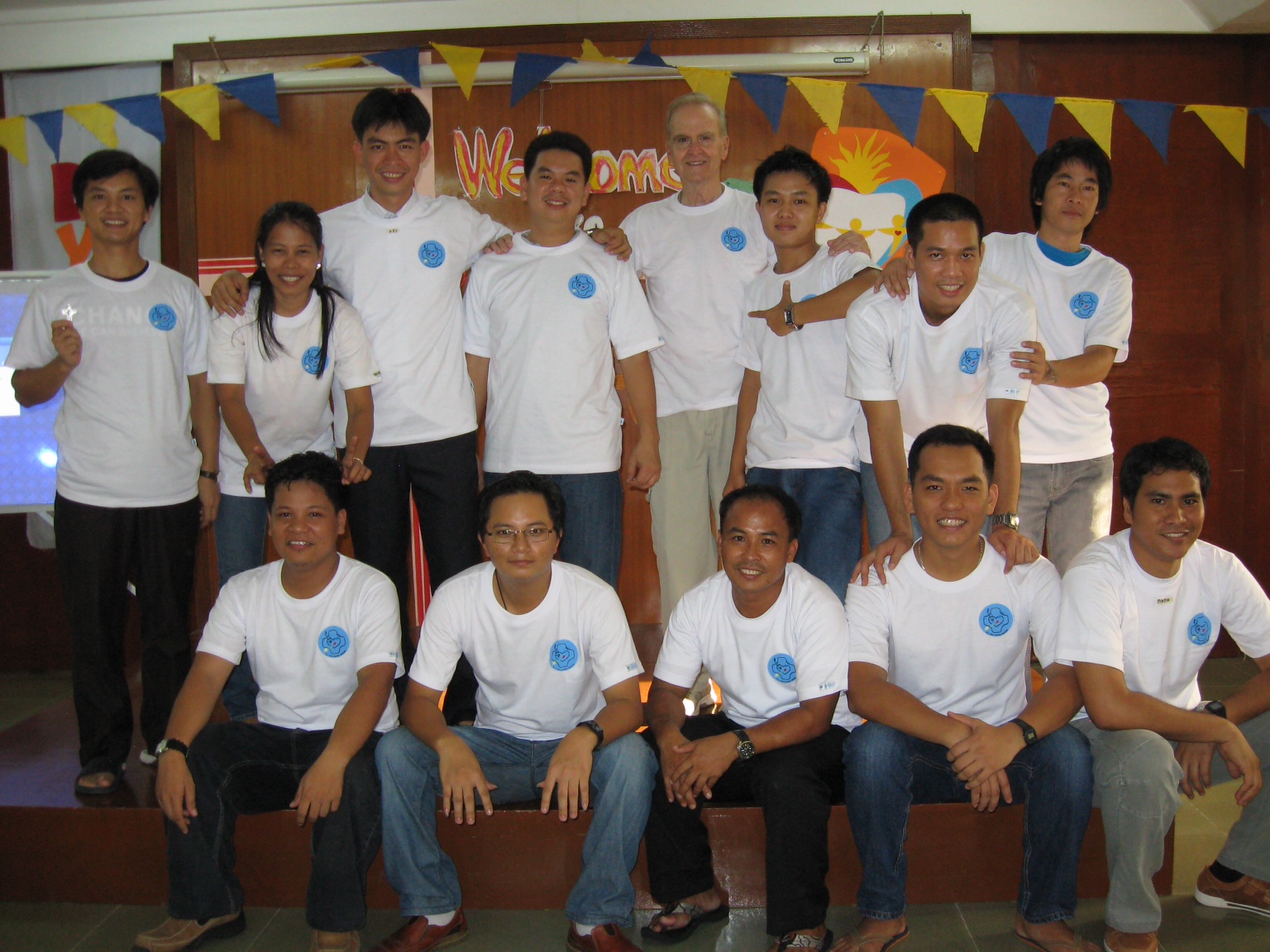
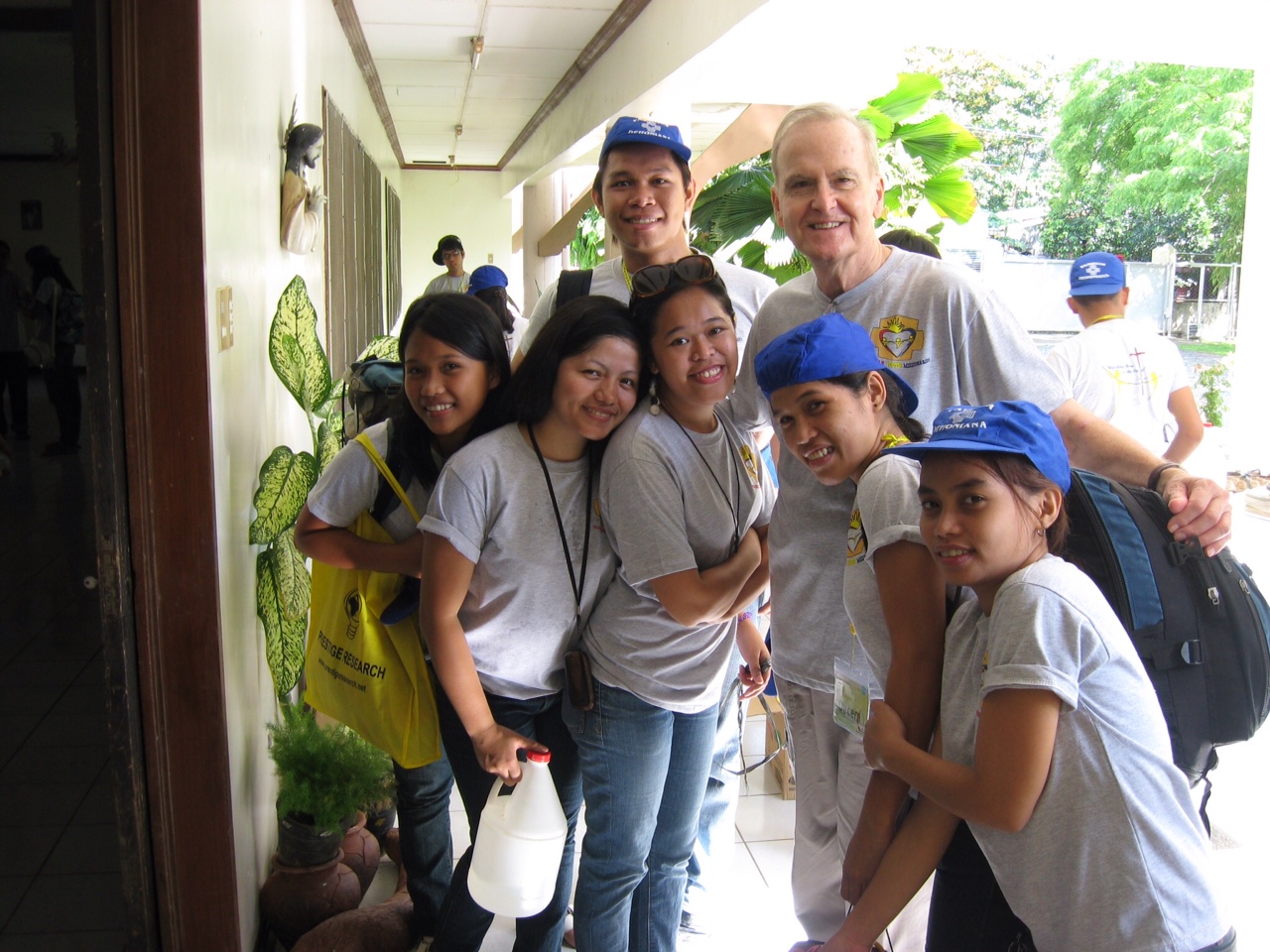
Last week the community of Cagayan de Oro hosted a five-day workshop for the Dehonian Youth Missionaries. This is a group of young people who live the charism of our founder. It is made up of young college age girls, boys and some SCJ seminarians. I was happy to be able to be the principal celebrant at one of their liturgies. The last evening they had a wonderful social which included dancing and an original comedy. There was so much laughter and even though I did not understand a word I enjoyed being with them. The closing Mass took place on Saturday morning. The young people received their commission to mission one week in three of the SCJ chapels in the mountains on the outskirts of Cagayan de Oro. I, along with the SCJs and the Youth Missioners, received tee shirts upon which was printed their logo.

Fr. Johnny poses with some of the Dehonian Youth Missionaries

Sunday morning, May 20th, I celebrated the community mass. It was special for me as it was the 45th anniversary of my ordination. I thanked our Lord for the gifts and blessings of so many years. In the afternoon I went with Fr. Bene to visit the Dehonian Missionaries in the three chapels of Manggalay, Rest House and Vgyaban. When we arrived the young missionaries were conducting May devotions with the small children from the areas.

There are 27 chapels in mountains of Dansolihon, Cagayan de Oro City and one main chapel. The SCJs who are responsible for the Church in Dansolihon try to visit them once a month. They give the sacraments and meet with the chapel lay leaders. Many of the chapels are in areas far from each other and are difficult to reach by vehicle.  The people are very poor. Many families live in very small houses with five to seven children. The people have little education and in some communities their children have to walk several kilometers every day to neighboring villages to go to school. The ministry is difficult. It is a big challenge that the SCJs have accepted.

We also visited the SCJ – Higaonon Scholar Project which is a Social Scholarship Project for Higaonon high school students. The native Higaonon live far in  the mountains and they are extremely poor. They receive little good education. In 2004 the SCJs began providing a dormitory living situation for high school age girls and boys that was close to a good school. Here they are in a safe place and cared for. Today there are now about 37 students, both boys and girls. Most of them are from poor families. The SCJ Philippine Region supports them in almost all of their needs for study. They provide for their tuition, school needs, uniforms and health care when needed. The parents are responsible for their food needs. Occasionally they cannot give enough food good for one week. A new boarding home was completed last September.

Since its beginning, 20 students have graduated. Some of them now have jobs and some of them continue their studies in colleges and as working students; two of them are in formation to become nuns and two are our seminarians.

I am now in my sixth and final week of teaching. We continue to be very involved in building vocabulary and good pronunciation.

Fr. Bene and Fr. Johnny at a remote chapel

“I have never felt so Catholic”

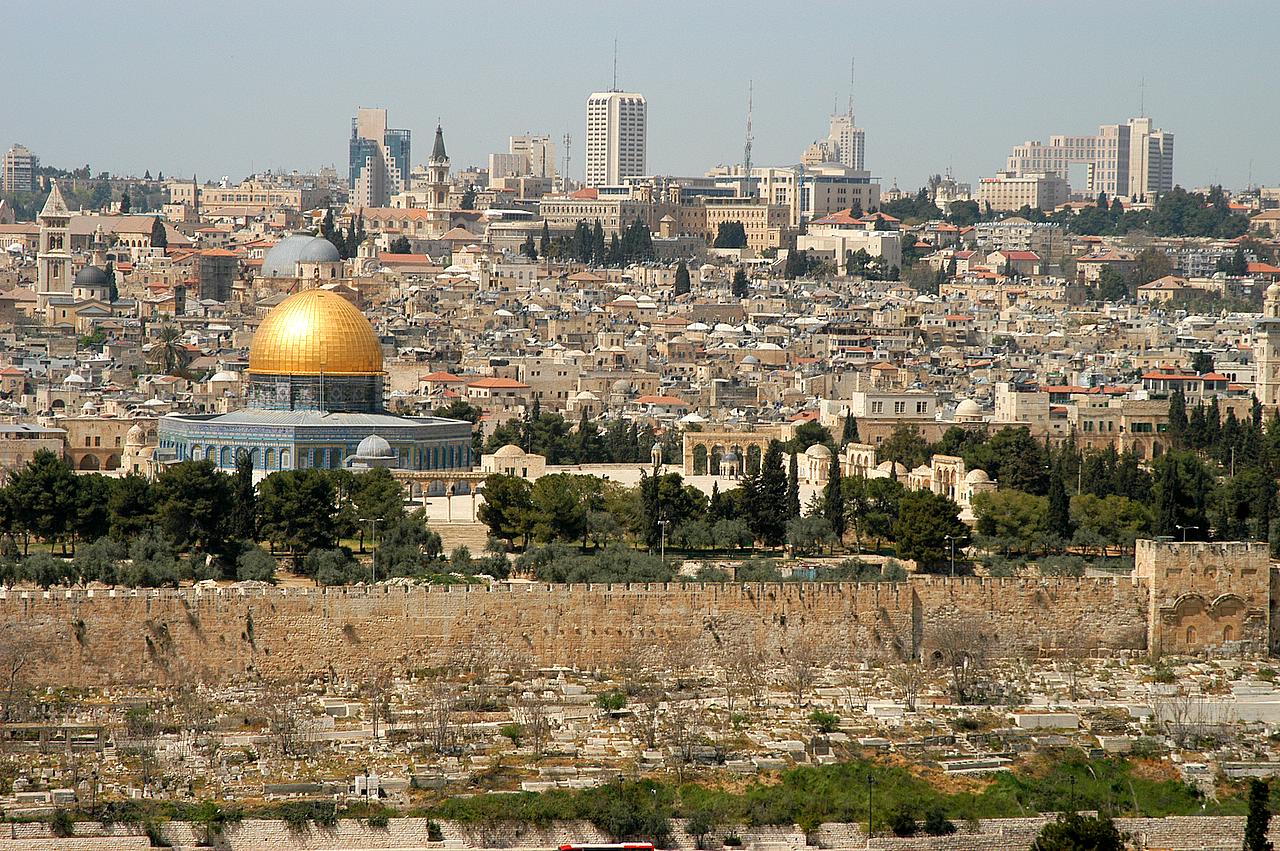
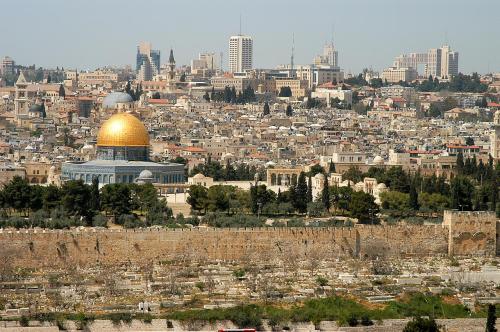
Jerusalem

“I have never felt so Catholic” are the words Fr. Tim Gray, SCJ, expressed when he reflected on his recent trip to the Holy Land. The rest of his reflection follows:

Many of you have heard the story of the little boy who could not sleep because he was frightened of the dark. His mother reassured him that he shouldn’t fear, that God was with him. But he replied, “yes, but I want someone with skin!”

As Catholics, we want a God who has skin, a God we can touch. This is the meaning of the Incarnation – God made flesh.

I want to share the experience with you. I won’t use a travelogue form, as I’m afraid that would become quite long and boring. I will tell you about what happened to me as I joined 27 other pilgrims for 14 days in this special place.

I had never met any of these people before, but since they all came from parishes in the Detroit area, we did have something in common. We got along very well, no one got sick (a first according to our guide), the food was excellent and the entire trip went without a hitch.
Fr. Tim Gray

People ask if I felt afraid because of the political tensions and the possibility of violence. I didn’t. I guess I have traveled enough, and seen 18-year-old soldiers strolling around with high caliber machine guns over their shoulders, that I didn’t feel worse walking the streets of Jerusalem than walking the streets of Chicago. Much more bothersome were the vendors who came up by the dozens at every stop, selling just about every type of article you could imagine. They were polite, but very insistent. Once a young man, having caught my eye, stepped up and tied a kaffir on my head so I looked like Yasser Arafat. I took it off and tried to give it back to him, but he stepped back and absolutely refused to take it. So I walked away, trying to figure out what to do. As far as I can understand from his culture he had given me a gift, so it would be insulting to return it to him. I was obliged to give him a gift in return.  So when we came back out, I spotted him, gave him ten dollars, and asked him to tie it on my head again. I figured he earned it just by his chutzpah.

Only once during the entire trip did we see someone begging – an old woman in black sitting on the ground outside the old city gates. Either they keep the beggars far away from the tourists, or else people find ways to survive and feed their families.

I was completely overwhelmed by the churches, especially in the Old City of Jerusalem – the history and the people.  In my travels, I have seen churches that are 400 and 500 years old. In Jerusalem, those would be modern churches, built upon the ruins of churches 800 years old, which were built upon the ruins of churches 1,600 years old, built on top of Roman temples which were built to try to obliterate the traces of Christianity in 165 AD.

Somehow I had expected a Christian Disneyland, like colonial Williamsburg, in which everything would appear just as it did in Jesus’ day. Instead, we walked down into the basements of the present churches to see the earlier places where people have worshipped for thousands of years on the same spot. Each generation has left its mark behind.  At first I was startled to see 20th century artwork in these old buildings, alongside statues and pictures and mosaics from previous generations. But I realized that we are simply one more generation, one more century, coming to these holy places and leaving our marks behind.

I have never felt more Catholic in my life.  A Protestant would probably feel the connection to Jesus through the Bible, which he or she believes has come down, unchanged, untouched by human hands for 2000 years. We Catholics feel the connection through our bodies, which touch the same stones worn smooth by millions of others who have touched them through the centuries, who bring rosaries, cards, images, statues, to touch the holy places and be blessed and shared with family and friends. We gaze upon images which (as I mentioned above) present the understandings of Jesus, the church, and the holy places as they have evolved over the centuries in many different cultures.

And as I stand in this history, it feels like a tree with roots planted in tradition, adding growth rings every year (some thick, some thin and dried, some rings marking fires or lightning strikes or torn off branches) and reaching to the sky, thousands of pilgrims from all over the world are flooding into these holy spaces – each group with a guide, each one with special hats, or shirts, or scarves or flags, to keep together and not get lost in the crowd, each one speaking their own language, all thirsting for the holy. Each group, like a tiny piece of a mosaic, adding bit by bit to the grand, multicolored, diverse, growing Body of Christ.

We were in the Cenacle, the upper room, when a group came in from Russia and started charismatic prayer in tongues. Just when we thought they were as loud as they could get, they got still louder. That’s Pentecost!

The numbers of people from India amazed me. It seemed that every Catholic in India was there that week. As much as I have traveled, I never felt the universality of the Church so strongly as that week. I have been to Rome, I have seen crowds of people, but Rome seems to herd people in, and hold them together, and have them focus on celebrating the same way together. In the Holy Land, people are free to express their personal devotion and come and go as long as they want.

So I came, expecting to walk in the footsteps of Jesus, and discovered that millions of people over thousands of years were all walking alongside me – and that is the church, in all its humanity and its divinity. Quite a gift to bring back home.

The most moving experience was the opportunity to celebrate the Eucharist inside the Holy Sepulcher – also known as the Chapel of the Resurrection. I truly felt time stand still as I thought, “This is it. This is the place where it happened.” As members of the group came forward one by one to reverence the stone, I could feel huge burdens being brought and placed on it, and people rising up with new life and new hope. That is an experience I will never forget.

 

Mother’s Day in the Philippines

Fr. Johnny heading out for a day at the park with his English students.

Fr. Johnny Klingler, SCJ, continues his blog posts from the Philippines where he is teaching English: 

Today, May 13th, is Mother’s Day. I celebrated the Sunday liturgy at 7:00 a.m. The air was pleasant and mild just before the heat would take over. We prayed for our mothers, living and dead, and in thanksgiving for the gift of a loving mother. It is quiet at the present time as the community is small due to vacation time for the students and Frs. Francis and Bene are at the novitiate. Fr. Andrew left last week for India where he is giving a retreat. Fr. Richie, student formation director, and I, will be the only priests here for the next few days.

Last week I, Frs. Francis, Bene and Richie went to the 14th anniversary of the Kasanag Daughters Foundation. It is an institution providing shelter and professional assistance to young girls who are victims of sexual abuse. Presently there are 21 girls in residence. It was founded by Fr. Eduardo Agüero. It is managed by the SCJ community of Cagayan de Oro. The celebration began with a beautiful Mass. The girls all spoke individually to their mothers expressing their love. Their talks were full of emotion and tears. I was very touched. What a blessed ministry. A delicious meal was served. A special treat was ice cream cones for dessert.

The fourth week of our English classes went well. Besides teaching my regular group, I give special attention to three students in the afternoon. I help each one individually with his pronunciation. For example, words beginning with jo, yo or wo need special attention.

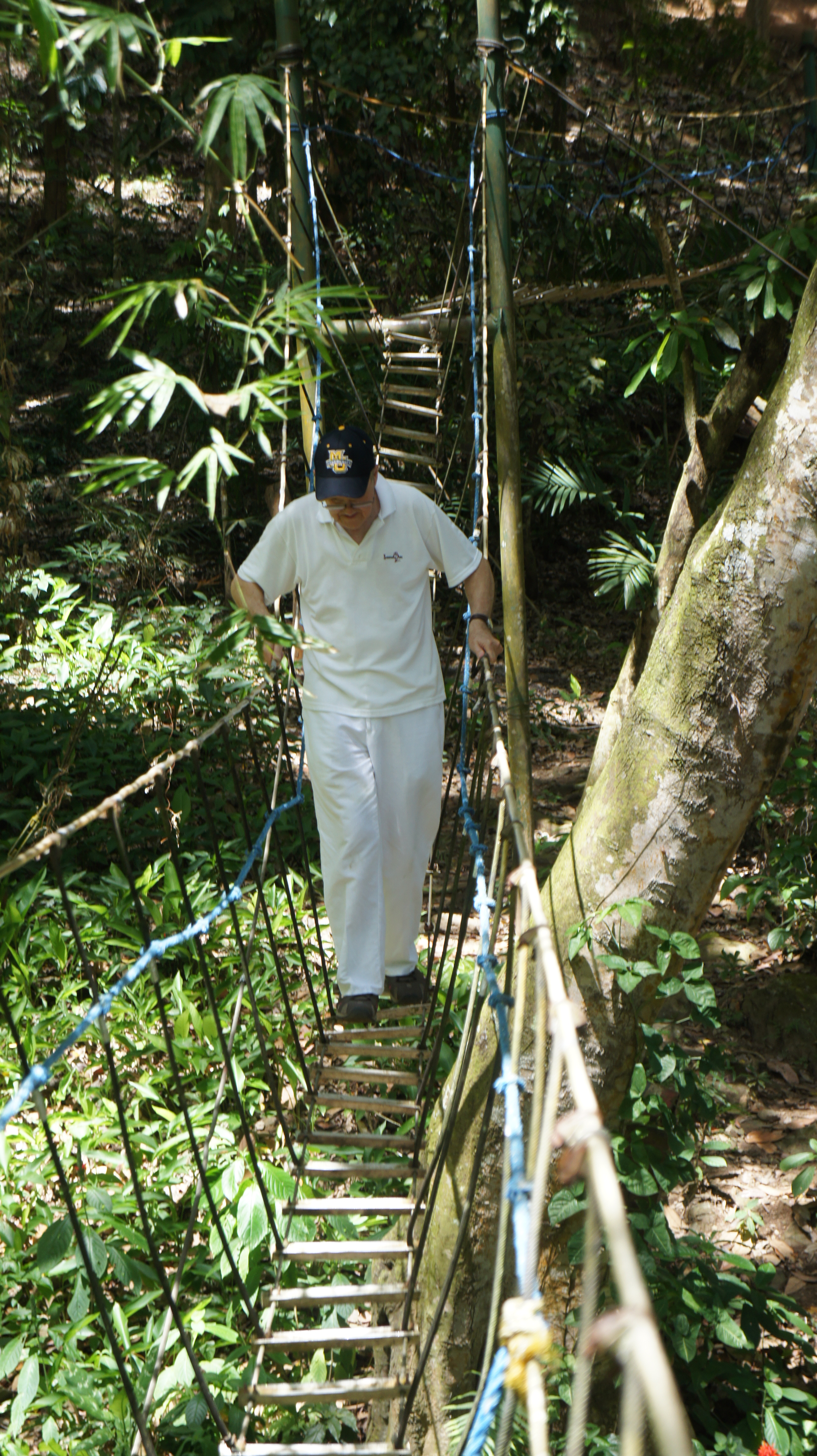
Fr. Johnny on the “Monkey Bridge.”

We went on a field trip Friday morning to a beautiful park in the mountains which overlooks the city of Cagayan de Oro and the ocean. One of the things to do is to cross “The Monkey Bridge.” It was quite an adventure. You walk on a swinging bridge by holding onto two cables with each hand and stepping on metal slates 9 inches by 1 1/2 inches with a distance of 1 foot to 1 1/2 foot between them. I had to climb a tree trunk to get to the first landing and from my perspective the walk looked rather short. However, when I got to the end of the first stage, I saw I had a long way to go. Thank God, I didn’t fall as I finally came to the end, soaking in sweat. That evening the professed community went out for pizza, which is always a special treat.

The week flew by and tomorrow we will begin the fifth week of the six-week English course.

Finally, I want to correct something that I wrote in my last blog, I told of having lunch with Pat Houterman. I made a mistake regarding his work and position. Please note that Pat is the Academic Director of High Scope, a school consisting of an early childhood program, elementary school, middle school and high school. There are over 1,000 students with 10 other High Scope units across Indonesia.

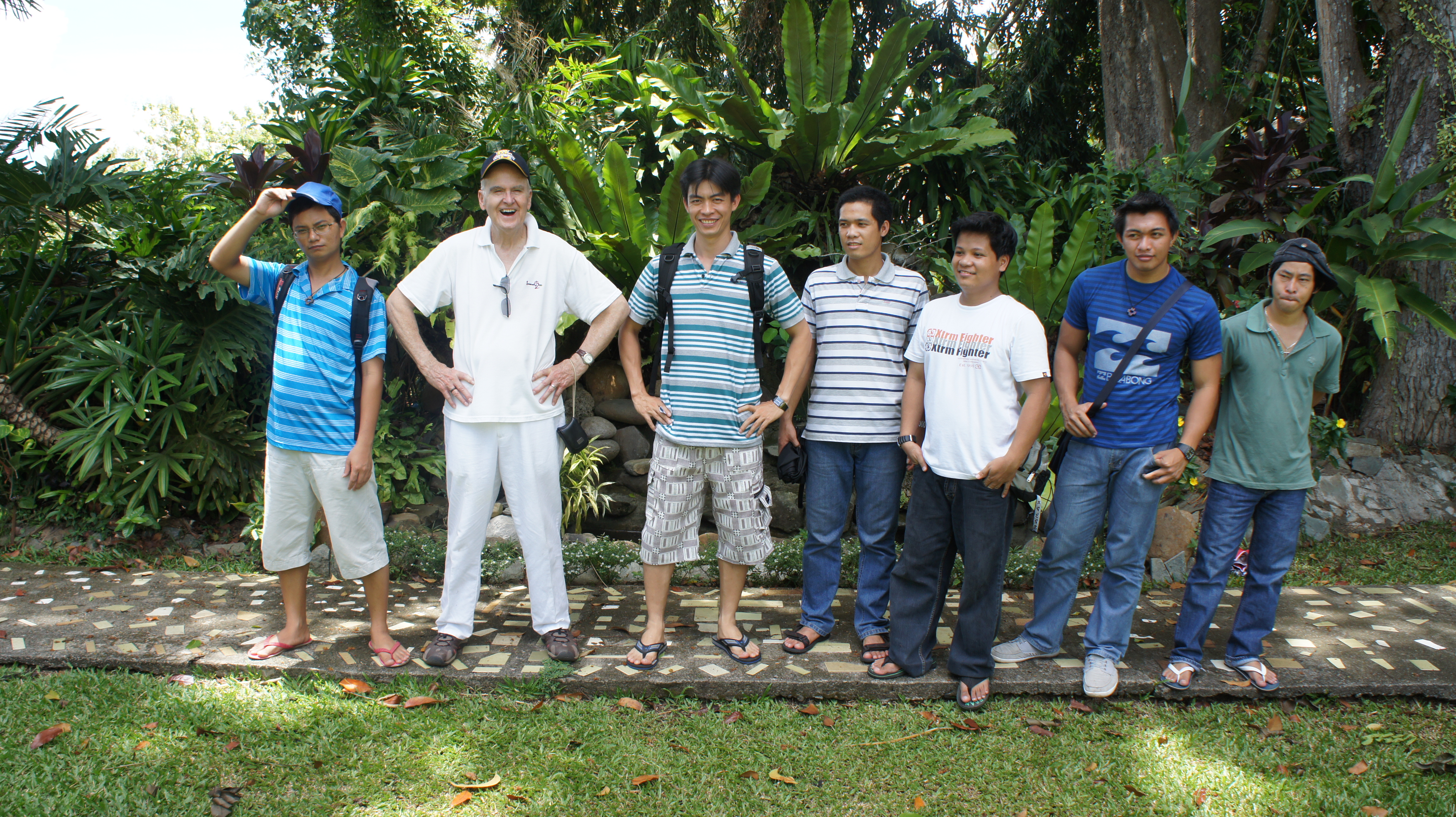
Fr. Johnny with students at the park near Cagayan de Oro

Back in the Philippines

Fr. Johnny with Van, one of his students.

As noted with his last post, Fr. Johnny Klingler, who has been in the Philippines for the past several weeks teaching English, represented the U.S. Province at the funeral for Fr. Tom Fix in Indonesia. Fr. Johnny writes the following after having returned to the Philippines from Indonesia.

May 6, 2012:  I left Palembang, after some six hours of sleep, in the early morning hours of Tuesday, April 24, the day after the funeral for Fr. Tom Fix. I arrived in Jakarta at St. Joseph Home and spent a quiet day with Fr. Aloysius, the coordinator of St. Anthony’s Schools in Jakarta. Fr. Aloysius met me at the airport when I arrived early in the morning on Monday. He took very good care of me, arranging transportation and a place to stay while I was in Palembang and Jakarta. He and the cook, Tonto, fed me well. I spent the day taking it easy and catching up on my email.

Wednesday I visited with Pat Houterman, a former member of our community who continues to live in Indonesia. We went to lunch and caught up on our lives over the years. Pat is the co-director of  a private English language school in Jakarta.  He and his wife Jane are both doing very well professionally. It was a joy to see him after so many years and to see him healthy and happy. I left  Jakarta on a 12:30 a.m. flight to Manila. I have never taken such an early morning flight. I was surprised that the plane was full. I would have the second day of four days of travel with no sleep.

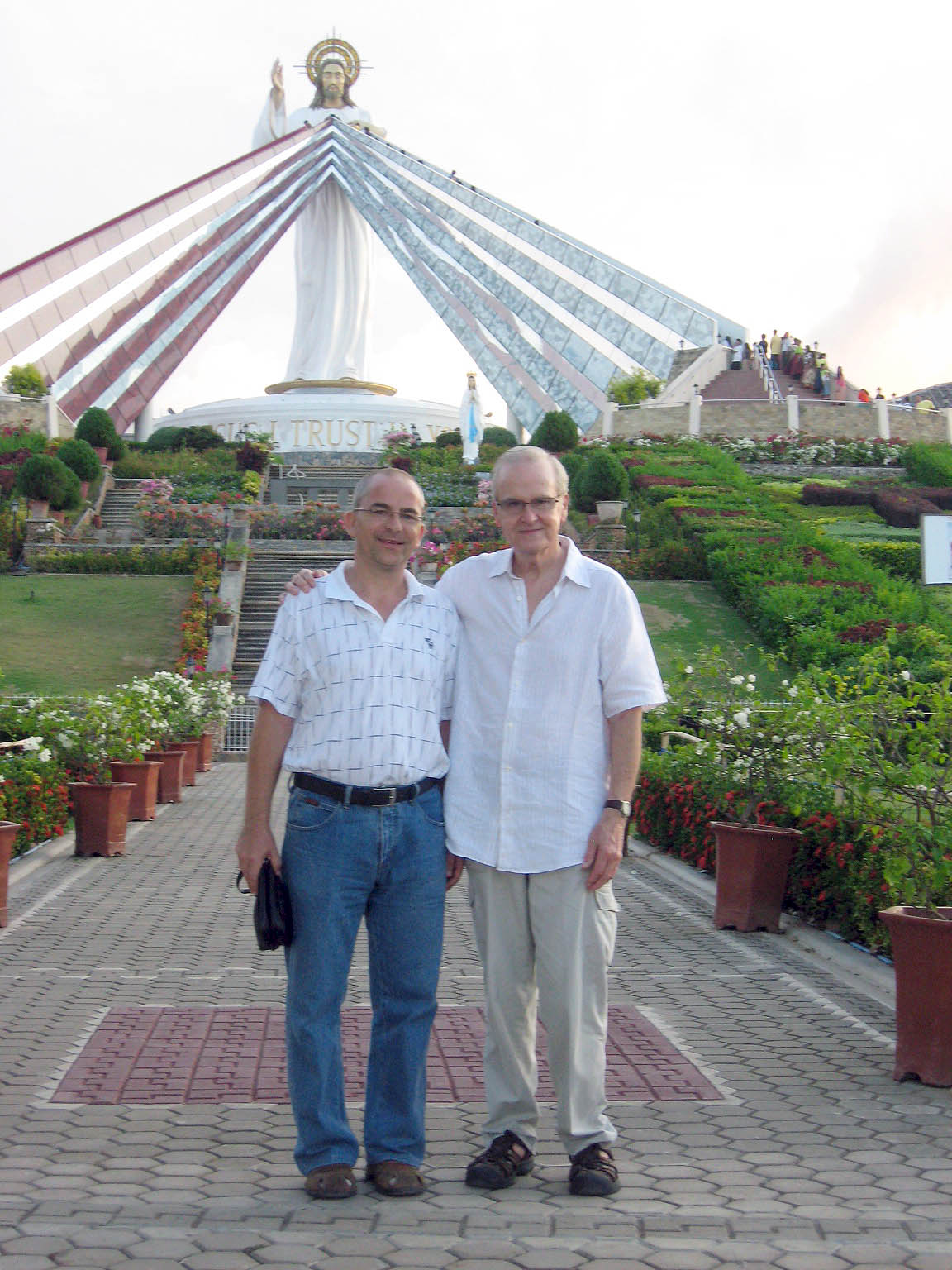
Fr. Johnny visited the Divine Mercy Shrine with Fr. Andrew Sudol.

I missed four days of the third week of school so I felt I had to teach on Friday. I made it through the day and on Saturday I was able to go with Fr. Andrew to see the Shrine of Divine Mercy in El Salvador. As you can see from the photo it is “unique.” It was late in the day when we arrived so there were few pilgrims. Fr. Andrew, two of his priest friends and me went out for a fish dinner in the evening. A small dish with two small peppers was given to each of us. I was told, or so I thought, to put lemon juice that was on the table on the peppers and eat them. I took one of the peppers and began to chew it but no sooner did I do this that my entire mouth went on fire. I could hardly talk. I gulped down beer to put the fire out but to no avail. The pain lasted about 10 minutes. What I was supposed to do was to use the sauce with the peppers as a dip for the fish I ordered.

The third week of school was spent building vocabulary and pronunciation. During one morning’s class we watched the movie “Romero.” It was very useful as the film was English and there were sub-titles also in English. We had a discussion together about the movie in the afternoon class. That evening the professed community went to our SCJ parish of The Immaculate Conception for a going-away party for Dn. Showe Reddy. He is going to our parish in Kumalarang. It was a very nice gathering. There are three SCJ priests who minister at Immaculate Conception. Fr. Jan Krzeysciak, who has been here in the formation community, will join the parish team. The meal that the community provided was very good. When I saw that pasta was one of the main dishes, I was very happy.

Tuesday, May 1st, was Labor Day, a civil holiday. The community spent the day at Marvellia Beach in Opol, which is only a 40-minute car ride from the city. It was a very hot day so one had to be very careful not to sunburn. The following evening we had a farewell gathering for Fr. Szymon Bendowski, who was leaving here to minister in our parish of St. Isidor in Dumalinao.

The students worked hard this past week. I can see the progress they are making. As I mentioned before, they are very eager to learn. They have to pass an English exam in order to begin the study of philosophy at St. Xavier University. This is a big motivation in itself for them to learn.

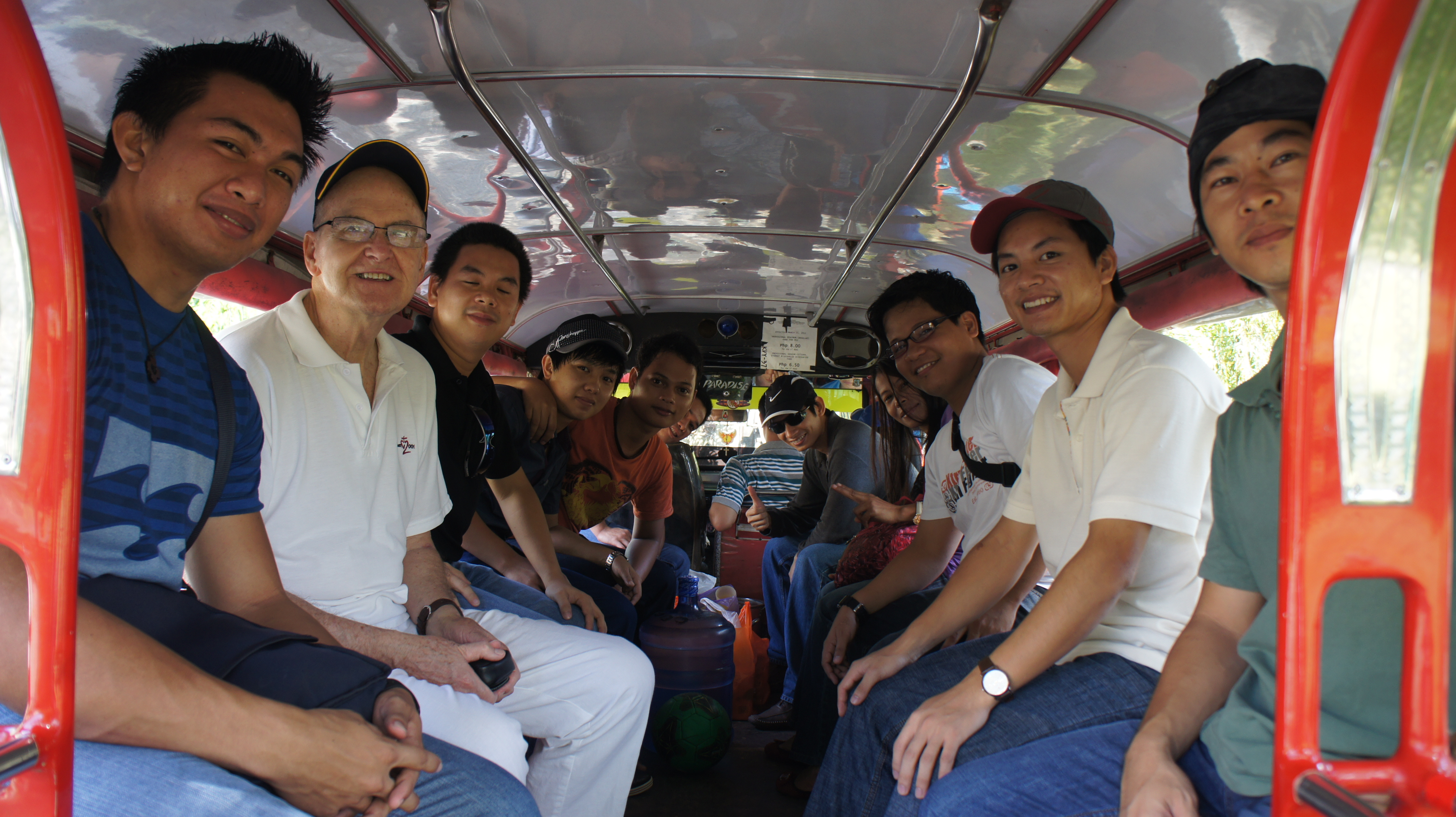
Yesterday, Saturday, May 5, I went with Fr. Andrew, Jona (secretary to Fr. Francis), and a friend of the community to Forest Garden Adventure Park in Dahilayan, a one-and-a-half drive to the mountains. The air was so “fresh,” as the people describe it, and the temperature easily can be10-20 degrees cooler. It was a big change for me from the city. I can understand why it would be popular for families to picnic and to enjoy the many adventure rides.

This morning I celebrated the Sunday liturgy for the students as all the priests were helping out in parishes. I had a two-hour nap in the afternoon, which is most unusual for me. Perhaps the reason was that air-conditioning was installed in my bedroom and office a few days ago.

Tomorrow, Fr. Andrew will go to our seminary in Aluva, India, to give a ten-day retreat for those taking final vows.

-Fr. Johnny Klingler, SCJ

The death of a missionary

Fr. Johnny Klingler, who has been in the Philippines for the past several weeks teaching English, represented the U.S. Province at the funeral for Fr. Tom Fix in Indonesia. An American SCJ, Fr. Tom spent all but three of his 53 years of ordination as a member of the Indonesian Province.

 Fr. Johnny writes the following from Jakarta, Indonesia, where he was preparing for his return to the Philippines:


Fr. Tom Fix

On Saturday night, April 21, we received the call that Fr. Tom was in critical condition. Sunday morning, around 9:00, another call telling us he died. Soon after, Fr. Francis Pupkowski, superior of the region, called Fr. Vincent Sri Herimanto, superior in Manila, to arrange a ticket for me. I left Cagayan de Oro at 11:30 a.m. for Manila and then to Jakarta. I arrived at 2:30 a.m. Fr. Aloysius Suyoto met me at the airport. He told me that we had to fly to Palembang at 4:00 a.m. I caught about 45 minutes of sleep.

When we arrived at the airport there were a significant number of people waiting to go Palembang for the funeral. I believe most were from the SCJ parish of St. Steven. What touched my heart were the number of people who came to the airport just to say goodbye with wishes for a good flight. It was their way of going with us. Fr. Hadrianus Wardjito, a former general councilor, was there. He brought water and food for our refreshment. The plane ride took only an hour.

We arrived at the SCJ community and the seminary of St. Paul. The Mass of the Resurrection would take place in the chapel. There were many people, many SCJs waiting for the body of Fr. Tom to arrive for the visitation. The community prepared food and drink for all.

His body lay in a white coffin and looked so peaceful. The people came and the visitation continued up to the Mass, which would take place at 3:00 p.m. I went to the community of the Sisters of Charity where a room was prepared for me. I got about an hour of sleep before we returned for the Mass. The chapel holds approximately 500. It was overflowing with extra chairs in the side and back and many chairs placed outside at the open sides of the chapel.

Bishop Aloysus Sudarso presided. At the altar with him were the provincial of the Indonesia Province, Fr. Andreas Madya Sriyanto, former provincial Fr. Sapta Dwi Handaka, Fr. Nico Steekelenburg, one of the few Dutch priests still in Indonesia, and myself. It appeared to me that the whole province of SCJs was there as there were so many. There were also many religious sisters and many lay people. The presence of so many people was overwhelming and spoke so much of Fr. Tom. The choir of young seminarians was so beautiful. Hearing them was like hearing music from heaven.

Bishop Sudarso spoke about Fr. Tom, about when he first arrived, his various ministries and of his beautiful heart. Then the provincial spoke of Fr. Tom and the gifts he brought to his SCJ community and all the people he served. I was asked to speak and this is what I said as I recall it now:

“I am very happy to be here with all of you who knew and loved Fr. Tom. I thank the Lord that I was able to come. It is a privilege for me to be here with you, Bishop Al, and you my SCJ brothers.

“It is an honor for me to represent my SCJ brothers in the United States Province and the family of Fr. Tom.

“When I think of Fr. Tom, many words come to my mind: he was a loving person, compassionate, spoke only about the good of persons, did not judge others,  loved to laugh, and smiled so much. He was happy man.

“He was man of prayer, who loved his Lord so much. He was a holy man, and he loved being an SCJ with you, his brothers. He loved Indonesia and its people.

“We have lost a Prince of a Man but we have gained another Saint!”

Tom was buried in a crypt in the convent of the Sisters of Charity.

The sisters prepared a meal for all. When supper was over, I and Fr. Donatus Kusmartono, visited with the bishop at his home.

-Fr Johnny Klingler, SCJ