Celebrations, youth ministry and final week of teaching

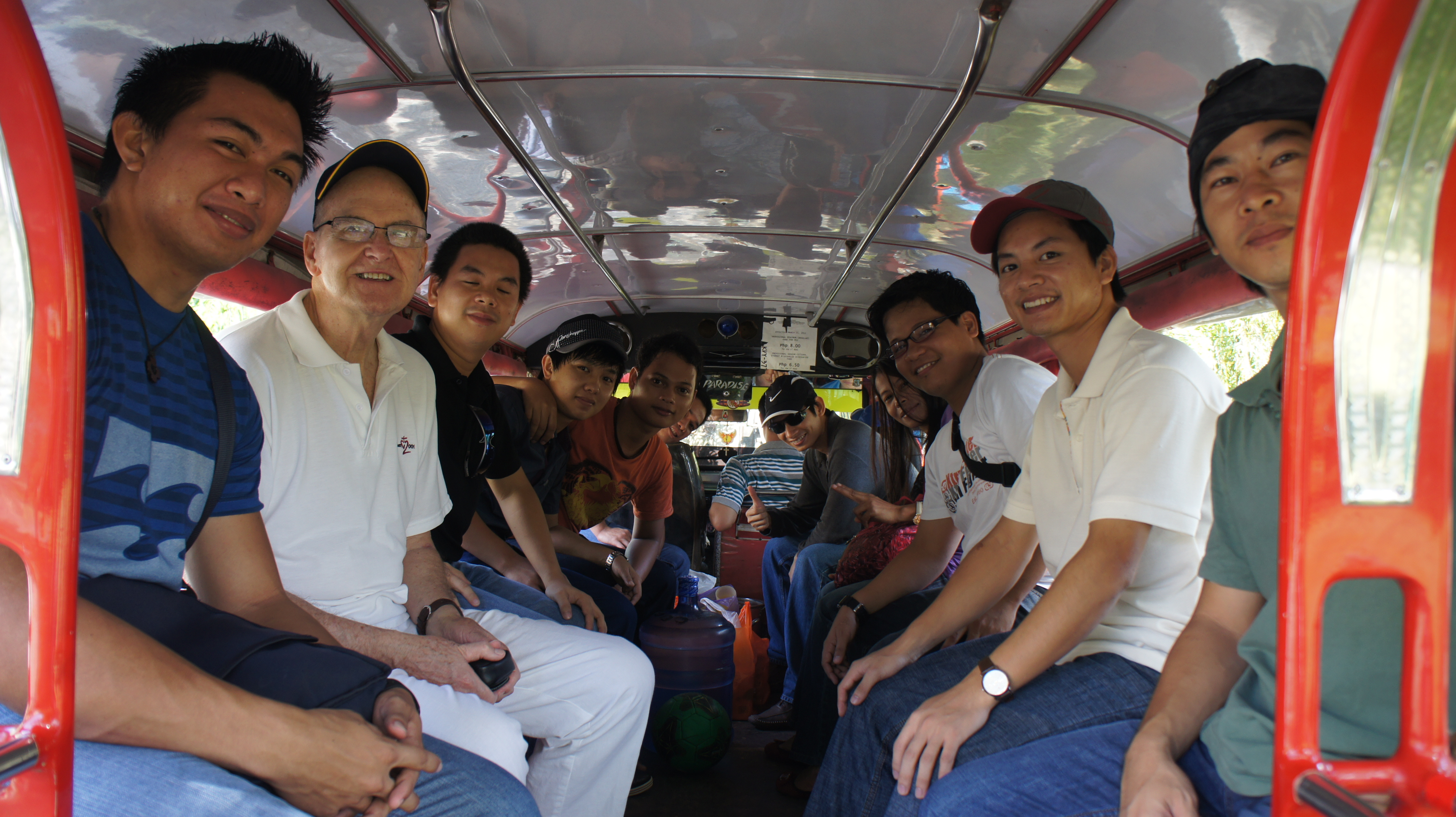
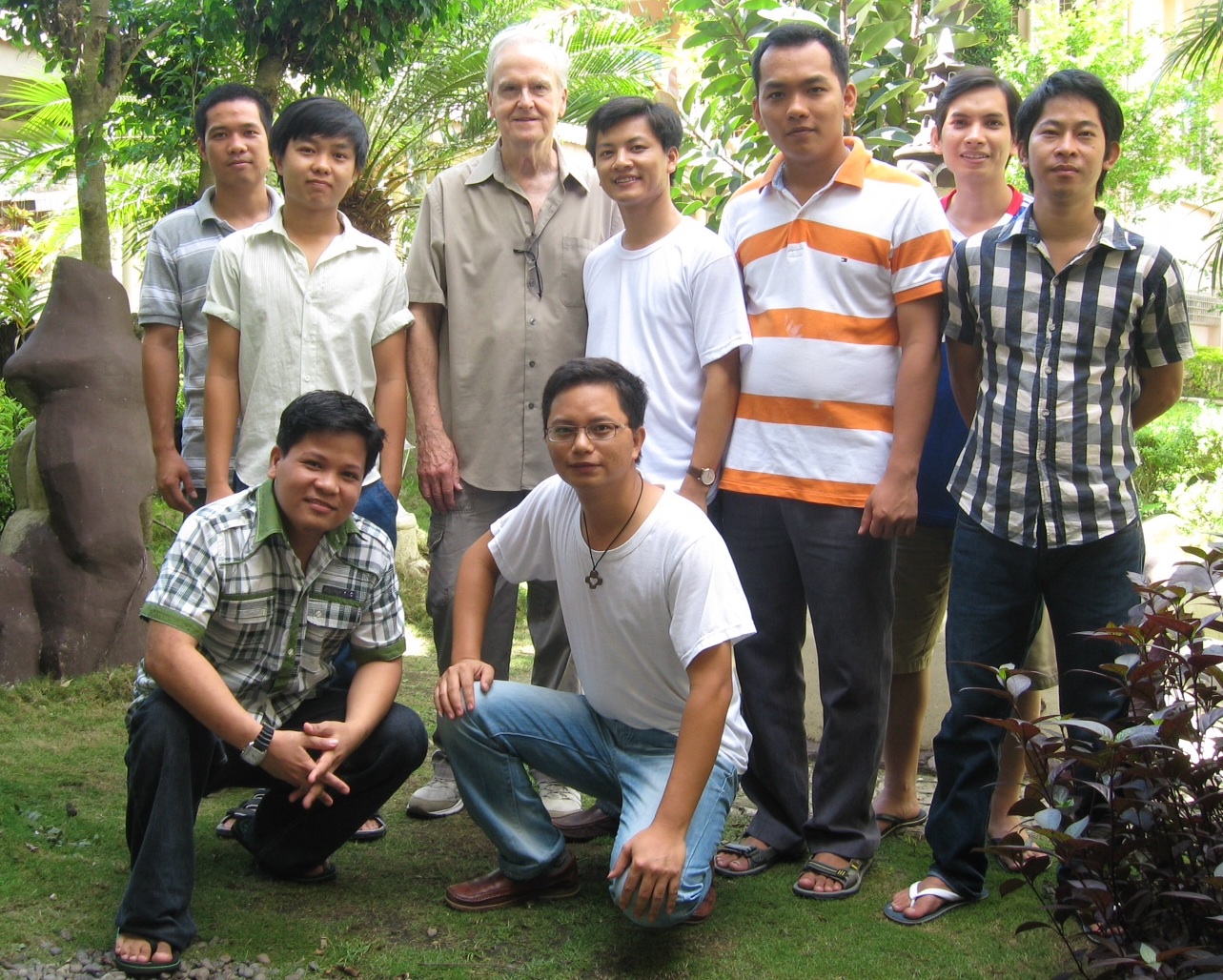
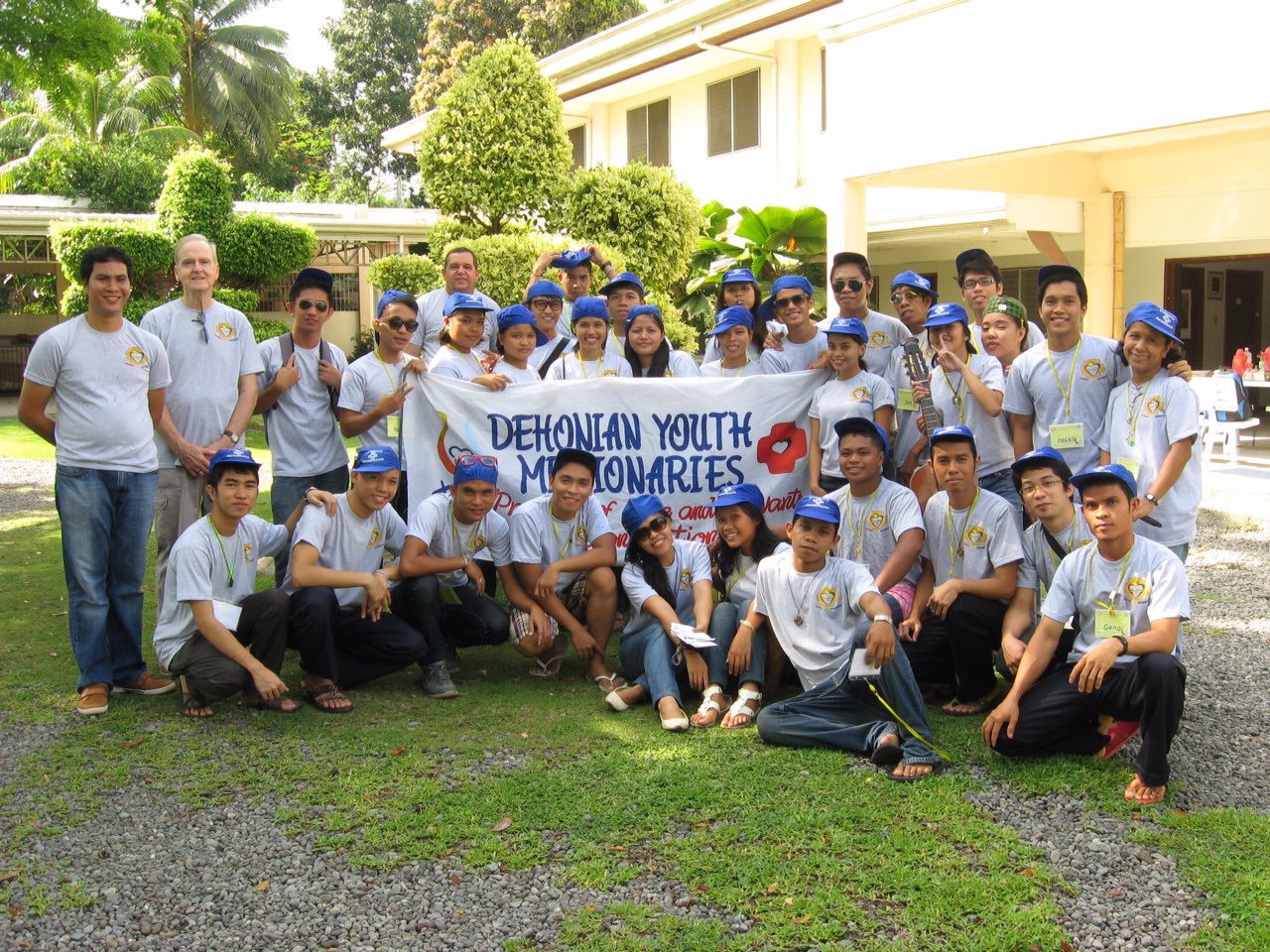
A group picture before Dehonian Youth Missionaries leave for their assignments in remote areas of the Philippines.

As noted previously, Fr. Johnny Klingler, SCJ, is in the Philippines, teaching English through the end of May. The following is his latest update:

Last week the community of Cagayan de Oro hosted a five-day workshop for the Dehonian Youth Missionaries. This is a group of young people who live the charism of our founder. It is made up of young college age girls, boys and some SCJ seminarians. I was happy to be able to be the principal celebrant at one of their liturgies. The last evening they had a wonderful social which included dancing and an original comedy. There was so much laughter and even though I did not understand a word I enjoyed being with them. The closing Mass took place on Saturday morning. The young people received their commission to mission one week in three of the SCJ chapels in the mountains on the outskirts of Cagayan de Oro. I, along with the SCJs and the Youth Missioners, received tee shirts upon which was printed their logo.
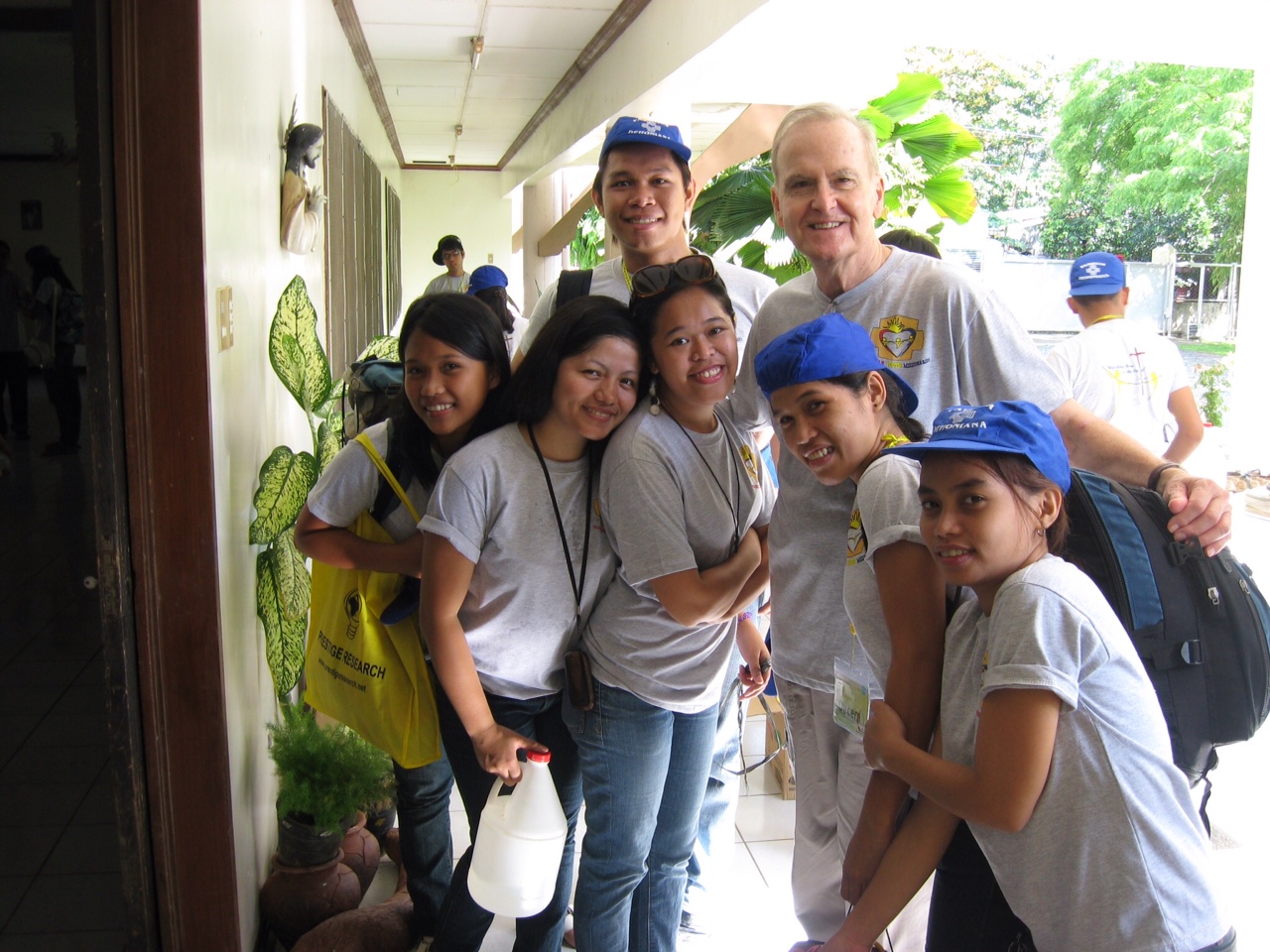
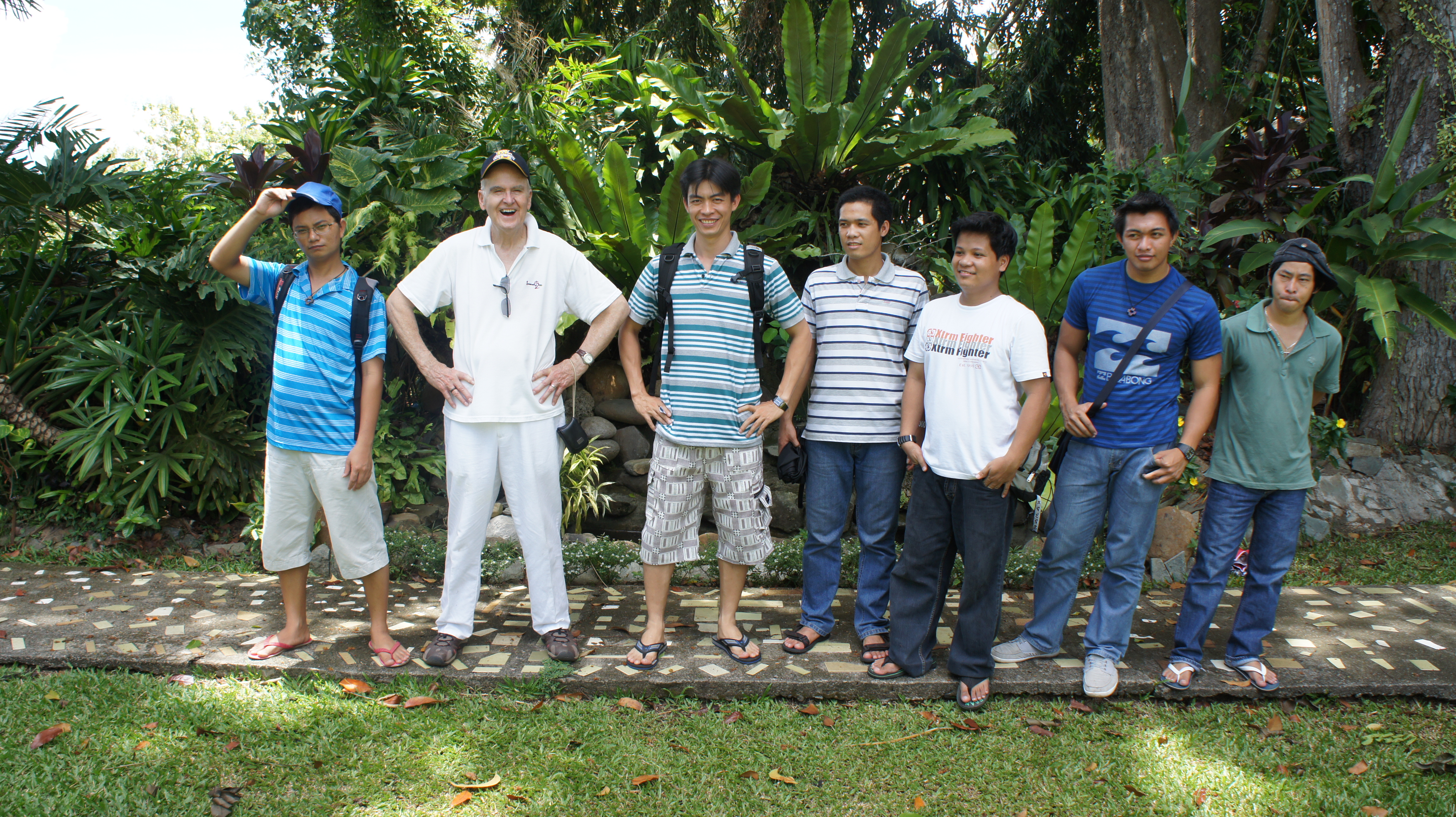
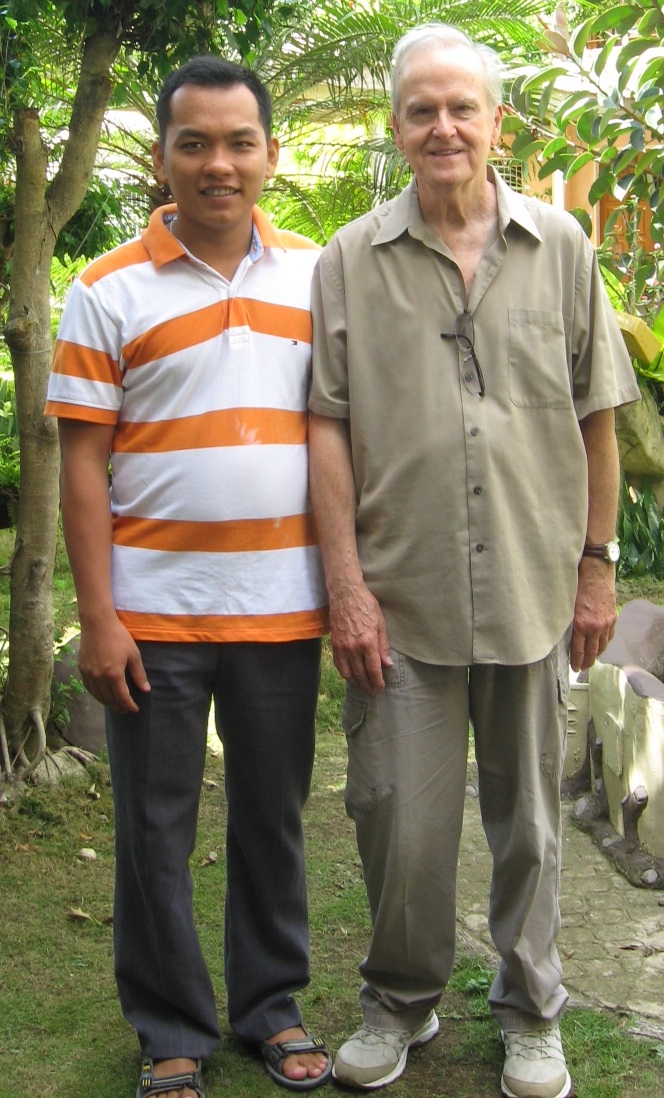
Fr. Johnny poses with some of the Dehonian Youth Missionaries

Sunday morning, May 20th, I celebrated the community mass. It was special for me as it was the 45th anniversary of my ordination. I thanked our Lord for the gifts and blessings of so many years. In the afternoon I went with Fr. Bene to visit the Dehonian Missionaries in the three chapels of Manggalay, Rest House and Vgyaban. When we arrived the young missionaries were conducting May devotions with the small children from the areas.

There are 27 chapels in mountains of Dansolihon, Cagayan de Oro City and one main chapel. The SCJs who are responsible for the Church in Dansolihon try to visit them once a month. They give the sacraments and meet with the chapel lay leaders. Many of the chapels are in areas far from each other and are difficult to reach by vehicle.  The people are very poor. Many families live in very small houses with five to seven children. The people have little education and in some communities their children have to walk several kilometers every day to neighboring villages to go to school. The ministry is difficult. It is a big challenge that the SCJs have accepted.

We also visited the SCJ – Higaonon Scholar Project which is a Social Scholarship Project for Higaonon high school students. The native Higaonon live far in  the mountains and they are extremely poor. They receive little good education. In 2004 the SCJs began providing a dormitory living situation for high school age girls and boys that was close to a good school. Here they are in a safe place and cared for. Today there are now about 37 students, both boys and girls. Most of them are from poor families. The SCJ Philippine Region supports them in almost all of their needs for study. They provide for their tuition, school needs, uniforms and health care when needed. The parents are responsible for their food needs. Occasionally they cannot give enough food good for one week. A new boarding home was completed last September.

Since its beginning, 20 students have graduated. Some of them now have jobs and some of them continue their studies in colleges and as working students; two of them are in formation to become nuns and two are our seminarians.

I am now in my sixth and final week of teaching. We continue to be very involved in building vocabulary and good pronunciation.

Fr. Bene and Fr. Johnny at a remote chapel
“I have never felt so Catholic”

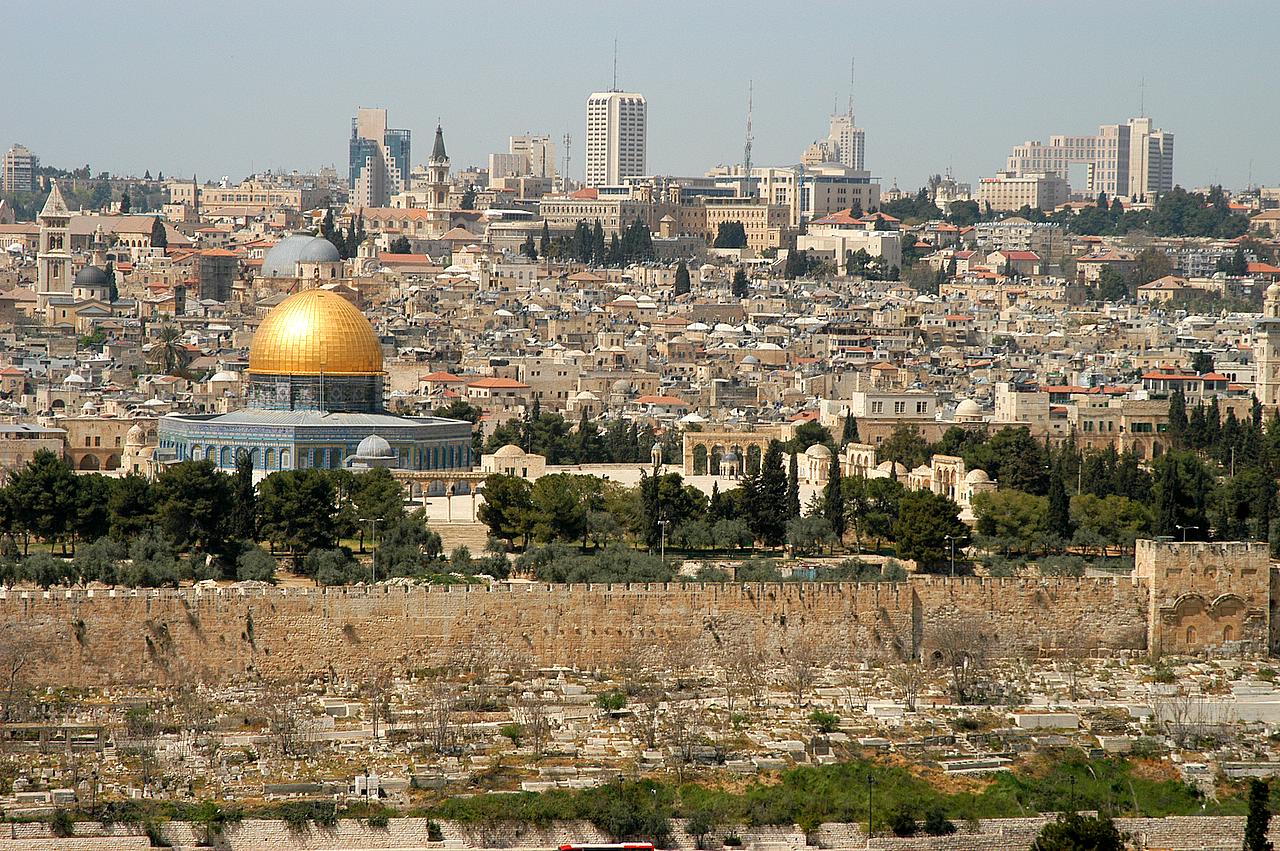
Jerusalem

“I have never felt so Catholic” are the words Fr. Tim Gray, SCJ, expressed when he reflected on his recent trip to the Holy Land. The rest of his reflection follows:

Many of you have heard the story of the little boy who could not sleep because he was frightened of the dark. His mother reassured him that he shouldn’t fear, that God was with him. But he replied, “yes, but I want someone with skin!”

As Catholics, we want a God who has skin, a God we can touch. This is the meaning of the Incarnation – God made flesh.

I want to share the experience with you. I won’t use a travelogue form, as I’m afraid that would become quite long and boring. I will tell you about what happened to me as I joined 27 other pilgrims for 14 days in this special place.

I had never met any of these people before, but since they all came from parishes in the Detroit area, we did have something in common. We got along very well, no one got sick (a first according to our guide), the food was excellent and the entire trip went without a hitch.

Fr. Tim Gray

People ask if I felt afraid because of the political tensions and the possibility of violence. I didn’t. I guess I have traveled enough, and seen 18-year-old soldiers strolling around with high caliber machine guns over their shoulders, that I didn’t feel worse walking the streets of Jerusalem than walking the streets of Chicago. Much more bothersome were the vendors who came up by the dozens at every stop, selling just about every type of article you could imagine. They were polite, but very insistent. Once a young man, having caught my eye, stepped up and tied a kaffir on my head so I looked like Yasser Arafat. I took it off and tried to give it back to him, but he stepped back and absolutely refused to take it. So I walked away, trying to figure out what to do. As far as I can understand from his culture he had given me a gift, so it would be insulting to return it to him. I was obliged to give him a gift in return.  So when we came back out, I spotted him, gave him ten dollars, and asked him to tie it on my head again. I figured he earned it just by his chutzpah.

Only once during the entire trip did we see someone begging – an old woman in black sitting on the ground outside the old city gates. Either they keep the beggars far away from the tourists, or else people find ways to survive and feed their families.

I was completely overwhelmed by the churches, especially in the Old City of Jerusalem – the history and the people.  In my travels, I have seen churches that are 400 and 500 years old. In Jerusalem, those would be modern churches, built upon the ruins of churches 800 years old, which were built upon the ruins of churches 1,600 years old, built on top of Roman temples which were built to try to obliterate the traces of Christianity in 165 AD.

Somehow I had expected a Christian Disneyland, like colonial Williamsburg, in which everything would appear just as it did in Jesus’ day. Instead, we walked down into the basements of the present churches to see the earlier places where people have worshipped for thousands of years on the same spot. Each generation has left its mark behind.  At first I was startled to see 20th century artwork in these old buildings, alongside statues and pictures and mosaics from previous generations. But I realized that we are simply one more generation, one more century, coming to these holy places and leaving our marks behind.

I have never felt more Catholic in my life.  A Protestant would probably feel the connection to Jesus through the Bible, which he or she believes has come down, unchanged, untouched by human hands for 2000 years. We Catholics feel the connection through our bodies, which touch the same stones worn smooth by millions of others who have touched them through the centuries, who bring rosaries, cards, images, statues, to touch the holy places and be blessed and shared with family and friends. We gaze upon images which (as I mentioned above) present the understandings of Jesus, the church, and the holy places as they have evolved over the centuries in many different cultures.

And as I stand in this history, it feels like a tree with roots planted in tradition, adding growth rings every year (some thick, some thin and dried, some rings marking fires or lightning strikes or torn off branches) and reaching to the sky, thousands of pilgrims from all over the world are flooding into these holy spaces – each group with a guide, each one with special hats, or shirts, or scarves or flags, to keep together and not get lost in the crowd, each one speaking their own language, all thirsting for the holy. Each group, like a tiny piece of a mosaic, adding bit by bit to the grand, multicolored, diverse, growing Body of Christ.

We were in the Cenacle, the upper room, when a group came in from Russia and started charismatic prayer in tongues. Just when we thought they were as loud as they could get, they got still louder. That’s Pentecost!

The numbers of people from India amazed me. It seemed that every Catholic in India was there that week. As much as I have traveled, I never felt the universality of the Church so strongly as that week. I have been to Rome, I have seen crowds of people, but Rome seems to herd people in, and hold them together, and have them focus on celebrating the same way together. In the Holy Land, people are free to express their personal devotion and come and go as long as they want.

So I came, expecting to walk in the footsteps of Jesus, and discovered that millions of people over thousands of years were all walking alongside me – and that is the church, in all its humanity and its divinity. Quite a gift to bring back home.

The most moving experience was the opportunity to celebrate the Eucharist inside the Holy Sepulcher – also known as the Chapel of the Resurrection. I truly felt time stand still as I thought, “This is it. This is the place where it happened.” As members of the group came forward one by one to reverence the stone, I could feel huge burdens being brought and placed on it, and people rising up with new life and new hope. That is an experience I will never forget.


Mother’s Day in the Philippines

Fr. Johnny heading out for a day at the park with his English students.

Fr. Johnny Klingler, SCJ, continues his blog posts from the Philippines where he is teaching English: 

Today, May 13th, is Mother’s Day. I celebrated the Sunday liturgy at 7:00 a.m. The air was pleasant and mild just before the heat would take over. We prayed for our mothers, living and dead, and in thanksgiving for the gift of a loving mother. It is quiet at the present time as the community is small due to vacation time for the students and Frs. Francis and Bene are at the novitiate. Fr. Andrew left last week for India where he is giving a retreat. Fr. Richie, student formation director, and I, will be the only priests here for the next few days.

Last week I, Frs. Francis, Bene and Richie went to the 14th anniversary of the Kasanag Daughters Foundation. It is an institution providing shelter and professional assistance to young girls who are victims of sexual abuse. Presently there are 21 girls in residence. It was founded by Fr. Eduardo Agüero. It is managed by the SCJ community of Cagayan de Oro. The celebration began with a beautiful Mass. The girls all spoke individually to their mothers expressing their love. Their talks were full of emotion and tears. I was very touched. What a blessed ministry. A delicious meal was served. A special treat was ice cream cones for dessert.

The fourth week of our English classes went well. Besides teaching my regular group, I give special attention to three students in the afternoon. I help each one individually with his pronunciation. For example, words beginning with jo, yo or wo need special attention.

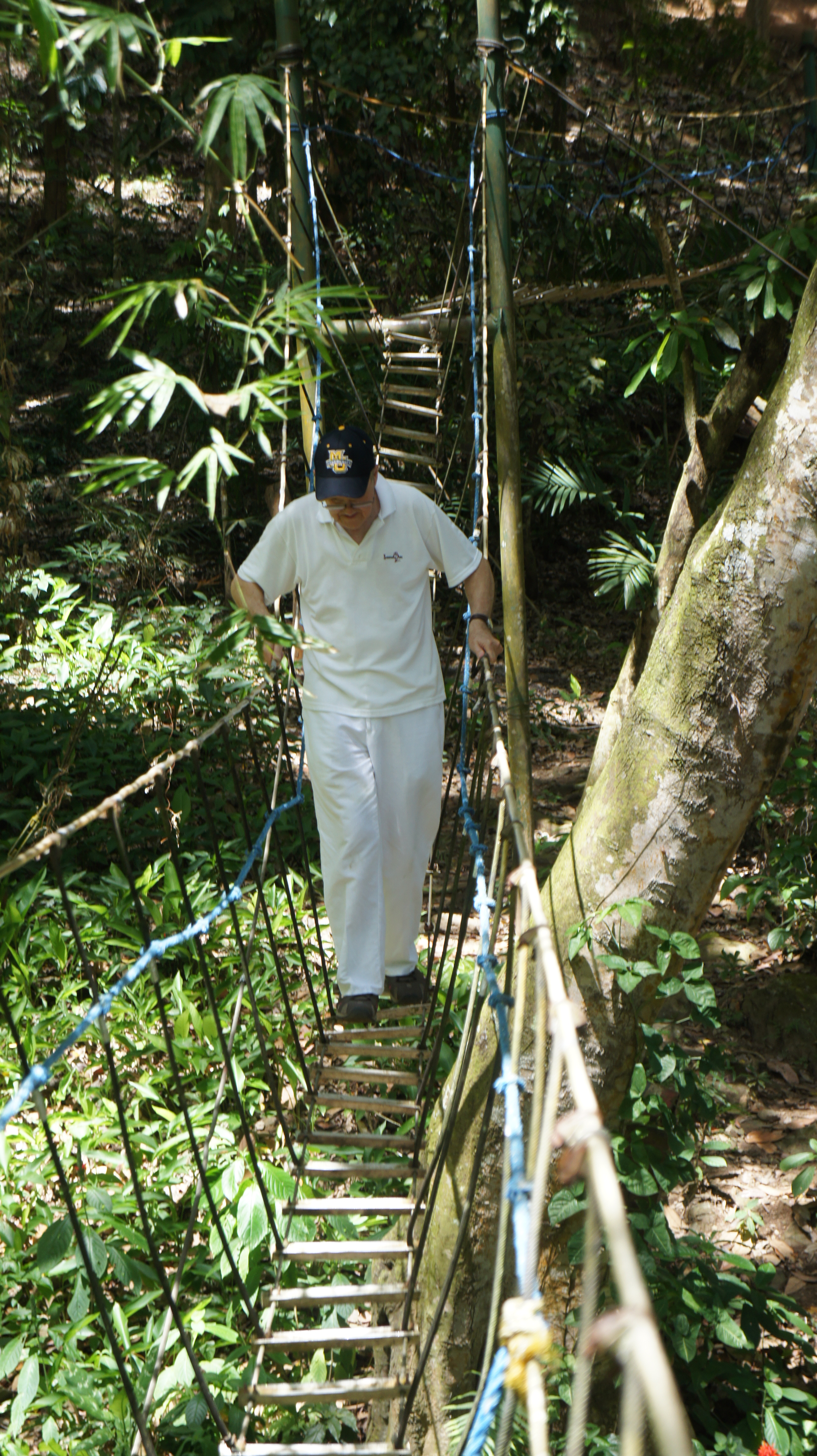
Fr. Johnny on the “Monkey Bridge.”

We went on a field trip Friday morning to a beautiful park in the mountains which overlooks the city of Cagayan de Oro and the ocean. One of the things to do is to cross “The Monkey Bridge.” It was quite an adventure. You walk on a swinging bridge by holding onto two cables with each hand and stepping on metal slates 9 inches by 1 1/2 inches with a distance of 1 foot to 1 1/2 foot between them. I had to climb a tree trunk to get to the first landing and from my perspective the walk looked rather short. However, when I got to the end of the first stage, I saw I had a long way to go. Thank God, I didn’t fall as I finally came to the end, soaking in sweat. That evening the professed community went out for pizza, which is always a special treat.

The week flew by and tomorrow we will begin the fifth week of the six-week English course.

Finally, I want to correct something that I wrote in my last blog, I told of having lunch with Pat Houterman. I made a mistake regarding his work and position. Please note that Pat is the Academic Director of High Scope, a school consisting of an early childhood program, elementary school, middle school and high school. There are over 1,000 students with 10 other High Scope units across Indonesia.

Fr. Johnny with students at the park near Cagayan de Oro

Back in the Philippines

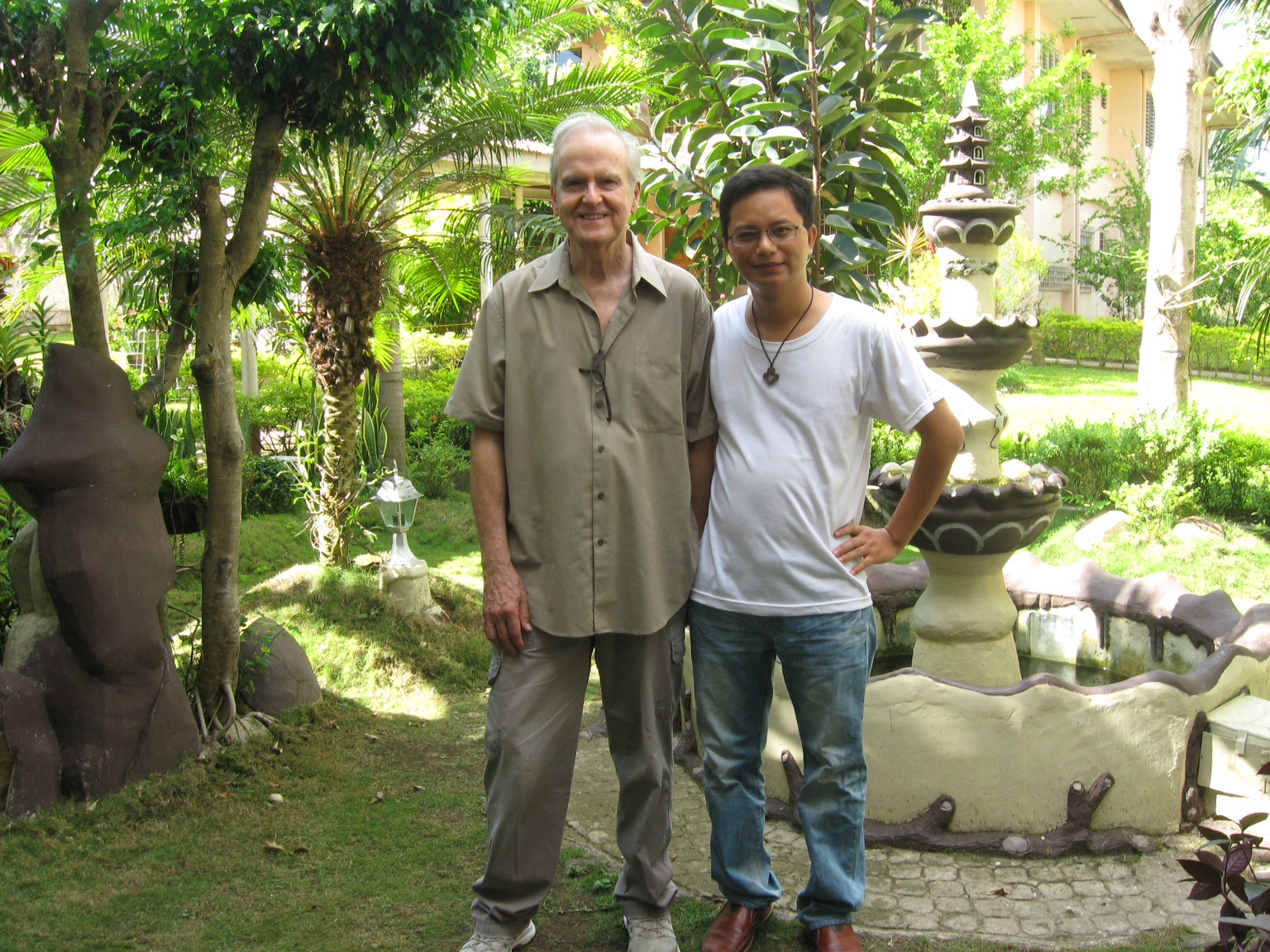
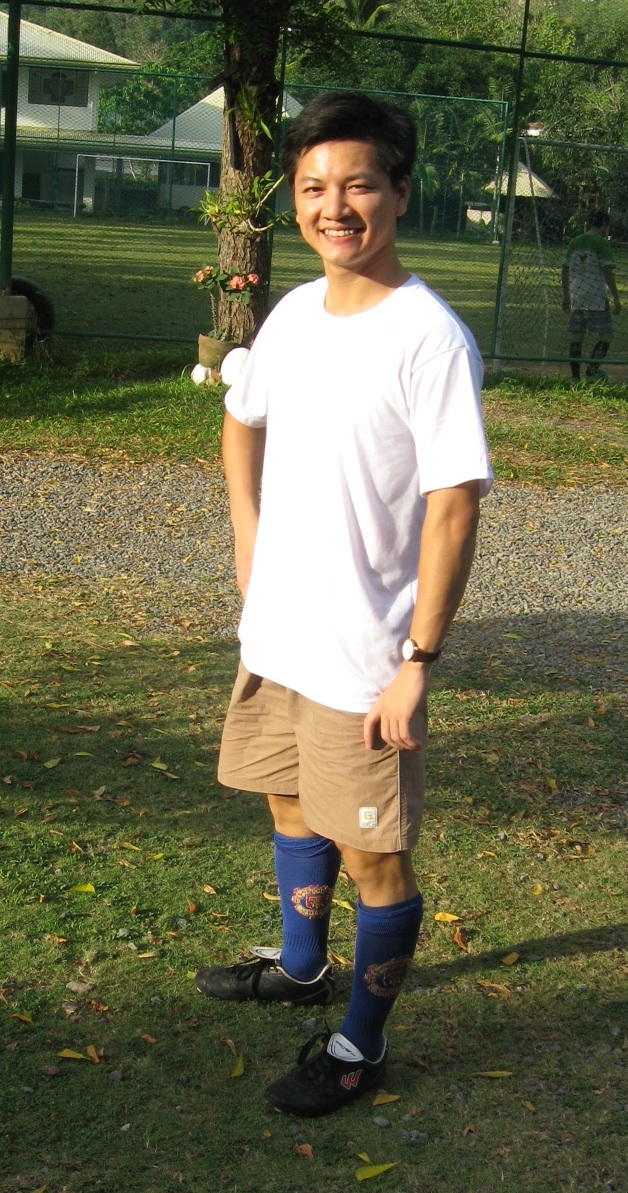
Fr. Johnny with Van, one of his students.

As noted with his last post, Fr. Johnny Klingler, who has been in the Philippines for the past several weeks teaching English, represented the U.S. Province at the funeral for Fr. Tom Fix in Indonesia. Fr. Johnny writes the following after having returned to the Philippines from Indonesia.

May 6, 2012:  I left Palembang, after some six hours of sleep, in the early morning hours of Tuesday, April 24, the day after the funeral for Fr. Tom Fix. I arrived in Jakarta at St. Joseph Home and spent a quiet day with Fr. Aloysius, the coordinator of St. Anthony’s Schools in Jakarta. Fr. Aloysius met me at the airport when I arrived early in the morning on Monday. He took very good care of me, arranging transportation and a place to stay while I was in Palembang and Jakarta. He and the cook, Tonto, fed me well. I spent the day taking it easy and catching up on my email.

Wednesday I visited with Pat Houterman, a former member of our community who continues to live in Indonesia. We went to lunch and caught up on our lives over the years. Pat is the co-director of  a private English language school in Jakarta.  He and his wife Jane are both doing very well professionally. It was a joy to see him after so many years and to see him healthy and happy. I left  Jakarta on a 12:30 a.m. flight to Manila. I have never taken such an early morning flight. I was surprised that the plane was full. I would have the second day of four days of travel with no sleep.

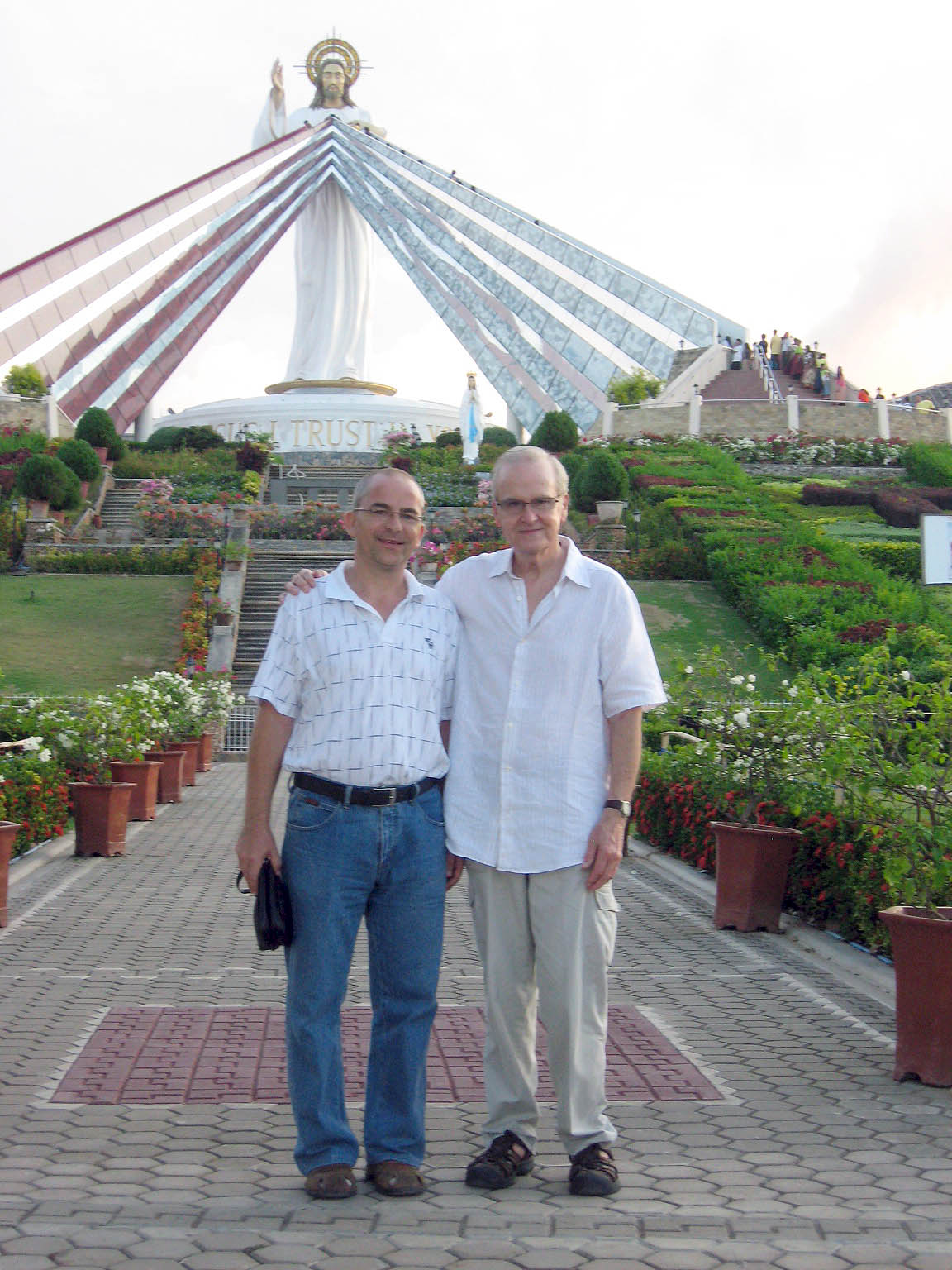
Fr. Johnny visited the Divine Mercy Shrine with Fr. Andrew Sudol.

I missed four days of the third week of school so I felt I had to teach on Friday. I made it through the day and on Saturday I was able to go with Fr. Andrew to see the Shrine of Divine Mercy in El Salvador. As you can see from the photo it is “unique.” It was late in the day when we arrived so there were few pilgrims. Fr. Andrew, two of his priest friends and me went out for a fish dinner in the evening. A small dish with two small peppers was given to each of us. I was told, or so I thought, to put lemon juice that was on the table on the peppers and eat them. I took one of the peppers and began to chew it but no sooner did I do this that my entire mouth went on fire. I could hardly talk. I gulped down beer to put the fire out but to no avail. The pain lasted about 10 minutes. What I was supposed to do was to use the sauce with the peppers as a dip for the fish I ordered.

The third week of school was spent building vocabulary and pronunciation. During one morning’s class we watched the movie “Romero.” It was very useful as the film was English and there were sub-titles also in English. We had a discussion together about the movie in the afternoon class. That evening the professed community went to our SCJ parish of The Immaculate Conception for a going-away party for Dn. Showe Reddy. He is going to our parish in Kumalarang. It was a very nice gathering. There are three SCJ priests who minister at Immaculate Conception. Fr. Jan Krzeysciak, who has been here in the formation community, will join the parish team. The meal that the community provided was very good. When I saw that pasta was one of the main dishes, I was very happy.

Tuesday, May 1st, was Labor Day, a civil holiday. The community spent the day at Marvellia Beach in Opol, which is only a 40-minute car ride from the city. It was a very hot day so one had to be very careful not to sunburn. The following evening we had a farewell gathering for Fr. Szymon Bendowski, who was leaving here to minister in our parish of St. Isidor in Dumalinao.

The students worked hard this past week. I can see the progress they are making. As I mentioned before, they are very eager to learn. They have to pass an English exam in order to begin the study of philosophy at St. Xavier University. This is a big motivation in itself for them to learn.

Yesterday, Saturday, May 5, I went with Fr. Andrew, Jona (secretary to Fr. Francis), and a friend of the community to Forest Garden Adventure Park in Dahilayan, a one-and-a-half drive to the mountains. The air was so “fresh,” as the people describe it, and the temperature easily can be10-20 degrees cooler. It was a big change for me from the city. I can understand why it would be popular for families to picnic and to enjoy the many adventure rides.

This morning I celebrated the Sunday liturgy for the students as all the priests were helping out in parishes. I had a two-hour nap in the afternoon, which is most unusual for me. Perhaps the reason was that air-conditioning was installed in my bedroom and office a few days ago.

Tomorrow, Fr. Andrew will go to our seminary in Aluva, India, to give a ten-day retreat for those taking final vows.

-Fr. Johnny Klingler, SCJ

The death of a missionary

Fr. Johnny Klingler, who has been in the Philippines for the past several weeks teaching English, represented the U.S. Province at the funeral for Fr. Tom Fix in Indonesia. An American SCJ, Fr. Tom spent all but three of his 53 years of ordination as a member of the Indonesian Province.

 Fr. Johnny writes the following from Jakarta, Indonesia, where he was preparing for his return to the Philippines:


Fr. Tom Fix

On Saturday night, April 21, we received the call that Fr. Tom was in critical condition. Sunday morning, around 9:00, another call telling us he died. Soon after, Fr. Francis Pupkowski, superior of the region, called Fr. Vincent Sri Herimanto, superior in Manila, to arrange a ticket for me. I left Cagayan de Oro at 11:30 a.m. for Manila and then to Jakarta. I arrived at 2:30 a.m. Fr. Aloysius Suyoto met me at the airport. He told me that we had to fly to Palembang at 4:00 a.m. I caught about 45 minutes of sleep.

When we arrived at the airport there were a significant number of people waiting to go Palembang for the funeral. I believe most were from the SCJ parish of St. Steven. What touched my heart were the number of people who came to the airport just to say goodbye with wishes for a good flight. It was their way of going with us. Fr. Hadrianus Wardjito, a former general councilor, was there. He brought water and food for our refreshment. The plane ride took only an hour.

We arrived at the SCJ community and the seminary of St. Paul. The Mass of the Resurrection would take place in the chapel. There were many people, many SCJs waiting for the body of Fr. Tom to arrive for the visitation. The community prepared food and drink for all.

His body lay in a white coffin and looked so peaceful. The people came and the visitation continued up to the Mass, which would take place at 3:00 p.m. I went to the community of the Sisters of Charity where a room was prepared for me. I got about an hour of sleep before we returned for the Mass. The chapel holds approximately 500. It was overflowing with extra chairs in the side and back and many chairs placed outside at the open sides of the chapel.

Bishop Aloysus Sudarso presided. At the altar with him were the provincial of the Indonesia Province, Fr. Andreas Madya Sriyanto, former provincial Fr. Sapta Dwi Handaka, Fr. Nico Steekelenburg, one of the few Dutch priests still in Indonesia, and myself. It appeared to me that the whole province of SCJs was there as there were so many. There were also many religious sisters and many lay people. The presence of so many people was overwhelming and spoke so much of Fr. Tom. The choir of young seminarians was so beautiful. Hearing them was like hearing music from heaven.

Bishop Sudarso spoke about Fr. Tom, about when he first arrived, his various ministries and of his beautiful heart. Then the provincial spoke of Fr. Tom and the gifts he brought to his SCJ community and all the people he served. I was asked to speak and this is what I said as I recall it now:

“I am very happy to be here with all of you who knew and loved Fr. Tom. I thank the Lord that I was able to come. It is a privilege for me to be here with you, Bishop Al, and you my SCJ brothers.

“It is an honor for me to represent my SCJ brothers in the United States Province and the family of Fr. Tom.

“When I think of Fr. Tom, many words come to my mind: he was a loving person, compassionate, spoke only about the good of persons, did not judge others,  loved to laugh, and smiled so much. He was happy man.

“He was man of prayer, who loved his Lord so much. He was a holy man, and he loved being an SCJ with you, his brothers. He loved Indonesia and its people.

“We have lost a Prince of a Man but we have gained another Saint!”

Tom was buried in a crypt in the convent of the Sisters of Charity.

The sisters prepared a meal for all. When supper was over, I and Fr. Donatus Kusmartono, visited with the bishop at his home.

-Fr Johnny Klingler, SCJ 

Second week, and death of a confrere

As we noted previously, Fr. Johnny Klingler, SCJ, is in the Philippines teaching English April through May. He writes from the formation community in Cagayan de Oro.

It is Sunday morning and I will soon prepare to travel to Palembang, Indonesia, for the funeral of Fr. Tom Fix, SCJ. He died last night after a battle with cancer. Now at peace, he surely will be missed by the people he served for so many years. I was able to visit him in Indonesia on two occasions through the years.

Fr. Johnny with one of his students.

The  second week of school went well and I continue to feel very positive about what I am doing. Besides being in the classroom the students call on me to help them in their punctuation and writing assignments.They are eager to learn and all need individual  help. I have already used film and popular songs  to help them. I recall my days at the seminary in Kilroe teaching writing and multimedia.

Aside from school I went out one evening to an Italian restaurant and enjoyed some pizza and wine. It was a pleasant respite from rice, fish, and water. Saying that though I should add that the fish at our meals is good and a we are served a large variety as we live close to the ocean. We also at times enjoy a pasta and tuna dish which is delicious.

Yesterday morning I went with one of the postulants to see something of the city. We visited the cathedral and Xavier University where the SCJ  students study philosophy. It is very large and quite impressive. The city was crowded with Saturday shoppers and, of course, traffic and more traffic. I am happy that I do not  have to drive. However, driving here would be easier than Rome. I hope in the coming weeks to visit some of our SCJ parishes and our novitiate, which is about six hours away by car. This past Tuesday there was a final profession at the novitiate.

The intense hot summer continues. I sweat most of the time even after a nice cold shower!

–Fr. Johnny Klingler, SCJ

“How old are you?”

Two of Fr. Johnny Klingler's students working in the formation house garden.

As we noted previously, Fr. Johnny Klingler, SCJ, is in the Philippines teaching English April through May. What follows is his first blog post from the formation community in Cagayan de Oro.

On my first day at our seminary and community house in Cagayan de Oro, I was awoken at 4:30 a.m. by a symphony of cock-a-doodle-doos, the barking of dogs, the songs of birds and the tape-recorded call to prayer of our Muslin neighbors.

The formation house library is Fr. Johnny's air-conditioned refuge. The librarian is pictured here.

It was Wednesday morning and I went around introducing myself to the librarian, the secretary, two cooks and the lady who does the washing. They are all so lovely. I took my writing pad with me in order to write down their names, which helps me to remember. The class of Vietnamese aspirants that I will teach are all so friendly. They range in age from 21 to 29. They all look much younger. The first question that they ask me is, “How old are you”? It appears it is the way to get the conversation going. I start out with 42 years and work myself up to 76! They ask many questions and want so much to learn English. I got to know them better the following day when we went on an outing to the beach. It was a beautiful place. The water was warm, clean and had a good surf. I got a slight sunburn despite the protection. Our picnic lunch consisted of rice, chicken, shrimp chips, peanuts, bananas and watermelon. The watermelon is the best I ever tasted.

Fr. Johnny said that the students and SCJs in the formation community are all "mad about soccer."

Lunch and dinner usually consists of rice, chicken, fish, tomatoes, cucumbers and onions, and for dessert, bananas and mangoes. There is always rice (white and sticky), even at times for breakfast. I make my own breakfast of toast covered with peanut butter. I love the strong instant coffee and I drink plenty of water. I have to as I am usually sweating. It is a little cooler than Manila in the early morning and late evening. The days are so hot and humid. My room is usually about 83 degrees or more and I am happy to have a fan. There is no air conditioning. However, I discovered that the small library is air conditioned so I go there as much as I can. One thing is sure, I will not gain a pound and more than likely lose a few. There is beer and coke in the recreation room and even though I don’t care for beer, I find it refreshing when the temperature is so high.

Friday, the teacher who set up the six-week English course came over to see me and we went over the program. She has a doctorate in communications and has taught at the formation house for a number of years. The classes begin on Monday.

This Sunday morning, I woke up at 4:30 a.m. and began my day. The liturgies are prayerful and simple; the singing of the students, so beautiful. This afternoon I will take a siesta. Perhaps we will watch a movie this evening. I brought some DVDs for the community,

Fr. Wayne Jenkins, who has finished his archival work for the new district, will leave this afternoon for Indonesia to visit Fr. Tom Fix and then return to the States on Wednesday.

-Fr. Johnny Klingler, SCJ

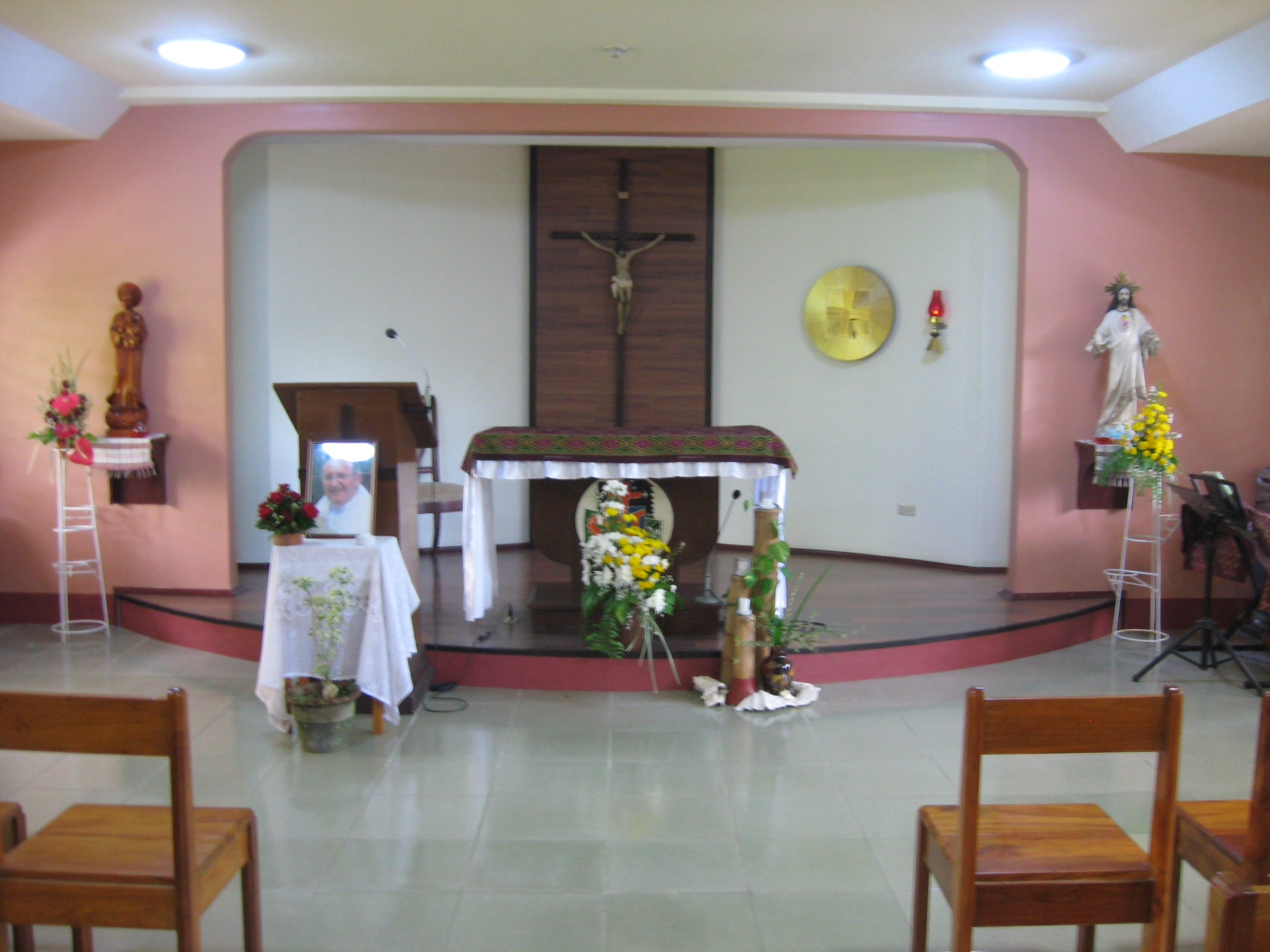
The formation house chapel

Holy Week in the Philippines

Fr. Johnny writes: "This is painting done by Joey Velasco, of slum children. Notice on your right the child sitting on a garbage can and the lad to the side. Joe Velasco is a Filipino artist who lives close to our house.

Fr. Johnny Klingler writes from the Philippines. He will be there for the next two months teaching English:

“Just a little news… I arrived in Manila on Wednesday at 11:30 p.m. Fr. Vincent Sri Herinati, superior of the community, was there to welcome me. It was a very long journey. I finally got to bed at 2:00 a.m., Holy Thursday. I left Chicago on Tuesday at 3:30 p.m! I could only sleep about three hours due to jet lag and it being  so hot . I was happy to have a fan in my room as the temp was 83 degrees.

“I went  to the ‘Church of the Revolution’ for the Holy Thursday liturgy. It is so called because after the peaceful change of government the new president, Corazon Aquino, had it built in Thanksgiving. I went with Fr. Al  Back, Formation Director  and Fra. Jonathan Schneriders from Brazil who is studying  the native language, Tagalog.  It was a beautiful Mass, lovely singing and procession. We stood for 2 1/2 hours not knowing that you had to be there at least 45 minutes before it began to get a seat. I was grateful that the church was air conditioned. The temperature during the day is in the 90s and humid  I am usually sweating here!

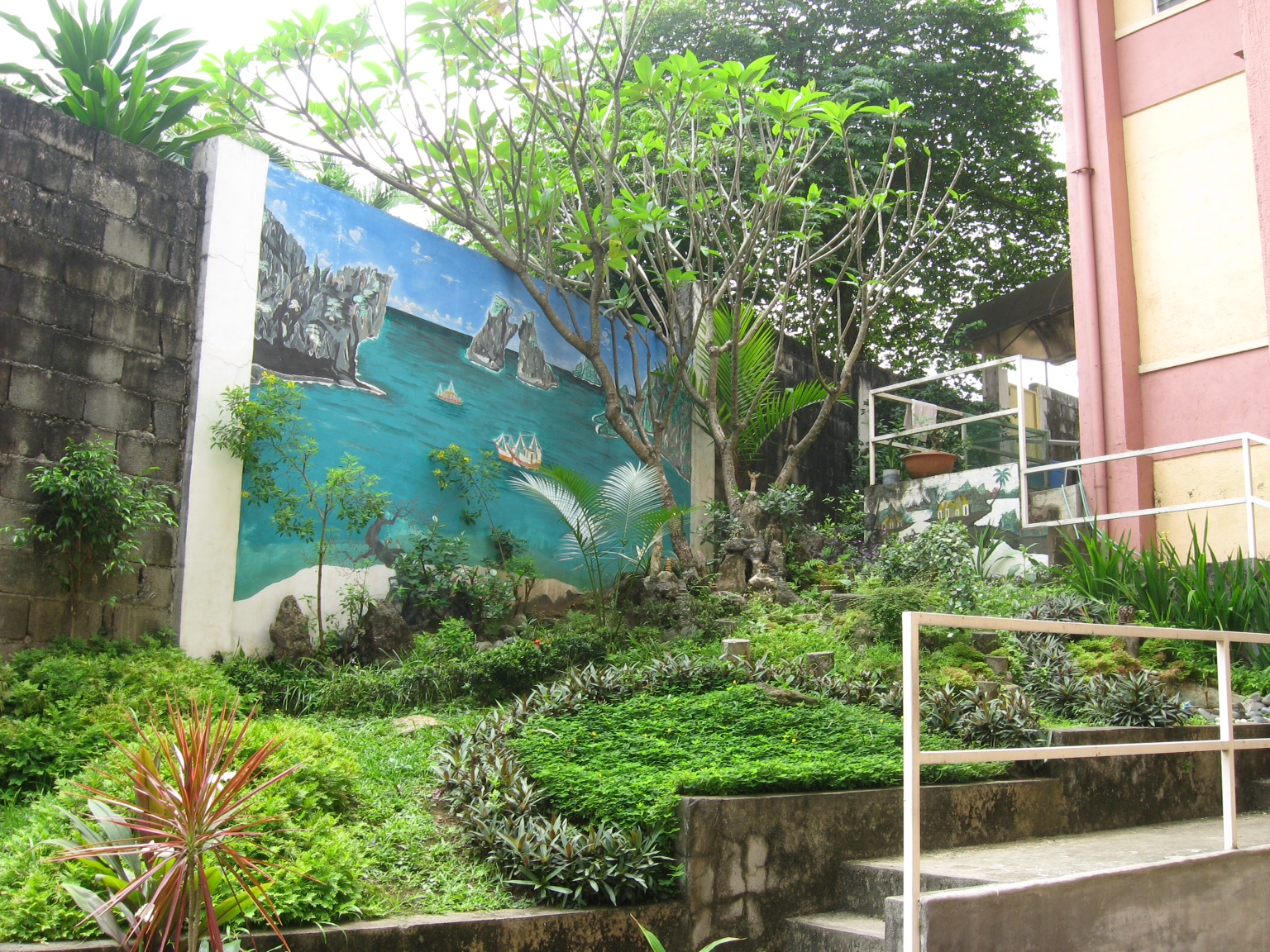
"This garden on our grounds of the community house was done by an SCJ from Vietnam while he was a student," writes Fr. Johnny. "His name is Br. Thai D Tran and will soon be ordained a priest."

“Good Friday services took place at one of our  SCJ parishes which is located close to the large garbage dump in a very poor area. Many of the people scratch a living from it by looking for recycle material that  they can sell. I read that 45% of the people of the Philippines live on $2.00 a day. I went with Fr. Vincent Sri, who is  pastor of the parish, and a visiting Holy Cross brother. I sat on a bench in the very small church. It was simply celebrated with a children’s choir. The entire service was said and sung in Tagalog. The people were so friendly and welcomed you with a blessing: taking your hand and putting it on their forehead with a bow. I in turn placed my hand of their head or shoulder.

“Fr. Heiner Wilmer, the provincial of the German Province, arrived on Holy Saturday afternoon from Cagayan de Oro after visiting one of his priests. We are friends from my days in Rome. He had to get up at 3:00 a.m. Easter morning to catch a plane for Vietnam where he will give a retreat to our community. We celebrated Easter Mass with Fr. Al  and then went out pizza.

“Today, Easter Sunday morning, most of the community is out for Easter Sunday Mass. I look forward to our Easter meal. I am happy that I can enjoy the food. I especially like their coffee and fruit, and thank God I like rice!

“I will leave for Cagayan de Oro on the island of Mindanao on Tuesday. It is a 1 1/2 hour flight. The summer school will begin on Monday, April 16th.”

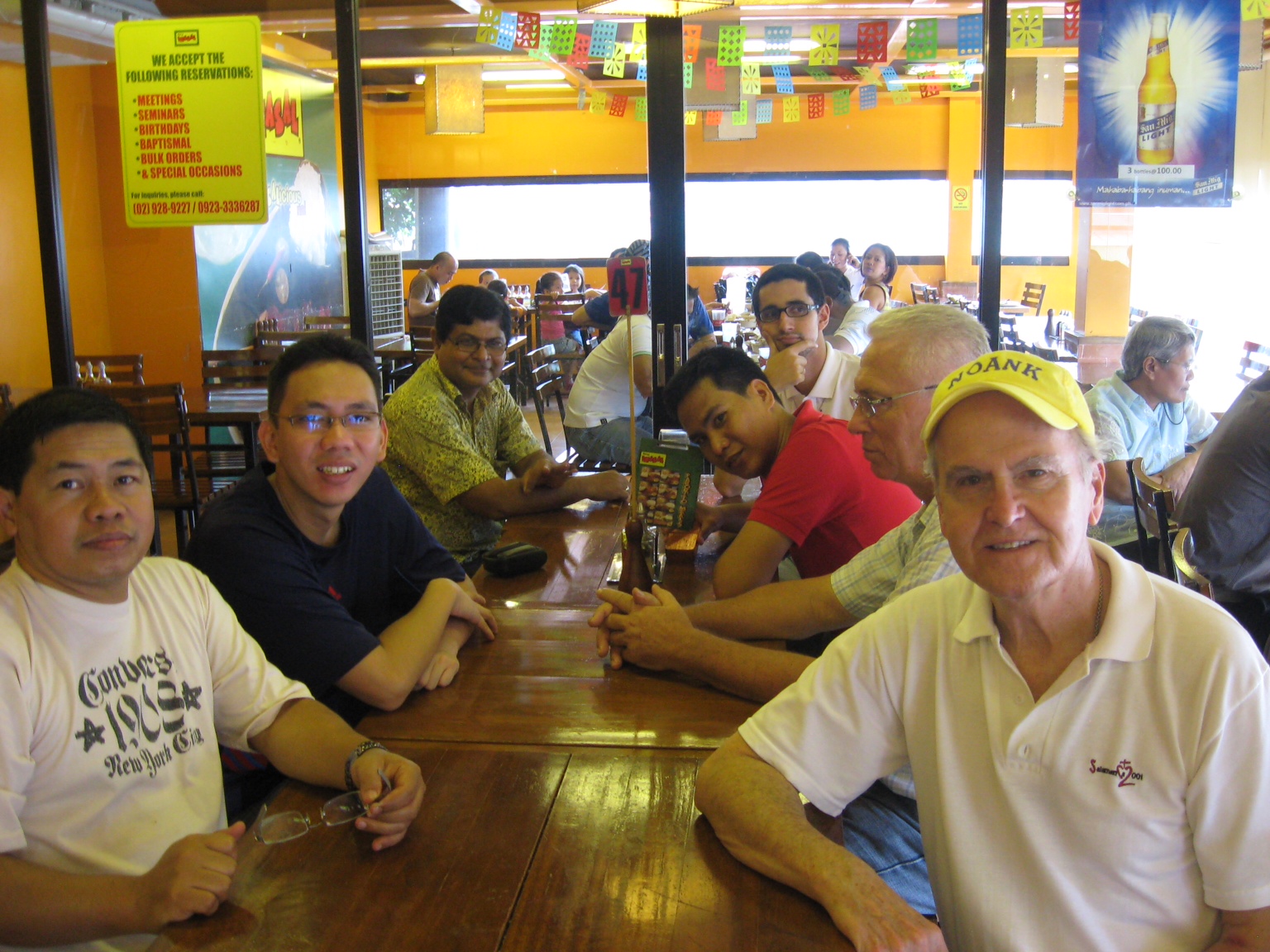
Fr. Johnny (front with yellow cap) with students and SCJs at a Philippine restaurant.

God’s Presence in the Prairie

Originally from Indonesia, Fr. Vincent Suparman, SCJ, volunteered to be a missionary and was soon assigned to Papua New Guinea. In August, he began his new assignment: serving in rural South Dakota with the Lower Brule Pastoral Team.  When people think “mission” they often think of lands far beyond the shores of the United States.  Yet there are many home missions throughout North America.  Much of the ministry of the Lower Brule Pastoral Team is on the Lower Brule and Crow Creek Indian reservations.  

This is Fr. Vincent’s second blog post:

Fr. Vincent Suparman during the province jubilee celebration in July; Fr. Vincent celebrated his 25th anniversary of vows.

On one Sunday before noon I reached St. Catherine Church at Big Bend for a mass. I got there about 40 minutes before mass began. Shortly after parking my car I went into the reconciliation room hoping that there would be a few parishioners coming for confession. Nobody showed up. As I gave my Sunday homily, I saw four people sitting far back on the pews. I felt like I was in a strange place facing a vast meadow. Then I recalled what my spiritual director said, “We don’t pray to make God present to us. God is always present everywhere. No matter how many people there are in the prairie here in Big Bend and its surroundings, the Holy Spirit is always there. God does not depend on how many people there are to be present among us. We pray to make ourselves present to God.” I continued my own reflection after communion.

In my opinion, also true for us SCJs. Sadly, we too often are not present to appreciate the beauty of nature, grace, and the love that overflows within the ordinary moment of our lives. Bounty is there, but sometimes we do not see it. We easily find excuses: fatigue, haste, and so on. These excuses prevent us from reflecting on our spiritual lives more deeply to appreciate what the moments of our ministry, spirituality, and lives hold. Our mission goal is not to try to make God present, but rather to make ourselves and the people present to God. Nonetheless, in order to be prophets of love or God’s instruments, we ought to equip ourselves with knowledge, skills, and wisdom by which we proclaim the Good News.

The commissioning of the disciples (Matt 28:19-20) –– that is interpreted as mission task –– is not meant to be lived in black and white, nor is it meant simply to be going off to work, coming home, having supper, preparing for the next day, and going to bed. We have much to share and say to help our community and the people grow in faith, hope, and love in this challenging world. No matter how busy we are, we must be careful not to let ourselves get burnt out. We can think of the days after having a retreat, pilgrimage, or workshop. We regain our health and energy after having been out of our normal routines. On the way home we think that nothing is as sweet as returning to the ordinary, our work, and being in the everyday life.

Life is given freely. All our needs are provided for. Water, grass, and land in which we raise our cattle are signs of God’s presence. There are more signs of God’s presence than we can think of. Plants and animals are there for our nourishment. We have flowers for beauty, trees to shade and shelter us. Do we possess them? We possess none of them. It is ours to use as we are passing through and walking by as we continue to walk the path to manifest God’s love and mercy to the people we serve.

Fr. Vincent Suparman, SCJ

Brought by the hand of God to the prairie

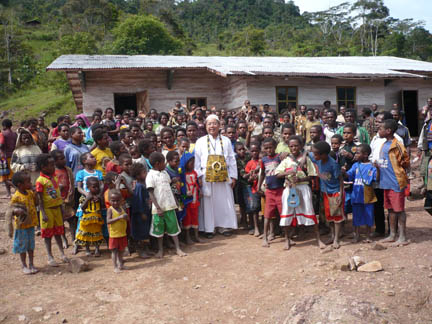
Fr. Vincent at his prior missionary assignment in Papua New Guinea

Originally from Indonesia, Fr. Vincent Suparman, SCJ, volunteered to be a missionary and was soon assigned to Papua New Guinea. In August, he began his new assignment: serving in rural South Dakota with the Lower Brule Pastoral Team.  When people think “mission” they often think of lands far beyond the shores of the United States.  Yet there are many home missions throughout North America.  Much of the ministry of the Lower Brule Pastoral Team is on the Lower Brule and Crow Creek Indian reservations.  

Fr. Vincent wrote the following shortly after beginning his new assignment:

It is impossible to see all of South Dakota in a few days. South Dakota is a very large state, and it has many natural wonders. There  is much to see and to do. Most visitors only choose three or four places to visit, namely Mount Rushmore, the Badlands, the Black Hills, and the Crazy Horse monument. One must choose to see South Dakota, it isn’t on the way to many places.

It takes approximately 12 hours to get to Lower Brule by car from Sacred Heart Monastery in Hales Corners, Wis. Or, you can fly to the state’s largest city, Sioux Falls, from which you can rent a car and drive the 170 miles to Lower Brule. After getting off I-90 at Exit 248 to Lower Brule, if it is a clear day, you will see the highest hill called Medicine Butte situated just eight miles from Lower Brule.

When I drive in South Dakota, I immerse myself in the vast, sweeping prairies of The Great Places and the Great Faces. I am warmly welcomed by a place of endless educational opportunities and unforgettable experiences. Anytime I drive to visit one of our six parishes on the west and east banks of the Missouri I can feel prairie winds through the valley breaks and broad river terrace of the Native American reservations. The great Missouri runs through the vast grasslands which extend west over east to the horizon. In my opinion, the Brule Reservation is rich in natural life. Antelope, mule, deer, and buffalo roam freely. There are also prairie dogs scattered across the uplands and valleys. Pheasants, wild turkeys, and many kinds of birds are abundant.

What can I say about pastoral ministry in Lower Brule? As with any place, pastoral ministries are done with a local flavor:  the sacrament of reconciliation, the Eucharist, the liturgy of the Word, etc. Also as in many places, fewer people go to Mass and confession these days. This is an unfortunate development because private confession is one of the pillars of the spiritual life. It is said that God is not tied to one vehicle as a highway for the forgiveness of sins. However, the sacrament of confession is still important for adult Christians as they grow spiritually.

Sometimes I listen to the stories of villagers after Mass. At times they have struggled to integrate their Native American culture with their Catholic faith.  In many instances, both traditions have been passed down by their families.

When the Native Americans come to powwow, they talk about Native American culture which is expressed in many symbols, songs, and dances. They hold it firmly and closely as a jewel.

Whenever I reflect on my own inner journey I realize what a gift it is to be a Dehonian missionary, to learn first-hand about other people by being with them. In reflecting on my pastoral ministry in Lower Brule, many questions fill my mind because I am a new person in this area.  I have much to learn.

If I truly live in the mission spirit and in the spirit of Sacred Heart, I will let myself be used by God to bring hope, love, and mercy to the people with whom I am ministering.