A year at St. Joe’s Indian School

Br. Clay Diaz, SCJ

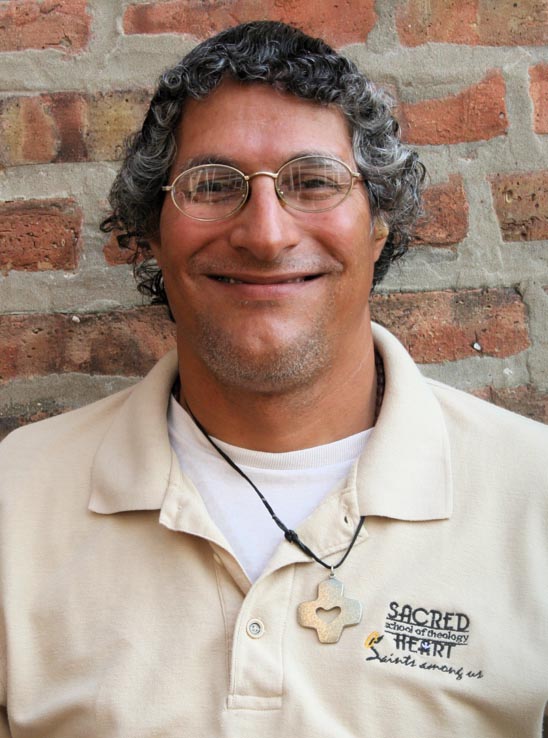
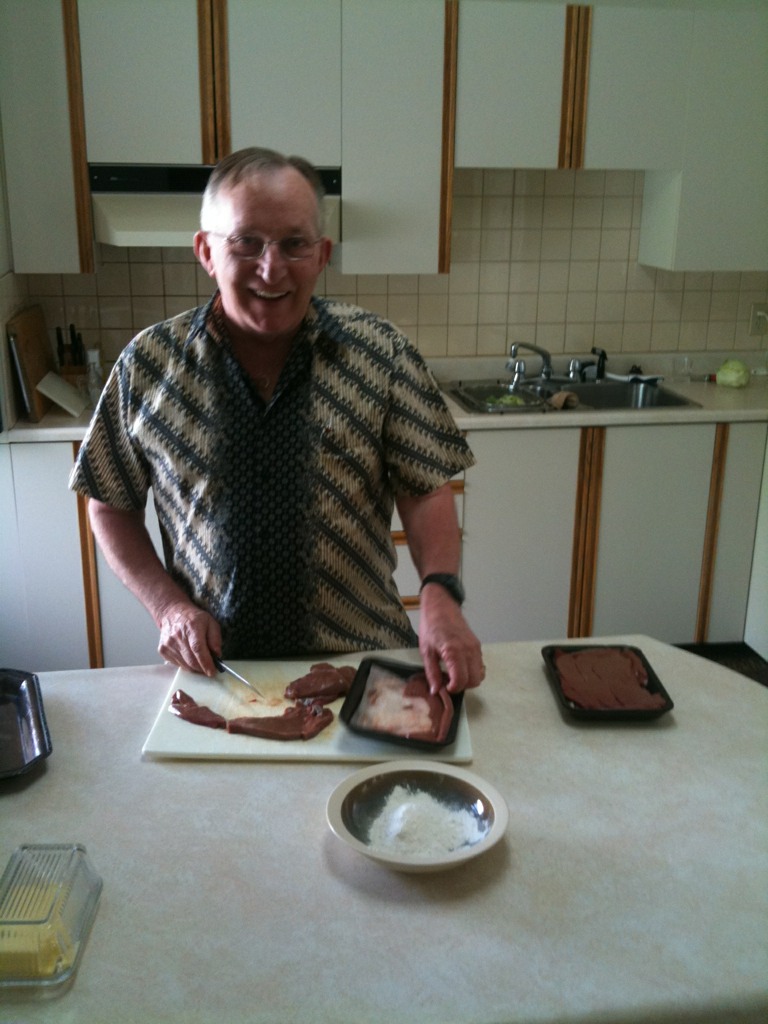
My name is Br. Clay P. Diaz Vlaida, SCJ; I am currently working at St. Joseph Indian School in Chamberlain, South Dakota. I have been at St. Joe’s since December, 2009, and continue through mid December. This is a part of my pastoral ministry year before starting my studies at Chicago Theological Union in Chicago.

I was working with the high school level students and with the house parents in a support role. My role with the high school students was to tutor them in English, science, history and other courses –– except for math, which is not my specialty. With the house parents I helped them with transportation and in other areas as they arose.  I also observed and helped with the Native American class and the computer class at the elementary school.

I have truly enjoyed working with the high school students. Starting in August I will move to the elementary and middle schools, once again tutoring tutoring students.

I enjoy working at St. Joe’s because of the great people both at the homes and in the different academic departments. The atmosphere on the campus is such a unique experience. I have learned a lot about the Native American culture and continue to learn because each day is a new learning experience. I have participated in different events throughout the campus, such as bowling and a 7th grade cultural trip.

I’d be happy to share my experience with others who are interested in learning about the Native American culture.  Of course, my experience is that of someone who is new to the culture and to South Dakota, having been in this ministry for only six months.

God Bless!

Br. Clay Diaz, SCJ

EDITOR’S NOTE:  Br. Clay will be renewing his vows on July 23 (8 a.m.)  at St. James Church in Chamberlain, S.D.  Fr. Bill Pitcavage, newly elected provincial councilor and pastor of St. James, will receive his renewal. “I am looking forward to renewing my vows with our community,” said Br. Clay.  “For me it is a true blessing being a member of the Priests of the Sacred Heart.”

People really do say “eh?” in Canada; awesome!

The following is written by Novice Joseph Vu who, along with Novice Fernando Orozco and Novice Master Fr. John Czyzynski, are visiting SCJ ministries in the Canadian Region.

Look out Canada, here comes the good ‘ole US of A!

Still cool from winning the Stanley Cup, a handful of Chicagoans head to the land that gave birth to the sport of Hockey!

Us heading to Canada…and wouldn’t you know it…EVERYONE ELSE is too!

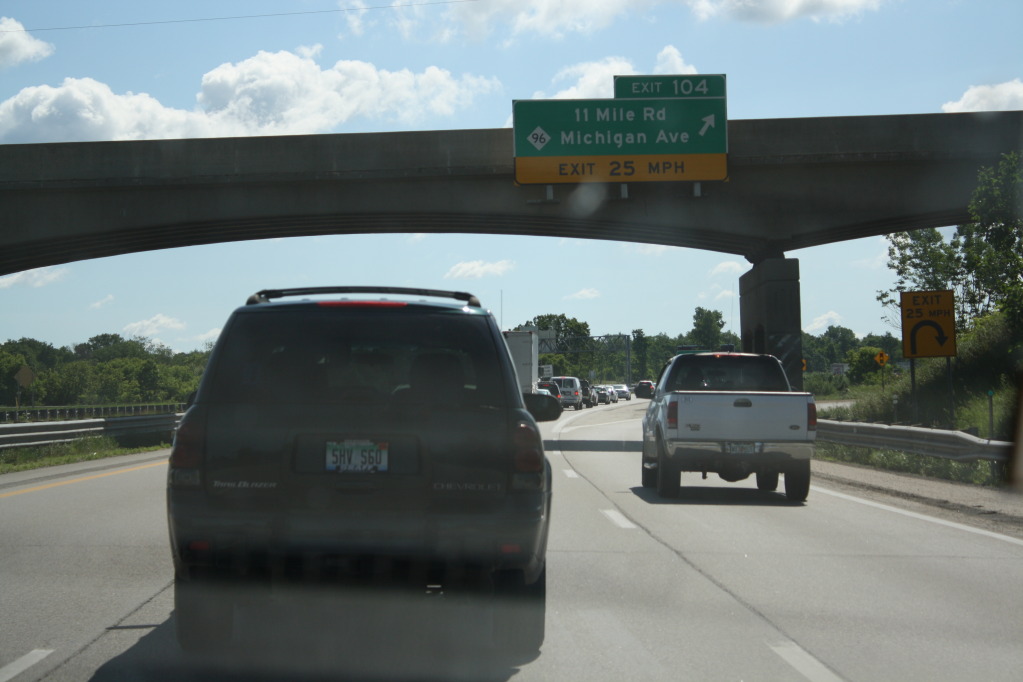
The SCJ novices have skidded their way to the doorsteps of the SCJs of the Canadian province. We left the house at 7:00 AM (that’s right, AM!!!) and made our way to the chilling north. Unfortunately, “chilly” doesn’t fit the bill. I’m not much of a meteorologist, but I think I am quite accurate in saying that the temperature in the city of Toronto, Ontario, is “egg-cook-able-sidewalks” HOT.

Actually, in all seriousness, Canada is not as different as one would imagine. Well, except that the official national languages are English AND French… and that means that my Spanish dictionary is totally useless! (I threw it out the window at the Ambassador Bridge)

The bridge!

A cool difference about Canada is that you can drive really fast on the freeways, where the limit is 100… kilometers, that is.  Ha, ha!

Anyways… the novitiate has landed unto Canadian soil, and of course we paid homage to the Queen as we made our way on the Q.E.W. (there was an old lady with really regal clothing standing at the split directing us to the Q.E.W., but I didn’t catch her picture in time). Although we were in a ‘foreign’ country, I still felt a little bit at home. The “Queen” was a little backed up today — a little slice of Chicago traffic just for little ‘ole me.

The SCJ house in Toronto

After long hours of being in the car (I slept most of it, so it felt really quick), we finally made our way to the SCJ community house in Toronto. The house is on a street that is called Hyde Park, which is amazingly the name of the neighborhood where the SCJ Chicago Formation house is located. (What happened to originality!?)

More to come soon!

JJ, aka: Joseph Vu

“Seize for God the Energies of Love”

I returned this weekend from the Canadian Religious Conference Assembly held in Montreal from May 27-31, 2010. This year’s theme: “Seize for God the Energies of Love: choose to live the vowed life.” While here in the States we have separate conferences for men and women religious, Canada, like many other countries, has one conference representing both men and women religious. And as in most countries the women outnumber the men by a considerable number. Thus the vast majority of attendees to this year’s conference were women religious. It would be interesting to know what the ratio of women to men is but from my observations it would be similar to when CMSM and LCWR hold a joint assembly as they did two years ago.

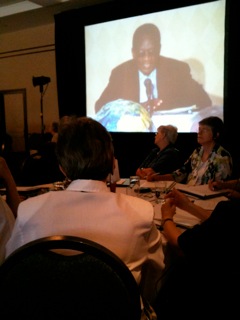
As president of CMSM I was a guest of the conference along with my counterpart from LCWR and CLAR. It was a good opportunity for each of us to rub shoulders with religious in Canada who face many of the same issues we do in the States. One of the major differences that is readily apparent is the bilingual nature of the conference and Canadian life. Everything was conducted in two languages with simultaneous translation provided. French-speaking religious far outnumber their English speaking counterparts. This should not come as as surprise with the historical Catholic presence in Quebec.

There is a real effort made to give due time to each language. A good example of that is the two keynote speakers. The first, Fr. Sidbe Sempore, a Dominican from Africa, spoke in French. While Sister Elaine Prevallet, a Sister of Loretto from Kentucky, spoke in English. Fr. Sempore’s theme was: In a Multidimensional Africa, Giving One’s Life out of Love. My years of service on the general council plus my own trips to South Africa and on one occasion to Mozambique helped me understand the reality Fr. Sempore was trying to describe. So often we think of Africa and in our mind’s eye have equatorial Africa in view. Africa is not a country but a continent filled with many tribes, cultures and languages. It is an area of rapid growth for the Church while at the same time a place where Islam and Christianity often intersect.

Religious life, though born in northern Africa centuries ago, has been shaped by Europe. Now that it has returned to Africa finding the balance between Western understanding and African realities is a challenge and at the same time an opportunity. His talk is available on the CRC’s website.

Sister Prevallet’s presentation was entitled: Religious Vows: Energies of Life for Life. As the introduction to her talk that is also found on the CRC’s website states: On this second day of the assembly, Sister Elaine Prevallet, SL addressed the vows of consecrated life in a totally new perspective. “The whole earth needs to be included in our understanding of our vows,” she said. “Life is one energy and it expresses itself in us and through us. With all of creation we then form a community of life.”  In this way, there are three types of energy at the root of the vows. How, therefore, do we keep these energies free to flow into a life of discipleship?

In addition to these two presentations, one of the real values of attending such a conference is the opportunity to meet fellow religious and the opportunity it provides to exchange ideas. We have much in common but we also need to recognize that the Canadian reality is a story all its own. Their history and experiences are unique to Canadian history and circumstances.

Fr. Tom Cassidy, SCJ

A gathering of north and south

Meeting of the Inter-American Committee

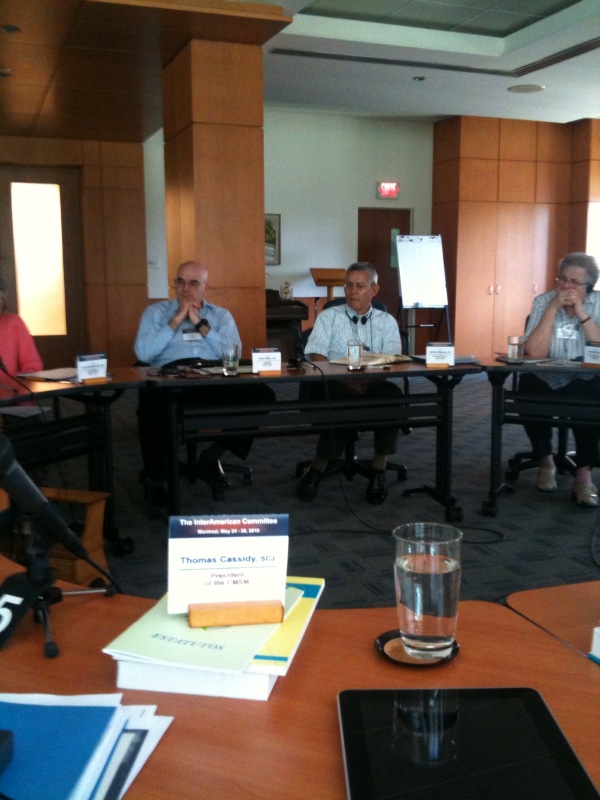
Yesterday we finished our three day meeting of the Inter-American Committee Meeting held at the Providence International Centre in Montréal. CMSM (Conference of Major Superiors of Men) and LCWR (Leadership Conference of Women Religious) met with their counterparts in the CRC (Canadian Religious Conference) and CLAR (Conference of Latin American Religious). CLAR represents the religious conferences of Latin America, Central America, Mexico and the Caribbean. It is an annual gathering with the CRC acting as hosts. Next year it will be the turn of CMSM and LCWR to do the same.

In addition to reporting on events in our respective regions a full day was devoted to the devastation wrought by the terrible Haitian earthquake. First we looked back at how it has affected religious communities and religious life; this set the stage for looking ahead as to how best to assist in the rebuilding that needs to take place, rebuilding not only structures but human life and spirit as well.

From the first word of the disaster both CMSM and LCWR were aware that the media would focus its attention on the devastation but no one would be telling the story of how it affected religious; their institutions and their members. A conscious effort was made to gather information on how religious were affected and to transmit that information to our members.

The Inter-American Committee looked at ways it might offer assistance through the religious conferences of our respective countries. There is no easy answer. However, past experience might prove to be a good teacher. After the devastation of Hurricane Katrina through the auspices of LCWR and CMSM religious partnered with religious communities directly affected by the flooding in New Orleans (and other areas) to assist them in their rebuilding efforts.

Last summer LCWR held its national conference in New Orleans and viewed first-hand how their efforts helped religious and their ministries come back from those dark days.

We were greatly assisted in our discussions about the situation in Haiti by Sister Kesta Occident, CSC, superior general of the Sisters of the Holy Cross and a native of Haiti. In addition to speaking about the current situation in Haiti and what needs to be done, Sister Kesta also spoke about how the earthquake might reshape religious life itself.

Our gathering was not all work, however. We did take an afternoon to visit Notre-Dame Bon Secours Chapel, museum and archeological findings. It date back to 1655 and the founding of Montréal. The museum presents the story of the development of Montréal and the Notre-Dame Bon Secours. It is really the story of Marguerite Bourgeoys who was born in 1620 and came to Montréal in 1653. She founded the Congrégation of Notre Dame and was canonized in October of 1982 by Pope John Paul II.

Next March the Inter-American Committee will meet in the United States hosted by CMSM and LCWR. Though we have not pinned it down, most likely the meeting will take place in the Washington DC area since the two conferences are based in nearby Silver Spring, Maryland.

And now with the close of our international gathering I have moved to the Airport Wyndham Hotel where the Canadian Religious Conference will hold its annual four-day assembly. Due to my own schedule I will only be able to attend the first two days before heading home.

Fr. Tom Cassidy, SCJ

Pentecost in French Canada

It is Sunday morning and we have just concluded celebrating the feast of Pentecost, the Church’s birthday. I am at our SCJ community house on Boulevard Gouin having arrived here late Friday afternoon. The community currently consists of eight SCJs but only seven are in the house at the moment. Fr. Zenon Zendkici, scj, from the Congo is here on a sabbatical year but at the moment is in Ottawa. I’m sorry I missed him as Zenon was studying in Rome while I was a member of the general administration. One of the perks of living in Rome is that over time you come to know many SCJs from around the congregation who pass through the house or live there for a time. It really gives you a sense of the internationally of the SCJs who are now working in 38 countries around the globe.

We added, or are in the process of adding, number 38 this year when a cooperative effort of several of our Latin American Provinces will begin a new mission in Paraguay. Most of our Latin American Provinces are small outside of Brazil where the SCJs, especially in the south, have flourished. Support in the way of personnel from Brazil will be very helpful to this new project. The province of Argentina and the district of Uruguay are also participating in the Paraguay project.

Even here at Boulevard Gouin one immediately senses the internationality of our congregation. Walter van Aas is an 86 year old Dutchmen who came to French Canada a long time ago and worked for many years in parishes about an hour outside of Montréal. Fr. Rein van Leeuwen, scj, as I reported in my last bog, is also from Holland and spent most of his life working in Indonesia. We were reminiscing last evening that he was my guide on my first trip to Indonesia in 1990. Br. Dieudonné Tchouteu, scj, came to French Canada about ten years ago from our province in the Cameroon. Finally Fr. Claude Bédard, scj, a French Canadian, spent many years working in the Congo. In addition to Claude, Br. Luc Coursol, scj, Fr. Roger Phaneuf, scj, and Fr. Maurice Légaré, scj, are also French Canadians.

Fr. Claude Bédard serves as chef of the day in Montréal

Maurice is an excellent cook and serves as the weekend chef for the community. His back-up is Claude who is in the process of preparing the noon dinner as I write this. Maurice is helping out in a special blessing ceremony at a nearby parish so today’s meal is in Claude’s hands.

Even simple things like meal customs and foods are a reminder of how international we SCJs really are. Here in French Canada, for example, soup is a part of every noon and evening meal. Wine, when it is served, tends to lean very much toward French varieties where as back home we might be a bit more eclectic in our choices. Finally, the language of the house is French though with me around English is freely spoken as well since my French is very limited, to say the least.

Later this afternoon I will head to the Providence International Centre to prepare for our Interamerican Committee Meeting. It will kick off this evening with an informal gathering at 7:30 PM. This year’s theme: Crisis in Haiti: How is it a sign of the times for us? How do we respond? Its stated objective: To share ideas on how today’s religious can be present with the poor following the crises in Haiti and Chile.

The SCJs do not have anyone serving in Haiti, however we do have a small province in Chilie and even though by and large they escaped the havoc caused by the earthquake it will be interesting to learn from our Latin American representatives from CLAR how the earthquake has impacted religious in Chile.

Thomas Cassidy, scj


North to Canada

Tomorrow I will fly to Montréal, Canada for two meetings. The first, and the primary purpose of this trip, is the annual meeting of the religious conferences of the Americas. Each year one of the conferences acts as host, and this year’s honors fall to the Canadian Religious Conference (CRC). In addition to CMSM (Conference of Major Superiors of Men) and LCWR (Leadership Conference of Women Religious) we will be joined by CLAR (Conference of Latin American Religious).  Both Canada and Latin America have one conference each that represents both men and women religious; though it would be more proper to say CLAR actually represents the individual religious conferences of the countries that make up Latin America.

As I understand it the US model of separate conferences for men and women religious is not followed in much of the rest of the world. Actually, for historical reasons, there are now two conferences representing women religious in addition to LCWR, there is also the Conference of Major Superiors of Women Religious (CMSWR). However, this group will not be participating in our gathering next week.

Besides the usual reports of what is going on in each of the respective conferences, and religious life in general, I suspect much of our time will deal with the aftermath of the earthquake in Haiti, and the response of religious to that tragic event and what needs to be done as we move forward. To a lesser degree the same questions may be raised about Chile, though the earthquake that struck there did not have the same impact given the poverty of Haiti.

Following this gathering I will also attend most of the Canadian Religious Assembly that will run from May 27 – 31. Their theme this year is Seize for God the energies of love; choose to live the vowed life. The keynote speakers will be Fr. Sidbe Sempore, OP, and Sister Elaine M. Prevallet, SL.

I am actually going to Canada a few days early to give me an opportunity to spend time with our SCJ brothers in Montréal. We have a community house on Boul. Gouin est that I know very well. During my 12 years on the general council I would make annual visits to the community. For most of that time it was the French Canadian Province, but in June of 2002 they merged with the English Canadian Province to form the SCJ Region of Canada.

Boul. Gouin runs along one of the rivers that make Montréal an island city. At present the Montréal SCJ community has seven members. Several of them are retired including Fr. Reinier van Leeuwen, SCJ, who served for many years in Indonesia. Originally from Holland, he found Canada to his liking when it came time to retire given its large number of Dutch SCJs who first came to Canada after World War II to assist the Dutch immigrants moving to Canada.

While Dutch SCJs are responsible for our current presence in Canada, and the Germans for the United States, this June the Canadian SCJs will host the 100th anniversary celebration of the arrival of SCJs to North America. Fr. Dehon, our founder, sent several French-speaking SCJs to the great plains of Alberta to minister to French Speaking Canadians who had migrated west from Quebec.

During his studies in Rome, Fr. Dehon met a number of North American seminarians, including Louis Nazaire Bégin, who later became archbishop of Quebec City, and Emile Legal, who in 1902, was named bishop of St. Albert in Alberta.

Fr. Dehon was looking for new apostolates and through his on-going correspondence with these friends in Canada, he began to explore the possibility of a presence there.

In 1910  Fr. Dehon sent four SCJs to Alberta and was given pastoral charge of Wainwright, a village on the edge of the Diocese of St. Albert near the Saskatchewan border.  Shortly after their arrival, the founder visited Canada on the occasion of the Eucharistic Congress of Montreal.

Gradually, SCJs took up ministries on various points along the railroad, from Edmunton to the Saskatchewan border.

These first SCJs in North America ministered primarily to French-speaking Catholics.  As the face of western Canada changed, ministry to the French-speaking diminished.  In 1940, the SCJ presence in western Canada ended and the congregation’s focus moved to Ontario and Quebec.

The celebration date is set for the Feast of the Sacred Heart, June 11th, in Ottawa. Why Ottawa? It is the current headquarters for Canadian SCJs with Fr. William Marrevee, SCJ, the current regional superior. I will return to Canada to participate in the celebration. That visit will be short as the US SCJs will be getting ready to hold their election assembly starting on Monday, June 14th.

Hello from Jakarta!

Originally from the U.S. Province, Fr. Tom Fix, SCJ, has been a missionary in Asia for most of his priesthood.  Now a member of the Indonesian Province, he often works for extended periods of time with the formation program in India.  He wrote the following from Jakarta:

Fr. Tom Fix, SCJ

I have been back in Indonesia now for three weeks, during which time I took six days to visit Palembang.  They still have a room with my shingle on it at St. Paul’s Minor Seminary — with air conditioning — so that’s where I stayed, starting May 2.

The day after I got to St. Paul’s there was a Mass for all the teachers and other employees serving in our numerous Catholic schools in Palembang. Some 800 people were in attendance.  This was a bit of a nostalgia trip for me since I had held various positions as a teacher, a moderator, even as rector, within the archdiocese.  Besides Archbishop Sudarso’s fine homily, there were other speeches given after the Mass, one of which, given by Fr. Frido, SCJ, head of Catholic schools, reminded the teachers to maintain our Catholic identity by opening and closing classes with prayer, which applies in all levels from kindergarten up through high school.  And college!  We have a budding school of higher education called MUSI that recently got the government go-ahead to be listed as a university. Fr. John Samiran, SCJ, is the new rector.  Affiliated with MUSI is a nursing school run by the Franciscan Sisters of Charity, who also run two hospitals in Palembang.

So right away I got to touch base with old friends and co-workers.  In the evening there was the monthly recollection for all the clergy in town.  This continued into the next morning at a local retreat house. Fr. Agus Setyoaji, SCJ, gave the conference, titled “The Priest and the Eucharistic Liturgy.”  Fr. Agus has a master’s degree in liturgy, which he got in Manila a few years ago.

On another afternoon I decided to get some exercise and so walked to several shops in the heart of the shopping area, where I hoped to pick up a few birthday cards.  It took me three stops to find a place, which just goes to show that people tend to create their own cards on the computer these days, or just send a greeting by e-mail. What we old timers grew used to isn’t so available anymore.

The one-hour flight back to Jakarta was without a hitch until I began waiting for the carousel to deliver my checked baggage.  This was around noon on Friday.  We waited an hour!  It was prayer time in all the mosques and apparently the devout personnel who hoist baggage felt their priority was to do devotions!  But my bag arrived safely anyway, which is the main thing.

The good people who came to meet me had me out to lunch before delivering me to a kind of temporary assignment — helping out in one of our three SCJ parishes — the one called “Apostle Barnabas,” located in the county of Pamulang and the township of “Pondok Cabe” which, translated, means “chili pepper cottages.”  The church complex is located only a hundred yards from a busy intersection called “Simpang Gaplek,” which translated means “dried tapioca root junction.” Fr. Puryanto, SCJ, is pastor here, with Fr. Jozef Kurkowski, SCJ, as his only assistant since Fr. Suryadi, SCJ, the other assistant,  recently left for year-long studies in Rome.  They have a beautiful setup here.  There is a new church that was dedicated only last November, with a capacity of 1,500 people.  The parish membership goes to more than 2,000 families.  All the motorbikes are parked in the basement, while cars can park in a lot that must be half the size of a football field.

My schedule is open until mid-June, when I intend to apply for my next visa to India..  Before then I hope to visit our novitiate in Gisting and our scholasticate in Yogya.

Fr. Tom Fix, SCJ

Reflections from 37,000 feet

I begin this some where south of Iceland with just under five hours left in my flight from Rome. It came as a surprise to find a fair number of empty seats on this flight. I am blest with two seats next to the window on our 767. Today’s flying time from Rome to Newark will take just over nine hours. That is more or less normal for this flight as we tend to fly against the wind when headed west. I also notice our flight path is back to normal now that the volcano, about 600 miles north of us, is belching less ash and not disrupting flights to, from and around Europe.

Our Vatican visits ended yesterday with one to the Congregation for the Clergy at 09:00 and a joint meeting with LCWR at 11:00 to Oriental Churches. Both meetings were very interesting and gave us much food for thought.

The Congregation for the Clergy has greater dealings with diocesan clergy, but since so many men religious are also ordained, there is much overlapping interest. Thanks to our dialogue and the perceptive questions of His Eminence Cláudio Cardinal Hummes, OFM, we will have some areas to look at when we begin the next revision of our Instruments of Hope and Healing.

The same can be said about our visit with the new secretary at Oriental Churches. It was interesting to hear about religious life coming out of the Oriental traditions. Since many of the Eastern Churches were under Communist rule, religious life suffered greatly, and is still recovering from this difficult period. This is an area the monastic communities of CMSM may better understand as religious life in the East certainly comes out of the monastic tradition.

Since we had the afternoon free I took the opportunity to visit our generalate one more time. I arrived just in time for pranzo (the main meal of the day). I was joined by Fr. David Szatkowski, scj, who is finishing up his doctoral program in Canon Law at The Pontifical University of Saint Thomas Aquinas. David will return to the States in June and begin teaching at Sacred Heart School of Theology this fall.  David will also become our official province canonical expert. Actually, he has proven helpful numerous times since first earning his license (STL) around the time I became provincial.

Fr. Francis Vu Tran, scj, missed pranzo due to his language school lessons, but joined us shortly after we had finished eating. Francis will begin studying Biblical Theology this fall at The Pontifical Gregorian University. He arrived in Rome about a week ago and will use this time to continue his Italian lessons that he began last summer at Perugia to be ready for the fall semester.

There are a number of SCJs in house getting ready for the formation program the congregation will run during the 2010-2011 academic year. Since the course will be taught in Italian it is necessary for some to come now to pick up the language. I met about four or five SCJs from Asia who left this week for Perugia where many (including myself) first begin their language studies. To this day I have fond memories of my time in this ancient city in the heart of Umbria — still my favorite part of Italy.

After taking advantage of the house washing machines to wash a week’s worth of dirty laundry I headed back to Domus Carmelitana. Our last evening in Rome was in search for that elusive best pizza al forgo (pizza made in a wood burning oven). Although the service left something to be desired the consensus was pretty good pizza, and so the search will  go on the next visit to la Bella Citta.

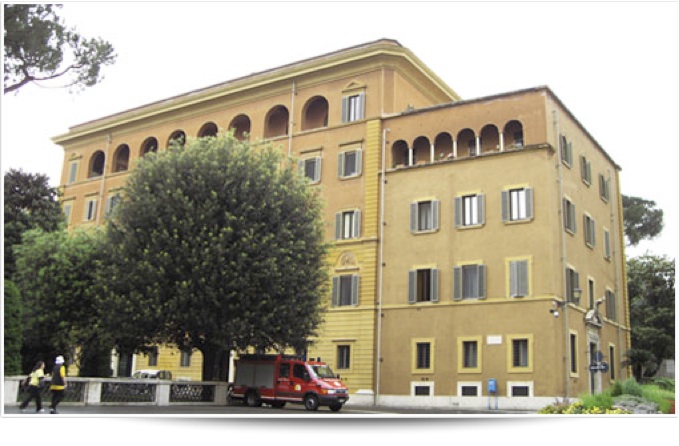
Now that would be a great way to end this blog, but I would be remiss if I failed to mention Monday evening’s reception sponsored by CMSM and LCWR. Thanks to the Conventual Franciscans of Rome we were inside Vatican City at the College of Confessors at St. Peter’s Basilica where Friars who serve as confessors at St. Peter’s live. This photo of their community house does little justice to the beauty of the roof top and it’s view of St. Peter’s Basilica, as well as the Vatican gardens, that helped form the back drop on a warm pleasant late April Roman evening.

So now I fly back just in time to preside tomorrow at Sacred Heart School of Theology graduation ceremony. It is always a bittersweet moment. On the one hand you are proud and pleased to watch men receive their degrees while at the same time you say good-bye to men you’ve come to know so well. I know some came four years ago filled with doubt if they could really make the grade. And now we say good-bye as many prepare for their ordinations and the dream of serving as a minister of the Gospel. We wish them Godspeed and realize that in a few months the cycle will begin again!

Fr. Tom Cassidy, SCJ, from 37,000 feet

Last day in Rome

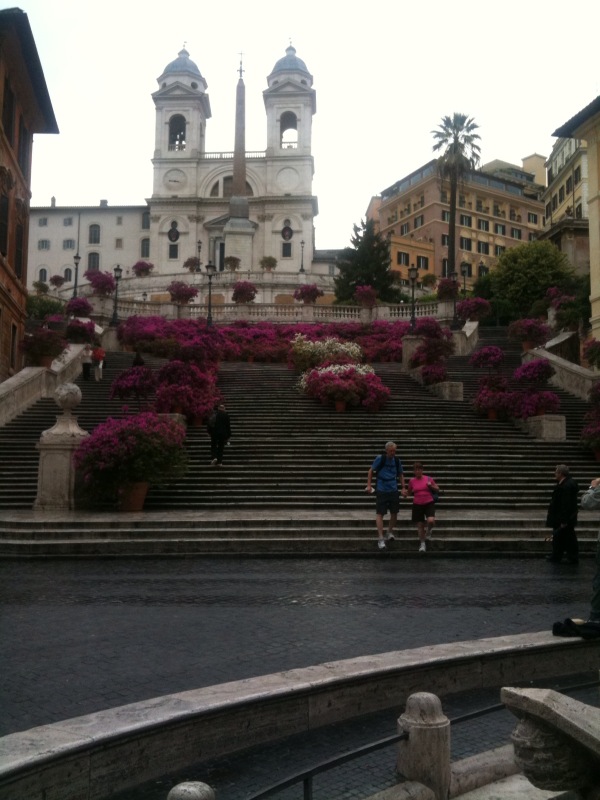
Yesterday morning we had a late start to our meetings with the first one scheduled for 10:45 AM with the Congregation for Catholic Education. With all that time on my hands it was a perfect opportunity to do my walk after breakfast rather than in the afternoon as has been my normal routine here in Rome. During my 12 years living here I found many interesting walks covering different parts of the city. In spring one of the most beautiful spots to visit are the Spanish Steps. From our hotel on Via Alberico II (about a half a mile from St. Peter’s) to the Spanish Steps takes about 35 to 40 minutes, depending on both traffic and the number of tourists.

The Spanish Steps in Rome

I say tourists as they often come in groups, and groups tend to take up the entire sidewalk. I often looked for side streets not frequented by groups so I could keep up my pace. As you can see from this photo the Steps are all decked out with flowers. As I was here at about 8:15 AM it was still quiet but later in the day the place will be mobbed and lots of people will be sitting on the steps. It’s one of the places to see and be seen.

Our meeting at Catholic Education was actually pushed up by half an hour to accommodate the staff as they were going to attend a memorial Mass for Cardinal Grocholewski’s brother who died recently. We were not scheduled to meet with the cardinal but with Archbishop Brugués, secretary of the congregation. We had  an engaging conversation on various topics. It was good we had both Br. Frank Carr, FSC, and Tom Smolich, SJ, with us as much of the conversation centered on higher education and as the US Jesuits run 28 universities and the DeLassalle Brothers three we were well covered on this topic.

Later in the day we had two meetings going on at about the same time so we split our presence at the Congregation for the Doctrine of the Faith and the Pontifical Council on the Family. The later was the first time LCWR and CMSM met with this council. I attended the meeting at CDF along with Tom Smolich, SJ, and Paul Linninger, Conv. OFM.

Today is our last day in Rome, and we have two meetings scheduled this morning. First  with the Congregation for the Clergy and then we will end our visits at Oriental Churches. With the afternoon free I am going to go to our generalate for pranzo and a meeting with Fr. Ornelas, our superior general. It will also afford me the opportunity to do my laundry. I will return to Domus Carmelitana this evening for our final debriefing. In the morning we will begin the long journey home. I will try to write one final reflection on the flight home. I’ll certainly have enough time. I am scheduled to leave Rome’s Fumacino airport at 10:45 a.m., and after changing planes in Newark arrive in Chicago around 4:30 p/m/ local time. I’ll then try to catch the next bus to Milwaukee and hope to be home by 8:00 p.m. Add seven hours to the local time in Milwaukee and you’ll have an idea of the length of my day.

Fr. Tom Cassidy, SCJ, provincial superior

An ordination, and Vatican meetings

A reminder, Fr. Tom Cassidy, provincial superior, is writing from Rome, where he is attending to meetings in his role as president of CMSM (Conference of Major Superiors of Men).

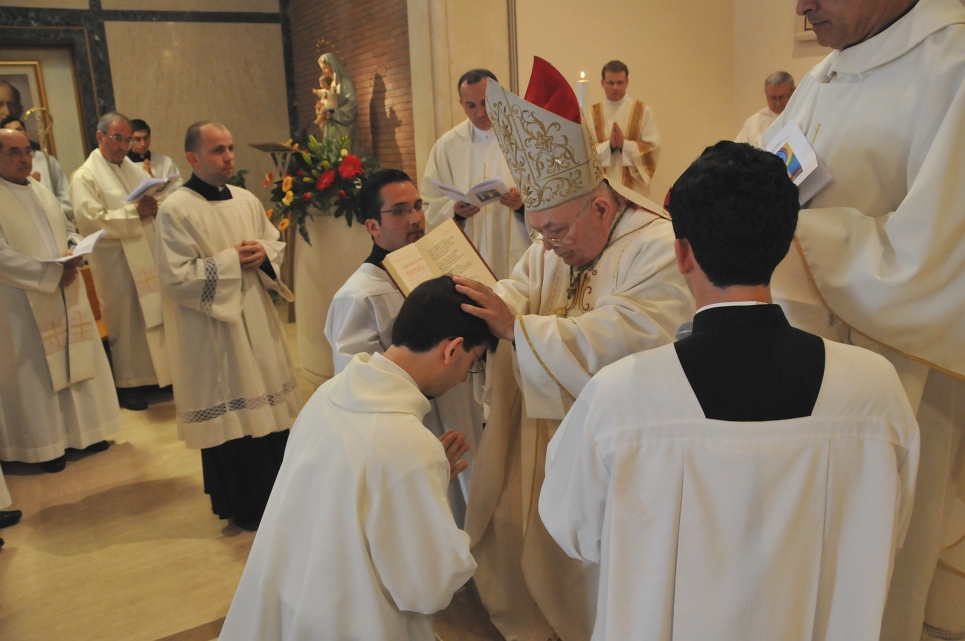
Dn. Pablo Minamres Barbero of the Spanish Province

It is now Sunday morning in Rome and I am preparing to take a bus later this morning to our generalate to attend the deacon ordination of Pablo Minambres Barbero, scj, from Spain. Deacon ordinations at our generalate are a bit rare as most of the students are priests working on advanced degrees. Pedro completed his theological studies in Spain and is working on a doctoral degree from the Gregorian University.

I am able to attend the ordination and celebration to follow since this is Sunday and all Vatican offices are closed. That is not the case on Saturday as weekends do not begin until 1:00 PM on Saturday afternoons. That gave us the opportunity to visit the Congregation for Institutes of Consecrated Life and Societies of Apostolic Life (CICLSAL) at 9:00 AM and the Pontifical Council Cor Unum at 11:30 AM.

It would be safe to say CICLSAL is the most important discastre we visit as it is responsible for religious life in the Vatican scheme of governmental organization. It is currently headed by his Eminence Frank Cardinal Rodé. We were slotted for an hour and-a-half, and it would be safe to say the time flew as we had many topics to cover in reporting on the activities of CMSM and its members. Since, by its mandate, CMSM represents all pontifical male religious in the United States, that covers a wide spectrum from contemplative and monastic communities to communities of apostolic life.
Dn. Pablo's ordination at the SCJ Generalate, which Fr. Tom attended on April 25.

Hank Lemoncelli, OMI, chaired our meeting. Hank has been very helpful to CMSM as an American attaché to the Secretary. In addition to being helpful in preparing the agenda and seeing to it that we were able to stay on topic and cover all the material, as someone living in Rome he steered us to a great restaurant for pranzo (the noon meal) to mark the conclusion of our encounter and for all the start of il weekend for all.

Since LCWR (Leadership Conference of Women Religious) were following us at CICLSAL at 11:00 AM after our coffee break together, those of us from CMSM headed down the street to meet with his Eminence Joseph Paul Cardinal Cordes, president of the Pontifical Council Cor Unum.

Although we had met with Cor Unum last year this was my first opportunity to meet with Cardinal Cordes as he was out of Rome last year. He gave us an overview of the activities of Cor Unum. Though it does distribute small amounts of money to projects around the world the Cardinal clearly indicated the task of his council is to give a theological and philosophical foundation to the works of charity. He was also very complimentary to the works of religious communities around the world in aiding the poor.

One of the challenges for all is the fact that with less religious men and women involved in these activities, and the increase lay participation, how does one preserve the theological and philosophical underpinnings to the works of charity so that is not just a job?

Cardinal Cordes shared with us two books he has recently published on, on priests, in honor of the year of the priest, and another directly related to the activities of his pontifical council, Where Are The Helpers:

On December 25, 2005, Pope Benedict CVI published ‘Deus caritas set’ (“God is Love”), the first Encyclical of his papacy. In Part I, Benedict CVI analyzes human and divine love in terms of eros and agape; presenting love as a fundamental force, Benedict argues that in the Christian, biblical understanding, love is a single reality with many dimensions. He declares to the world that ‘the love which God lavishes upon us and which we in turn must share with others’ also carries cultural, political, and legal implications, arising from the fact that ‘love of God and love of neighbor’ are ‘inseparable’ and form a single commandment.

Caritas, the ‘practice’ of love of neighbor, is the teem of the second part of the Encyclical. As Cardinal Cordes explains, ‘the Encyclical represents the magna cart a of our work: to orient and to inspire the charitable work of the Catholic church.’ In this volume, Cardinal Cordes offes his own studies and the reelections that investigate the meaning of Christian help, comment on the theological, spiritual, and canonical guidelines of Deus caritas set, and illustrate concrete ways to help the needy and, in doing so, experience the goodness of God.

Notre Dame Press (http://undpress.nd.edu/book/P01390).

Tomorrow we will once again be visiting various Vatican offices. In the morning we will first visit the Council on the Laity and then the Congregation for Bishops headed by his Eminence Giovanni Battista Cardinal Re. In the afternoon we will be meeting with USIG/USG (Union of Superior Generals). The day will end with a reception for Roman Cardinals and staffs at the Conventual Franciscans house inside the Vatican. Trusting it won’t rain, the reception will be on the roof and I’m told its quite a view. I have invited several people from our SCJ generalate to join us, and will meet them at St. Peter’s around 6:00 PM.

Fr. Tom Cassidy, SCJ, provincial superior