Sunday in Vampadu

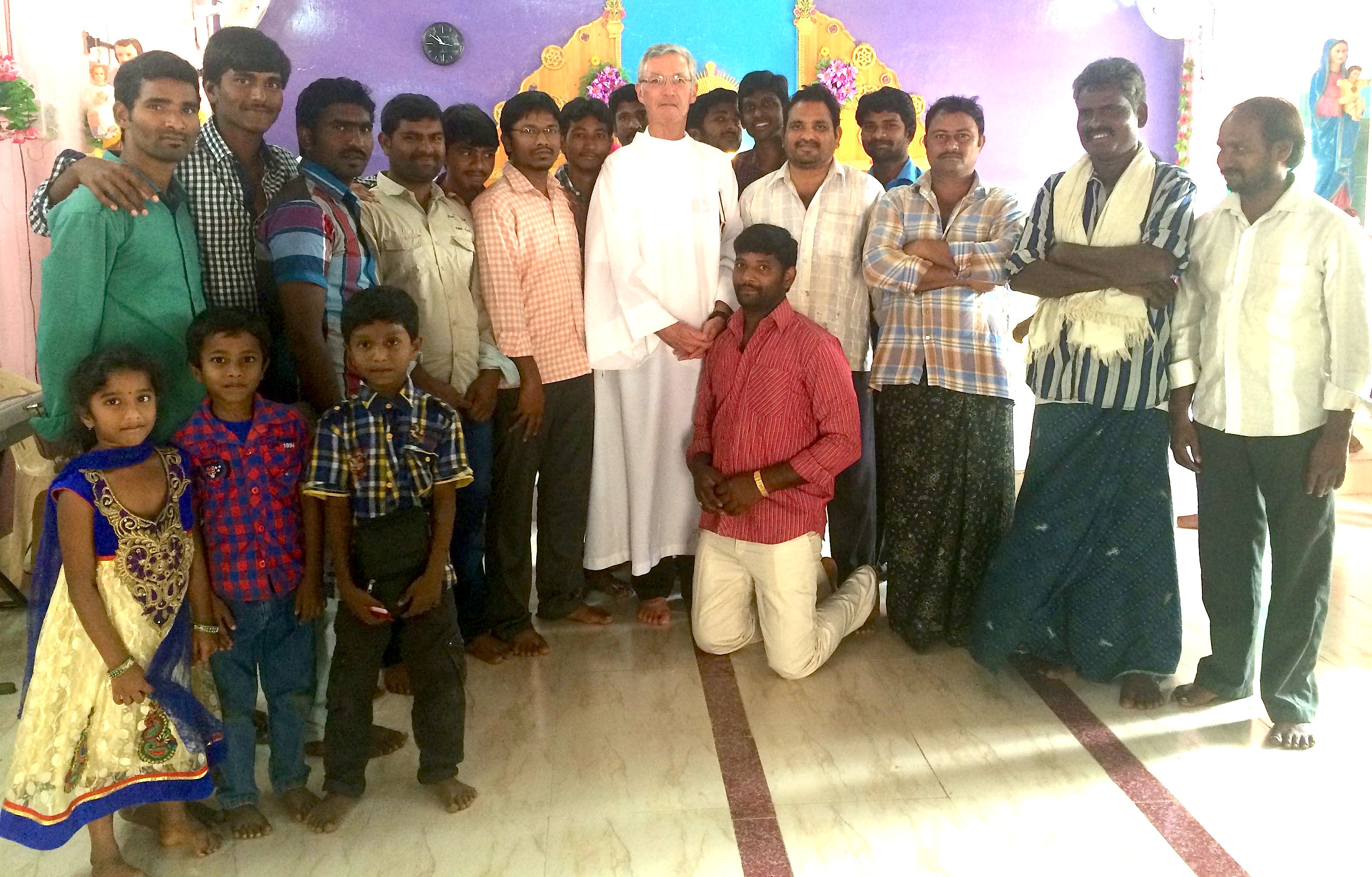
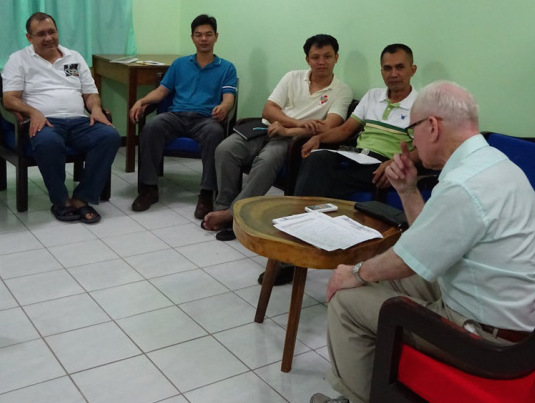
Fr. Tom with the Dehonian Youth Group in Vempadu.  "On my right is the local village council," writes Fr. Tom. "It consists of members of the three major faiths: Hindu, Muslim and Catholic.

Fr. Tom with the Dehonian Youth Group in Vempadu. “On my right is the local village council,” writes Fr. Tom. “It consists of members of the three major faiths: Hindu, Muslim and Catholic.

Fr. Tom Cassidy writes from India:

When the district council met in Nambur I promised, Fr. Jojappa Chinthapalli, SCJ, a member of the council and pastor of Sacred Heart Parish, Vempadu, that I would visit him soon and this morning I was able to keep my promise. Vempadu is about 35 to 40 kilometers from our scholasticate and is the one parish the SCJs staff in the Diocese of Eluru. In addition to the main church it also has three sub-stations.

This morning I was traveling with Fr. Joseph Gopu, SCJ, and four of the students: Joseph Thambi, SCJ, and Harish Kumar, SCJ, both in their second year of theology, and Thambi Joseph, SCJ, and Syam, SCJ, both in their first year of theology. Joseph Thambi and Syam are the house musicians and take turns playing the keyboard and leading the community in song during our various liturgical services.

We got on the road around 6:45 am and our first task was to pick up three Dominican sisters who come each Sunday to help with the singing and teaching of catechism after Mass.

Before picking up the sisters, we dropped off Br. Vineeth, SCJ and Anu, SCJ who do their Sunday pastoral assignment at the cathedral in Eluru.

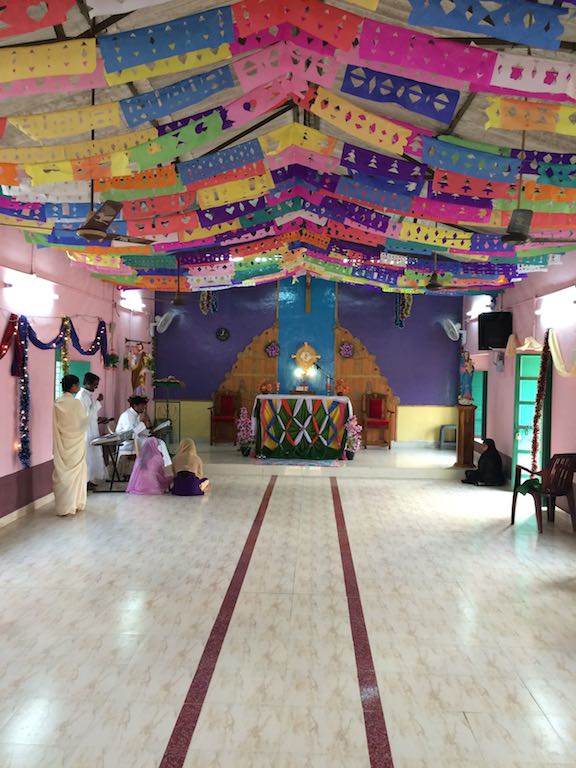
Sacred Heart Church

Sacred Heart Church

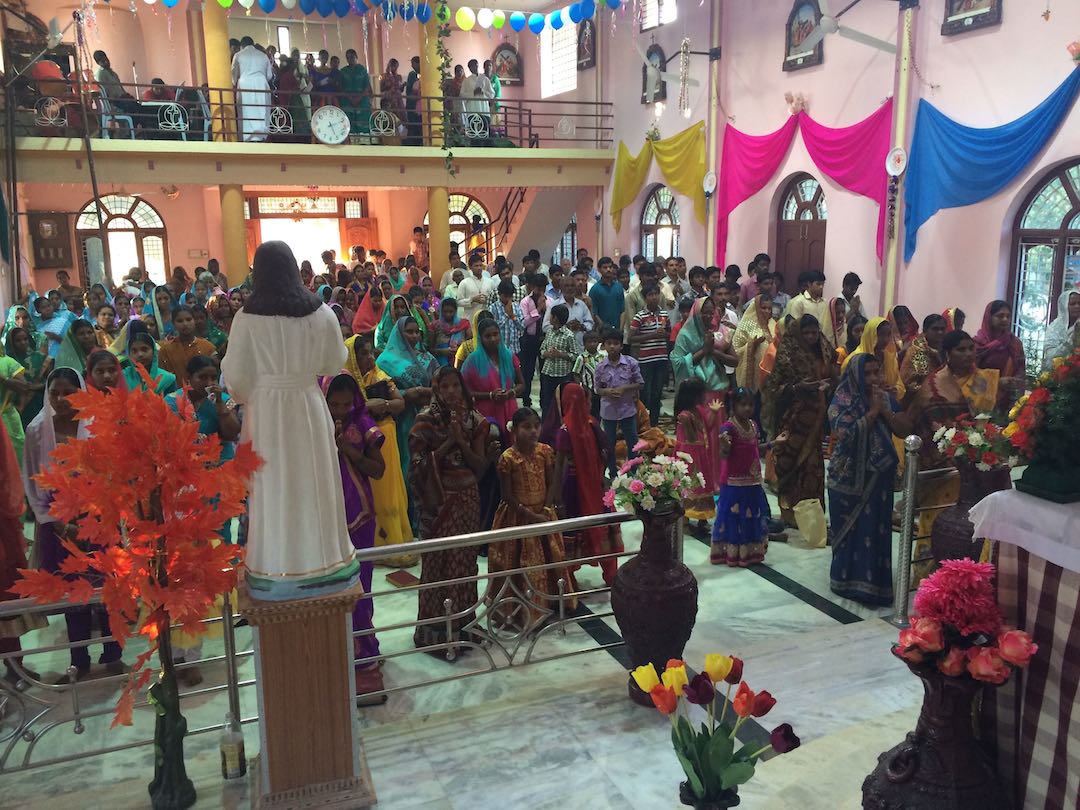
Once we left Eluru it took us about 20 to 25 minutes to get to Vempadu. Our Mass took about two hours. Of course it was said in the local language so I had to follow along in my English missal. Fr. Jojappa’s homily lasted about 20 minutes. That’s standard for the local area — in fact I was told the people would be disappointed if the homily was any less then that.

At the end of Mass I was thanked for the contribution of $5,000 for the building of the bell tower. I told them that they should thank the US Province as I was simply the agent who asked if our province would support this request. The young man who thanked me did it first in Telugu and then in very good English. It turns out he teaches English.

While we were celebrating our Mass Fr. Gopu and Brs. Harish and Thambi Joseph along with Br. Suresh, SCJ, took the two motorbikes to say Mass in two of the sub-stations. The roads are in such condition that the motorbike is better suited then the minivan that we came in.

I had the chance after Mass to chat with some of the Dehonian youth; most do not know English, or at least that was my presumption. When I say “youth” that can cover between the last two years of high school to, I’m guessing, age 35. All the youth with whom I was talking had full-time jobs which included an electrician, two government workers and an English teacher to name a few. Two of the men were married. Fr. Jojappa said he just started a lay Dehonian group for families.

My stay ended when the two motorcycles returned with our brothers and Fr. Gopu and we headed back home, but first dropping off the sisters at the Dominican convent. We were the first to be back and ate our meal before any of the other brothers returned from their respective pastoral assignments.

Continuing to enjoy the beauty, food and community of the Philippines

The Philippine novitiate

The Philippine novitiate

Fr. John Czyzynski  writes from the Philippines:

Well, they said the novitiate here in Padagian (the city) Zambuanga del Sur (the province) is nice — that is an understatement.  It is unbelievable.   so beautiful.  And I feel like I am on retreat.  Every day we pray (and in part chant) all the hours of the Liturgy of Hours.  We also have meditation and the rosary and adoration together.  That barely leaves me time for my daily walk and a nap.  Just kidding, of course.  I am giving a couple of talks to the novices (we have four here)  One of them is raising what looks like morning doves that he raises from just after they are hatched.

I thought I would have a chance to visit the families of two of the 44 police officers who were killed by the Muslim Liberation front, but that did not work out. These two men belong to one of the parishes we have here.

My dietary repertoire continues to expand.  I have eaten goat meat and fruits I never heard of:  marang,  durien, star apples, jack fruit. It is amazing to see jack fruit growing.  Picture a tree with watermelons hanging from the branches.  You got it.

Fr. John

Fr. John

Tuesday I visited our parish at Kumalarang.  This is one of the first places where the SCJs settled when we came to the Philippines. (we already have two SCJ priests who came from that parish) At  present time two of our men are there:  Fr. Showe from India and Fr. Candido a rather newly ordained Filipino priest.  We shared a nice meal of mostly seafood because that is the kind of food that is available.  What we might consider luxury food in the United States is a staple here because it is so  close to the sea.

It is a very poor area materially speaking but rich in so many other ways. Our guys raise livestock of various kinds as sources of food and as sources for income:  pigs (I didn’t know this but a pig can have three or four litters in one year and have 8-14 piglets each time), chickens and roosters, fish, rice.   I think there was something else but that is all I remember.   The Christmas tree was still up on the parish grounds.  Really unique and proper to this locale.  The tree is made of what is available. The “trunk” is a 45-foot tall bamboo tree.  Then palm tree leaves are hung from and extended out from the bamboo trunk so that what you get is what looks like a 45-foot tall tee-pee.  This structure is then decorated with various lights and other decorations.

The people in the area are poor so periodically there are what Fr. Showe says are called “free marriages.:”   Our guys welcome folks who cannot afford a wedding celebration to have their wedding at the parish.  There are a number of couples and their guests there for the occasion. Our guys cover the cost of a very nice meal for them after the wedding ceremony.  People of the parish support this generous celebration.  A favorite dish for this occasion would be a huge roasted pig or maybe two of them.

I experienced my first power failure here on Tuesday.  We have a generator that can supply power for everything but the refrigerator.  That requires too much “juice.”

On Wednesday Fr. Suanto ( the director of novices) took me to see the cathedral in Padagian, the see that governs our places here in the province of Zambuanga del Sur.  The cathedral  is wide open never closed.  There is a chapel for perpetual adoration.   After seeing the cathedral we went to a mall so I could do some shopping.

I washed a load of laundry and I had to learn the system.  There are two tubs next to each other. One is for washing and rinsing and the other for a spin cycle.  You put your clothes in the tub for washing and fill it with water from a hose nearby and add detergent.  After letting the machine wash the clothes for about 15 minutes, you remove the clothes and put them in the spin cycle tub.  While that is going on you empty the tub where you washed the clothes and then refill it with water for rinsing. You do that a couple times. After the clothes have been rinsed thoroughly you soak them in a pail with fabric softener added to the water for 15-20 minutes. Then you spin cycle the clothes and hang them on the lines to dry.  The drying area is covered so you don’t have to worry about rain.

In the evening we went to our parish in Dumalinao just down the hill from the novitiate. We gathered to celebrate the fifth anniversary of the ordination of Fr. Marshall (one of the priests at our parish in Dumalinao).

Friday being the first friday we had a day of recollection here at the novitiate.  I was asked to give a conference to the community and be the presider and homilist at the Mass.  It is actually a morning of recollection preceded by the Holy Hour the evening before.  In the afternoon work period Fr. Rico, the superior, and the novices, harvested coconuts.   I was thinking that was a sharp contrast to the work being done at our house of formation in Chicago.  I imagine that instead Br. Duane and the guys were shoveling the sidewalks and parking lot.  Different worlds.

The prayer list

Fr. Tom Cassidy writes from Eluru, India:

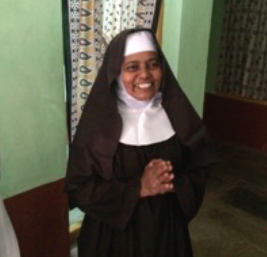
A member of the Carmelite community near Eluru

A member of the Carmelite community near Eluru

This morning the community rose a half hour early so that we could leave the house at 6:00 am to celebrate Mass for a Monasery of Carmelite nuns. It’s about a 25-minute drive into Eluru from our house. Actually it’s right next door to the convent of Dominican Sisters who accompany our brothers on Sundays to help at Sacred Heart Parish (Vempadu).

The monastery has a church attached to it and many people from the local area come for daily Mass. The Dominican Sisters, for example, walk over from their nearby house to attend Mass. The rest of the congregation is made up of local residents and a number of young women beginning their formation as sisters.

We had a division of labor for this liturgy. I was the celebrant, Fr. Joseph Gopu, SCJ, gave the introduction and Fr. Mariano, SCJ, the homily. We were also joined by the sister’s chaplain who gave a short talk at the end of Mass not only thanking us for coming but for what our SCJ community does for the church of Eluru. He especially mentioned Fr. Jojoppa, SCJ, pastor of Sacred Heart Parish.

The community has a minivan, a 14-year-old jeep, (purchased originally by Br. Leonard Zaworski, SCJ) and two motorbikes. With 17 students and three priests it took all four vehicles to transport us to the monastery.

Before we left to head home the sisters asked us to write our names in their prayer intention book and promised to pray for us. When told that the brothers would be going on vacation when school finished in March the mother superior said to them: “Don’t come back unless you have a candidate for our community.” I believe there are between 12 and 14 sisters but they are all up in years and need some young blood. The cloistered life is not an easy one and in today’s world men and women find it less attractive then it once might have been. Still it is a beautiful way life and the Church needs men and women who devote themselves to a life of prayer. I’m happy to know my name is now on their prayer list!

At the end of Mass and before we left the chapel the house chaplain exposed the Blessed Sacrament for day-long Eucharistic adoration. One of the prayer tasks the nuns have is to pray in front of the Blessed Sacrament with each sister taking turns; probably an hour at a time.

Inspired by the people, and SCJ missionaries, in the Philippines

Fr. John

Fr. John

Fr. John Czyzynski writes from the Philippine Region where he has been assisting with the formation program for the past few weeks:

On Wednesday afternoon/early evening Fr. Jan took me to our mission church at Dansolihon about a 45 minute ride from the formation house where I am staying. It is 400 meters above sea level [about 1,300 feet] so it is cooler up there. My heart goes out to these guys.  Three of our men are there:  Jan from Poland, Johannes from Indonesia and Pjoe (pronounced as it is written) from the Philippines.  Their rooms are tiny shoeboxes about 10 by 15 feet.  The toilet is primitive.  There is a commode in the room and a bucket with water to flush the toilet.  They do have TV but no internet access.

In this tough situation their spirit is inspiring.  They showed me a statue of Jesu Nazareno.  Jesus is portrayed as a man whose skin has been darkened by exposure to the sun.  I was surprised to hear that there is a strong devotion among men to Jesus portrayed in this way.  He is a worker like them and they connect with Him.

After our visit there we went to a residence we run for young people (ages 12-19).  They call them “scholars”. They live at our residence and have a chance to go to school and study.  If they were with their families they would be working in the field and even if they went to school, they would never have a chance to study at home.  One of the girls (14 years of age) was taken from our residence by her parents because they had received a cow (or the value of a cow) from a man who wanted to marry her.  The legal marrying age is 16.  The parents wanted the money.  It worked out all right and the girl was able to come back to the residence.

The “scholars” sleep on plywood on the floor.  The wood is covered with mats of some kind.  It is harsh but better than they would have at home.

I felt that I was being treated like the Pope.  When Fr. Jan and I arrived, young girls came out and placed orchid wreaths around our necks. They asked questions and sang for us and when we were leaving they were waving and shouting “We love you.”  Very touching and humbling.

Today I had my last class with the seven postulants.  They are a great group:  bright, inquisitive and fun. Besides the sessions with the formation directors and classes with the postulants, and presiding at some Masses,  I am busy hearing confessions, helping with English pronunciation and discussing questions/topics on theology and religious life.

Friday was a day of mourning for the 44 Filipino police officers who were killed by members of the Muslim Liberation Front.  When I go to the novitiate on Sunday one of the guys is going to take me to the families of two of the men who were killed.  Their families belong to our parish near the novitiate.

Saturday evening I had Mass at a residence we run for young girls who have been sexually abused. [Kasanag Daughters Foundation] They range in age from 9-19, but they look so young.  Your heart goes out to them. They really enjoyed the visit and sang for all of us and they sang wonderfully.

When I got back to the formation house they were holding a birthday celebration for everyone who had a birthday in January.  They celebrate all the birthdays of the month on the last Saturday of the month.  They start the celebration with a prayer and then the singing of the national anthems of Vietnam and the Philippines. After that the guys put on skits.  One of the formation directors and I were asked to be judges of the performances.

Well tomorrow I am off to the novitiate.

Fr. John leads a discussion with formators in the Philippines.

Fr. John leads a discussion with formators in the Philippines.

“Literally” building the church in India

The new bell tower going up at Sacred Heart Church in Vempada.

The new bell tower going up at Sacred Heart Church in Vempada.

Fr. Tom Cassidy’s latest journal entry from India:

Fr. Jojappa Chinthapalli, SCJ, is a member of the district council and pastor of Sacred Heart parish with its three sub-stations. It is usually referred to as “Vempada,” the village in which the central church is located. Last fall the US Province gave a grant of $5,000 to construct a bell tower which, as you can see from the photo, is well underway. In fact, Fr. Jojappa was eager to get back from the district council meeting last Thursday by 7:00 pm as he had to round up about 30 people to help provide labor on Friday to get the roof tiles up to the men doing the actual work.

This is not the only construction project in the parish. Our North Italian Province is providing funds to construct a parish/community house. Presently Fr. Jojappa and Br. Suresh, SCJ, arenliving in a rented house. Suresh just completed his regency year with Fr. Jojappa and will be one of four regents to be ordained deacons on February 21 at Gorantla — our minor seminary about 60 to 90 minutes from Eluru, depending on traffic.

Construction has not yet started on the parish house though it is hoped it can begin shortly as construction season is about to start. As the weather gets hotter I presume that it is similar to what takes place in cities like Phoenix in the United States where as summer approaches it is simply too hot to work in the middle of the day.

I have not seen plans for the community house. At present it is a community of two but the parish could easily use another priest especially with the limited pastoral support the scholasticate is able to provide at this time.

I will be visiting the parish a week from Sunday. It’s an easy day for me to go as several of the scholastics go there every Sunday along with a couple of Dominican Sisters from Eluru to assist in the liturgy at the principal church. When I say “liturgy” this includes rosary and adoration before Mass. Of course the Mass will be in Telugu so my participation will be limited.

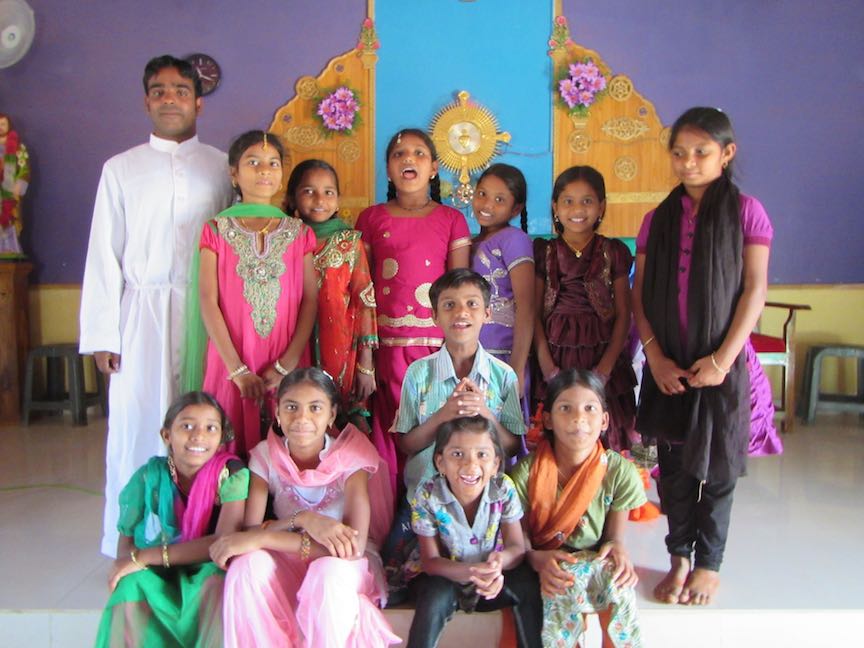
Harish and kids

Br. Harish with children after Mass

Last Sunday I asked Br. Harish to use their new camera [Fr. Tom used frequent flyer points to get a camera for the formation community] and take some pictures. Here is one of some of the boys and girls, along with Harish, after Mass following some activities conducted by our SCJ brothers and the Dominican sisters.

This Sunday I am going to ask one of the brothers to take some photos at a different parish ministry site. All the students have some sort of pastoral work and for the most part it is done on Sunday mornings. Some of the students go into Eluru or to the surrounding villages and often are involved in teaching catechism.

Celebrations in India

Parishioners celebrate the one-year anniversary of Sacred Heart Church in Nambur.

Parishioners celebrate the one-year anniversary of Sacred Heart Church in Nambur.

Fr. Tom Cassidy writes from Nambur, India:

First, I want to share a photo from the one-year anniversary celebration of the dedication of Sacred Heart Church in Nambur (January 26). To mark the occasion the parish held a Mass and procession beginning at 4 p.m. and running all the way until midnight! I hear that sometimes such celebrations can easily go until dawn.

With the SCJ community we celebrated the second annual “Novitiate day.” Last year it was held in March, but this year it was pushed forward to the end of January. I’m not sure why the change but from my point of view this time makes better sense, especially with Easter being early this year. The weather is also a bit cooler, but that can be seen as a minus by many Indians who find temperatures in the 60s to be downright cold!

There are 10 in the present novice class along with six postulants. While the show belongs to the novices, the postulants were heavily involved as well, carrying on many of the behind-the-scenes tasks and from time to time becoming part of one or the other of the 17 acts.

I’d divide the show into five categories: (1) dance routines, (2) morality plays, (3) audience participation, (4) PowerPoints on the SCJs and the Nambur community, and (5) songs.

Students perform during "Novitiate Day" celebrations

Students perform during “Novitiate Day” celebrations

For me, the dance routines and morality plays were the best part of the cultural show. Indian men like to dance and our SCJs are no exception. Some, of course, are better at it then others but all seem to be enjoying themselves. The most serious dance is the one pictured here called the “fire dance.” It was a stately dance using hand and arm motions along with body movements to place the fire pots into differing locations and formations. As for the morality plays I enjoyed the one about corruption the best. It showed how corruption begins at an early age and is pervasive. Sadly, it is a real issue for Indian society.

The two PowerPoints were well done though the writing was difficult to read at times.

The show lasted just over two hours. One of the novices told me that in their rehearsal they did it in 1 hour and 39 minutes. While it may have gone on a bit long I think that everyone had a good time.

Of course, we were all well-paid for our attentiveness with a wonderful meal to end the evening.

Appreciating a good clothes dryer!

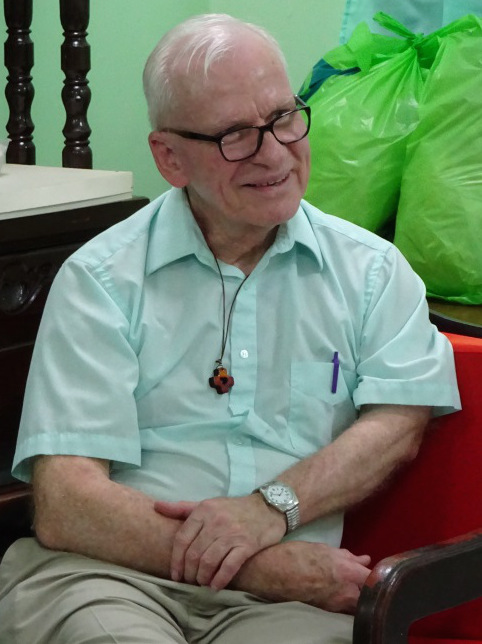
Fr. John (left) smiling during  a community meeting with the Dehon Formation Community in Chicago last fall. The retired novice master has served in formation during most of his 51 years of priesthood.

Fr. John (left) smiling during a community meeting with the Dehon Formation Community in Chicago last fall. The retired novice master has served in formation during most of his 51 years of priesthood.

Fr. John Czyzynski writes from the Philippines:

This week I have classes with the postulants (seven young men).  We meet in the morning for what is scheduled as a two-hour session, but is usually a bit less. I am doing some things on Fr. Dehon, SCJ spirituality, self esteem, and Marian devotion. When we talked about Fr. Dehon and I asked them to tell the group what appealed to them about the founder. It was interesting to hear how they came at that from all different points of view.

It started to rain during the sessions and one of the guys charged out of the room. I asked what was going on and was told that it is his job to get the laundry off the lines so it does not get soaked by the rains.  Thank God for dryers in the United States!

The rain has not been severe but steady for about five or six hours.  They have a interesting system of canals to drain off the water and get it to flow into the river the town is named after:  Cagayan d’ Oro (“River of Gold” — though it looks more like mud than gold). The ground is so moist it can’t absorb any more.

Several guys have asked me to help them with pronunciation of English.  One of them was pronouncing some words with a British pronunciation and I said that is not incorrect so I was not correcting him, but we say those words differently in the United States.  He said: “correct me.  I want to speak English the way the Americans do.”  It reminded me of St. Albert speaking of St. Thomas and saying the student would surpass the teacher.

There are about 45 seminarians here, four novices and 15 in the post-novitiate program in Manila (Quezon City). They are pretty evenly divided: Vietnamese and Filipinos.

I will be going to the novitiate on Sunday (Feb. 1) to have some time with the novices; Feb. 10 I return to Manila to have some time with the post-novitiate group before returning to the United States.

Back in India

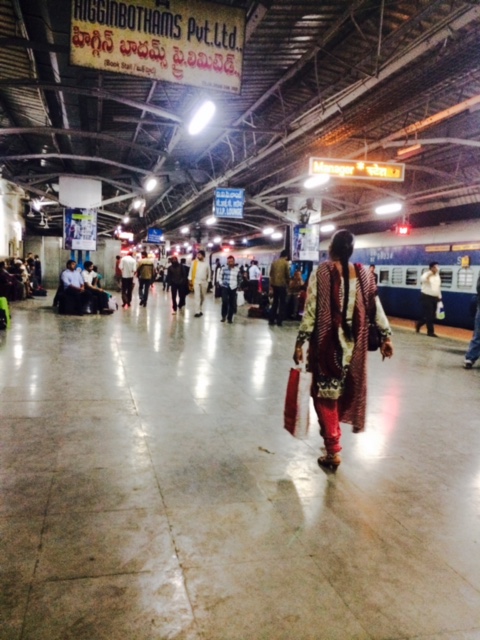
Planes, trains and automobiles. Fr. Cassidy was back on an Indian train less than a day after his arrival in Mumbai

Planes, trains and automobiles. Fr. Cassidy was back on an Indian train less than a day after his arrival in Mumbai

Fr. Tom Cassidy is back in India, where he will be assisting until early May. As he did previously, he will periodically share his journal entries on the province blog. The following is from his first:

Well, I made it to Mumbai on time and without any airline snafu or Mother Nature getting in the way. Going halfway around the world takes time no matter how you choose to go. I landed in Mumbai right on schedule and even though it was 10:30 pm there were lots of customs officials on hand so that everyone passed through passport control quickly.

Fr. Aji, the pastor of our parish here (Divine Mercy) and Fr. Thomas Vinod, district superior, were there to meet me, along with a good soul from the parish who offered to drive us. Since both passport and customs were quick we were on the road in almost no time.

I asked what the plan was for today and was told that we’d leave the house at 6:15 am to catch a train for Neural, about an hour’s ride on a local commuter train. That did not give me many hours of sleep! Fr. Abraham was kind enough to make us all a good breakfast to give us a jump start and get us on the way.

The SCJ community in India may take over ministry at this church in Neural

Fr. Thomas and Fr. Aji pray during their visit to a church in Neural (about an hour by train from Mumbai). The SCJs are in dialogue with the cardinal of Mumbai about taking over pastoral care of the church.

The purpose of our trip was to look at a small parish the cardinal of Mumbai suggested that the SCJs take. There is also the possibility of a school along with the parish. The school is currently operated by an order of religious sisters who plan to soon withdraw from it. It has almost 300 students and is in a tourist area up in the mountains about nine kilometers from the Neural train stop. As the district looks for land to build its future district/provincial house [headquarters] this is one area under consideration. It is at the moment still more rural than urban but you can see development is quickly taking place. This is in part spurred by the future international airport that will be located nearby.

The church was constructed in 1858 but is well taken care of. I am not sure how many Catholics are in the area or how many tourists take advantage of the Sunday parish Mass. If I understand correctly, this church would be considered the mission church of the parish that, I think, will be based in Neural.

Retired novice master heads to the Philippines

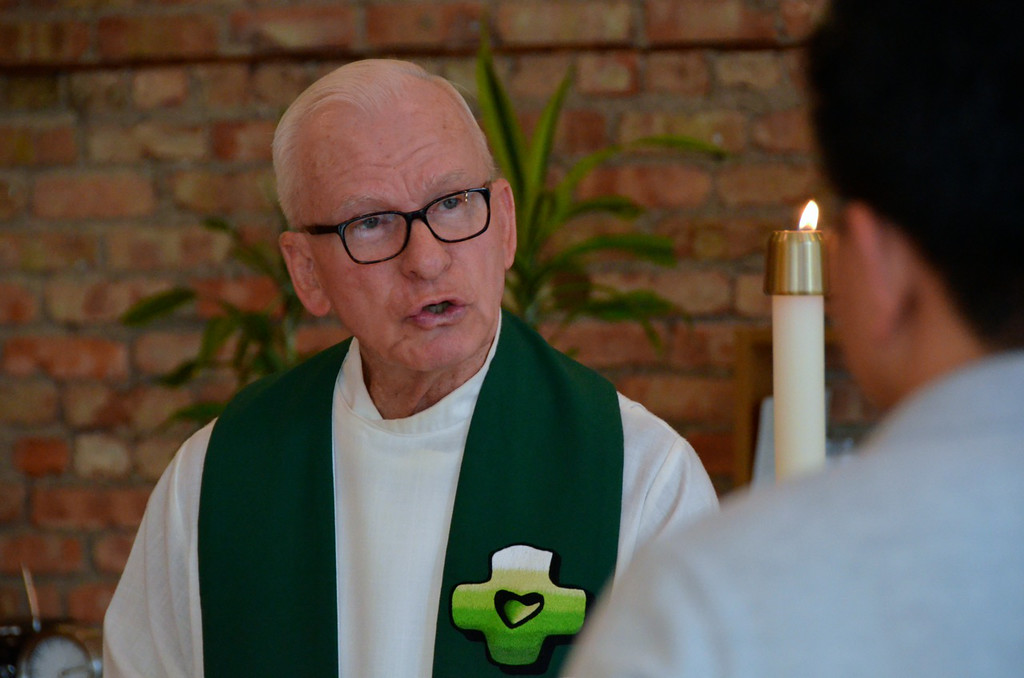
Czy preach

Fr. John Czyzynski during Mass with the Dehon Formation Community.

Fr. John Czyzynski is in the Philippines for the next month. “Really,” he joked, “rumors that Pope Francis timed his trip with my own are exaggerated!” The Holy Father recently concluded a five-day visit to the country, arriving just before Fr. John.

Writing from Cagayan d’Oro, the recently retired novice master shared a bit about his visit:

“I came here to meet with the formators and to share my years of experience doing formation ministry. [Most of Fr. John’s ministry as an SCJ priest has been in formation, the preparation of men for religious life and priesthood.] Our time together has been good.  At least it feels like some good stuff is happening.

“These formators are so young that I have a hard time distinguishing them from the students. I keep saying that I am speaking from an American’s point of view and I need to hear how what I say matches their experience of doing formation in a different culture.

“I got here Saturday and rested a bit and then had two Masses at a parish in ‘greater Manila’ (a parish close to our house there). It was a feast day. The Philippine people have a great devotion to ‘Santo Niño.’ They honor the child Jesus dressed in something similar to the Infant of Prague.  After communion all the children come up to the front of the Church and are blessed.  I started to choke up as I looked at all those little kids waiting to be blessed.  The folks here have great respect for the clergy.  People of all ages come up to priests and take the priest’s hand and touch it to their foreheads. It is a sign that they are asking to be blessed.

“I will be meeting with the students who are at different levels of formation and talking to them about our community and charism. I am amazed at how well they speak English.

“So far I have been able to eat everything that everyone else is eating. That’s it for now; I’m going to rest a bit before my next session with the formators.”

Last days in Congo

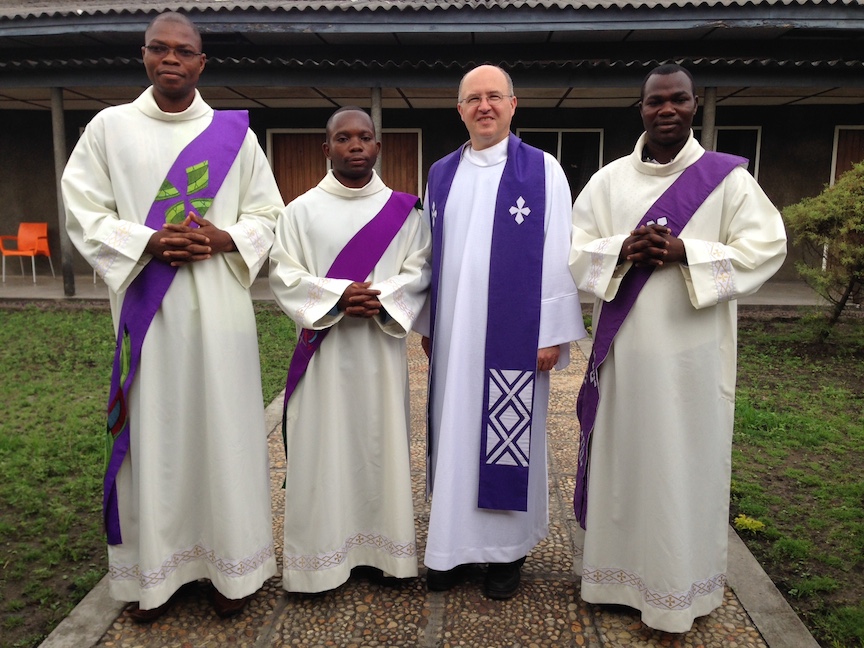
Fr. Steve with SCJ deacons in Kinshasa.

Fr. Steve with SCJ deacons in Kinshasa.

Fr. Stephen Huffstetter shares his final journal entries from the Democratic Republic of Congo where he and Frs. Charles Brown and Leonard Elder have been traveling for the past three weeks. They took part in several remembrance ceremonies for SCJ missionaries killed in Congo during the 1964 Simba rebellion. 

DECEMBER 3 – Yesterday was a long travel day, with more waiting than actual time on board the two-hour flight from Kisangani to Kinshasa. When we went through customs and security I was surprised that nothing was computerized. The agent asked a few questions about where we were staying, then entered our passport numbers with pen in a ledger book. I wonder if there is any check or follow through.

The overhead bins were full, not so much with suitcases containing clothes but with tubs and boxes of foods being transported from the country to the capital. Overcast skies prevented much of a view from above except for the period close to take off and landing. Coming into Kinshasa you certainly see what a huge and sprawling urban center of the world it truly is.

Today we had some time to explore part of the city. We visited the artists market and so a wide variety of many lovely things, mostly carved of wood, but a good selection of canvas paintings as well. Fr. Marek [provincial superior of South Africa] was most interested in some local weavings that he purchased for use decorating the altar and other prayer spaces. There are no posted prices, and the art of bartering is alive and well as prices are argued, haggled, then finally agreed to.

One stall had many old statues, masks and sticks. We tried to learn something about the cultural and religious significance of them.

As we drove around town the air was choked with smog. All the vehicles run on diesel fuel, and my eyes were itching and burning after a while. Power is cleaner, most coming from hydroelectric dams. But there are substantially long brown-outs throughout the city. Out house had electricity for only a few hours these past two days. Fr. Gabriel can use a generator when needed, as in the evening when students need light to study by. But their budget is strained every time they must buy more fuel for power most of us take for granted.

Notre Dame is the Cathedral church of Kinshasa. Midday the doors were locked, but a worker at the parish offices was happy to let us in for a tour. Built in 1955 it is a soaring brick building, made of local materials. The statues, ambo and tabernacle were lovely wood carvings. The rest of the space was simple, though prayerful, fitting for a poor church in a developing country.

The SCJ house in Kinshasa has a small chapel for daily mass that seats about 50. At 6 am today it was full to overflowing, with people spilling over to plastic chairs set on the lawn outside. Songs were in Lingala, and the mass in French. The music was quite spirited with drum, rattles, keyboard and tambourine . The crowd was an even mix between men and women from a variety of ages and walks of life. The SCJs incorporate the prayers of the Divine Office into the mass, and people pray along with them before going off to start their day.

DECEMBER 6 – Our time in Congo has come to an end, and we will soon board the plane for the long trip home. Our entourage of visitors has dwindled to the three Americans now. Fr. Claude returned to Canada on Thursday, and Fr. Marek to South Africa on Friday. Fr. Zenon left for Lumumbashi where the SCJs are exploring setting up a new community house in the southeast part of the country near Zambia.

The past two days have been on the quiet side. Part of me is impatient wanting to go and do things. Instead I’ve entered into these Advent days with an attitude of patient waiting and prayer. First Friday was much like a day of reconciliation , and I asked one of the priests here to hear my confession in preparation for the great feast of Christmas just around the corner.

I’ve used some of the time to write up reports and reflections about our collaborative efforts with the Congolese Province that I will share with the Provincial Council upon my return. And in my limited French and in our confreres’ limited English we’ve tried to learn as much about each other as we can.

Fr. Simplice was ordained a priest last February and is continuing his studies for a liscenciate in New Testament Biblical Studies. We walked about a mile to the Augustinian University where he studies.

Every country has its contrasts and things that don’t make sense to outsiders. The main boulevard through the city is actually quite nice, well paved with four lanes in each direction. I noticed street sweepers all along the route picking up dust and dirt with brooms and shovels to keep it looking tidy. Yet the side streets leading up to the main thoroughfare were not paved at all. The dirt was uneven with large holes and dips, and a lot of trash from daily use of the people clogging the drainage ditches. It reminded me of similar misplaced priorities we have back in the States where areas with wealth get more services and attention than poor neighborhoods.

Augustinian University is a consortium of 23 men’s religious orders and 17 sisters’ communities. About 10% of the students are laity committed to improving the quality of life and ministry in the church . The school formerly only offered a degree in philosophy, but in the last few years has expanded to include degrees in theology and psychology.

Since Charlie is a professor of New Testament studies, he and Simplice had a lively discussion about Luke’s Gospel. Simplice is writing his thesis on the story of the rich young man who turned away sad when Jesus asked him to give everything to the poor and follow him. We went to the university library to check out what academic resources were available . The good news is that books here are quite treasured and well used. The not so good news was that the collection was very old and dated. One problem is financial, purchasing new works. Another is availability. One of Charlie’s hopes as mission director is to help developing provinces get the theological books and resources they need for their libraries.

In the afternoon I noticed several students gathered around a plastic chair next to the garden. It was time for haircuts. A barber comes to the house every two weeks and gives everyone a good cut. Instead of scissors or clippers he used a double-edged razor blade attached to the side of a comb. Just as in a typical barber shop the crew sat around gabbing ands telling stories as each awaited his turn.

Every Friday evening the community opens up the chapel for Eucharistic adoration, and a good number of people from the neighborhood join. Today was First Friday, with a special emphasis on Sacred Heart devotion.

Over breakfast Fr. Simon and Fr. Gabrielle remembered an American SCJ who had a huge impact on their families and their vocation. Fr. Dave Maher devoted many years to serving in the Congo before he took ill and died. They are two of four SCJ priests from his parish, inspired by his hard work, dedication and deep spirituality. From that same cluster of parishes he served there are many vocations to the diocese and to women’s religious communities as well. One person’s witness can inspire many to follow.

My quarters here are quite comfortable (though with no AC a little on the warm side). I have a two-room suite, with an office in front and bed in back. I realized that it was Fr.  Gabrielle’s office, but discovered today that when I leave, he will get his bedroom back as well. “When guests visit us, we want them to feel at home and share our best with them.” This whole journey has been one of generous and gracious hospitality, and much to inspire as we wrap up and head home.