I was in prison and you visited me…

Light in prison

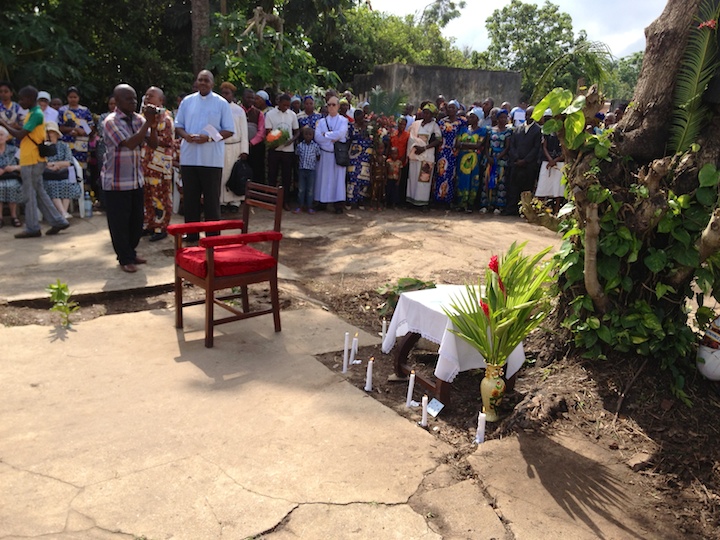
Fr. Stephen Huffstetter writes from Kisangani where he and other SCJs spent the first Sunday of Advent in a Kisangani prison, sharing the Eucharist with prisoners. 

Sunday, Dec. 30
1st Sunday of Advent

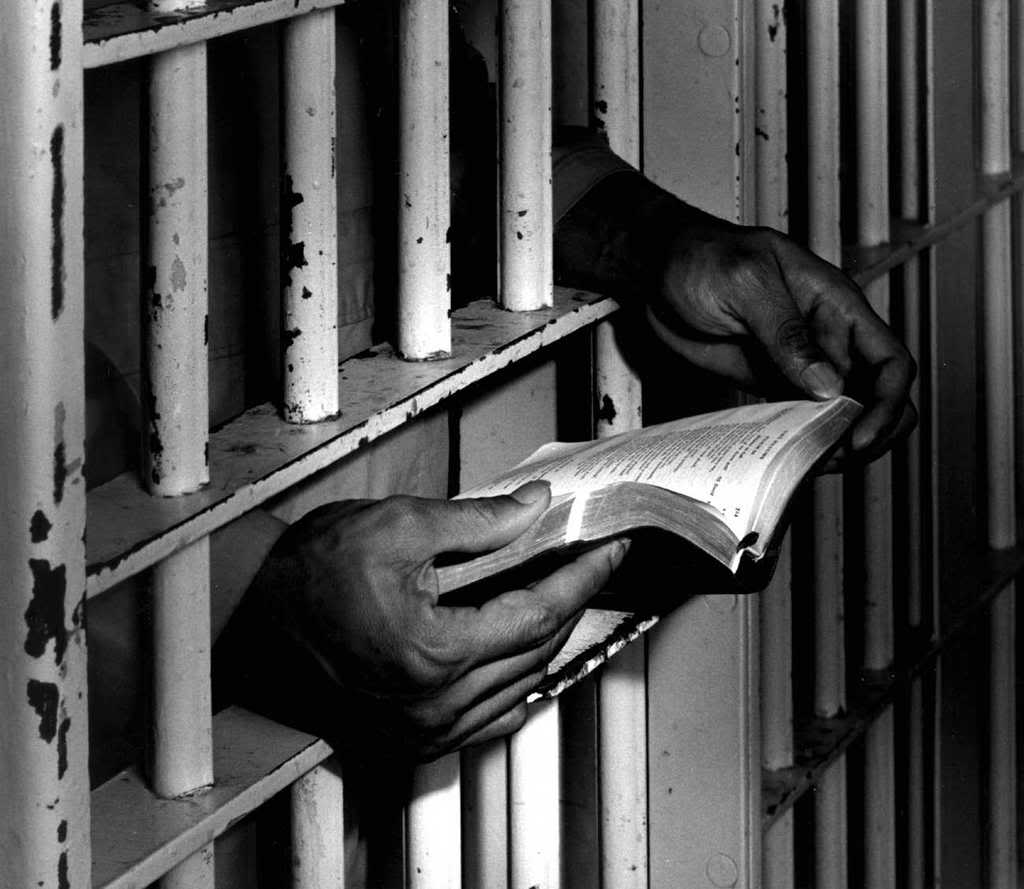
We celebrated mass this morning in the Kisangani prison. A thousand inmates are crowded into a facility meant for 300. Most were young men, whose crimes I never actually learned about. We were here to pray with them as our brothers in need. We tried to bring hope and light in a difficult place where it is needed the most.

The brick walls and barracks enclosed a dirt courtyard. Those attending mass crammed into a picnic  pavilion type structure in the middle of the yard. Parts of it were covered with patches of corrugated iron for shade from the merciless sun. One man sat on the roof looking down. I thought of the paralyzed man who watched Jesus from the roof and had to be lowered down, and that gospel passage came alive for me in a new way.

I scanned the crowd to see faces with scars and bruises from a rough life. Despite the bleak surroundings, once the drum beat began, and inmates started singing in soaring harmonies, I felt a tangible sense of God’s spirit. The opening song was in the Lingala language, but one repeated word stood out among the rest – Emmanuel! Advent has begun, and in this time and place we yearn and pray for a Savior, go to be with us. Advent counsels patience when we want instant solutions, hope when we are ready to give up or give in. O come o come Emmanuel.
prayer prisonJohn Pierre, one of our young Congolese confreres, presided and preached. I didn’t understand the words, but watched the faces and nonverbal interaction of the prisoners. They nodded. They laughed. They looked inside and reflected as he connected with the realities of their struggles. We all hope to hear the Word of God in that way.

From that crowded and hectic setting we moved to a more peaceful one: the convent of the Franciscan Missionary Sisters. The four members of their house were a mini League of Nations from Congo, India, Peru and Poland. They serve 1,300 girls who attend school next door. Besides academics the school offers courses in commerce and tailoring. If the girls can learn trades they can earn some money doing them even before they finish school.

As we talked over lunch, Fr. Marek asked them where they would hope to see their community in 15 years. They hope not only to serve local needs but to raise up local vocations who themselves have the needs of the larger world in mind. Perhaps the younger generation here might themselves be willing to one day be sent in mission.

In the evening another group of sisters invited us to their table. Jamaa Tatikufu, Sisters of the Holy Family, are a diocesan order, founded here in Kisangani. Sitting in chairs circled around the lawn we shared what kind of ministry each of us is involved in. We spoke of religious life, vocations, and the pastoral challenges each of our countries face. I admire the faith, charity and hard work of those serving the church through both evangelization and development.

Last evening, with the start of Advent, the church began celebrating the Year of Consecrated Life. Between the table fellowship and sharing with these two groups of Religious Women, what a wonderful way to kick off the year.


Monday, December 1 

I changed my domicile last night to the Monsignor Grison Center. Fr. Kiki, the director, wanted me to experience life here for a few days. Still in Kisangani, it lies more on the outskirts, on the banks of the Congo River. The setting is more peaceful, and as I look onto the river I can see ancient tree trunk pirogues taking villagers floating past downriver. Rather than the hustle and bustle of urban life around us, last night I drifted off to sleep to the chorus of frogs.

Part of the year the center is dedicated to retreats, as spiritual development is essential in renewing and revitalizing any church. When the war destroyed so much infrastructure there were really no other centers that could host spiritual searchers. It’s a needed and appreciated service to God’s people.

Other times of the year the center rents out rooms to civic groups for conferences and meetings. Again, there are few other places in the city that can offer such space. The rental income helps make the center pay its bills as it goes. Two SCJ priests and two interning seminarians oversee the operation. Another two priests serve the needs of St. Gabriel parish next door. It is the first and oldest parish established in the area.
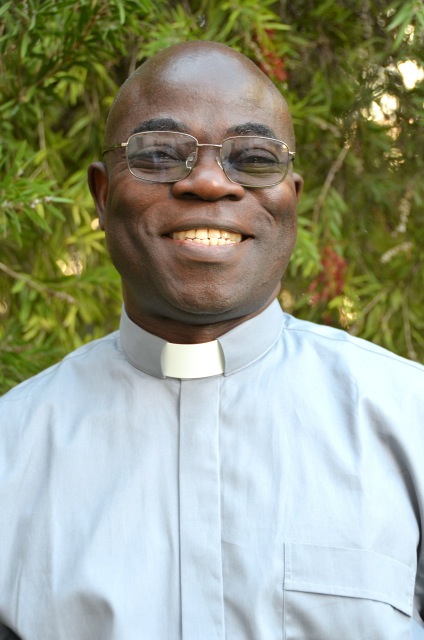
Fr. Zenon, provincial superior of Congo

Fr. Zenon, provincial superior of Congo

Fr. Zenon invited his provincial council and staff to have a wrap-up meeting with us. They laid out their overall vision for programs and building projects they dream about developing. Boldest is to build a new school to serve the needs of the abandoned children who come through the St. Laurent Center that would also serve the needs of that area of the city as it grows in that direction. Fr. Jonas, the provincial treasurer, was able to clearly break down the costs of each project. The small amounts they are able to raise locally , coupled with the amount of grants that might come in from other provinces, will determine whether these projects can happen sooner or remain but a distant dream. But the young and growing province is not afraid to dream big as its members try to meet the many social and spiritual needs of the areas entrusted to them.

The afternoon brought some free time. Fr. Apollinaire Mutima, SCJ, is the associate at st. Gabriel Mission. He is also studying in a field not usually associated with theology: forestry and agronomics. His last “field” placement was in the forests downriver where he learned about sustainability and trees. The jungle/forest has incredibly rich biodiversity, but the ecosystem is fragile and subject to abuse. We are stewards of the earth we inherit, and want to pass it on to the next generation in better shape than we found it. But that will take much work and conscious effort.

In the evening 27 area SCJs gathered for a farewell supper. We’ve been hosted and shown around by many of them individually, but it was nice to have everyone together at the provincial house. Tomorrow we travel back to the capitol, Kinshasa, so tonight was a time to exchange laughter, stories and email addresses, and wonder when we might next meet again.

Education about education in Congo

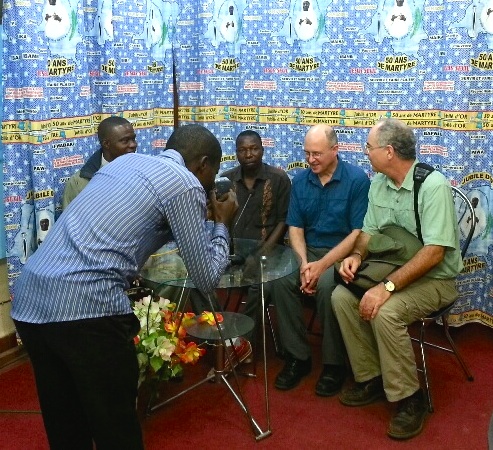
Fr. Charles Brown shared the photo above of SCJs with diocesan radio and television personnel in Congo. The US Province helps to financially support the broadcast center whose task is "evangelization and social development." Fr. Steve was interviewed on television during his visit.

Fr. Charles Brown shared the photo above of SCJs with diocesan radio and television personnel in Kisangani. The US Province helps to financially support the broadcast center whose task is “evangelization and social development.” Fr. Steve was interviewed on television during his visit.

Fr. Stephen Huffstetter continues to share his journal entries from the Congolese Province:

Friday, November 28 – The SCJ visitors from Poland and Cameroon returned home  yesterday and we welcomed two new members from the North Italian Province, Frs. Nerio and Daniele to our tour group. They flew into Uganda and took part in the events of the eastern part of the Congo before working their way to Kisangani to meet up with us here.

Visiting the minor seminary for the archdiocese brought back many memories for Fr. Nerio, who had lived there himself when it was an SCJ institution. We saw workers harvesting clusters of walnut-sized pods from palm trees to  press and boil and make palm oil. Rather than a kitchen, the cooking area was outside in the courtyard. Blankets spread in the sun held drying manioc.

The dormitory was one long room with beds covered in mosquito netting lined up one after another. Many of the buildings were in need of repair. The oldest original structure actually lay in ruins, destroyed in  the 1964 rebellion and never rebuilt.

But inside the classrooms where we met the students I encountered life and hope and energy. Their system of six years of secondary school would be the equivalent of our junior and senior high school together under one roof, so when we visited the first classroom I was struck by how young that group was. Just as in the States, when boys begin that young, only a small percentage will end up becoming priests. In their time of studies they will get a good education. Hopefully those who go one to other careers will become faithful Christians who will bring to those values to their families and society as a whole.

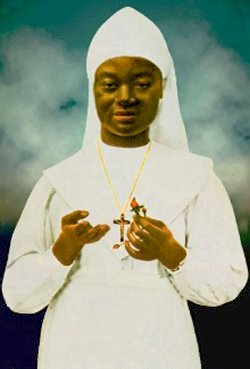
Sr. Anuarite

Sr. Anuarite

Every church we’ve seen has a prominently displayed a picture of Sr. Anuarite, a Congolese nun who was martyred in the 1964 rebellion. She has incredible respect and admiration from the people and many societies of prayer and good works have been organized in her memory. Fr. Claude, who worked for the diocese during his mission years here, was one of the interviewers when the Vatican investigated her cause. He actually interviewed the rebel officer who killed her when she refused to submit to him sexually. How would I have felt and acted to come face to face with one who killed someone I so admired?

We visited a high school.  One of the or English students asked me to explain why we have two different ways to pronounce the word “the” but I was no help there. Neither could I help when I noticed that instead of textbooks the students had just copybooks. The teacher asked if there was any way we could help with books and materials.

A complex problem we discussed on the way home is that illiteracy is very high in this part of the world. Books are both expensive and in short supply. Any items shipped into the interior take a long time to travel upriver, and without being guarded have a good chance of being stolen along the way. I asked about printing locally, but while there is a vast amount of wood, their are no paper mills. In this city of 1 million there is not even a daily newspaper.

The problem is similar in most any poor area of the world, and even my experience in the States. How can you gradually and effectively help a struggling local economy build the resources and infrastructure to meet its real needs?

Responding to health care needs the SCJs helped built a hospital some years ago. The surgery room looked like the set of a 1940 movie: six hospital beds to a room with no curtains or partitions. Families cooked meals on open fires at the property edge to feed their sick relatives. An ambulance with one missing tire rested on a concrete block. Bed sheets dried on the lawn. Nurses entered patient data by pen into a ledger book. Dedicated staff struggled with limited resources. The need is great and as the sick come to the door, they do what they can.

After the Six Day War in 2000, Fr. Zenon and other professionals of good will collaborated to develop an organization to give youth hope for a better future: GRADI Juenes (Group Reflection Action Development Integral for Youth). They volunteer their time to present programs, retreats, activities and even radio programs to help the youth in character and moral development. A starting point is a strong message of anti-corruption. They steer the youth away from getting caught up in the downward spiral of prostitution. Counseling is offered at the drop-in center. They reach hundreds of youth each month, and do it on a shoestring budget of about $1,250 per month. They expressed gratitude for our financial help. Again I was edified by the collaboration, commitment and hope.

Across the alley is a kindergarten that  the SCJs sponsor. School was closed for the day. I reflected on the brightly colored mural of Jesus looking over a crowd of Congolese children. Many of the buildings in the city could use a touch up. Paint seems like a luxury when there are more basic needs. Yet beauty and inspiration ARE a basic need.

Saturday, November 29 – RTA is the Radio and Television network for the Archdiocese of Kisangani. They invited us to tour the facilities and see how they use the media for both evangelization and development of the people. One of the technicians showed us the rough edit of last Sunday’s commemorative mass for the martyrs.

Frs. Steve and Charlie were interviewed in Kisangani.

Frs. Steve and Charlie were interviewed in Kisangani.

The main purpose of the visit was a “press conference”. A while back the SCJs gave a mission grant that helped keep them going through a critical time. I felt awkward when I found myself the center of attention and appreciation being thanked for something set in motion before I was provincial and the details of which I knew so little about. I mentioned that it is really our donors who deserve the thanks. We are only stewards of what they give us. They tell us to spread God’s love and use their donation where the need is great and it will do the most good. I thanked the staff for their dedication and hard work and told them I have seen good results and can assure our donors they have brought about great good.

We went to the production room and sat down for a short interview. Fr. Charles Brown graciously served as my interpreter. I spoke of what being here at the commemoration of the martyrs has meant to me, and offered some words of encouragement to the youth of the diocese. Fr. Claude Bédard then took his turn at the mike and had them laughing as he recounted some of his adventures from coming home after 30 years.

As a gift I received a lovely statue of Mary holding Jesus, carved in local ebony. Mary is the patron of the diocese, and they spoke of how the gift symbolized the connections between our peoples.

Our house for initial formation was rather quiet when we arrived. The new group of a dozen seminarians won’t start their program until February, but vocations are strong for us right now in Congo.

This part of the world has very limited banking and financial infrastructure. To try to establish some long-term financial viability the religious congregations try to invest what they have in land or buildings they can rent. Next to the house was some land the community wants to develop, and we saw the beginnings of a series of brick stalls where locals will be able to sell produce and wares. They joked that it was a local version of a strip mall!

We toured the Sotexki fabric plant to get an idea of the state of area industry. It is one of the multinationals still operating here, but in a much smaller capacity than in its heyday. Where once thousands of workers spun cotton into fabric, now the work is carried on by 200 or less. There are very few of these kinds of jobs for youth looking for employment.

Pizza for supper! 
I was grateful to a return to the good old fashioned comfort food I love so much. Fr. Giovanni is a missionary from Italy who knows how to make it right. He talked to a friend who owns a restaurant, borrowed his kitchen and ovens, donned a chef’s cap and baked us a feast as we sat in the (relative) cool of the evening and leisurely gabbed.

-Fr. Steve

US provincial continues to learn more about Congo and its people

SCJs pray at the tomb of the martyrs in Kisangani.

SCJs pray at the tomb of the martyrs in Kisangani.

Fr. Stephen Hufstetter continues to share his journal entries from his visit to the Democratic Republic of Congo for the commemoration of two 50th anniversaries: that of the deaths of 28 SCJ martyrs in Congo, and the 50th anniversary of the establishment of the Congolese Province. 

Monday 24

We’ve heard reports that back in the States heavy snows have snarled traffic and changed travel plans for many people this week. Ice and snow are the last thing on my mind as temperatures climb into the 90s most days in Congo. The issue here is rain and its effect on roads. Outside of the city, none of the roads are paved. We were supposed to travel east to the area of Wamba, where a  ceremony will commemorate the large group of SCJ martyrs who lost their lives there on the 26th. But roads are a muddy mess, and cars and jeeps that have attempted the trip have gotten bogged down or had to turn back.

After many days on the go, a slower day to read and take a long nap was greatly appreciated. The sidewalks outside our rooms were busy with visitors who took the opportunity to see Fr. Claude and Fr. Francois after their homecoming of many years.

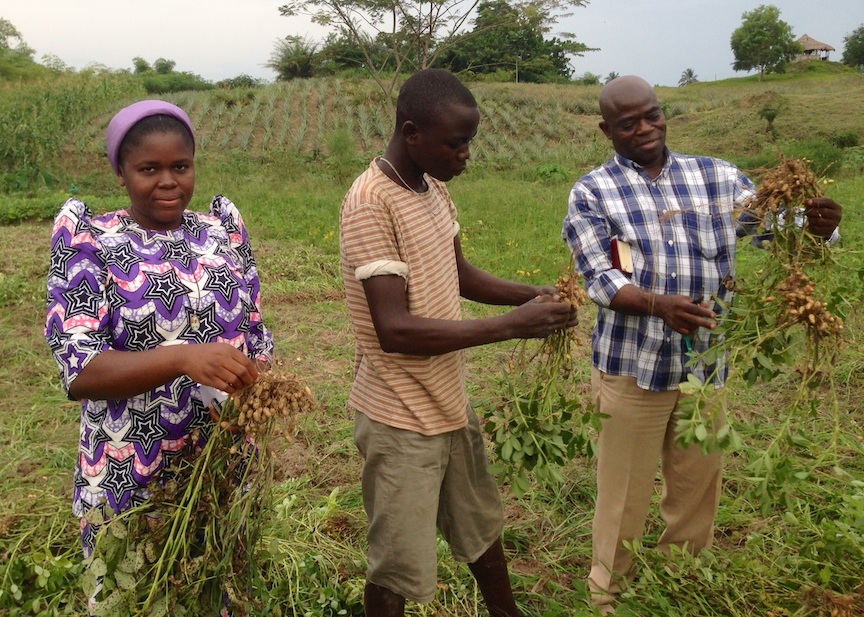
Fr. Zenon (right) helping in the fields

Fr. Zenon (right) helping in the fields

Fr. Zenon, the Congolese provincial and I sat down to discuss ways we can collaborate with one another. His province is quite pleased that we offer an English as a Second Language program in Hales Corners. He wants to continue to send men there in summers because English is becoming more and more useful as the international language, especially in the congregation. The U.S. Province is also sponsoring one Congolese member for continuing theological education. While studies in a different country are a difficult undertaking they see it as a way to help their province train experts in fields they need to support their works.

We also talked of finances. Monies from our  donors in the States go much further in a developing nation such as Congo. In schools that struggle mightily to teach the basics, $50 a month is the salary for an average teacher. Besides social projects, a lot of our financial help keeps the formation programs for our seminarians going.

Tuesday 25

With our travel plans east still canceled with impassable roads we were able to make a trip of 120 kilometers to the north on red dirt roads to the village of Banalia. This was one of the early SCJ missions staffed by the Dutch Province;  Fr. Hermann Bisshops, SCJ, was killed there on this day in 1964.

Along the way we saw many homes made of mud brick and leaf roofs. Pigs, goats and chickens constantly crossed the road, and far more traffic was on foot. Villagers carried large baskets with goods on their heads. Wood fires burned as people prepared food for their families. Bicycles laden with cassava leaves and bananas carried the goods to market.

Fr. Leonard takes a break

Fr. Leonard takes a break

We had a few stretches with only trees and plants, but I was surprised by the constant patches of homes even as we got further and further from the city. Most people live along the roads, with far fewer in the interior. We saw many children in uniform walking to school. We also saw many children working or playing, obviously not in school. when asking about this, I was told that education is mandatory but many of the children cannot afford the $5 per month school fees, and don’t attend.

We crossed over a couple of narrow bridges. Only one car could pass over at a time. Through broken wooden planks you could glimpse the rushing river below, and crossing over was an act of faith. At one river crossing we saw a hydroelectric dam which supplies most of the power for the region.

St. Elizabeth of Hungary church in Banalia stands tall and proud, though weathered and aged.  The mission has been turned over to diocesan priests and the three of them hosted us for lunch and a tour.  Also passing through the area was Bishop Joseph Banga Bsne of the Buta diocese. He serves as vice president on the Congo bishops conference and as we sat in a circle of chairs around the courtyard, he discussed church and political issues with us.

Congo has vast resources and potential. But it is a country where the rule of law is hard to enforce. Taxes and fees that should go to the common good end up enriching individuals instead. Those with wealth and power seem far distant from the needs of the villagers.

Because of poor roads it is a great undertaking for a parish priest, let alone a bishop, to maintain good contact with his flock.

After lunch we went into the village and visited the only hospital for many miles. It was brightly painted and well kept. The waiting room was an open brick building with spaces to build fires. Families will cook food there to take to their sick relatives. Staff say the most common problems are malaria, typhoid, TB and pneumonia. They are able to perform c-sections here. Since most women prefer to work with midwives, the hospital may not get the patient until the delivery has already begun and complications have set in. They try to do a good deal of education and preventative health care.

Thursday 27

Yesterday we toured the scientific and educational institute which is a center of natural sciences, with a focus on agricultural and botanical studies. They took over a former tobacco factory and created a place of great significance to the local and national economy. Their current pet project is developing strains of bananas that are resistant to the blight that has stuck some areas. We toured both the test plots and the laboratories where different plant strains are tested.

A beautiful walking trail with a wide range of native plants and trees was most like “the jungle” I had pictured in my imagination. The only wild animals though we’re in the small museum nearby.

We also toured the schools run by the Marist community. They educate 1,400 grade and high school students , and staff a small college with about 700 enrolled. I saw bright read and blue patches on the school lawn, and wondered what that could be. Gym clothes were drying out after PE class — much better than the smell of wet towels I remember from Jr. High days!

Students also help the school by doing manual labor. Some were cutting wide swaths of grass by hand with machetes and scythes.

I’m aware that today in the States is Thanksgiving Day. I’m  thankful to family, friends and community members back home, and pray their celebrations are joyful.

– Fr. Steve

Remembering those who gave their lives

SCJs join members of the local community to pray at the site where the first group of SCJ missionaries were killed during the Simba rebellion. Fr. Steve is pictured in the hat on the right.

SCJs join the local community to pray at the site where the first group of missionaries were killed during the Simba rebellion. Fr. Steve is pictured in the hat on the right.

Fr. Stephen Huffstetter writes from the Congolese Province where he is taking part in the memorials for SCJ missionaries who lost their lives in the Simba rebellion of 1964. Frs. Charles Brown, Leonard Elder and Claude Bédard (Canada) are also representing North America. 

NOVEMBER 22 – We walked to Bishop Marcel Utemi’s house to pay our respects. He warmly received us and thanked the Priests of the Sacred Heart for their rich history in this diocese. Monsignor Grison, SCJ, was the first bishop when this became a diocese. He is remembered with a statue in a small park nearby.

Next was a trip to the Procure. The high walled complex covering about a city block reminded me of some medieval fortress. It was here during the 1964 rebellion that many people took refuge. When rebels came Msgr. Fataki, a well loved native Congolese who later became a bishop, was in front of the doors. He stood up to the rebels who wanted to attack the Europeans inside. “If you are going to kill them you will have to shed my blood first.” They backed down and many lives were saved. In addition to the 1964 fighting, the procure and cathedral were shelled as recently as 2000. Bishop Fataki is now buried in the Cathedral, which stands next door, overlooking the wide Congo River.

In front of the cathedral stands a statue of the Sacred Heart. At one point revolutionaries were ordered to tear down external signs of the faith. They didn’t know the statue was constructed around steel railroad ties and when their wires snapped trying to topple Jesus, they took it as a sign to cease, and the statue still guards the church entrance.

More than an administrative office for religious activity, the procure was a supply center for the entire region. At a time when civil unrest brought all normal commerce to a standstill, SCJs arranged flights from Belgium directly into Kisangani filled with medicine and needed supplies. We saw the well worn printing presses, still in use today, that distribute news and books to the area.

Nearby in a small park stands a memorial to those slain in years of unrest. Sadly, it was later used as a killing site and is marked with bullet holes in the tiles.

3,000 come together 

NOVEMBER 23 – Today was the day of our big memorial celebration. It was 50 years ago today  the first group of SCJs were killed in a home a few blocks away from St. Martha Church.

The Congo River is perhaps a mile wide here, and there are no bridges to cross over. People walked onto a ferry boat that could take several hundred people at a time. As the mass of humanity crowded on board I got a better sense of how overcrowded ferries occasionally have trouble and sink. Yet the chaos quickly dispelled when the religious sisters on board intoned a hymn honoring Mary, and most of the boat started singing along with harmonies that stirred my soul.

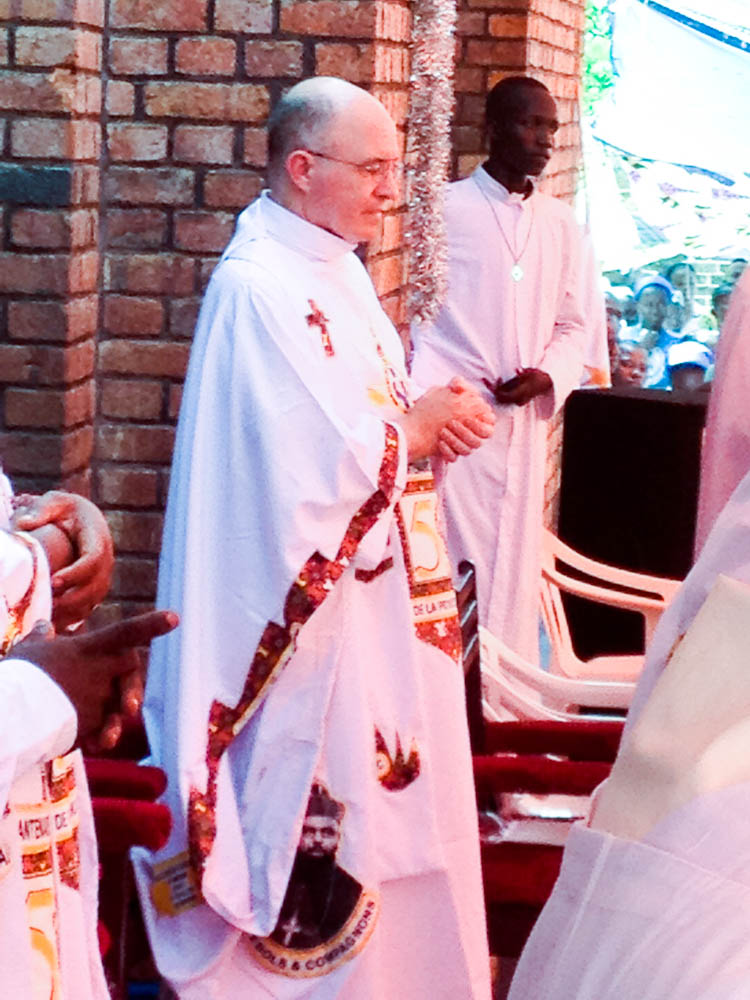
Fr. Steve during the memorial service at St. Martha's Church in Kisangani.

Fr. Steve during the memorial service at St. Martha’s in Kisangani; an estimated 3,000 people took part.

We gathered at the spot where our martyrs were slain, for prayer and reflection and the laying of wreaths. The mood was disturbed by intense yelling nearby, which I I thought was a domestic fight. I later learned it was a preacher who denounced us Catholics for disturbing the souls of the dead.

The crowd for the Mass was huge, perhaps 3,000 faithful from across the city. An altar was set on the front steps of the church, with a tarp providing welcome shade as the temperatures climbed into the 90s. Six tents provided shade for parishioners, yet the people still spilled out onto the roadway and surrounding the church.

The opening song and procession into church took a long time as the column of servers, priests and other liturgical minsters shuffled and danced to the rhythm of the drum. While so much of Congolese culture is so totally new and different, the prominence of the drum reminds me so much of my days working with Lakota people.

My favorite group of liturgical ministers were a dozen elementary school parishioners. They wore yellow dresses, white stocking feet, long white gloves and a star shaped white headband and they sang and danced to all the songs and liturgical music. I really smiled when they broke out white pom pons too!

I’ve never been at a Mass where the collection took a half hour! Initially ushers placed three foot high wicker baskets in the middle of the dirt road leading into church and people streamed from all sides to make their offering. The choir sang two or three uplifting songs during the time. When I thought we were finished, another group of parishioners lined up to present their offerings in kind – live goats and chickens, bushels of beans and vegetables, and bamboo poles heavily laden with bananas and other fruits from the forest. The need for the priest to wash his hands at that part of the Mass makes a lot more sense after handling livestock!

Distributing communion to the faithful is always meaningful to me, and today it was even more of a special honor and prayerful experience. I don’t know nor understand the lives of these people and what they’ve been through. Yet they believe, and it strengthens my own faith.

After communion came the remarks by the visiting dignitaries. I was warned that I’d be expected to give a few remarks. The Mass was in Swahili, but French is also widely spoken here. I dusted off my high school French from 40 years ago and with the help of Fr. Claude from Montréal told the people and the SCJ community of our prayers and support.

All in all we were at the altar almost four hours. While I didn’t understand the language, I paid more attention to the ritual, and the people gathered to pray and remember.

We shared a festive meal afterward. The new local food I tried today was a type of fried caterpillar. While it did take me a while to work up the nerve to taste, It reminded me of  smoked oyster, only crunchy.

The ferry was finished running for the day, so to get back to the other side we loaded into a pirogue. The boat was perhaps 40 feet long and carved out from the trunk of a single tree. About two dozen pilgrims sat on the edges as we motored across the vast river and reflected on an unforgettable day.

-Fr. Stephen Huffstetter, SCJ

Visiting today’s Congo while remembering the past

Fr. Leonard writes that by the time Mass was done their group missed the last ferry so "we traveled in a "piroug," a boat made from a hallowed out tree. Fr. Claude Bédard (Canadian Region) is front, left; Fr. Stephen Huffstetter is in the hat in the middle; Fr. Charles Brown is next to Fr. Steve.

Fr. Leonard writes that by the time Mass was done their group missed the last ferry so “we traveled in a “piroug,” a boat made from a hallowed out tree. Fr. Claude Bédard (Canadian Region) is front, left; Fr. Stephen Huffstetter is in the hat in the middle; Fr. Charles Brown is next to Fr. Steve.

Fr. Stephen Huffstetter writes from Kisangani, Congo, where he and Frs. Leonard Elder and Charles Brown are taking part in memorial services in remembrance of SCJ missionaries who were killed during the country’s Simba rebellion in 1964.

Kinshasa, the nation’s capital

Yesterday we toured the capital city of Kinshasa, one of the world’s sprawling urban areas with population estimates ranging from 8 – 12 million. There is a small downtown business district but much of the city is made of smaller buildings extending many miles in every direction. I was amazed to see so many people on foot. With the average worker earning about $2 per day there isn’t a lot left for transportation. Many from rural areas have come to the city in the hopes of work and a better life. Like other large scale migrations throughout history, the ruggedness of city life often overpowers the dream.

Fr. Gabriel needed some paperwork at the central government offices. Many people had been lined up since dawn and weren’t even sure if they would get in to do their business. Here one must be patient and persistent.

We walked to the president’s house (which is white here too) and to the memorial mausoleum where Laurent Kabila [president of the Democratic Republic of Congo from 1997-2001] was buried after a bodyguard shot him down. The corners of the edifice were strong hands holding ivory tusks, with broken chains and the hope for freedom. In preparing for this trip I read up on the history of the Congo, and the suffering and tragedies from the time of colonialism until today.

When we prayed adoration back at the community house I reflected that the problems I face are small compared to the major challenges of the Congolese people. Yet our SCJs here press forward with hope and faith. We have the chance to work together and make a difference.

Today we flew into Kisangani, formerly called Stanleyville. Our group of 10 seemed a bit lost amid the noise and chaos of the airport, but our hosts had a contact who helped us navigate our way through the system. By the time I went through the security questions the only thing I was asked was if I was part of the same pilgrimage. Unlike my usual travels, there were no assigned seats. I got a window so as to look out at the vast forests and wide and majestic Congo River.

On Saturday a memorial was held at the site where many of the SCJ missionaries were killed in 1964. The house has been demolished;  the SCJs were killed in the basement

On Saturday a memorial was held at the site where many of the SCJ missionaries were killed in 1964. The house has been demolished.

The first event in the commemoration of our 28 SCJ martyrs from the 1964 rebellion was an evening prayer and rosary at the site of 12 of the graves. Several sisters working in the area also died, and leadership From their communities honored them as well. Fr. Claude Bédard, a former missionary from from Montreal, also made the pilgrimage. He hasn’t been back to Congo for almost 30 years. When two of the sisters he used to work with recognized him we witnessed a joyful, tearful reunion. Prayer was in French, which I haven’t spoken since high school, but by the fourth decade or so I had the last part of the Hail Mary down.

We visited the Monsignor Grison center, which the U.S. Province helped renovate. In an area where many hotels and accommodations haven’t recovered from war and civil unrest, this complex serves not only as a center for retreats and spiritual development, but as a conference center as well. It is connected to St. Gabriel parish, on the shores of the vast Congo River. We first gathered for adoration, the adjourned to a reception area for an evening social. One room is dedicated to the 28 martyrs, and also had pictures of all the foreign missionaries who have served here. Fr. Charlie Brown and Fr. Leonard Elder laughed to see how they looked in their youth. Charlie remarked, “this is where I grew up and became a priest. We also prayerfully remembered people like Fr. Dave Maher, Br. Jerry Selenke, Br. Frank Miller and Fr. Frank Hudson. A table held ordination and profession pictures of our native Congolese vocations. This province is young and growing and the sixth largest in the congregation.

North American SCJs arrive in Congo

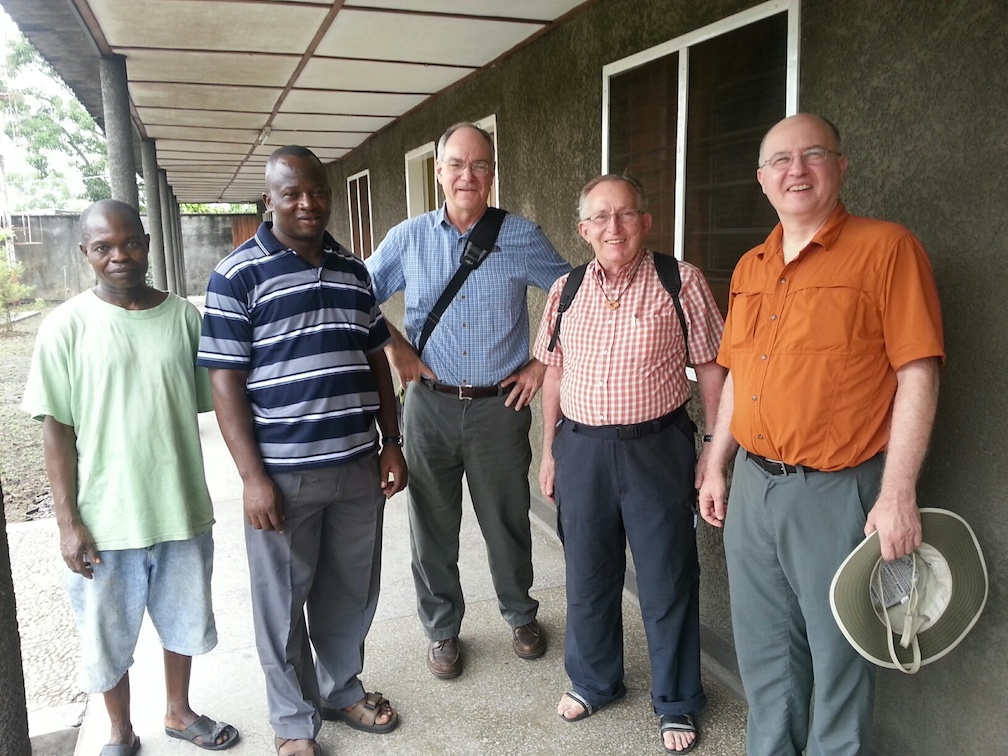
Fr. Charles Brown (middle, with blue shirt), Fr. Claude Bédard (member of the Canadian Region) and Fr Stephen Huffstetter with Congolese confreres.

Fr. Charles Brown (middle, with blue shirt), Fr. Claude Bédard (member of the Canadian Region) and Fr Stephen Huffstetter with Congolese confreres.

Frs. Stephen Huffstetter, Charles Brown and Leonard Elder are in the Congolese Province to take part in its 50th anniversary events of remembrance and celebration. It was 50 years ago this month that 28 members of the Priests of the Sacred Heart were martyred during the Simba Revolution. This year also marks the 50th anniversary of the establishment of the Congolese Province.

Fr. Steve shares the following:

An 8-hour overnight flight from Atlanta to Paris, immediately followed by another 8-hour leg from Paris to Kinshasa had me feeling weary. But when Fr. Gabriel approached us after we had cleared customs and asked, “Are you SCJ? Welcome to the Congo!!” I felt a sense of rejuvenated excitement. I am traveling with Frs. Charles Brown and Leonard Elder, both members of the U.S. Province who once served as missionaries in this country.

We flew over the Sahara desert with the astonishingly vast open spaces. Then as evening settled we crossed over dense jungle forests with few signs of lights or cities. What would I learn from my introduction to Africa? At my brother’s home for supper the night before I left he remarked that growing up in a small town in Indiana, Africa seemed like a distant dream – could I ever have imagined actually going there?

Porters aggressively scrambled to be the first to grab our bags, but we insisted on carrying our own. Eric, a young Congolese SCJ seminarian, helped load up the van. While French and four African dialects are the common national languages here, Eric studied philosophy in South Africa and was able to begin my orientation with details about the community and country in English. Eric is set for a missionary adventure, soon to be going to the Venezuelan Province to begin studies in Spanish. When a local church becomes a sending, missionary church, it has reached spiritual maturity.

Two SCJs from Cameroon, Jean Baptiste and Jean Marie, arrived just a few minutes after us. Jean Baptiste spent last summer in Hales Corners for our ESL program and greeted us with a hearty hug.

The main road was quite good but as soon as we turned off to wind our way to the SCJ formation house we had to slow down to cross rugged uneven surfaces. We received welcome from SCJ confreres from Poland, South Africa and Canada who have also arrived to take part in the celebrations. We enjoyed a hearty meal, conversations in many languages, and then headed for a much appreciated sleep.

Our novitiate in the shadow of Mt. Tanggamus

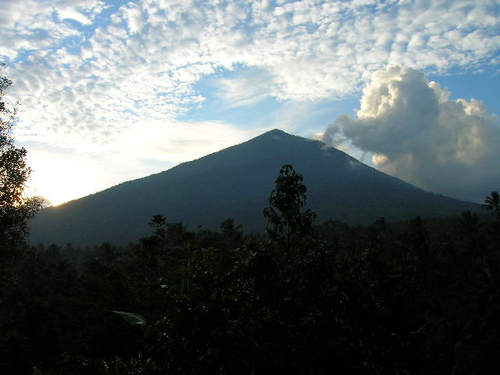
Mt. Tanggamus can be easily seen from Gisting, where our Indonesian novitiate is located.

Mt. Tanggamus can be easily seen from Gisting, location of our Indonesian novitiate.

Fr. Tom Cassidy’s most recent journal entries are from Gisting, Indonesia:

November 14, 2014 – I’ve arrived at the last stop of my Indonesian journey before returning to Jakarta next Tuesday in preparation for the trip home. After two days in Metro it’s time to spend the next four days at the SCJ novitiate in Gisting. I specifically asked to spend a few days here as on all my other visits (I think this is my fifth) it was “hello-spend-a-night-and-goodbye.”

Fr. Kus and Br. Antonio drove me here this morning. We left Metro about 8:30 am for the three-hour journey. The roads weren’t bad (though for the most part a single lane in each direction ) and the traffic presented few difficulties. Along the way we passed the airport I’ll use on Tuesday to fly from here to Jakarta.

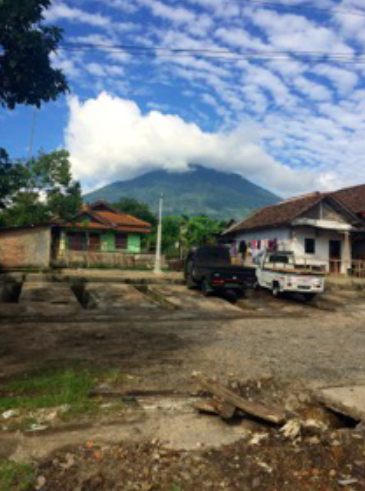
Looking at the mountain from a Gisting neighborhood

Looking at the mountain from a Gisting neighborhood

Gisting is located at the foot of Mount Tanggamus and is well known as the ‘village of a thousand springs.” I’ve tried to find out how high it sits but the internet isn’t cooperating at the moment. It is safe to say the trip from Metro to Gisting is an uphill climb. It is not a large city but a village that hugs the highway. It has been important to the SCJs for many years. A fair number of members of the Indonesian Province come from here. Fr. Sunardi, SCJ, who just recently earned his doctoral degree from Marquette University in Milwaukee calls Gisting home.

In addition to the novitiate, the SCJs staff the local parish and several years ago built a retirement community that unfortunately, not many senior SCJs prefer to use. It does not sit idle though as it is frequently used for retreats and as a conference center. I am staying there as the novitiate is filled. I was under the impression that it had hot water but was disabused of that fact when I took a shower after my walk this afternoon.

There is no room in the novitiate because this year they have 16 novices and 10 postulants which has greatly limited their guest room space. In turn, that will greatly increase the number of scholastics at Yogyakarta when the current novice class of 16 make their first profession of vows and head off to their philosophical and theological studies.

I don’t plan on climbing Mt. Taggamus, but it is a pretty site to see as I look at it out my window. Gisting itself offers a walker the choice of walking uphill on the way out of the novitiate grounds and downhill upon return or just the opposite if that be one’s choice. Threat of rain kept me walking on our grounds today, but tomorrow for sure I’ll venture out as rain tends to come in the afternoon so I’ll head out sometime after breakfast to see what Gisting may have to offer.

One of the less traveled roads of Gisting.

One of the less traveled roads of Gisting.

November 15, 2014 – This morning I took my walk exploring some of Gisting. I ran across a spring by sheer luck as when I turned right out of the novitiate’s main gate I was confronted by a Muslim School marching up the street and at the nearby corner it became impossible to head down the hill so instead I turned into a side street and found this stream in the process. By the way, I still have 999 others to find in the next three days if I’m to believe Gisting is indeed the village of a thousand springs.

The morning was quite pleasant with a temperature of about 85° and sunny skies. That would not last as this is the rainy season and the clouds build up so that by lunchtime the skies are gray and threatening and the rains come sometime during the early to mid-afternoon hours.

The virtue of taking the side road in addition to discovering a spring it allowed me to see some of the local housing, and scenery plus no traffic to speak of. I also found a few fields of rice and what looked like grape vines but I’m sure was a bean plant of some kind. I am told grapes are grown in some parts of Indonesia and given Gisting’s milder climate it might be grown in this area as well. Around here it is common to get two crops of rice in a normal year.

In addition to rice and beans corn for human consumption is a common crop as is palm oil and cassava. Then there are the many tropical fruits. Alas many of which we never see or taste in the States. I’m missing two of my favorites because they are out of season: duku and rambutan.

Tomorrow I will try to wind my way down to the traditional market now that I know where it is located. It is fun walking the streets standing out like a sore thumb. I don’t think they see many western tourists so stares are common along with the desire by young and old to use their smattering of English.

A worker in the SCJs' candle factory

A worker in the SCJs’ candle factory

Gisting wasn’t the only thing I explored today I nosed around the novitiate as well. This morning the novices and postulants finished a course in journalism. It’s a regular part of the novitiate curriculum as journalism is an important ministry of the SCJs. Judging by the laughter coming out of the classroom the novices and postulants were having a good time. I found out at lunch the highlight this morning was viewing the two funny videos the students put together as their projects.

I also spent time at the small candle factory just behind the main building. It’s a small way to help support the novitiate. It keeps food on the table! The factory has one full time employee and when things get busy and extra hands are needed some of the other novitiate staff will assist. I think from time to time the novices and postulants also lend a hand.

The candles are for liturgical or religious use. With Advent just around the corner they are busy putting together packets for Advent wreaths. I’ve been promised two sets to bring home with me to the States. The novitiate use to also raise coffee but no longer does so.

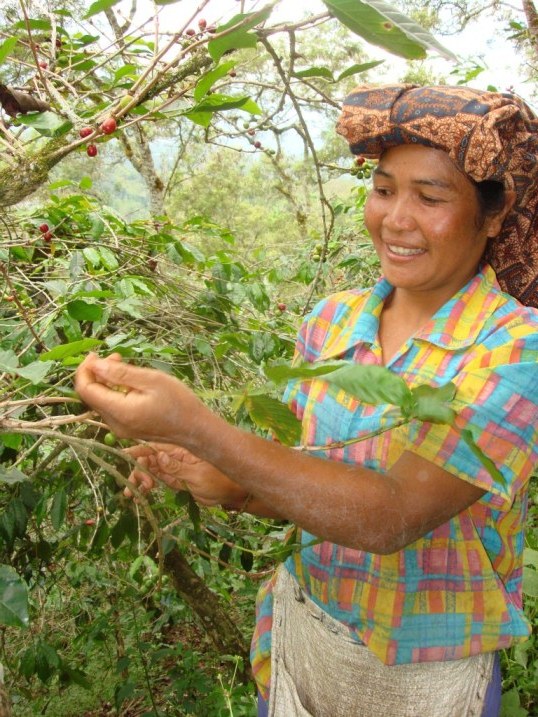
Picking coffee beans in Sumatra

Picking coffee beans in Sumatra

By the way, Sumatran coffee (in this case Lampung coffee) is a robust brew. It sure beats the instant coffee that is so common in India since tea is their preferred drink. Now this is how you brew a cup of Sumatran coffee.

1. Put your desired amount of coffee in a cup or glass. The coffee grounds must be extremely fine— almost a fine powder.

2. Pour boiling water slowly over the coffee grounds.

3. Allow the coffee to sit for a few minutes.

4. Just before sipping use a spoon and give it a good swirl.

Now you would think you’d be eating coffee grounds but because the coffee is so fine much of it is absorbed by the water and the rest settles to the bottom. I like a strong cup of coffee and have enjoyed three or four cups a day while traveling Indonesia.

Visiting our ministries in Indonesia


Metro.8

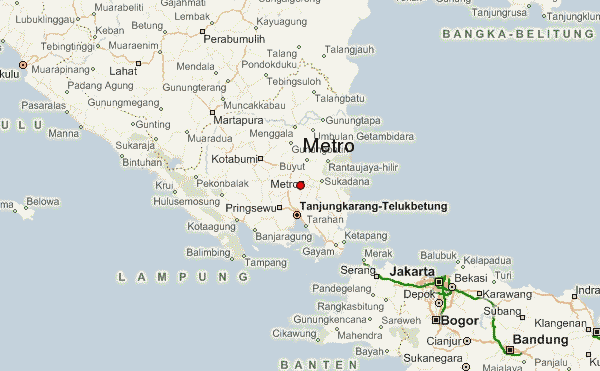
Fr. Tom Cassidy writes today about his journey to Metro, on the southern end of the Indonesian island of Sumatra:

Fr. Madya, SCJ, (provincial superior) and his driver picked me up just a little after 8:00 am from St. Paulus Minor Seminary and so began our 10-hour drive to Metro. We probably could have done the trip in nine hours but we made two stops along the way.

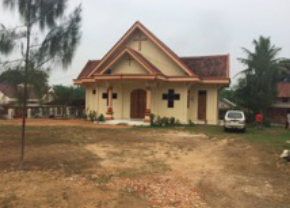
Chapel in Indonesia

Chapel in Indonesia

Our first stop was for lunch at a Halal restaurant. Think of kosher and you’ll know that what it is to Jews Halal is to Moslems. Fr. Madya said in the past we would have stopped at our parish for lunch but it was turned over to the diocese and we no longer staff it. Actually that’s a common theme in the Diocese of Lampung. The SCJs have been here for 90 years and staffed all or almost all of the parishes but as the diocesan clergy grew, especially in the last 25 years, slowly the parishes have been turned over to the local church. Metro, for example, was one of our large parishes that we no longer staff.

Our second stop was at St. Andreas (Andrew) parish in Mesuj, Lampung; the church and rectory (pastoran) were built in the last couple of years. It’s currently staffed by two priests, Frs. Sepiono, SCJ, and Eko Yuniarto, SCJ, and Br. Satria Pamungkas, SCJ, one of the 10 scholastics (regents) on his pastoral year assignment. We missed Br. Satria as the 10 regents are meeting in Jambi for their week of reflection just as the “baby priests” (The Indonesian term for those ordained five years or less) are meeting in Lampung. Actually that’s the reason Fr. Madya, made the trip as he will close the baby priests meeting on Thursday.

We stayed for about an hour and I was intrigued by the snack they served us — corn on the cob. It is eaten without butter, salt or pepper. In fact it’s almost impossible to find salt and pepper on an Indonesian table. As one Indonesian put it: “We put the spices in the food!”

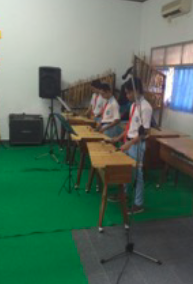
Students perform

Students perform

Our long journey came to an end at about 5:30 p.m. as we pulled into the drive of one of the two houses for boarding students (boys) that we have not far from the school the SCJs operate. I am staying with Fr. Kusmartono, SCJ, and Br. Sukarman, SCJ, who supervises the senior high boarding students. Br. Antonius Sudaryono, SCJ, and Fr. Anggota Budiyo, SCJ, staff the house for the middle school boarding students. The two houses are about a half a kilometer apart from one another and within walking distance of the Yos Sudarso school.

Our day began early this morning with Mass for the boarding students at 5:30 a.m. followed by breakfast, and then Fr. Kus took me to school to meet the faculty and tour the campus. We spent several hours together and then I was handed over to the care of Br. Antonius for the rest of the morning. It gave me a chance to use my rusty Italian as Antonius was in Rome to take care of the grounds while I was serving on the General Council.

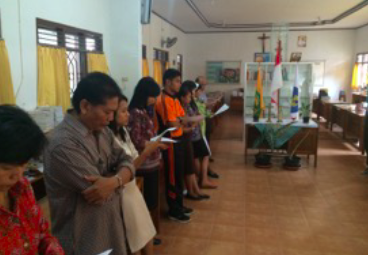
Teachers at Yos Sudarso pray at the start of the school day

Teachers at Yos Sudarso pray at the start of the school day

His own background was in carpentry. He returned to Indonesia after his stint in Rome and then worked in the Papua mission where, which by the way, both Fr. Vincent Suparman, SCJ, and Fr. Christianus Hendrik, SCJ, who nw work in South Dakota, also served. Papua is not an easy mission and one of the problems all the SCJs face is malaria as almost all of them come down with it sooner or later. Br. Antonius told me he managed the first two years free of malaria before the bug hit him.

After four years in Papua he returned to Rome for several years to take the place of Br. Vincentius Dalijan, SCJ, another Indonesian brother skilled in the building trade, who went with Claudio della Zuanna, SCJ, when he was named archbishop of Beira, Mozambique, in 2012. The archbishop’s residence was in need of major repairs. After two years of getting the archbishop’ residence in shape Br. Vincentius returned to Rome late this past summer and Br. Antonio returned to Indonesia to take up his duties here in Metro about a month ago. Now that’s all a long way of saying his Italian was better than mine as Br. Antonius has been using it for the last two years. I must say though we managed to communicate well enough to the point the he was my translator into Bahasa Indonesia when we stopped by to visit two communities of sisters towards the end of our hour-long walk we took as part of our morning together.

A day in Palembang

Screen Shot 2014-11-09 at 1.13.33 PM

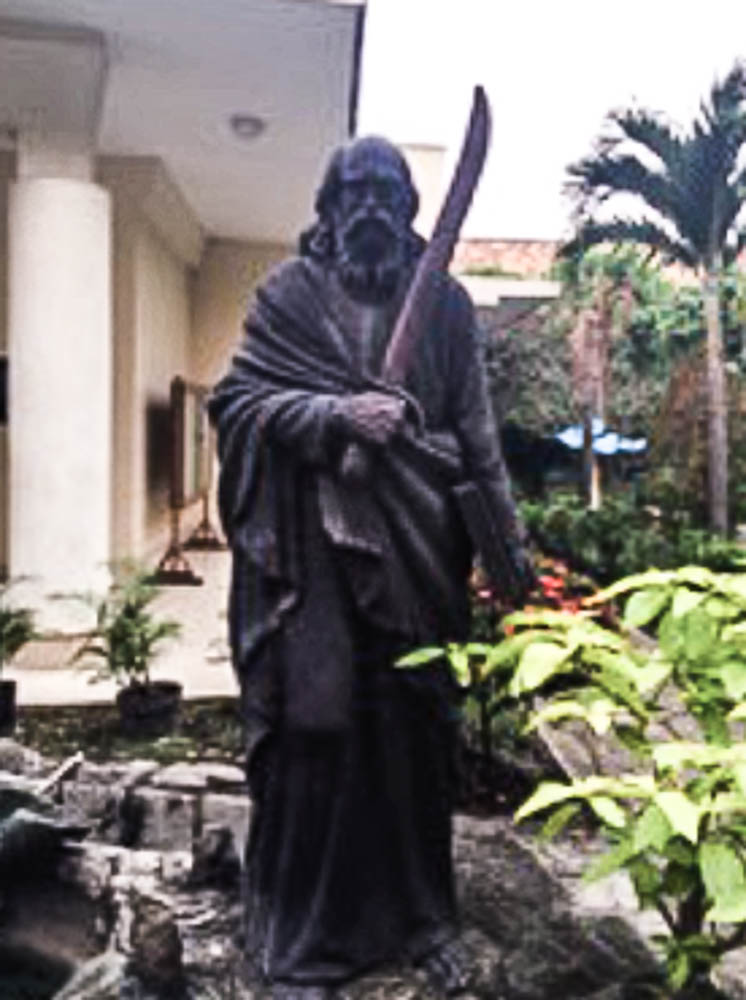
The statue of St. Paul outside of St. Paulus Minor Seminary, Palembang

Fr. Tom Cassidy writes from Palembang, Indonesia:

This statue of St. Paul with sword in hand stands outside the chapel of St. Paulus Minor Seminary where some of the residents in the area come for Mass. Tomorrow morning I will find out just how many attend as we’ll celebrate Sunday Mass at 6:30 a.m. As for today, I spent the morning touring a number of the churches in Palembang with Fr. Ignatius, a diocesan priest I know well as he spent several years living at Sacred Heart Seminary and School of Theology, first improving his English, and then attending Cardinal Stritch University earning a master’s degree in Educational Administration. He was our driver and was accompanied by Fr. Tri Mardani, SCJ.

Palembang is in red

Palembang is in red

Palembang was raised to the level of an archdiocese on July 1, 2003. The latest statistics I could quickly find on the internet were also from that year and listed it as having a Catholic population of 76,201 out of a total of 10,828,441 or .7%. The archdiocese covers three provinces of South Sumatra, Jambi and Bengkulu. It’s interesting that the Diocese of Tanjungkarang (Lampung) actually contains more Catholics, but since Palembang is one of the largest cities in Indonesia ranking 9th with a city population listed at 1,030,732 it became the archdiocese. In Sumatra only Medan (also an archdiocese) with a population of 2,185,789 outranks it coming in as the 5th largest city in all of Indonesia.

I was looking forward to meeting with Archbishop Aloysius Sudarso, SCJ, as I have known him since he was a student priest at Loyola University in Chicago and living with our SCJ formation community. Unfortunately at present he is in Jakarta attending the meeting of the Indonesian Bishops Conference. I found it interesting that both the US Bishops and their counterparts here meet at about the same time. I leave here on Tuesday for Lampung and the archbishop will not return until the 15th so our paths will not cross.

For many years Indonesia was truly mission territory and as such religious communities were tasked with building the local church. In the last 15 to 20 years a transformation has taken place where enough local (diocesan) clergy are now in place to take over many of the parishes previously staffed by religious. That is true in both Palembang and Tanjungkarang where the SCJs have served since coming to Indonesia in 1923.

Of the four parishes we visited this morning two were staffed by diocesan clergy and two by SCJs. Here at the seminary most of the religious on staff are SCJs but it also includes Fr. Ignatius, a member of the local diocesan clergy. Slowly the SCJs are taking over other ministries, particularly in education. This is at all levels, i.e., primary, secondary and at Musi University2 where they staff a number of positions.

Palembang, like many large Asian cities, is not easy to navigate. Actually the main roads are well kept and often have three lanes in each direction; however they are filled with cars and motorbikes. Happily there are a lot fewer busses or large trucks as they would add to the traffic woes. The former superior of our International College on his visit to Indonesia remarked that the bikes are like bees! Not a bad description as they dart in and out of traffic. Actually it is probably easiest to travel around the city by motorbike. I still think Vietnam takes the cake for the number of bikes per square meter, or foot in our American way of thinking.

In addition to the four churches, I had the chance to visit the tomb of Fr. Tom Fix, an SCJ from Milwaukee who came to Indonesia when I was a novice. Actually he was the first SCJ I ever met as when I was accepted to attend our seminary at Great Barrington, Massachusetts in 1960, he came to visit my family, along with the superior of the Great Barrington seminary. Fr. Fix was the last American SCJ missionary in Indonesia. In his last few years he was spending a great deal of time in India where the SCJs established their presence in October 1994. Fr. Fix died in April 2012. He is buried in an impressive mausoleum built by the Caritas Sisters who have a long-standing relationship with our SCJ community.

Our last stop before returning home was to enjoy lunch with the Caritas Sisters who once a month have a special meal for the sisters celebrating their birthdays. I believe we were celebrating four birthdays today. The Caritas Sisters were originally a Dutch Foundation but for all practical purposes it is now an Indonesian community with only a few elderly sisters still in Holland.

Smokey Sumatra!

Sumatra is one of Indonesia's largest islands.

Sumatra is one of Indonesia’s largest islands.

Fr. Tom Cassidy is spending much of November with the Indonesian Province, an area for which he had responsibility during his first term on the General Council. He writes the following from Palembang:

On the way to the airport this morning to catch my 10:35 a.m. flight from Yogyakarta to Palembang both Fr. Joni, SCJ, and Fr. Suradi, SCJ, warned me that Palembang would be smoky and that sometimes planes have trouble landing!

As our plane was coming in for a landing I understood what they were trying to tell me. Just like Mother Nature’s blanket of fog, a cloud of smoke hung over the city making it difficult to see the ground until we were practically on it. Not only that, you could smell the smoky air even as the plane was coming in to land.

It is an annual problem for this part of Sumatra as farmers west of here burn off the land to get ready for planting their next crop. The smoke lasts for about three months and spreads as far as Malaysia and Singapore, depending on the winds. As you might imagine, neither country is very happy about the situation. Fr. Agustinus Pribadi, SCJ, the provincial treasurer, told me that a number of owners of large farms live in either Singapore or Malaysia but still burn off the land. I’m thinking it may curtail my walking for the next few days. Thankfully, the air is to be much better in the province of Lampung where I will head next. I return to Jakarta on November 18.

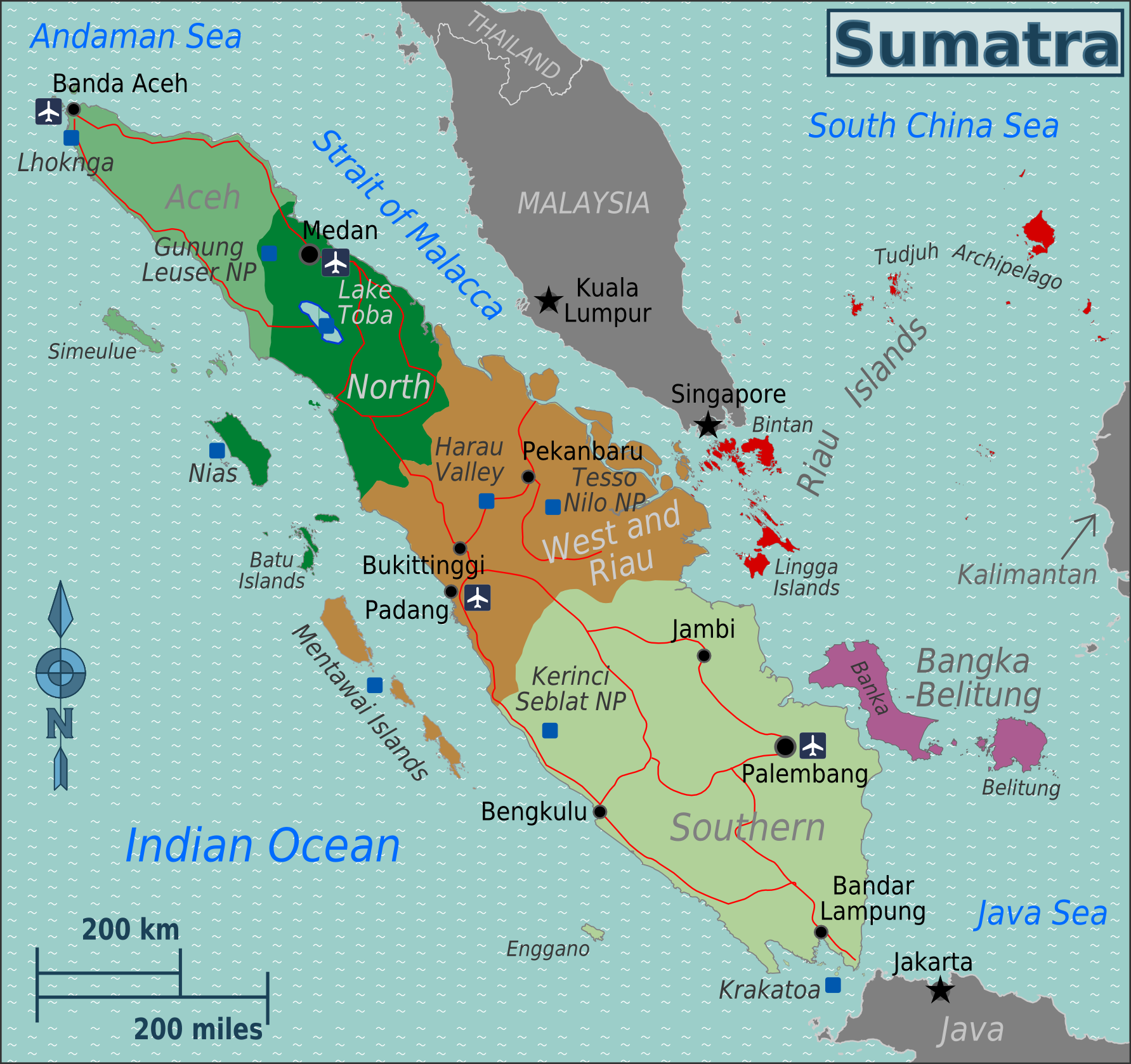
To help orient you as to where I am and where I am going I’ve included a map of Sumatra (top of page), one of the largest of the Indonesian islands. At the bottom right is the tip of Java with the capital Jakarta noted. Yogyakarta, where I came from today, is in central Java about a 55-minute flight east from Jakarta. Palembang is located in the province of South Sumatra (Sumatera Selatan) on the Musi River. On Tuesday I will travel from there to the province of Lampung making stops in Metro and Gisting and maybe one or two others depending on what has been arranged.

I was given the option to drive or fly to Lampung, where my fist stop will be Metro. To fly there from Palembang requires flying to Jakarta and then down to Lampung. They said it takes five hours but if you add one or two hours at the airport you’re up to seven for the trip and, like traveling to South Dakota from Milwaukee, you might as well drive it. Besides, it will give me a chance to see the countryside; something you can’t do very well from 35,000 feet up.

My room at the seminary is very comfortable and air-conditioned for which I am grateful, more for the quality of the air at the moment than the cooler temperature. Certainly one of the differences that’s easy to spot from my last trip some 18 years ago is that air-conditioning is available in certain rooms — especially guest rooms. The roads in Jakarta, Yogyakarta and Palembang also seem much improved. It will be interesting to see if rural South Sumatra and Lampung roads have changed much in the same time span.