The contrast of beauty and poverty

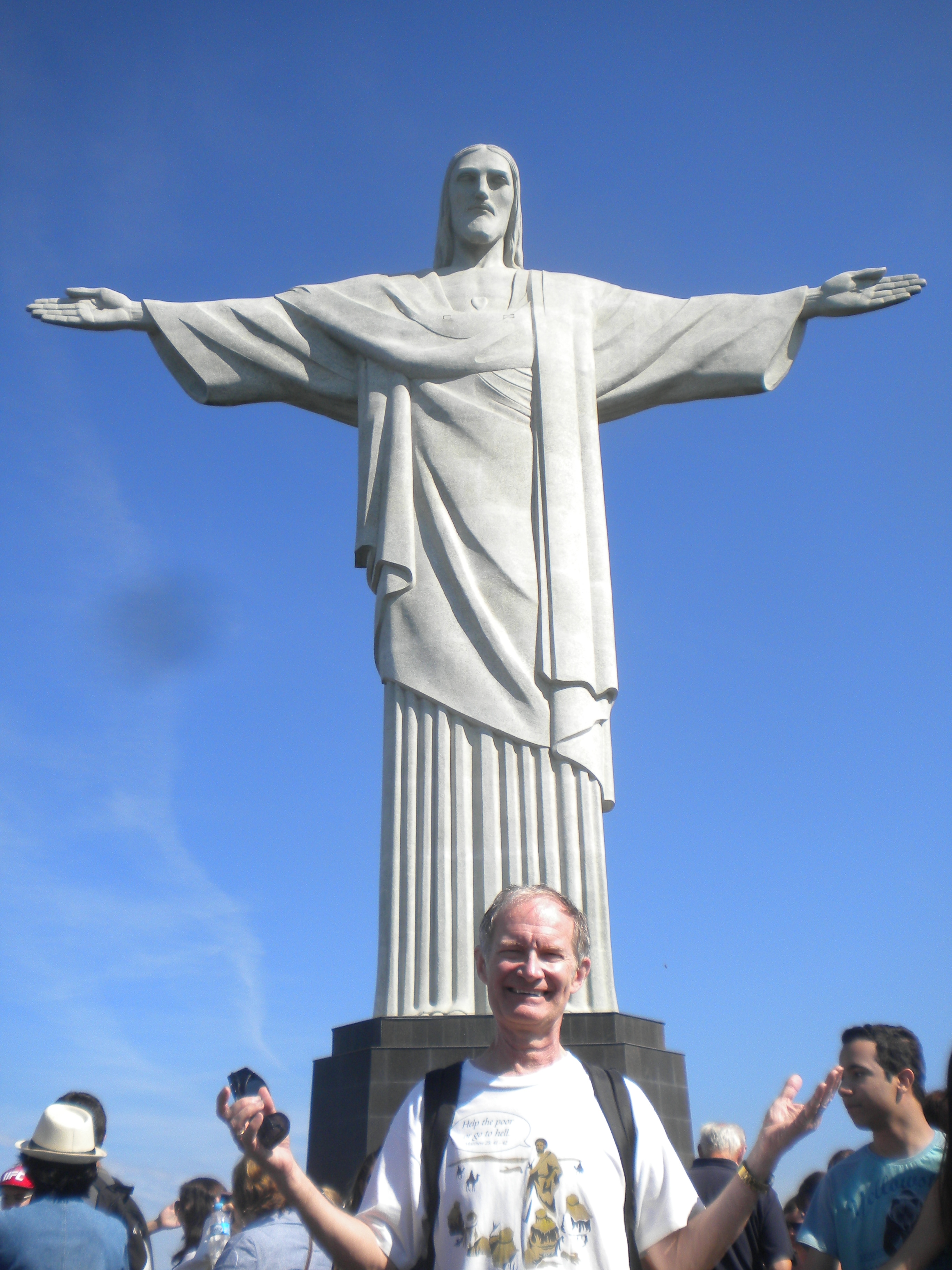
Fr. Tim next to the famous Christ the Redeemer statue which overlooks the city of Rio de Janeiro

As noted previously, Fr. Tim Gray, SCJ, is spending the last part of his sabbatical in South America, living and ministering with our SCJ communities there. On July 23 he wrote the following:

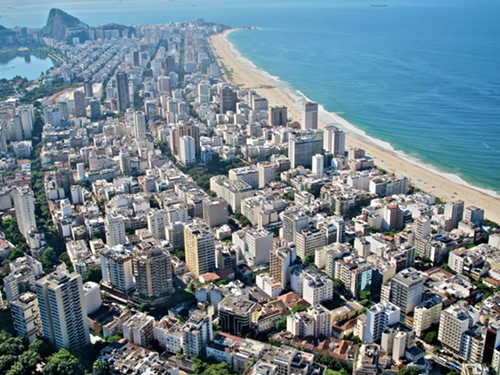
I look down from the Corcovado, the mountain on which is erected the well-known statue of Christ the Redeemer overlooking the city of Rio de Janeiro.

Only in Brazil.

If this were the United States, this would be a large cross, challenging believers to repentance and unbelievers to mount furious lawsuits.

But this is Brazil, land of tolerance, and the monument is noted with pride by all Cariocas (residents of Rio) as a symbol of God’s acceptance and love for all people.

This certainly is one of the most beautiful panoramas in the world, and has gained Rio the distinction of hosting World Youth Day in 2013, the World Cup in 2014, and the Olympics in 2016. However, the daily reality of residents of this overgrown metropolis of 12 million people presents enormous social challenges, and as usual, the SCJs (who call themselves here the Dehonians) are in the middle of it.

The first sight that greeted me as I arrived at Sagrado Coracao church was a long line of pathetic-looking people lining up for the weekly distribution of food. Fr. Jose Luis Gouvea, the pastor, pointed out to me with pride that the youth ministry had collected four tons of food in a one-week drive to stock the food pantry. Indeed, the 6:30 p.m. youth Mass on Sunday night was overflowing with enthusiastic youth and lively music. In fact, each Mass here has its own character; the 6:45 and 8:00 a.m. for senior citizens, the 9:30 a.m. for children, the 11 a.m. for couples, 6:30 p.m. for youth and the 8:00 p.m. for a group called Maranatha, which volunteers to work with the chemically dependent. The number of volunteers in many different areas of the parish is staggering.

I was quite fortunate to be able to attend this week the semi-annual retreat for the lay Dehonian group, which counts 50 members in this parish and 35 in Bom Jesus da Penha, the other Dehonian parish in Rio de Janeiro. It was heartwarming to see lay people so excited about our charism and so dedicated to putting it into practice. Next week I will visit the parish in Penha, which serves some of the infamous favelas (slums) of the city.

-Fr. Tim Gray, SCJ


Soldiering on as an Army chaplain

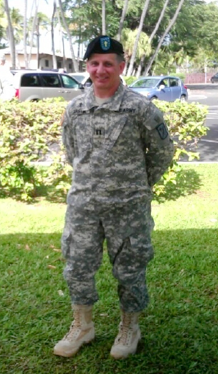
Fr. Mark does a baptism for a military family.

Fr. Mark Mastin is finishing his first year as an Army chaplain at Schoefield Barracks on the island of Oahu in Hawaii. He recently wrote with an update on his work:

I really feel honored to do this ministry. Every time I look at the photo I have of Fr. Dehon helping soldiers during the war of his era, I cannot but think how he and I are connected. We share the same desire to help soldiers regardless of the reason for war. We both have felt saddened by what war does to the soul and spirit of people. We both have felt a purpose in some small way of bringing the presence of God or at least a sense of peace and consolation to those afraid and feeling depressed, discouraged or emotionally or physically injured because of war. Finally, he must have felt the loneliness of being separated from his community members, family and friends. There is no glory of in any of this ministry.

Fr. Mark Mastin

Is it hard?  Yes! There days that I can feel drained and exhausted when trying to help a soldier, or help a family member cope with an issue of suicide, death, tragedy, deep emotional and psychological problems, sacramental preparations, etc.

But yes! I have good days and experiences when I feel that I have made a difference.

It has been extremely busy here at the battalion, as well as at the garrison chapels. In the battalion, we have had more field exercise trainings over the last several months, especially during Lent and Holy week. Yes, our scheduling shop planned these exercises during these time periods without looking at any religious calendars or consulting me. My commander was not pleased at this oversight.

At the garrison chapel level during these last four months, I not only had to perform my tasks in the field of operations at a Marine base, but I also had to leave every day to come back to each Army installation or Air Force or Navy base to either lead or help out with ceremonies, Lenten or first confessions, first communions, baptisms, daily masses, Living Stations of the Cross with the teens, Lenten and Holy Week activities, Confirmation Retreat, Easter Vigil and MC at the confirmations with the Military Auxiliary Bishop Buckon. Welcome to the military! Even though this was a difficult period, I really enjoyed the experiences.

My battalion is to perform more field exercises in the next several months. More desert training on the mainland. I will also be at sea helping. We have been notified that we are supposed to be going to the war zone overseas in phases beginning in June through August of 2013 for our nine-month tour of duty. We’ll see if this happens. We have had two cancellations last year.

We are still short of priests here in the on the island and elsewhere. I am one of two. The other priest is gone half of the time. So, I continue to manage the garrison chapels and all of the sacramental and administrative things. A retire-recall priest is coming by the end of the month, which will be a great relief for me.

I have made some good friends here. Many of them are pilots and very active Catholics. Having meals with them and their families is fun, especially in watching the war hardened pilots try to curb their language around me. On a recent weekend night we had a concealed wine tasting contest to determine which would be the best wine to order for our Masses; the winner was a Jewish wine. Go figure! The current wines that the Protestants have bought for us have been so bad that even Jesus would had to have performed another miracle to make it taste better.

In other areas of fun I have been running with members of my Battalion in 5-8  kilometer races for local charitable groups in Honolulu. In the recent 5k race, I came in tenth out of a several hundred. It was a bear of a run through the mountains and mud and rain. There were young grade school and high school kids that ran in this race too who were quite good. My commander said that some of these kids beat him and other adults in last year’s run. There was an ongoing joke that someone had to beat these kids. Well, unashamedly, I met the challenge. Everyone was quite pleased that I beat these kids!!! My commander jokingly calls me the “Beast” for still having the athleticism of a 20-year-old even though I’m 55. I pray every day that I will be able to remain healthy.

My battalion commander and other higher ranking commanders have been very pleased with my work and ministry, as well as being grateful to the Priests of the Sacred Heart for endorsing me.

That’s all for now,

Fr. Mark Mastin, SCJ

Maranhão

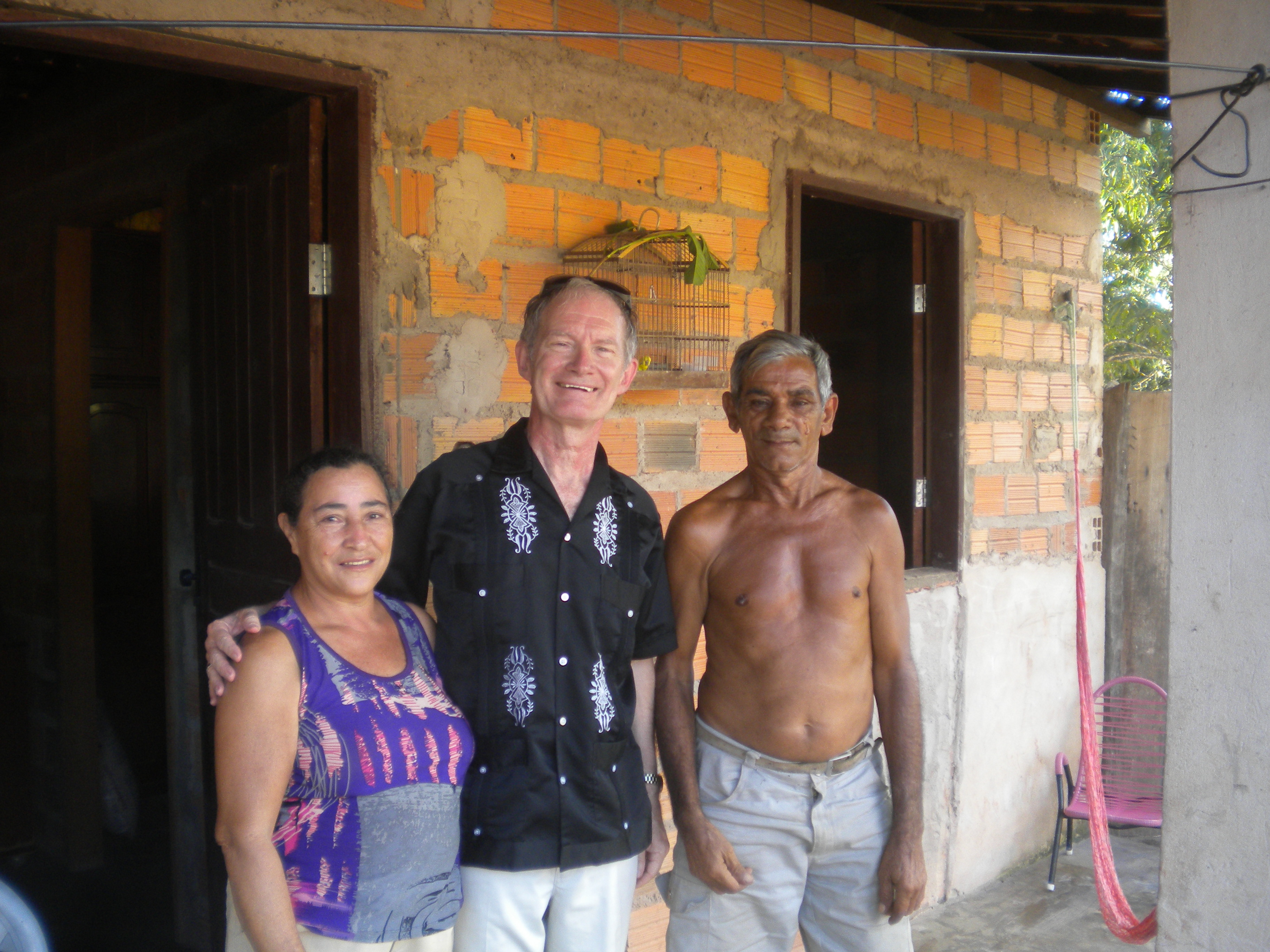
Fr. Tim visits a family in one of the rural communities of Maranhão, Brazil.

As noted previously, Fr. Tim Gray, SCJ, is spending the last part of his sabbatical in South America, living and ministering with our SCJ communities there. On July 15 he wrote the following from the Brazilian state of Maranhão:

On July 9 I arrived in Maranhão. The SCJs came to this neglected, underdeveloped state 43 years ago and demonstrated their commitment to it by making it an official region of the community (now, a district). As also happened in parts of the United States, the SCJs used their own resources to finance ministries which the local church could not afford.

The night after I arrived I concelebrated Mass at Santa Paulina, the newest of the three parishes which SCJs have established on the periphery of São Luis, the capital. Mass was celebrated in the parish hall, while funds are raised for the new church. I was quite surprised at how bare and plain the hall looked, compared to the lavish decorations found in the simplest churches in Brazil; only one statue, a life size image of St. Paulina, presided over her flock.

Threading our way past several classrooms and meeting areas to vest before Mass, we paused at the Eucharistic chapel. Perhaps as proof of our SCJ devotion to the Eucharist, this was the only room with air conditioning!

We finally arrived at the tiny room that served as the sacristy, and now I understood why there were no other statues in the church. They were all here! They were huddled together on a table about the size of a card table, like a Noah’s ark, waiting for the day when they will be given their proper places in the new church building. Who knows, maybe they are being held hostage as well.

After Mass, It happened that there was a big parish fundraiser in the street outside that evening, and so I discovered the rich folkloric tradition of Maranhão as two different dancing groups in exotic costumes put on quite a show. Who needs Carnival in Rio when you can see all this for free, take videos and then come out and join the dancers at the end?

The next day I saw quite a different dimension of Maranhão. I hitched a ride with a priest and two seminarians to Santa Lucia. After a five hour ride, slowing for each of the dozens of speed bumps which mark the entrance to each village along the way, we arrived at 2:30 a.m. The sleepy town, the lonely church, the dogs sleeping among the weeds growing in the middle of the street told me I was in for a culture shock. Seeing things the next morning in the light of day did not do much to change my impression that this was a place forgotten by the outside world.

Except for the SCJs.

The dedication of the SCJs in this city (I wanted to say remote city, but there are many places much further down the road) has contributed to the establishment and growth of 180 base communities; 40 in Santa Lucia and 140 in “the interior.” Most of these communities have Mass celebrated twice a year. In the rural community I visited, as with most others, a small chapel built by the community members themselves is home to Bible study classes, catechetical instruction, and local celebrations. During the annual parish celebration (which, in typical Brazilian fashion, runs from October 31 till December 13, the feast of Santa Lucia), thousands of people gather from all over the area at the mother church for the various processions, Masses, parish renewals and retreats, dinner, concerts, and folkloric presentations (The youth ministry has taken on the task of using the local folkloric tradition as a catechetical instrument.)

I visited two of the six other parishes, which also struggle to stretch resources. One has a parish retreat center — it was the third one that I have seen so far! Amazing! In Mississippi we had to drive hours to find a diocesan retreat center, and three of our parishes here have one within walking distance. Of course, the dormitory here is a room with 40 hooks for hammocks… but there is an adequate kitchen, and rooms for talks, and a chapel. The commitment to formation of leaders is so evident.

Guess what! Two of the parishes also have their own local radio stations! In places with so little entertainment, that is a great ministry.

Of course, the hospitality of the SCJs has been outstanding — especially the enthusiasm of the younger members. Of the nine SCJs in these parishes, two are deacons and one a seminarian. Almost all of them are from thousands of kilometers away in the traditional heartland of Brazil, and have made the commitment to join this young District. It is truly missionary work.

-Fr. Tim Gray, SCJ

Remembering Br. Tim

Image

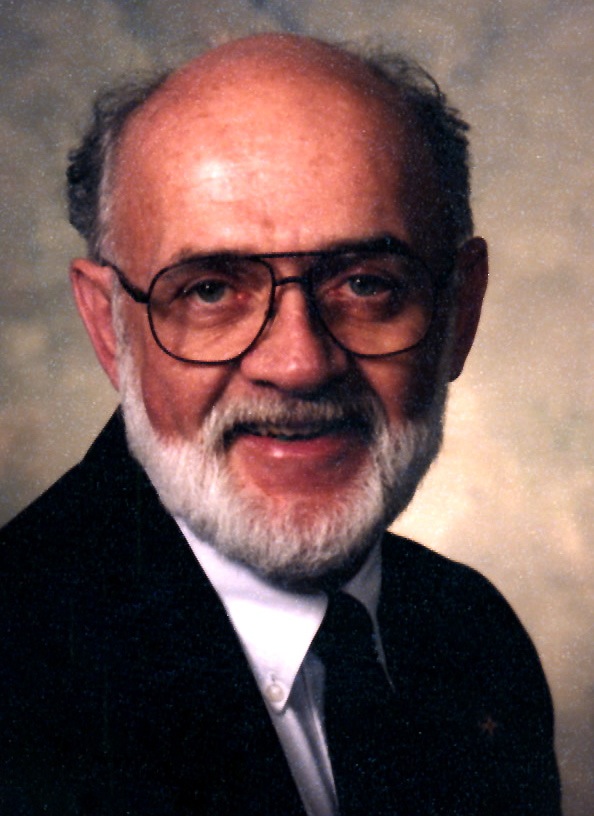
Br. Timothy Murphy, SCJ, died July 12, after having been hospitalized since July 1 following a seizure, and later, a heart attack. Br. Tim was 74 years old. He professed his first vows in August, 1965, and his final vows in August, 1968. Soon after learning the news of his death, Fr. Mark Mastin, SCJ, a chaplain in the US Army, shared the following:

I am very saddened at the death of Br. Tim.  I notified many of my Donaldson classmates about Tim’s death.  I write this with swollen eyes.

Br. Tim was probably one of the most liked SCJs by all of the students at Donaldson during my era of 1971-1975; no offense to those other great men who were there.  He was one of those unique individuals that was truly interested in all of the students and who never tried to play favorites with a particular group.  He spoke our language and never placed any type of rules upon us.  You could talk to Br. Tim in confidence and he usually gave you great advice.  I also remember his dog Toby. Br Tim and his dog were inseparable.

Br. Tim was noted for frequently taking a few of us to various events or just a night on the town for a movie or ice cream — and yes, Plymouth, Walkerton and Argos were towns.  Sometimes, we got to the really big city of South Bend!!!  He knew that being cooped up all of the time at the school was not always a good thing for us. Going with him was better than sneaking off and getting into trouble — admittedly though, sneaking off was good too!

I remember Br. Tim’s truck as being pretty cool.  It was a hard covered truck with benches built into the flat bed.  One could open up one of the bench compartments to reveal soft drinks and snacks.  Just those small acts that he did for us made our seminary stay enjoyable.  His acts of kindness diminished the loneliness that we young men can experience when living so far from home.  

Finally, many of us remember Br. Tim as the muscle man.  He looked like a body builder and was quite strong.  I remember visiting him in Florida in 2003 and saw a man still physically fit and hoped that I could look that fit when I reached his age.

Since my years at Donaldson and onward, Br. Tim kept in touch with me and many of those from my high school era.  I will miss his yearly Christmas cards.  I am certain that all who knew him will miss his caring nature.  God bless you Br. Tim.

4th of July in Brazil

As noted previously, Fr. Tim Gray, SCJ, is spending the last part of his sabbatical in South America, living and ministering with our SCJ communities there. On Independence Day he wrote the following:

Fr. Tim Gray

July 4, Lavras, Brazil.  Fireworks are going off; the SCJs are preparing churrasco and chilling beer to get ready to watch the big football game. But it’s not a USA Independence Day celebration, just another big showdown between archrival teams in this soccer- crazy country.

Suddenly, I realize that I am a fan of one of the teams — Boca, from Buenos Aires, whom I adopted on my visit to Argentina in 2005. They feel like the Boston Red Sox of soccer. So I joined in the cheering and teasing (and like the Red Sox of old, they lost).

The celebration was an informal send-off as I prepare to move north (toward the equator) to visit the District of Maranhao, As I travel, I notice one charism that seems common to most SCJ places I have ever visited; SCJs make large investments in improving the well-being of society.

So far, in Brazil I have only visited the orphanage and social service centers at Sao Judas in Sao Paulo, the school of philosophy/theology in Taubate (serving the entire archdiocese), the drug treatment center, community clinic, vocational school  and the retreat house here in Lavras. There are many other such institutions in Brazil which serve the church and society, places where SCJs choose to invest their resources in “promoting the reign of the heart of Jesus in people and in societies.”

Our US Province participates in many such ministries. We may not run large universities or hospitals, but we certainly leave our mark.


St. Valentine of Brazil?

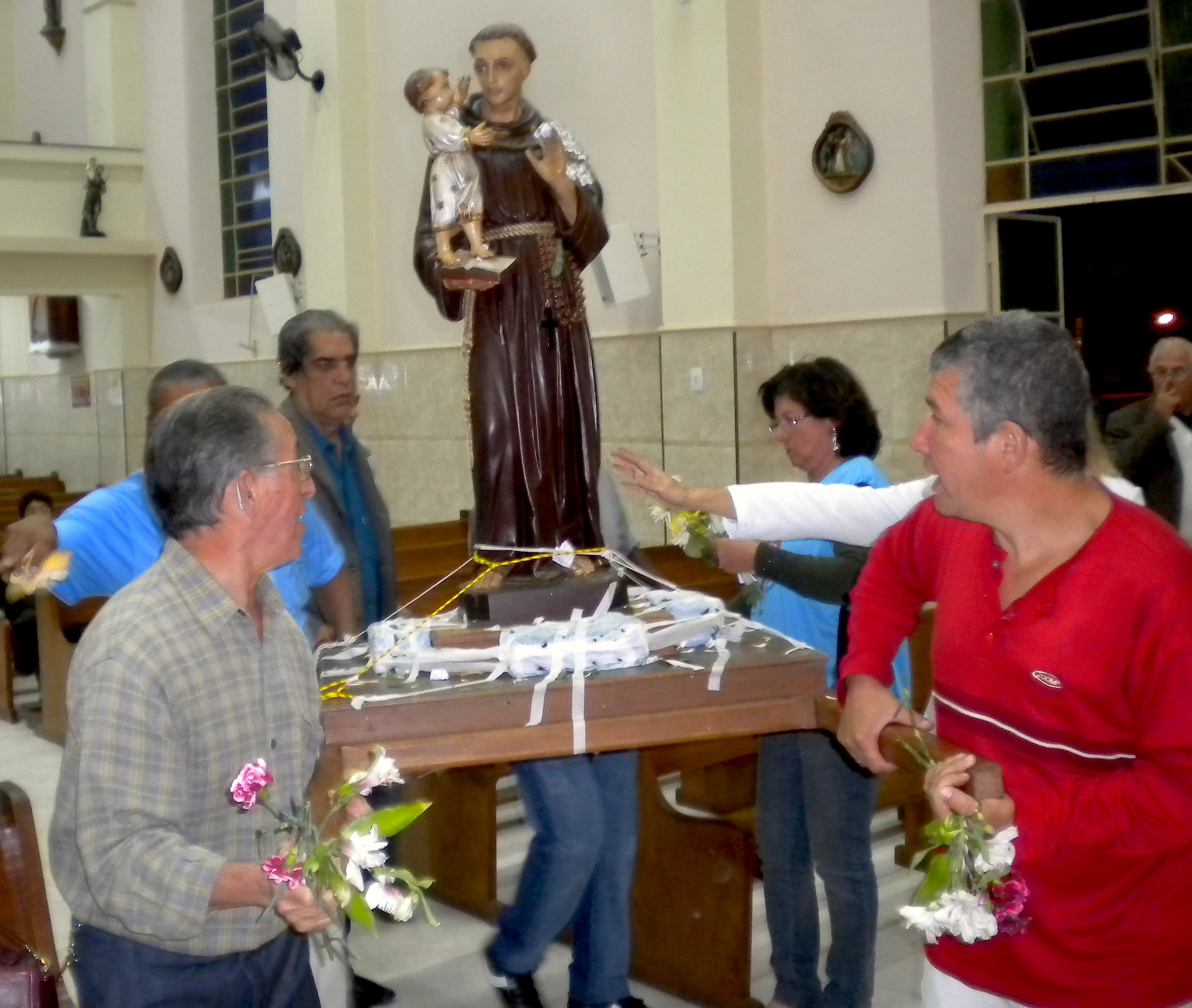
The statue of St. Anthony of Padua is brought from a church for an outdoor procession.

As noted previously, Fr. Tim Gray, SCJ, is spending the last part of his sabbatical in South America, living and ministering with our SCJ communities there. This week he writes the following:

Wednesday night was the final night of the novena of prayer dedicated to St. Anthony of Padua, a very popular local saint (note: I think St. Valentine got lost crossing the equator because in this part of the world lovers choose June 12 to exchange cards and flowers, and to dedicate songs on the radio; youth were praying to St. Anthony to send them someone to love).

Pedro Paulo, the seminarian spending his pastoral year at the parish, asked me if I wanted to participate in the procession. I said “Yes! Of course!”  I really did say that, in English, because he wants to practice his English with me (and he needs all the practice he can get). He led me six blocks to St. Anthony church, while it was getting dark (at 6 PM – it’s winter here), where a crowd was gathering. The rosary was being prayed and pastoral assistants were scrambling around, getting everything ready.

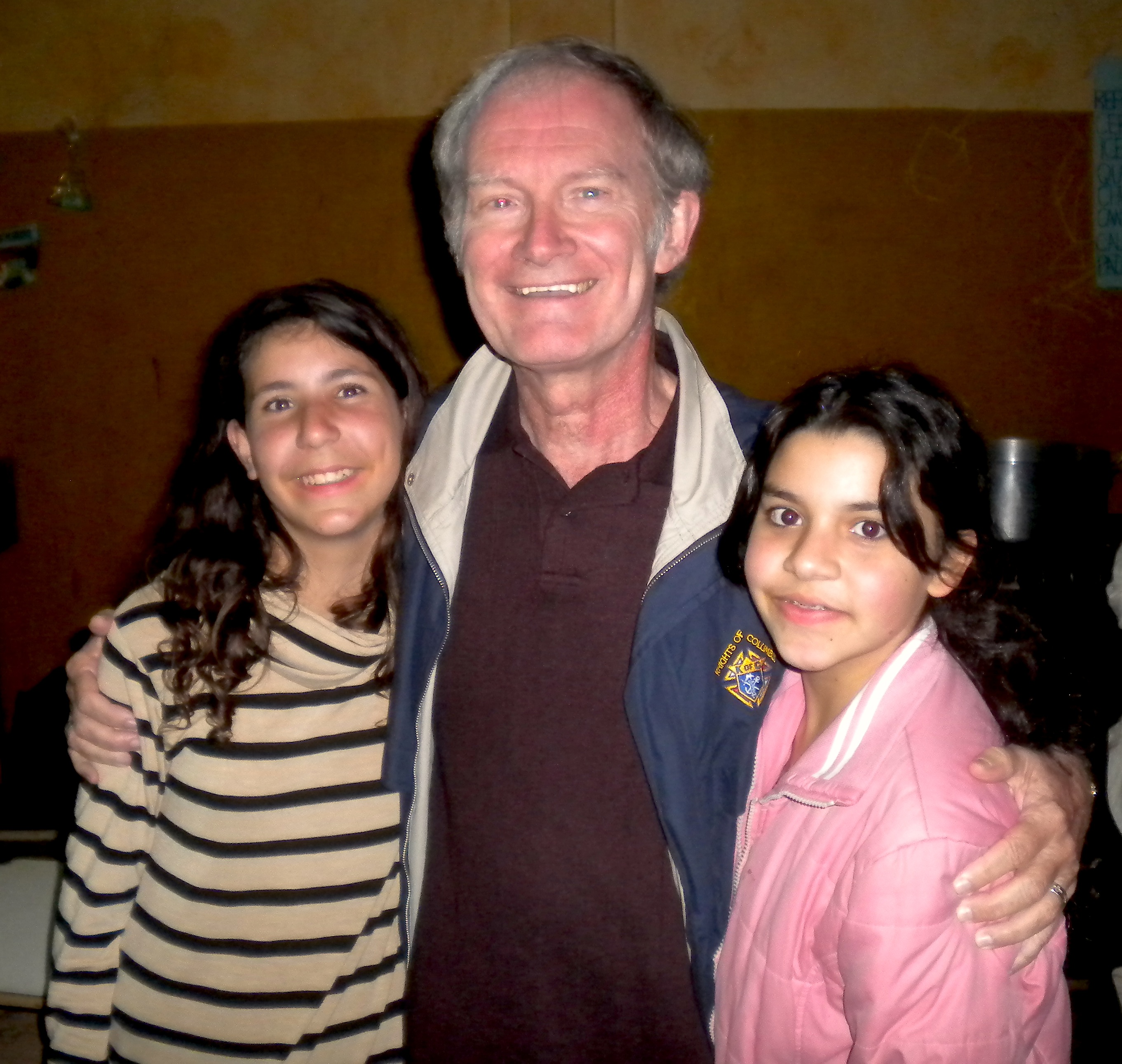
Fr. Tim with a couple of young parishioners

We set out in procession pretty close to 7 PM. Four men and four women lifted a small portable platform on which was carried the statue of St. Anthony. A car pulled up behind with a sound system installed so that the priest could lead the prayers. A pretty good-sized and talented musical group led the singing, and we set out over the streets of Lavras. I recognized some of the songs which were written by our own SCJ priest-composer Fr. Zezhino. Some people opened up their windows and doors and waved as we passed by.

So far, this procession was very similar to rituals I have participated in in Latin America, East Chicago, or Houston — religiosidad popular.  When we returned to the church, after about 45 minutes, an altar was set on the steps (about 20 feet above the street level) and another musical group, heavily electrified, began to play very upbeat music.

When we got to the altar and turned around I was amazed to see that the crowd had tripled in size! They filled up the whole street in front of the church. The celebrant, Fr. Antonio Marcos, who works in a center to heal drug addicts, began to stir up the crowd in a very charismatic style, aided by musical riffs from the keyboard and guitar. He called the people to conversion, to turn their lives over to God, and to put their faith into practice. Suddenly I realized that Brazil has a different flavor to its rituals.

The SCJs here in the parishes have kept up all the traditional practices of the faith while challenging people to study and learn more and put their faith into practice. The church in the US had the same opportunity after the Second Vatican Council but we for the most part chose to cast aside our popular devotions, and I think that is a shame. I’m glad I will have a couple weeks to see how the blending of popular devotion and faith formation is works in practice.

-Fr. Tim Gray, SCJ

Feast day in Brazil

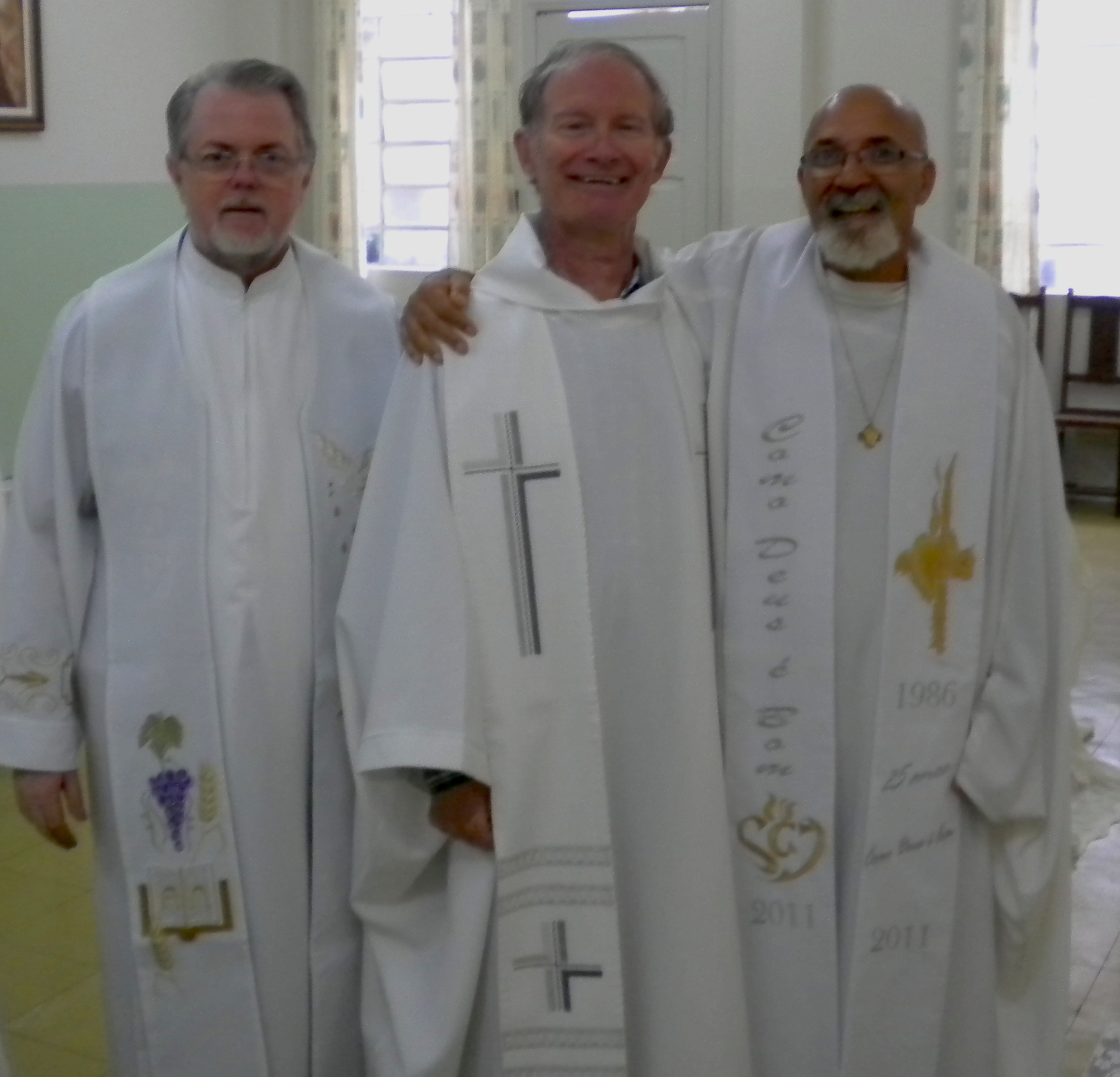
Fr. Tim (center) with Fr. Sebastian Pitz and Fr. Aurelio Pereira

As noted previously, Fr. Tim Gray is spending the last part of his sabbatical in South America, living and ministering with our SCJ communities there. He writes the following:

Vivat Cor Jesu!” “Per Cor Mariae!” The old Latin greetings (Latin as in Rome, not Latin America) rang out as SCJs from all around the area came through the doors of Dehon Seminary in Lavras to celebrate the feast of the Sacred Heart. Joined in spirit by SCJs throughout the world, 20 priests, five seminarians and a brother celebrated the Mass of the Sacred Heart and renewed their vows.  We were joined by about 30 lay Dehonians, and also by the 15 high school seminarians, who supplied the music for the Mass.

It is difficult to describe the joyful solemnity of the liturgies I have participated in here. I have lived in Mexico and have ministered with people from other Latin American cultures, so I am comfortable with the traditional religious expressions of piety common to those cultures. At the same time, at the liturgies I have participated in in Brazil, I am impressed with the way the liturgy forms community and (at least with SCJs) challenges people to move beyond piety to action.

I enjoyed singing the sign of the cross and the penitential rite, and other parts of the Mass. I noted that the entire Eucharistic prayer is a dialogue, with the assembly responding ten times during the prayer. But my favorite exchange is this: (Celebrant) “The Lord be with you!” (Assembly) “Yes, God in our midst!” To be honest, I received better catechesis on liturgy and ecclesiology from attending one liturgy here than I did during the year of preparation that led up to the new Missal in the USA. I can’t speak for the whole country of Brazil, but so far I have been very impressed at the way the SCJs place the liturgy as the summit and font of their pastoral activity.

In other circumstances, I would consider 22 weekend Masses and 22 more Masses during the week (in ten locations, plus home Masses for the base communities) to be an excessive work load for four priests. However, if the liturgy does what it is supposed to do, it is well worth it. I am glad to have the opportunity to stay here for four weeks so I can experience how this works out in practice. (They have already put me in the pastoral schedule– I am being inflicted on a smaller rural community, but a deacon will accompany me to preach). I also want to find out more about how the lay Dehonian groups function. So stay tuned.

And, on a lighter note:  I was walking back to the parish office when I heard a shout: “Chin O Chee!” I continued walking, and a car pulled up alongside, and I saw the photographer who had taken pictures at the Mass and gathering. He shouted again “Chin O Chee!” I guess that will be my name for the duration, because Portuguese does something which, oddly enough, English does as well. A “T” followed by “I” is pronounced “ch” so there go the T’s in my name. We do the same thing in words like “nation” and wonder why English is so hard to learn.

Enjoy the summer. It’s in the 60s and 70s here — very comfortable.

-Fr. Tim Gray, SCJ

From the Holy Land to Brazil

The large Brazilian city of Sao Paolo, the first stop on Fr. Tim Gray’s journey visiting SCJ communities in the country.

The last time we heard from Fr. Tim Gray he was writing about his visit to the Holy Land. From one end of the world to the other, he is now writing from Brazil where he is spending the last part of his sabbatical learning about SCJ ministries and communities in South America.

June 7, 2012: Here I am, in São Paulo, Brasil. The flight was uneventful. I left Chicago at 3 p.m., changed planes in Miami, and arrived at 7 a.m. Fr. Mariano was waiting for me, and took me back to the house where he lives with four other SCJ priests. It’s a cloudy, rainy, 60-degree early winter day; the weather here is very similar to Houston, so that was one thing I did expect.

What did I NOT expect? I was surprised to see it was pitch dark at 6 a.m. I’ve gotten used to summer in the United States, where now the birds start singing at 4 a.m. Guess I’ll have to go to Rio for some sunshine. I was also shocked that we were scooting along on nearly deserted highways! I had forgotten that today was Corpus Christi, and the country still takes most religious holidays off. That was nice!

We arrived back at the house at 8:30, just in time for breakfast. So it was a great chance to meet the other priests in the community. Time to shower and shave, and then meet for cocktails at 11 a.m. Really! Then to a Brazilian barbecue.

This is just a note to let you know I arrived — more news to follow.

And here’s the “more news to follow:” I am finishing the third day of my two-month pilgrimage through Brazil. Almost everything has gone very well: the travel, my welcome here by Fr. Mariano (the provincial superior), and the community. Actually, there is very little that has surprised me! Sao Paulo looks and feels like a Latin American version of Houston; a very good place for business, an OK place to live and work, but a place no tourist would want to stay. Sometimes it seems they outsourced the design of their skyscrapers to East Germany.

Fr. Tim Gray

The weather is also like Houston in winter: lots of rain and temps in the 50s and 60s. But I was prepared for that. As I move further north, the weather will get warmer. A pleasant surprise for me has been the communication; it has been very good considering that I speak Spanish, not Portuguese. About half the time I will sit in the middle of a conversation, like I am floating in a pond, hearing words and phrases go by, sometimes catching the drift of the conversation. Then suddenly, there will be a jerk, like a tow rope pulling me, and I am up on top, water skiing! I am speaking Spanish, but I let words and accents from the Portuguese language tapes I have been studying creep in. The others speak slowly and clearly enough, using lots of Spanish words and phrases themselves.

Tonight I had a long discussion with Fr. Celson, a priest I met ten years ago in Recife. It was a typical late night discussion of religion and politics, and although a lot of what we shared was kind of sad and discouraging, it was exactly what I hoped for on this trip — to cross barriers of language and culture and to share what we have in common.

Tomorrow we go to the sanctuary of St. Jude. The only word to describe it is “humongous.” They receive a million visitors a year and have many social outreach programs, including an orphanage. The guidebook that describes their activities is 88 pages long. Ten priests work there. I’m especially interested in the small communities which are the basis of the parish.

Monday, I will visit the seminary in Taubate. Every year they ordain between five and ten priests, enough to maintain their work and send missionaries out. That was the way it was with us in the United States 50 years ago. We changed. What is happening in Brazil, a country nearly as secularized as the United States? Fascinating.

Tuesday I will go to Sta. Ana in Lavras, a much smaller city of 100,000 people. That will be another culture shock for me. I will send this note out while I still have good internet access.

-Fr. Tim Gray

Getting ready to head home

Fr. Johnny’s students thank him and wish him well as he gets ready to leave the Philippines.

As noted previously, Fr. Johnny Klingler, SCJ, spent much of April and May teaching English in the Philippines. He is now in Manila, preparing for his departure. Before returning to the States, he will make a stop in Korea to visit a friend: a Maryknoll missionary whom he met during his days in the Army. This is his last blog post from the Philippines.

I have almost been in the Philippines for two months. The  time passed quickly as my days were full. It was a very good experience. I saw the progress that  the students made which made all of us happy. I will never forget these fine young men. They were special in so many ways. They were eager to learn and after six weeks we could all see their improvement. Most importantly,  they were kind and gentle and made my task so much easier.  It was a joy to be with them.

The afternoon of our last day a simple graduation took place. They received their certificates from me and from co-teacher, Mrs. Josephine Visande. They honored us with gifts and a presentation. At times I used popular songs in my teaching. One of them was ” I Can’t Smile Without You.” They sang it karaoke style,  and  they did it so well. It was very touching. Our graduation ended with the largest pizza pie I ever saw with ice-cream on the side. That surely was a unique combination for me.

Last night the professed community took me out for, yes, pizza. It was delicious. They thanked me  for coming from so far away and for so many weeks  to teach their  student candidates. They and the staff were so good to me. I am grateful  for all the kindness and care they gave me.

I left Cagayan de Oro City this morning, May 28th. I am at our community house on the outskirts of Manila. The theology students are now returning from summer ministry and vacation. There are 20 students  in residence for the coming school year. The day is hot and the house is humid. The wet season is just starting. I will do some sightseeing the next two days and Thursday, I will prepare for my visit to Busan, Korea, on June 1st.  I will  visit a friend, Fr. Hank Beninati, a Maryknoll Missionary, whom I got to know while serving in the Army in Korea.  We have corresponded for the past 54 years. I saw him once, 28 years ago in Boston, when he was on a home visit and I was on sabbatical. I will be with him four days and then leave for Milwaukee on June 6th. It will be a long journey, I will be in the air 18 hours.

-Fr. Johnny Klingler, SCJ

Click on the link below to view a few photos from Fr. Johnny’s weeks in the Philippines:

http://www.slideflickr.com/slide/MER3Qp5E

Spending time with the Holy Land’s “living stones”

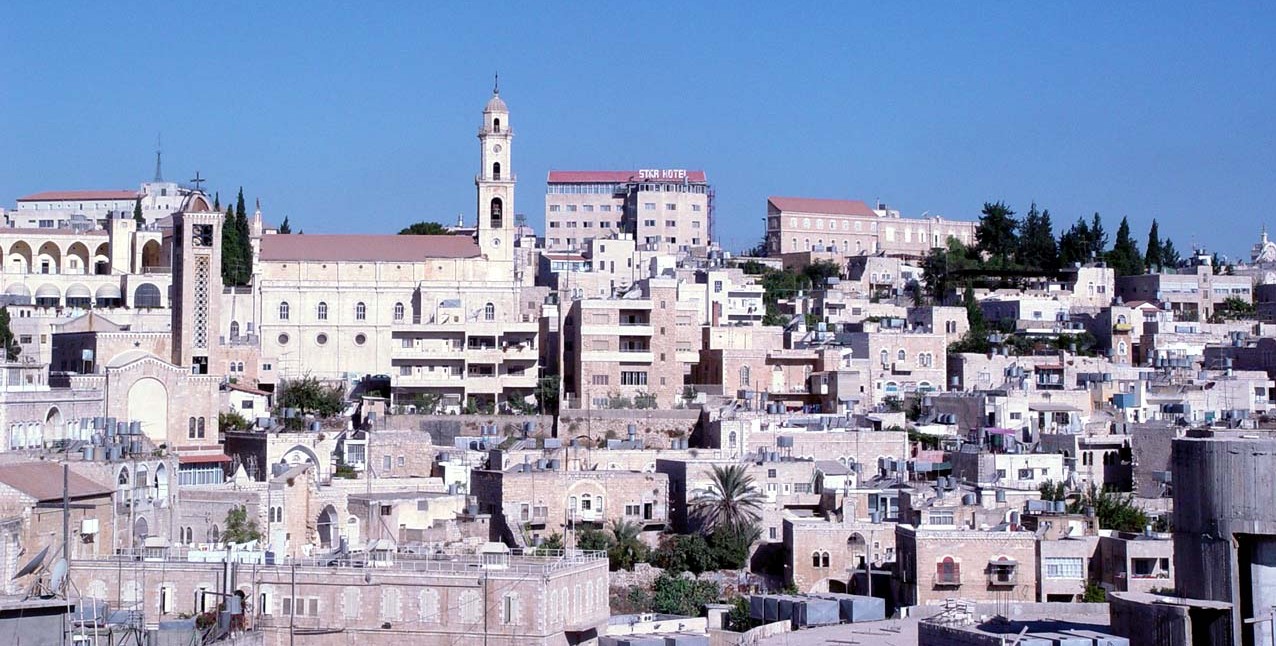
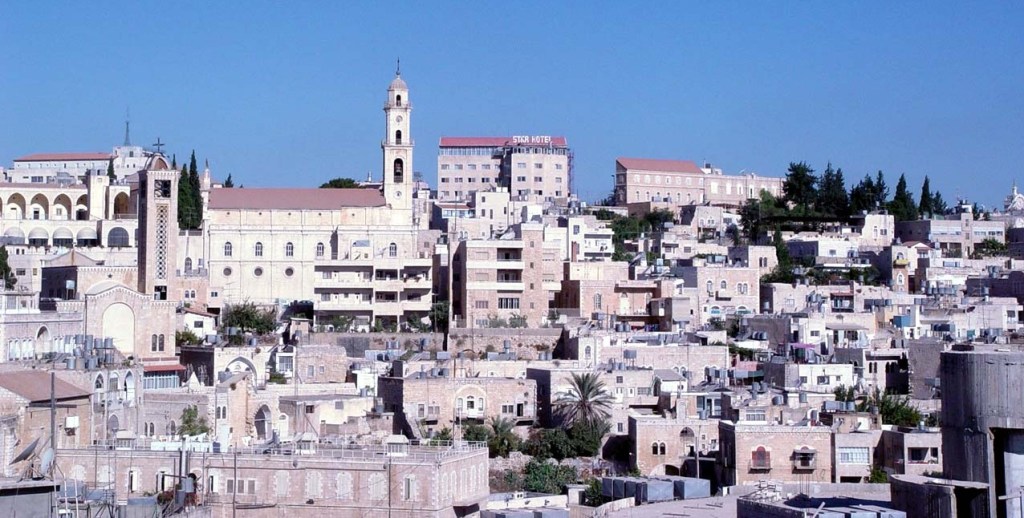
Modern Bethlehem

On May 14 Fr. Tim Gray, SCJ posted a piece about his April visit to the Holy Land. Here, he shares further impressions of his trip. Click here to read the original entry.

My first note about the Holy Land could have been written after almost any religious pilgrimage. However, the group I traveled with had another specific purpose. In the words of Fr. Alex, it was not only to visit churches and sites, but to spend time with the “living stones,” the Arab Christians, both Catholic and Orthodox, who are the descendents of the original Christian communities of the first century.

Of course, it would take books to describe the social, political, religious and military history of this part of the world. It is such a tragedy that war and religion have always been linked here. Judaism entered with a military conquest of the land in the 13th century BC. Islam entered with a military conquest in the 7th century AD. Christianity, which had been present since its founding in the first century, was superimposed in a European militant form by the Crusaders in the 12th century. Islam once again became dominant after the re-conquest by the Turks in the 14th century. In our own era, Judaism has been reestablished in a European form by military conquest. The reason why the sacred sites are composed of layers of churches and shrines one on top of the other is because conquests often resulted in wholesale destruction.
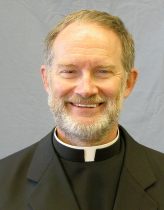
Fr. Tim Gray

Because the media tends to present the situation in the Middle East as a two-sided conflict, the Palestinian Christians are usually forgotten. As Palestinians, many of them were driven off their land when the state of Israel was created and they continue to suffer from the consequences. As Christians, they are a minority in a heavily Muslim area.

What we personally experienced during our visit to a Catholic community near Bethlehem was a small example of this situation. Bethlehem is one of the few areas where Christians make up a considerable size of the community. After touring the ancient sites, the field of the angels and the Church of the Nativity, we met with the pastor of the local Catholic Church who explained to us some of the history and the present situation of the Catholic community. Those of us pilgrims who chose to stay were put up overnight with local families so they would have an opportunity to talk and share a bit of their daily life.

The priests in our group (four of us) stayed with Fr. Fawid, the pastor.  It was fascinating to me how his life reflected both the ordinary responsibilities of a parish pastor, and the tensions created by the political and social situation. After welcoming us, he kept being interrupted by visitors and phone calls until about 10 p.m., when we finally had some time to talk. He described his efforts to draw attention to the plight of his people, both by visits and correspondence with Church officials, and attendance at conferences.

The next morning we attended the Sunday parish Mass, in Arabic of course. I was fascinated by the music. Since this community, like   Catholics around the world, had to find music in their own vernacular tongue after Vatican II, they adopted a mixture of music, some drawn from local culture, other songs to melodies familiar to me from the U.S. and Mexico.  In his parish, Fr. Fawid likes to play popular Christian music (most of it from Lebanon) at high volume on speakers around the church compound as a response to the equally loud calls to prayer from the mosque next door.

After the Mass, Father announced that he was going to bless a home and invited us along. It is customary to bless a home three times; once when the foundation is laid, once when the roof is completed, and a third time when it is ready to be moved into. This time we were blessing the roof. We arrived at the house, to the sound of a large cement mixer sending the cement up to where it was being poured into the forms on the roof. Since there was no ladder, we scrambled up piles of rubble to a partially completed staircase up the side of the house. Fr. Fawid walked all over the roof, between the workers pouring concrete, sprinkling holy water liberally all over the roof. In the midst of so much history and conflict, life goes on.

We could see how “life goes on” in a much different sense when we went to visit “the wall” which is being built to separate Israel and protect it from terrorist attacks. While in this report I am not going to enter into the discussion about whether Israel has a right to protect itself, this particular 30-foot-tall concrete barrier we saw was built to protect new Israeli settlements. These settlements are new Israeli towns built in Palestinian areas, on land taken from Palestinians, with walls to protect them. This particular wall runs right through Bethlehem, past city streets and houses, and reminds me very much of the Berlin Wall. It separates people from relatives, from their farms, and places of work, in effect putting them in different countries.

While the main purpose of our trip was not political education or action, what we learned by visiting the real Arab Christians is that they are caught in the middle of this conflict. The Christian population of Palestine has dropped from eight percent in 1947 to TWO percent at present, and the only future most of the young people see is emigration. The history of past conquests is being repeated in our day.

The next day we had an audience with the Patriarch of the Catholic Church, in the Middle East, Patriarch Fuad. Quick lesson: the Catholic Church is composed of 16 different rites, one of which is the Latin Rite, presided over by the pope, whose other name is the Patriarch of the West. Ninety-five percent of Catholics worldwide belong to the Latin Rite. Each of the other rites has its own patriarch, who presides over the churches of that rite. They acknowledge the Pope as “first among equals” and head of the whole Church. On the other hand, Orthodox rites look at the pope as one patriarch among many and so do not submit to his authority, so they are not part of the Catholic Church.

The patriarch was a wonderful, kind, very spiritual man who also described the situation of the Church. The one comment he made, in response to a question about evangelization and the RCIA, that left a deep impression on me was the fact that he felt that evangelization of Muslims is impractical. A Muslim who converted would be ostracized by his or her family and community, he told us.

As he said this, I realized that the social and religious world these people live in is what we in the West experienced hundreds of years ago – where isolation and excommunication were the most effective way to keep intact boundaries between people. So the Christian community in the Holy Land is in reality dying out – not through violence or overt persecution, but by being marginalized and caught in a much larger conflict. It seems that its main role is to remain faithful.

So these are some of my impressions of my visit to the place we call the Holy Land – holy for three of the world’s great religions, and fought over as well. While I experienced much during those two weeks, it shook me up and made me think and pray a lot more. I now hear the news about what is happening in that part of the world from a different perspective.

-Fr. Tim Gray, SCJ