Category Archives: Uncategorized

Last day in Kumbalanghy

This may be the last of Fr. Tom Cassidy’s blog posts for awhile. He is moving from a regular internet connection in Kumbalanghy, India, to a less predictable one in Eluru. The former provincial superior will be with the formation program in Eluru through the end of February.

Today is my last day in Kumbalanghy. I’ll have to get up at 3:00 a.m. to be packed and ready to go to the airport when the taxi arrives at 4:00 a.m. Fr. Thomas and I will be traveling to Andhra Pradesh and as I understand it we will be taking a “puddle jumper,” which means we’ll depart Cochin at around 7:00 a.m. and arrive at our final destination around 1:00 p.m. I think there are three or four stops along the way — shades of the old North Central Airline flying Wisconsin, Minnesota and the Dakotas. I thought I would be going to the novitiate as tomorrow is the dedication of the new church the U.S. Province  helped build through our financial contributions to the project. Fr. Thomas told me at dinner this noon that I would be met and driven to Eluru (my final destination for my stay in India) and that on Sunday we (meaning a number of SCJs) would drive to Guntur for the dedication.

One of the things I forgot to bring with me was a hat so until yesterday I was doing my walks on the roof since it is covered and keeps the sun out. While in Cochin I managed to pick up a baseball cap not in the style I would prefer but it does the job. With hat on my head yesterday and today I walked the road that passes in front of our house.

Screen Shot 2014-01-27 at 8.38.08 AMThere wasn’t much traffic when I took this photo but during much of the day there is a steady stream of traffic, and since all the busses end their route just beyond our property there is a steady stream of bus traffic in both directions. Perhaps next would be the number of motorcycles, followed by cars and then trucks and a cyclist or two (especially young kids). If my memory is not playing tricks on me there is a lot less traffic in this local area compared to Andhra Pradesh and it seems to flow better as well. Finally, remember due to India being under British influence for so long traffic drives on the left, just opposite of what we do in the States.

When we speak of a small rural town we think of a Main Street with a number of side streets jutting off to residential and perhaps some other commercial properties. In Kumbalanghy, as I suspect in much of rural India, Main Street is the only street and most buildings — either small shops or homes — are built right along the roadway. Instead of side streets you’ll find a path or two that leads to homes built off road. Obviously if you have a car you’ll need to be on the main road while a motor bike can easily maneuver most side paths.
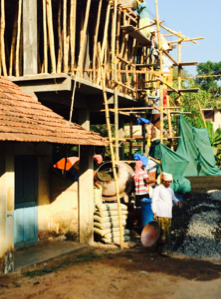
Screen Shot 2014-01-27 at 8.38.17 AMA few minutes’ walk toward the parish of St. George I spotted this construction site. It would be typical of what you’ll see in much of India outside the large cities. Most structures are made of steel and concrete. You’ll note the extensive supports holding up the roof above the second story. Note too the cement is mixed on site and though the photo only hints at it much of the work is labor intensive. With a population of over a billion people labor is not in short supply.

All the homes I spotted along the road were made of cement with tile roofs. Some of the homes were large and quite attractive. As is the case all over the globe Mother Nature is construction’s worst enemy. Here the two elements that can wreck havoc are sun and rain. The sun tends to wash out colors over time and the raining season can be torrential. Even one drop of water constantly dripping in one spot can over time carve stone. Just think of our own Grand Canyon that water carved out of rock ions ago.

I suspect home interiors are not all that different from what we have in our seminary here in Kumbalanghy. High ceilings to help dissipate the heat and tile or marble floors which also help cool the building. I’m sure in wealthier homes one would find area rugs to accent the flooring. I am grateful our house has screens as insects, especially mosquitoes, are a problem. They have not, thankfully, been a great bother so far, especially in my room with the ceiling fan creating a good breeze. I read somewhere that mosquitoes can’t fly in any kind of wind to speak of. I suspect that’s why they seem most pesky at down and dusk when winds tend to be their calmest.

A growing history in India

Mass in India

As noted earlier, Fr. Tom Cassidy helping with the formation program in India until early March. In the following post he reflects on the history of the SCJ presence in the country:

I think it was in 1994 that the invitation came to the SCJs from the Bishop of Cochin to establish our presence in India. It was not an easy process. Foreign Missionaries are not granted access to the country and as a result, SCJs from around the congregation would move in and out of the country. India does grant a six-month visa for foreign visitors. As a consequence many SCJs have come to India on a short-term basis to help build our presence, and that has included a number of Americans.

I don’t think I can recall all those who have been here but a few stand out in part because they are remembered so well here by the Indian SCJs. I believe the first American who came to India was Fr. Rick Dileo. Rick was on sabbatical when Fr. Virignio Bressanelli, SCJ, our superior general at the time, encouraged Rick to spend six months of his sabbatical in Cochin. Maybe it helped that Rick’s family came from Argentina, Fr. Virgnio’s native land, but in any case Rick agreed and became one of the first SCJ vocation recruiters.

Without a doubt the American SCJ who has had the biggest impact and is best remembered is Fr. Tom Garvey, SCJ. Just as in the case of Rick Dileo, Tom was on sabbatical. Once again Fr. Virginio worked his charm and asked Tom to spend part, if not all, of his sabbatical helping develop our SCJ presence in India. It did not take too much convincing as Tom’s sense of SCJ availability was always strong.

There was another advantage for him as an American: he could apply for a five-year visa making it easier to come in and out of India. Once Tom arrived to spend his sabbatical year I think he fell in love with India and the challenge of forming a new SCJ entity. His sabbatical turned into his ministry as he spent the rest of his life working to develop a native SCJ community. Sadly, he died following minor surgery and has become revered among those Indian SCJs who knew him and a legend to those who entered after his passing.

Another SCJ who is truly held in high honor for his simplicity and holiness is Fr. Tom Fix, who actually went through the US formation program at the same time as Tom Garvey. Following his ordination and a few years working in the United States, Tom volunteered to go to Indonesia as a missionary. He became a member of their province and when the government demanded missionaries either leave the country or apply for citizenship he became an Indonesian citizen.

In many ways our expansion in Asia came about through the request by our Indonesian  Province that we expand in Asia beyond our Indonesian presence. That expansion began in 1988 when we opened our Philippine mission on Mindanao. Indonesia has sent its members to each of the new missions in Asia and Tom was asked to work in the formation program here in India which he did until 2011. He was slated to return to India following his home leave in the US. However, upon returning to Indonesia in order to apply for a new Indian visa it was discovered that he had cancer which could not be treated and so he spent his remaining days among the Indonesian people he served so well. Tom is especially remembered by Indian SCJs as a wonderful spiritual director and a man with a smile on his face.

Finally there is Fr. Charles Bisgrove, SCJ, who came to India on a number of occasions to help in one formation house or the other. He’s remembered for his hearty laugh, his love of peanut butter and for his wonderful singing voice. Many of the SCJs just finishing their formation hold Charlie in high regard as he worked with them at the novitiate as well as after they entered theology at Eluru. Charlie was supposed to come with me in 2011 when the region was set to ordain a large group of SCJs to the priesthood. About a month before we were to travel to India he suffered a massive stroke and died several days later.

There are other American SCJs who came for a time to lend a hand and although I don’t think I can recall them all several do come to mind. Frs. Jan de Jong and Mike van der Piet, two Dutch American SCJs, both gave some time to India. Fr. Dominic Peluse, SCJ, often talks about his sabbatical when he ask asked to come to India to work for Tom Garvey as his “secretary.”

I would certainly be remiss if I forgot Fr. Wayne Jenkins, SCJ, who worked very hard to establish the SCJ Indian archives and guidelines on how to keep it up-to-date. Even our US director of communications, Mary Gorski, came to India to assist in establishing good communication policies to better inform the congregation of what is happening in India as well as for their internal district communications and for SCJ promotion in India.

I’m sure there are others but without the means to recall or verify who they are I can simply say that though the US no longer has a mission it can call its own (South Africa) and though we have not sent permanent missionaries anywhere for many years, India has helped keep our mission spirit alive. In closing I certainly would be remiss if I did not point out our financial support for India and our other Asian entities has been vital to their development.

EDITOR’S NOTE: Fr. Tom noted several SCJs from the US Province who have gone to India over the years. However, as he indicated, there were certainly others. One of them was Br. Leonard Zaworski, an SCJ from the United States who spent 10 years in India. He is now retired and living at Sacred Heart at Monastery Lake in Franklin, Wis. Always the risk in naming a few people is the possibility of missing others — even someone like Br. Lenny who devoted so many years to the Indian District. 

Dehon Bhavan, India

Dehon Bhavan

Dehon Bhavan

Building an academic foundation

As noted previously, Fr. Tom Cassidy is assisting with the formation program in the Indian District until early March. Today, he writes about the SCJs’ seminary in Kumbalanghy:

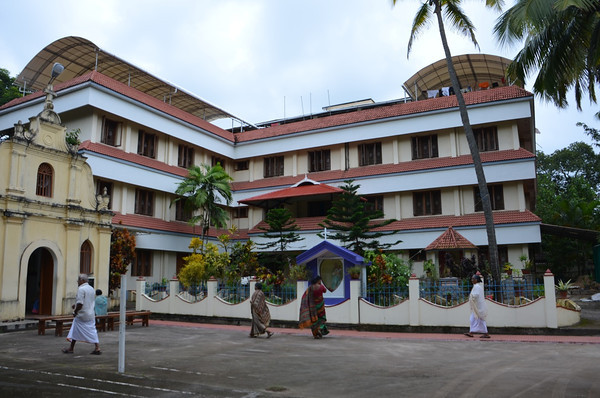
I thought today I would spend a little time describing the life of a seminarian here at Kumbalanghy.  The name of our seminary is Dehon Bhavan. This is one of three minor seminaries the SCJ Indian District operates. Due to the amount of land the SCJs were able to purchase when they were looking to open up a seminary in this part of Kerala, facilities for physical activities are somewhat restricted.

Minor seminaries use to be very common in the United States; we had two in the US Province: one in Lenox, Mass., and the other at Donaldson, Ind. I taught at Divine Heart Seminary in Donaldson for two years as a scholastic (1966 to 1968) and then again as a priest I served as principal from 1973-1977. After Vatican II the minor seminary system in the States slowly began to disappear, though there are still some around, including St. Lawrence run by the Capuchins in Wisconsin.

I can understand why here in India the minor seminary continues to make sense as a lot has to do with the quality of education available to students. By using good schools, the foundation is laid for future academics in both philosophy and theology. In addition, English language skills are necessary for theological studies, and since English is the common language of all our Asian entities it is important for Indians to know it so they do not become isolated from the rest of the congregation.

Here at Kumbalanghy there are two education tracts going on at the same time. First there is English. There are about five students who are currently here spending at least a year learning English. One of them is a bit older then the typical minor seminarian as he completed a bachelor’s degree prior to his joining the SCJs. The others are more typical teenagers of high school age.

The second tract is high school. These students travel by bus each day to a Catholic high school for their studies. When they have completed the required program of studies they will move to Cochin where we have our house of philosophical studies (Dehon Vidya Sadhan).

Here is the official outline of the purpose of Dehon Bhavan as described in the SCJ Indian District Directory of 2010.

‘The SCJ Candidate students come from all parts of the state of Kerala, although at times there are students from other parts of India. The SCJ formation program is designed to introduce the candidates to the fundamentals of SCJ Spirituality and Religious Life, and to experience different kinds of ministry. During this time they also attend outside classes to receive their High School diploma at the end of the two year program at Dehon Bhavan.”

The House Language is English. As noted in their directory, while most students come from Kerala, not all do. India is a country of many languages and cultures and someone coming from the state of Andhra Pradesh would not know Malayalam. Since the SCJs are drawing students from several areas of the country they need a common language and since English is important for studies and communication with SCJs in other parts of the congregation it is also the common language of the district. In India the official common language is Hindi.

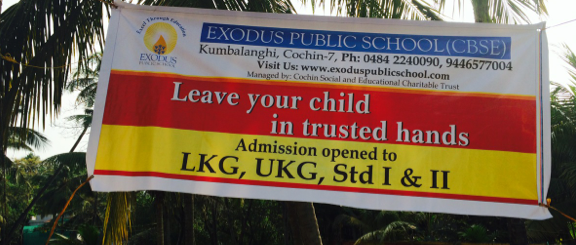
English is still a very important language in the country, especially for commercial reasons. Often you see advertisements for schools that specialize in English  language and instruction. I’ll close with a picture of one such advertisement right in front of our house.

Screen Shot 2014-01-21 at 10.57.56 AM

Eating Indian style

Indian Curry Meal Banquet

More than curry found on the table

As noted previously, Fr. Tom Cassidy is assisting with the formation program in India until the beginning of March. Here he writes a bit about Indian food.

I thought I would spend a few moments talking about food, at least as I have experienced it so far. Most Americans think of curry when they think of Indian cooking, but that’s only partly true. India is a country of 1.2 billion people and like the US, it is a large geographic area. From the warm south as we are here in Kumbalanghy, about 9° north of the equator, to the highest mountains in the world — the Himalayas at 28° north — you can begin to get an idea of its size. Along with its size is the vast linguistic and cultural diversity of the country and with that comes diverse cooking styles as well.

The ocean is only a short distance away, perhaps a mile or two, and since the state of Kerala boarders the sea it’s not at all surprising that fish is an important part of the diet along with chicken. Rice is a staple and is served at the noon and evening meals without fail. I suspect, but have no way of knowing for sure, that rice appears in all the diverse ethnic and cultural groups in the country. Certainly that was the case on my last trip to both Kerala and Andhra Pradesh.

In the few days I have been here there has been a bit more variety at breakfast. A rice and coconut mixture (almost like a powder) frequently appears, serving the purpose of rice at the other two meals. However, we have also had a flat bread resembling a Mexican tortilla in its place and on Sunday a small thick white bread. For this meal there is usually a dish of some time of vegetable based soup or broth that is mixed with the bread or rice. Water and tea are served with these dishes.

The noon and evening meals consist of rice and several side dishes. Fish or chicken are the protein dishes and are accompanied with several other vegetable side dishes. I have particularly enjoyed how the okra and green beans are prepared. Water is the liquid of choice and we have frequently had small bananas to top off the meal. On Sunday we also enjoyed a small cup of ice cream. That, you must eat quickly as it tends to melt rapidly.

Screen Shot 2014-01-20 at 3.06.59 PMI took this photo last evening at St. George’s rectory as we attended the final celebration for the 175th anniversary. As the photo shows, rice is the central dish with, in this case, four side dishes and a tad of sauce on the rice. Two side dishes were vegetables: one much like a coleslaw and the other a mixed vegetable including red onions, carrots, etc. The other side dishes were beef (at the top of the photo) and SHARK at the bottom.

When the dish was first put before me I thought the shark might be a type of bacon — it had both the color and texture of bacon and certainly was fried much as we would fry bacon. After tasting it I asked the pastor what it was and to my amazement he said shark! It was delicious and I graciously accepted a second helping when offered.

As for spices, yes, Indian cooking tends to be on the spicy side. It is not as hot as some Mexican or even Italian dishes I’ve had (at least so far!) but on the other hand practically everything has a tinge of heat to it. And while I may have had curry I can’t say I have found it overpowering or for that matter, bring it to mind as I think of the dishes I’ve enjoyed to date.

As for my eating habits I eat the food put before me. If it’s a fish dish I usually take little as the fish comes with bones included and I’ve not mastered the art of deboning the fish before putting it into my mouth and as a consequence have to be a bit careful when chewing it.

Eating with your hands is a common method here and according to all, the preferred method at home. However as this is a seminary and which is preparing the students for a future life that will encounter other cultures and worlds in one form or another utensils are used at the noon and evening meals. It makes for a noisy table much more so than in the States. The plates are made of metal (hard to break) and with the pushing of rice and side dishes together unto a fork or spoon makes for a racket when 20-plus are doing it all at the same time.

Let me close with one word about last evening’s closing celebration at St. George’s. We arrived as the speech making was coming to an end. That was fine by me as I would be at a loss for what was being said. I do know the bishop of Cochin and local politicians were among those scheduled to speak.

Screen Shot 2014-01-20 at 3.07.19 PMThe highlight for everyone was the two acts which brought the evening to a close. Both were in a sense morality plays. The first was about the relationship between a father and his son and how important respecting your parents is as the tables can turn and the child one day may take care of the parent.

The second was harder for me to grasp but I was told it had to do with doing your part to make your parish a better place. This one had a lot more dialogue and that made it difficult to comprehend. I will say that the acting (all members of the parish) was quite good and though I did not understand the lines they were delivered with professional skill.

By George!

Celebrating 175 years!

As indicated previously, Fr. Tom Cassidy is in India until early March, assisting with the formation program. The following was writing from Kumbalanghy.

Screen Shot 2014-01-18 at 10.00.37 AMI can summarize the day in two words: “By George!” I arrived last evening around 10:00 p.m. and was informed by Fr. Thomas Vinod (the SCJ district superior) that the parish our minor seminary is located in would be finishing a year-long celebration in honor of the 175th anniversary of their foundation. Not too many parishes in this area bear the name St. George. I wonder given the date of their foundation if any British influence went into this given the fact that St. George is the patron saint of England and the British were fully entrenched in India during this time period. By the way, this is a very Catholic area, which makes it an exception to the rule in this vast country.

Before speaking about the day’s activities, a few words about this SCJ house. It is the smallest minor seminary we have in India. At present their are 18 students who are nearing the end of their school year (March). There are four SCJs on the staff: two priests, one deacon and one SCJ student who is doing his regency year. Each SCJ student has a year out to work in one of our ministries either formation or, as in Mumbai in one of our parishes. Having spent two years myself between college and theology teaching at Donaldson I can appreciate the value of a regency experience.

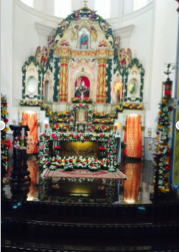
Our day at St. George, about one mile from the seminary, began with Mass. The sanctuary was festooned with flowers and reminded me of Our Lady of Guadalupe celebrations at our parish in Houston. Even though Friday is a work day in India the church was packed and spilled out the doors into the courtyard. I have no idea how many the church can hold as the church had no pews save for a very small section in one of the alcoves. Here the people stand, kneel and sit on the floor. Men and women are separated from one another as well.

Screen Shot 2014-01-18 at 10.00.28 AMThe Mass began at 10:00 a.m. and went on for about two hours. It was celebrated in the local language of Malayalam so I was out of the loop when it came to the homily or other extemporaneous parts. The retired pastor was the main celebrant and his introduction went on longer than the homily given by another priest. The singing was well done, and even though I did not understand the words the melodies were pleasing to hear. I’m guessing some were modern tunes while others more traditional given their intonation.

Both before and after Mass people gathered in front of the Church where the statue of St. George, as well as those of the Blessed Virgin and Jesus were on display for their veneration. Given this is St. George’s feast his was in the middle and festooned with an abundance of flower garlands as I think you can make out here.

Before we all returned to our house for a rest we were invited to stay for lunch. We are very near the ocean and so seafood is the specialty of the area. I was served a fish with a tomato base. The only down side for me was my need to debone the fish myself, but I seemed to manage it. After the fish course we were served rice with three or four side dishes. We ended with ice cream. The drink of choice was water as alcohol is not a part of the culture.

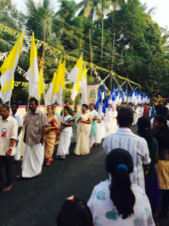
Screen Shot 2014-01-18 at 10.00.15 AMI think I managed about an hour’s rest before it was time to head back to the parish for the procession. The estimates of how many marched along was a low of 2,000 to a high of 3,000. Since I only have an alb with me I chose not to be with the priests who marched behind the Statue of St. George and the Blessed Sacrament in their habits and cassocks. Instead I joined a couple of our students on the march. I think all we had to cover was a mile or perhaps two since it was a circular route but it took 2 hours to complete. I think I was the only non-Indian to participate.

At the head of the procession was a group of drummers followed by this section of various parish organizations (Legion of Mary for example) carrying their flags denoting who they were. Following the flags and umbrellas the people walked along in two lines — young and old, men and women, boys and girls and even a dog or two came along. Just before the men carrying the flag of St. George and the three statues of Mary, Jesus and St. George another group of drummers and musicians made way for the important part of the procession. I thought to myself we could never get away with this in the States but it made absolute sense in this context. I also thought Italians could fully participate in a procession like this. If you have ever been to the Sunday Mass at Festa Italiana and took part in the procession after Mass you’ll understand what was going on here in Kumbalanghy.


First stop: Mumbai!

A typical residence near a mission attached to the SCJs' parish in Thane (Mumbai). Fr. Tom Cassidy's first stop in India was with the SCJ community there.

A typical residence near a mission attached to the SCJs’ parish in Thane (Mumbai). Fr. Tom Cassidy’s first stop in India was with the SCJ community there.

A multilingual, multicultural ministry

After completing his term as provincial superior Fr. Tom Cassidy is spending several months visiting the locations for which he had responsibility when he was on General Council. From mid-January until the beginning of March he will be in India, where he will assist in the district’s theology program. The following was written soon after his arrival in Mumbai: 

It is always a bit disconcerting landing in a strange city (though this is actually my second visit to Mumbai) and expecting a ride, hoping nothing goes wrong. Happily, Fr. Aji was there to greet me. When all was said and done it took us about an hour to get to our SCJ house (less than 14 miles from the airport). Even though we left the airport after 10:00 p.m. there was a lot of traffic on the road. Mumbai, like many mega-cities, is one that never sleeps.

On the way to our house Fr. Aji asked if I would be willing to be main celebrant at the 7:00 a.m. parish Mass. It would make for a short night but I would probably be awake anyway so I agreed. I stayed in a house just in front of the parish that belongs to an elderly gentlemen who has been very generous to the Priests of the Sacred Heart. The elderly gentlemen, whom they call “Uncle,” is in the hospital recovering from surgery. I had the chance to meet him this morning as the hospital is only a half a block from our house.

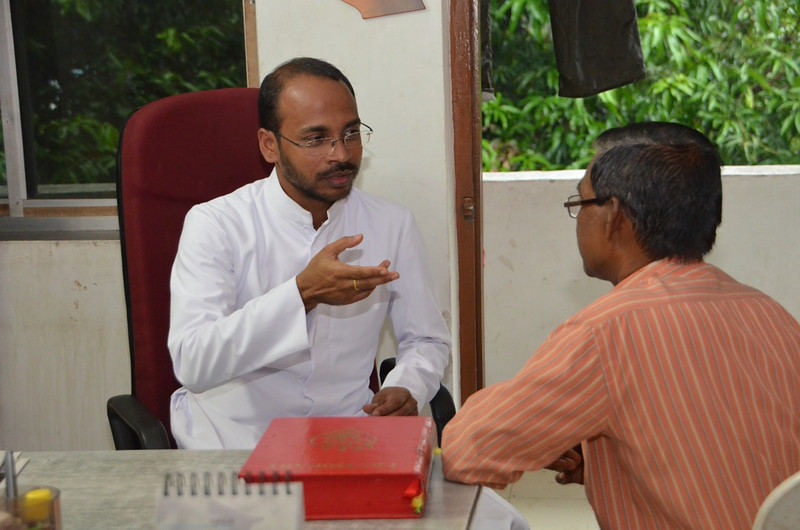
Fr. Agi meets with a parishioner

Fr. Agi meets with a parishioner

The SCJs came to India around 1994 and began in the state of Kerala, the most Catholic area of the country. We came at the invitation of the bishop of Cochin, who knew Bishop Joseph DePalma. I believe they knew each other when the bishop was our superior general. The SCJs have since expanded to other parts of the country. The main work at present is formation given this is one of our newest foundations.

From the very beginning there was the idea to find ministries in the north, or at least north of the states of Kerala and Andhra Pradesh. About two years ago work began on securing a presence in the Mumbai area, and as of 2012 the SCJs were tasked with staffing the parish of Divine Mercy in Thane (next to Mumbai), along with its attached missions. I was told this is the third parish SCJs now staff in India.

Divine Mercy has about 500 families. The vast majority of parishioners are migrants to Mumbai who have come to look for work. As a consequence, the parish is multi-lingual and multi-cultural. Mass is celebrated in Hindi, Malayan, English and I believe sometimes in Tamil.  Many parishioners are poor, though certainly not all.

As Catholics they are a very small group. Hindus are the majority here, followed by Muslims. There is a large Muslim community not far from the parish. Tension between religious factions ebbs and flows. 

The parish team at Divine Mercy

The parish team at Divine Mercy

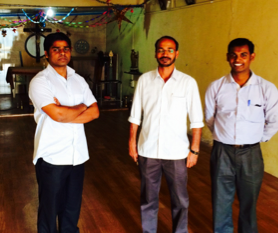
I don’t want to make this entry too long so let me close by introducing the three members of the Divine Mercy Parish. In the middle is Fr. Aji, the pastor. He worked in Mumbai as a deacon before we were given the parish and is assisted by Fr. Abraham, standing to the left of Fr. Aji. On Fr. Aji’s right is Alex, who is finishing his regency and will be ordained a deacon on February 1, 2014. 

Christmas travels bring SCJ in touch with province’s past

One of the international Nativity sets on display during Fr. Tim's visit to the Montréal community.

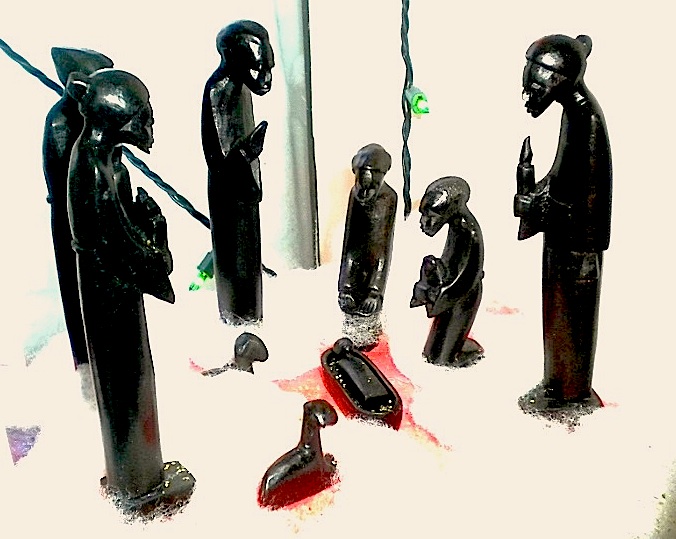
One of the international Nativity sets on display during Fr. Tim’s visit to the Montréal community. This crèche is from Africa.

Fr. Tim Gray, SCJ, is a member of the formation team at the Dehon Formation Community in Chicago. Recently he reflected on his holiday travels, travels that took him from a former SCJ seminary in Pennsylvania, to visits with fellow SCJs in Canada, where he once ministered. He writes:

I began a two-week swing through the Northeast this Christmas. I stopped to visit family, friends, and also SCJ confreres. Three visits of note were in Honesdale, Pa., Toronto, and Montréal, Quebec.

While in Honesdale I visited the Hnatko family, who are well known to many SCJs. They lived at the building at Kilroe for over a year as caretakers before it was sold. It was so good to see Marge and much of the family; they send their greeting to all the SCJs. [Editor’s note: the building to which Fr. Tim refers was at one time the location of one of the province’s seminaries.]

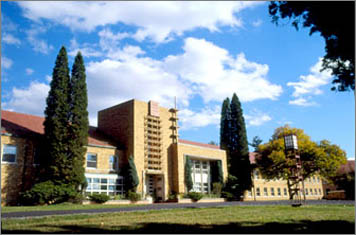
The former Kilroe Seminary now houses the Himalayan Institute

The former Kilroe Seminary now houses the Himalayan Institute

Of interest to even more SCJs is the status of the building at Kilroe. It continues to serve as the headquarters of the Himalayan Institute, a center for growth and healing, which has used the building since 1979. It is absolutely fascinating to me how familiar it still looks! Very little has changed – the person giving me the tour pointed out how durable both the building and the furnishings have been.  Almost all the original equipment in the kitchen and laundries is still in service. There are still chairs from the visiting rooms, in colors that have since come back into style!

Fascinating is that the building continues to be filled with people dedicated to a spiritual life, who spend months or years living in the same conditions as we seminarians did – simple rooms, common baths and toilets, common meals, sharing in housework and other chores. Almost all the work is done by volunteers – there are only a handful of paid employees. The irony, of course, is that they abandoned their center in the Chicago area to move to Honesdale just as we SCJs were doing the opposite. It surely brings a strange mix of feelings to see such familiar surroundings in the service of God, much different than the one we lived in the 1950s and 60s, and yet so perennial.

After spending Christmas with my father and my sister’s family in Maine, I drove to Montréal to enjoy the great hospitality of the SCJs there. Fr. Claude Bédard looks and sounds great [Fr. Claude recently underwent treatment for cancer.]. He expects reconstructive surgery, but it will not prevent him from singing in two operas this spring. All others are fine. I was totally amazed by the collection of Nativity sets from around the world they have collected over the years! I took as pictures of as many of them as I could – I lost track at around 55. It outdoes the Christmas display at the Museum of Science and Industry in Chicago. I’ll share the pictures with anyone who is interested.

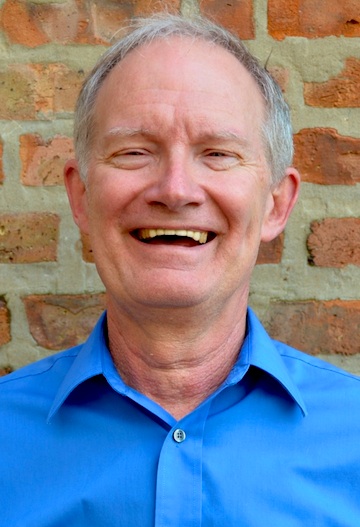
Fr. Tim Gray

Fr. Tim Gray

I continued through icy conditions to Toronto, which was devastated by the storms. Our parish lost power for one day; many people were out for a week! The house on High Park feels very different with only three regular residents: Fr. Peter McKenna, Fr. George Coppens, and new arrival Fr. Antonius Purwono, from Indonesia. Fr. Jim Casper, Fr. Willyans Prado Reposo, and Fr. Aegi Warsito are in residence at St. Thomas More parish and return only for the weekly meal. I’m sorry I missed the chance to visit the parish; Fr. Aegi assured me that they would have found a Mass for me to celebrate in Spanish! The parish is massive: 7,000 families, very multicultural. A wonderful SCJ ministry.

So Happy New Year to all, from all, and back to work.

Christmas in Afghanistan

Colored christmas glass balls isolated on white

Fr. Mark Mastin, SCJ, is a chaplain with the US Army, stationed in Afghanistan. Here, he writes with an update on his ministry, as well as Christmas greetings:

Merry Christmas.  I pray all are well.  For over a month I lead a Christmas planning group of several Coalition Catholic and Protestant chaplains.  My counterparts wanted me to head this planning project of religious services and concert events not because they wanted to avoid the work but because they viewed me as the key NATO leader; English is considered to be the main language we are to speak here and therefore I got the short straw, in a nice way of course.  The experience was very good.  It gave me a small taste of what all of our men experience, particularly our SCJ superiors, when they meet in Rome for general assemblies or other international gatherings.

Fr. Mark Mastin

Fr. Mark Mastin

So, we had several ecumenical events with prayer and music.  The Germans and Norwegians supplied the bands and I provided the manpower, sound,  flyers and programs.  It was good to hear songs from different nations and appreciate the lyrics and melodies.  Many of the American Christmas songs were from the 50s and 60s — Big Band style.  This is the music that I grew up with as a child.  Listening to it made me fell a little less  lonely.  Furthermore, I have been able to see how our American culture, particularly in music, has influenced other countries.   As a side note, the Germans know how to do Christmas well here — they actually bring in real trees and lights and ornaments.

It was interesting to listen to and to participate in the sing-a-longs in another language.  I certainly did my share of butchering the pronunciations of a view Croation and German songs.  One of the songs that got people on their feet was Jose Feliciano’s “Feliz Navidad.”  Everyone became Hispanic on that song.

We had a true midnight mass.  Again, I felt like I was back in my childhood when my family and I went to mass at this time. The chapel was packed and soldiers and civilians were standing out in the cold.  There were three priests: a German, Croation and me.  I put a book together of the mass prayers in all three languages, as well as assorted songs.  We each preached for 3 minutes even though I joked with my German friend that he spoke for 5 minutes and therefore I should get six.  Overall, the mass went well and people were very grateful for the experience.  I am a litte worn out from all of the events in the past week.  However, my spirits feel uplifted from the experiences.

Well, take care and tell everyone I said hello and Merry Christmas.  Happy New Year too!

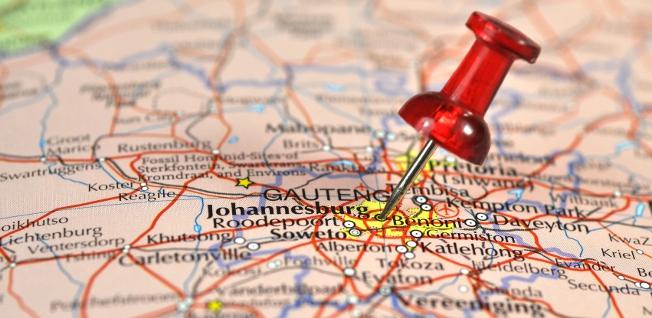
Last stop Johannesburg, SCJs’ newest community in South Africa

Image

As noted previously, Fr. Tom Cassidy, former provincial superior, is spending his first months out of office visiting the countries for which he had responsibility when he was on General Council in Rome.  During his travels he is maintaining a journal; several excerpts from it are being posted on the province blog. The following two entries are from Johannesburg:

November 16: 2 University Road, Auckland Park, Johannesburg, South Africa

This is my address for the next three days! It is our newest South African SCJ community. The South African Province purchased the property from a community of sisters who retired from their ministry here. It is in a pleasant area in this large metropolitan city of over 8 million inhabitants. The house is located about a four-minute walk from the University of Johannesburg Auckland Park Kingsway Campus.

Fr. Peter Surdel, superior of the SCJ community in Johannesburg

Fr. Peter Surdel, superior of the SCJ community in Johannesburg

The Jesuits have their community house a few doors from here. According to Fr. Peter Surdel, the area is also home to a number of actors as the studios for South African Television are very close to here as well. It is also close to the Botanical Gardens, were I took my walk this morning.

My plane was late getting here from Pietermaritzburg but Fr. Peter was there to greet me with his usual smile and we soon were on our way to the house. It’s only about 20 minutes from the airport and traffic was light at the late hour.

This morning we had morning prayer and Mass at 7:30 a.m., followed by breakfast cooked by one of the students. There are five in the house right now. Three are professed (in vows) preparing to study theology in Pietermaritzburg. Two are from Mozambique and one from Angola. The other two are candidates for the South African Province. All five are studying English.

One of the students celebrated his birthday and in his honor, and my arrival, a Braai (South African barbeque) was planned for the evening meal. Two of the students were responsible for the fire and the cooking of the various meats (chicken, beef and sausages) and two others prepared the salads. Earlier in the day Fr. Peter took me to visit the cathedral and the spot of the first gold mine in South Africa. Today it is a casino and theme park.

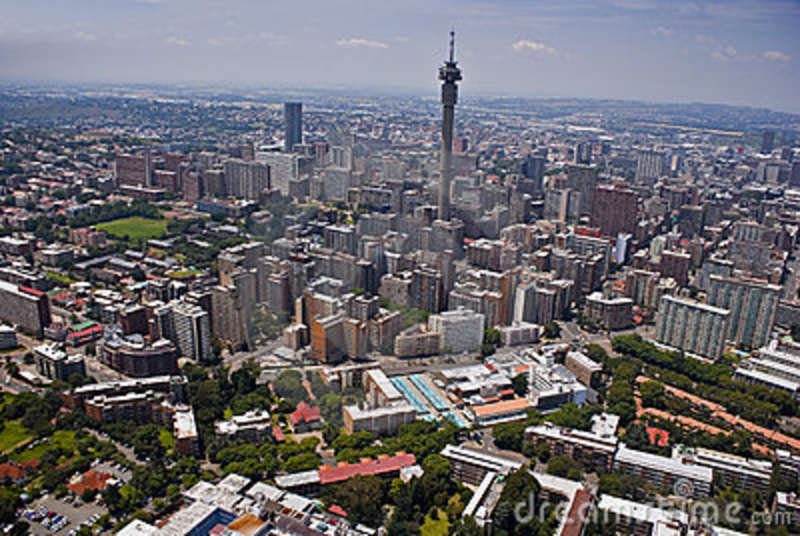
Johannesburg, the site of the SCJs' newest community in South Africa, is the country's largest city with 8 million inhabitants.

Johannesburg, the site of the SCJs’ newest community in South Africa, is the country’s largest city with 8 million inhabitants.

November 17, 2013, Johannesburg

This is my last full day in South Africa; tomorrow evening I will begin the long journey home. There’s not too much on the schedule. This afternoon Fr. Peter showed me St. Augustine College and the Holy Cross Sister’s Convent. The sisters have been connected with the SCJs in Aliwal North since almost the start of our presence there in 1923.

Recently the provincial administration of the Holy Cross Sisters made the decision to close Fatima House, a large nursing facility they run in Aliwal. It is slated to close next June. I learned that the nuns intend to continue a nursing facility but on a much small scale. What will become of Fatima House remains to be seen. The talk of it becoming a private hospital would be welcome by many. [Several SCJs have spent time at Fatima following illness and injury, including Bishop Joe Potocnak and Fr. Peter Surdel.]

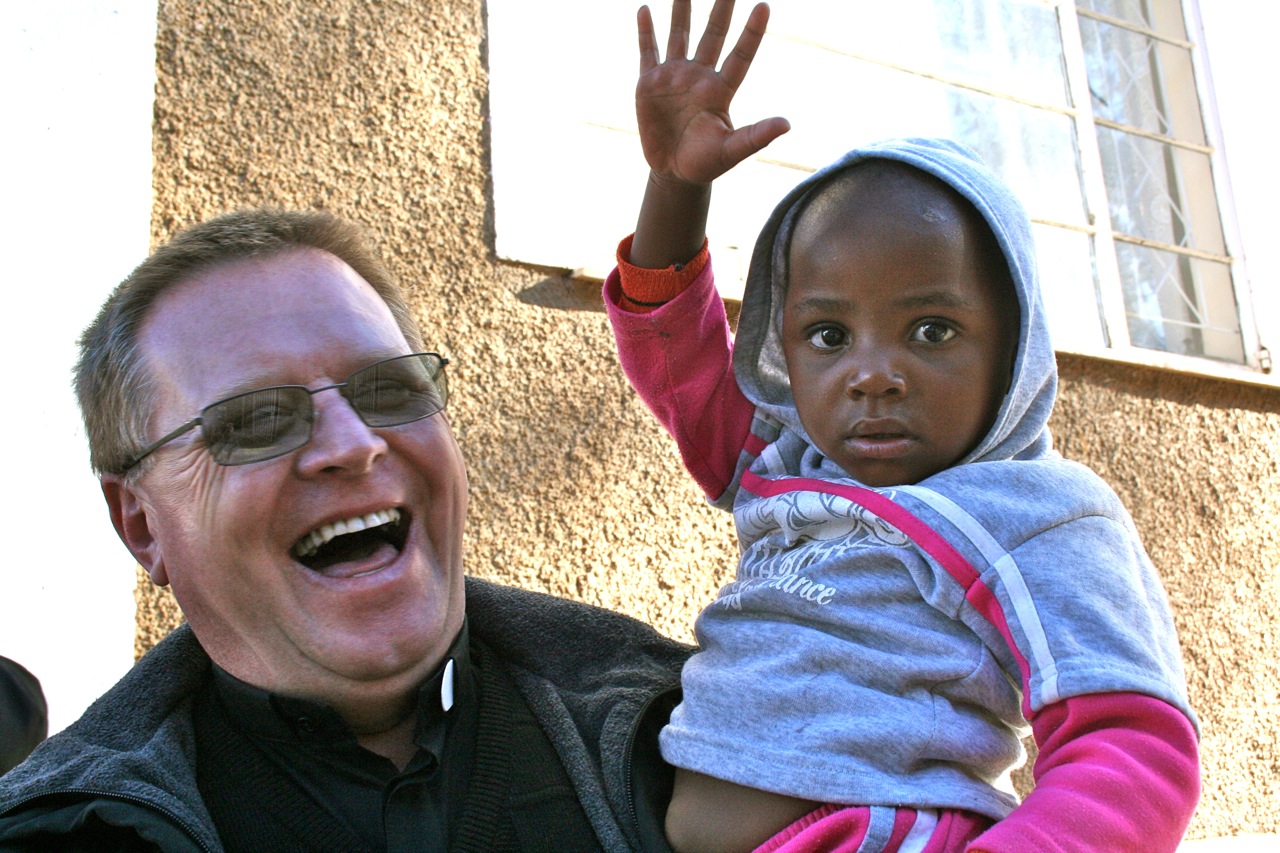
Fr. Tom with students in Johannesburg

Fr. Tom with students in Johannesburg

During my stay in South Africa I have not taken many pictures of people, but yesterday Fr. Peter took the picture of me at right with the five students living here.

This is truly an international community.

Fr. Peter, the superior, is a member of the South African Province and comes from Poland

The two students studying for the South African Province come from Zambia and Lesotho.

Two of the three are here to learn English in preparation for their studies at St. Joseph Seminary, Cedara, [near Pietermaritzburg] come from the Portuguese-speaking countries of Mozambique and Angola. Finally, there is one student from Madagascar where French is the national language.

The community does not have a cook so the students take turns cooking. One student is on each week which means once every five weeks they are responsible for preparing breakfast and the evening meal. They also take care of their own laundry and the upkeep and cleaning of the house.

In a certain sense English is a work in progress. The level of English skills varies from person to person. Most seem comfortable with spoken and written English, at least based on the prayers said in common as well as the table conversation at meals.

Variety of religious serving South Africa

As noted previously, Fr. Tom Cassidy, former provincial superior, is spending his first months out of office visiting the countries for which he had responsibility when he was on General Council in Rome.  During his travels he is maintaining a journal; several excerpts from it are being posted on the province blog. The following was written on November 14 in Pietermaritzburg:

Marian Hill & The Sea

This morning I left with Frs. Jean Paul and Innocent to visit Marian Hill and then travel south of Durban to visit the Capuchin Sisters for lunch.

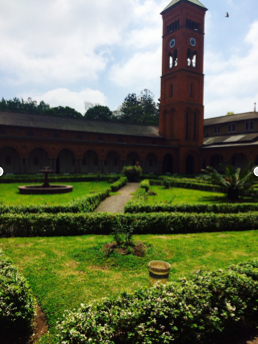
Screen Shot 2013-11-17 at 11.26.46 AMMarian Hill is the birthplace of the Marian Hill religious community as it is the birthplace and mother house of the community, a community of priests and brothers who number over 400 members and serves in a number of African countries, as well as North America, Brazil and Papua New Guinea.

The community traces its roots to the Trappists who came to South Africa and established their monastery at Marian Hill. The story goes that they were looking to build on top of one of the hills in the area but when the ox cart broke down their superior said: “We build here.”

Most people know that Trappists live a monastic life dedicated to work, prayer and (certainly in the 19th century) silence. As Marian Hill began to develop, the monks were asked to send men out to teach such skills as reading and writing to Zulu children in the area. As this did not fit the charism of a Trappist, eventually Rome approved the Rule of Life for a new community called Marian Hill whose mission, as it was described to me yesterday, was to go to the margin of society.

The reason I can report all this is that we had a guided tour by a young Marian Hill postulant (someone getting ready to enter the novitiate). He knew his story well and helped us to understand the history of how Marian Hill came to be what it is today from out of its Trappist roots.

Screen Shot 2013-11-17 at 11.26.57 AMThe Trappists who came to Marian Hill came from Austria and it is easy to see the Germanic influence in the chapel. The use of wood is evident throughout as is the choir stalls common to a monastery chapel.

After our tour was completed and we said our thanks and goodbyes it was off to the Indian Ocean and the convent of Capuchin Sisters. We were expected for lunch and managed to arrive almost on time. The Capuchin Sisters are a cloistered community. They are familiar to our SCJs as from time to time they come here for days of recollection or, as will be the case at the end of January, for several days of planning for the new semester and school year.

The community is international in character as their are five sisters from Mexico, some from other African countries, as well as some from around the area. The mother superior is from Mexico and has been here for nine years. Her English was excellent and if I closed my eyes I would be hard pressed to say where she came from or that English was not her first language.

After our lunch we had the opportunity to spend about half an hour with the Mother Superior and a young African sister who had a wonderful personality, full of humor while at the same time filled with down to earth wisdom.

We finally said our farewells, though Frs. Jean Paul and Innocent would be back with the rest of the SCJ community at the end of January, and headed home. We made it back before the afternoon rains and thunderstorm broke over our heads. The day ended with a community gathering to bid farewell to the deacons leaving on Sunday to prepare for their ordinations next month; as well as my own goodbye, as tomorrow I will fly to Johannesburg for my last stop on this journey through South Africa.

The gathering also gave me a chance to thank and say my goodbyes to Frs. Chris, Adam and Ziggy from Hilton who came down for supper and the farewell celebration. I said a few words to the entire group to thank them for their hospitality. I basically told them that like SCJs around the world they practice hospitality well and I felt right at home and at ease among them and especially appreciated the opportunity to pray with them.