Ecuador: Fr. Dehon’s first mission

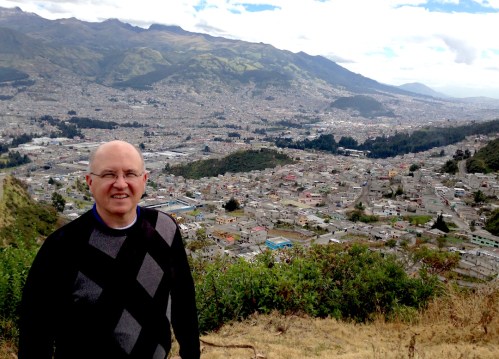
Fr. Steve with Quito in the background. He describes the backdrop as "our parish." Santa María de la Argelia consists of nine chapels that serve over 50,000 people

Fr. Steve with Quito in the background. He describes the backdrop as “our parish.” Santa María de la Argelia consists of nine chapels that serve over 50,000 people

Fr. Stephen Huffstetter, general councilor, writes from Ecuador where he has been visiting with our SCJ community there for the past week.

Fr. Dehon sent the congregation’s first missionaries to Ecuador in 1888. But due to several complex problems the mission did not succeed and the SCJs left the country in 1896.

One hundred years later the Spanish Province took up the mission anew. The district now consists of two communities in Quito and one on the coast at Bahía de Caráquez. District members come not only from Spain, but also from Venezuela, Brazil and now Ecuador itself.

Fr. Steve writes:

I arrived in Quito late at night for my first visit to Ecuador. Driving to the community house I could see lights up and down steep mountainous hills, but couldn’t get a true perspective on the landscape until the morning sun. Fr. José Luis Domínguez González, the district superior, and Deacon Carlos Alonzo Vargas led a walking tour of the neighborhood. With an altitude of between 9,000-10,000 feet above sea level, I appreciated the slow pace as I gasped for breath climbing the hills in the thin altitude.
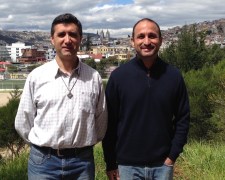
Fr. José and Dn. Carlos

Fr. José and Dn. Carlos

José Luis joined the Ecuadorian mission in 2001, one week after his priestly ordination, and is finishing his first three-year term as district superior. He has been highly involved in Retrovaille, a program for marriages in conflict, and served as president of the Latin American chapter. Carlos is from Venezuela and has served the district in the Bahía de Caráquez region since March. I also met Fr. Edson Pacheco de Almeida, a Brazilian working in Bahía in pastoral vocational ministry, and Hernan Carrera Pruna, an SCJ candidate from Ecuador doing his philosophy studies.

Our district / formation house is in a neighborhood next to the Central University of Ecuador. A good number of students were in summer sessions as we walked through campus. Nearby are the Catholic Episcopal and Religious Conferences of Ecuador, as well as the Catholic University where SCJ candidates attend classes. In September, there will be one returning and six new candidates in formation.
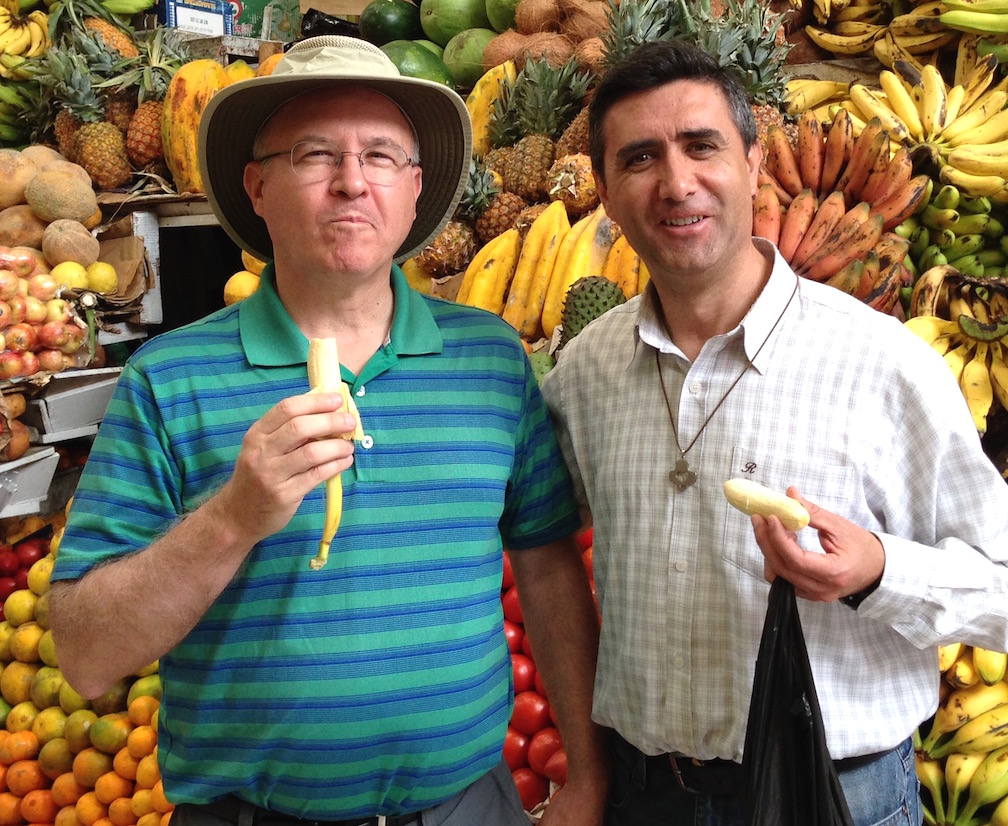
Testing the local produce

Testing the local produce

Our first stop was a marketplace where I saw many fruits and vegetables new to me. Jose Luis helped me to learn the new vocabulary of what we saw, and then we snacked on luscious bananas and salted, roasted corn kernels. We saw a great variety of fish, popular in this coastal country.

Our parish in Quito, Santa María de la Argelia, is actually a series of nine chapels that serves a large area of the southern section of the capital. The area houses around 50,000 people. 90% of the country is nominally Catholic, and as is true in most parts of the world, the challenge is to serve the smaller percentage we see in church each week and reach out to those who are on the periphery. This area of Quito has grown as people from smaller countryside villages flock into the cities in search of work.

Fr. Artemio López Merino and Brother José María Urbina Rioja are two of the original missionaries who re-founded the congregation’s presence in 1997. Artemio gave me a book he wrote on the history of the mission. Fr. Benjamín Ramos Fraile, who spent many years in Bahía and was just named pastor in Quito a month ago, joins them. He is organizing a week-long summer church camp for youth aged 4–13 and is getting to know families along the way. Fr. Joaquín Izurzu Satrústegui is a member of the Spanish Province and is helping for a month while on a break from his school ministry.

Fr. Benjamin with parishioners

Fr. Benjamin with parishioners

The SCJs sponsor a parish program for the elderly in collaboration with the local government. The elders refer to themselves as “70 + a little.” Services include meals, physical therapy, nutrition counseling, regular medical check-ups, and a social worker available to help address family issues. Perhaps most importantly is the social dimension of time spent with others in fun activities. We celebrated Mass to help with the spiritual dimension of their life. Their spoken prayer intentions included so many heartfelt prayers for the needs of not only of their own families, but of the community around them. I was surprised at the strong bear hugs the little old ladies embraced me with after Mass.

Life in these barrios can be difficult, with family violence, many absent fathers, gang activity, drug dealing, and a shortage of good jobs. The parish secretary’s office installed metal grating after a couple of attempted robberies. Friday evenings the parish has an outreach to the homeless, as they go into the streets to meet people in need.
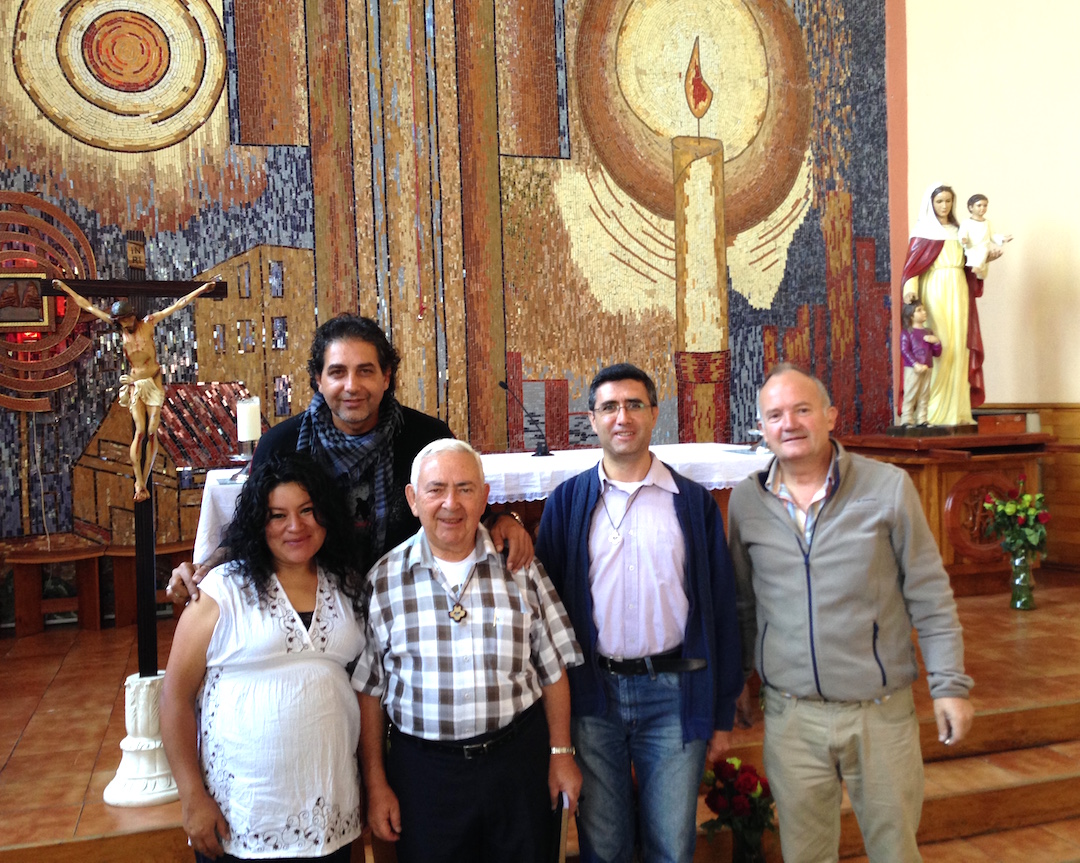
At Santa María de la Argelia

At Santa María de la Argelia

The chapels range from mid-sized churches to community meeting rooms. We visited three. Next to the San Francisco Javier chapel are 11 small houses, originally built to house domestic violence victims. Now the community uses them to host refugees, many from neighboring Columbia. The community of San Carlos is building a new chapel, a few bricks at a time, as they are able. One temptation is to seek outside money and finish more quickly. Though it will take longer for the parishioners to build it themselves, in the end it will have ownership and responsibility. At Argelia Alta, several women and children of the parish welcomed our tour.

While many parishes I am familiar with have individuals who are daily communicants, the weekday Mass traditions here are different. The evening parish Mass is attended by various parish groups. One night we celebrated with the family outreach committee. The second night was the charismatic prayer group. Each group is responsible for the liturgical ministry that day, like the music, readings and serving.

One night I sat in on a gathering of parishioners who have benefited from a Spain-based micro-credit program to help families start small businesses. Mr. José Luis Angel Vega met with groups of 6-10 people with team names like “Sacred Heart” “Santa María,” and “Life and Faith” They stood and introduced themselves and their business which included carpentry, a tire shop, restaurants, clothing stores, an internet café, and raising both pigs and puppies. They receive small loans of up to $1,000 and the group helps people work together to make sure that the business becomes stable and the loan fund is repaid so monies for other possibilities can be reinvested in the community. It is difficult for people who have ideas and hopes but no collateral or resources and this gives them a chance. These people are now providing needed and wanted services for their neighborhood, all within the parish.

Fr. Steve with some of the SCJs in Quito

Fr. Steve with some of the SCJs in Quito

I spent time talking to each individual in the district, and with the local communities as a whole. What they want the congregation to know is that they work hard both pastorally and to form a living situation good for religious life. They have formed an international community, and while they strive to develop local vocations among the Ecuadorian people, they also want to welcome those from other entities who have a good spirit of mission to join them.

I had a fun day exploring the touristic side of Quito. Ecuador is obviously located on the equator. Mitad del Mundo, (middle of the world), is a monument and village built on the site first calculated to be earth’s geographic center. We toured a village of reconstructed typical native houses in diverse regions such as the Amazon, the mountain highlands and coastal plains. Our guides were dressed in colorful local folk attire and brought the lives of the region’s first inhabitants to life.
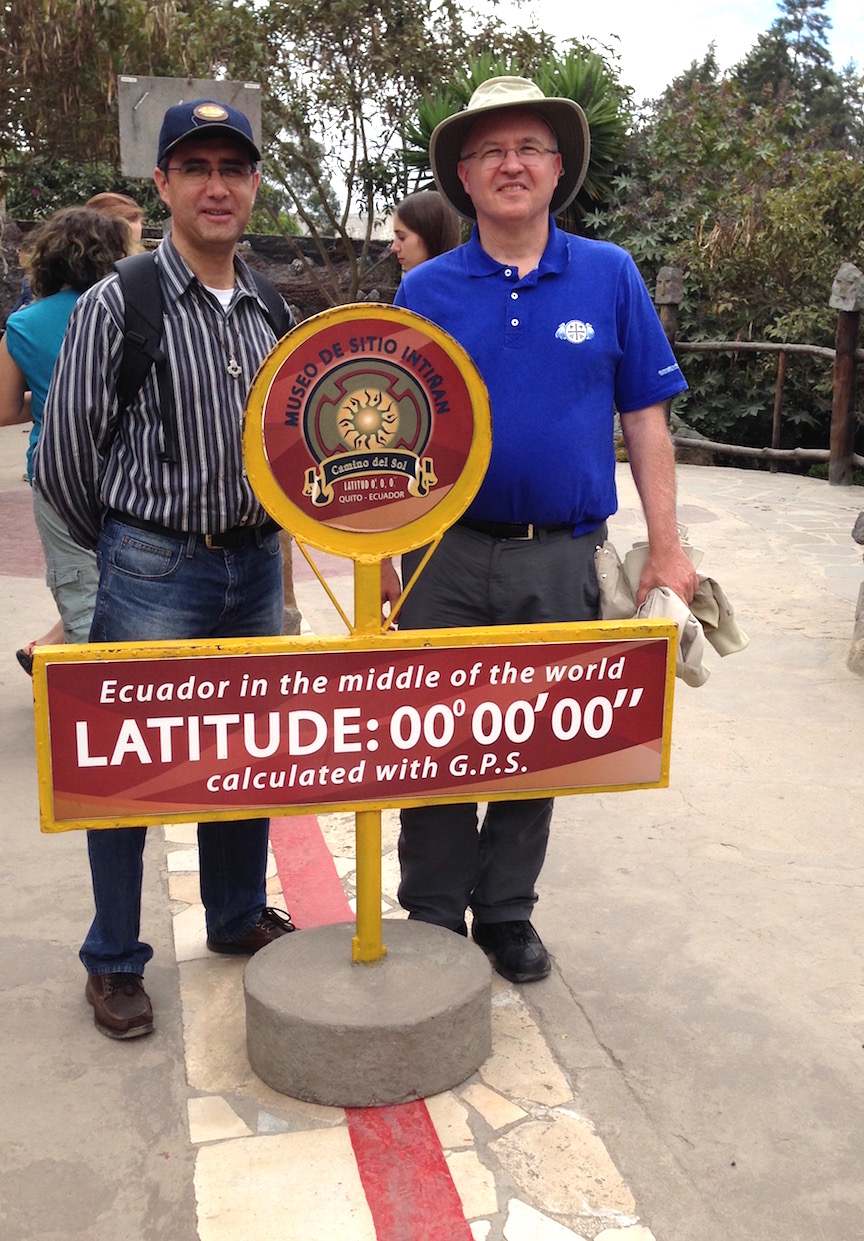
Fr. José Luis and Fr. Steve at the equator

Fr. José Luis and Fr. Steve at the equator

At the GPS equatorial line we entered a museum which demonstrated the forces of gravity, and how just a few feet on either side of the equator water swirls down the drain in different directions, but straight down when in the geographic middle. I tried to balance an egg upright, but couldn’t master the intricacies. A tour group of US high school students was starting a tour in English, so I joined that group to learn about the flora and fauna and people of Ecuador. We also saw some actual shrunken heads. Some were taken to show power over the enemy, others to preserve the wisdom of a respected elder in the community. The practice is now banned, but in some remote regions it continues.

The mountainous volcanic land around Quito is quite striking. We stood above a huge volcanic crater, Pululahua, perhaps 25 miles in circumference. In the valley far below we could see green and fertile farms. We also hiked up El Pucará de Rumicucho, a hilly area used by the Inca and older tribal cultures for prayer and ceremony.

While I have tried many new fruits and foods, the national dish Cuy, (Guinea Pig) has been the most unique for me so far. Our group split a platter, and the meat was tasty, like moist and tender pork ribs.
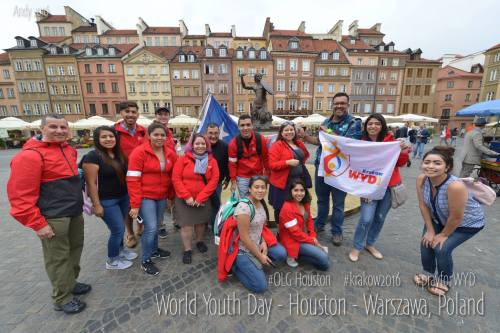
First days in Poland

13691171_10205170228095184_7093098474046543231_o

Fraters Juancho Castañeda Rojas and Justin Krenke are traveling with a group from Our Lady of Guadalupe in Houston to World Youth Day in Poland. Periodically they and others in the group, will share their experiences. From their first days in Poland Fraters Juancho and Justin write:

First Day in Warsaw 

As we continue our pilgrimage in Warsaw, we had the amazing experience to visit the Warsaw Uprising Museum where he had the chance to learn about the history and the rebirth of a nation after WWII. As the tour guide said to us: “after this tour you will have a better appreciation for the architecture of the entire city but especially the old part of the city.” She was right!! Everybody had the same experience of amazement during our walk through the old part of the city after learning about the destruction and suffering the people of Warsaw went through. During our walk through the Old City we met a group from Hong Kong also going to World Youth Day and took some pics with them.

Second Day 

13710735_10205170227335165_5955675802425746752_o

Frater Justin with fellow WYD pilgrims

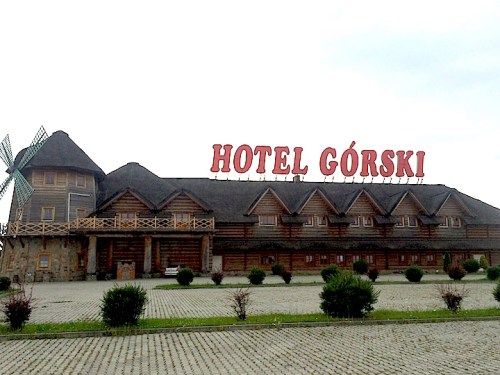
What an amazing experience visiting the Queen of Poland, The Black Madonna of Czestochowa at the Jasna Gora Monastery. It was a four-hour drive from Warsaw to Jasna Gora, and our driver Christofer made this drive very enjoyable. Once there we all were amazed by the size and beauty of the Monastery and the amount of people there… also we met some people who will participate in the World Youth Day from Mexico and we met again our friends from Hong Kong. We had a very exciting tour through the history and beauty of the monastery which is built as a fortress to keep safe the invaluable art work surrounding the Icon of the Black Madonna. We learned how important she is to the faith of the people of Poland because as our tour guide said: “the difference between the Black Madonna and other Marian shrines or devotions is that in comparison to places like Lourdes, Fatima, and Our Lady of Guadalupe no apparition took place here, it is just the people’s faith that makes this devotion.”  We had time to pray in front of the Icon of the Black Madonna and be witnesses of this beautiful devotion from all the visitors. Another meaningful experience for us was to visit the chapel dedicated to the Sacred Heart of Jesus. We elevated our prayers by lighting a candle there. After our visit we had very good Polish food at the Hotel Gorski, no relation to our Mary LOL…

Fraters Justin and Juancho

Gorski Hotel

Welcome to the USA!

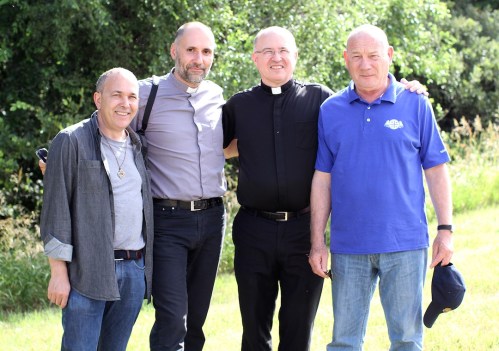
Fr. Jesús, Fr. Luca, Fr. Steve and Aldo

Fr. Jesús, Fr. Luca, Fr. Steve and Aldo

Fr. Stephen Huffstetter recently hosted Fr. Luca Zottoli, general treasurer, along with his assistant, Aldo Ivaldi, and Fr. Jesús Valdezate (a member of the General Finance Commission), for a visit to the United States. Fr. Steve shares his journal from the visit:

Monday, June 20

Last night I felt privileged to welcome three members of our SCJ General Finance Commission to the States. They are here to learn about how the US Province approaches finance and investment, development and fundraising, and forming relationships with donors. Mr. Aldo Ivaldi has made the trip before, but for Fr. Luca, the general treasurer from Italy, and Fr. Jesús from Spain, this was their first time in the States. Their plane into Chicago was four hours late, and by the time we finally arrived in Hales Corners, the three travelers were very tired. We started early today meeting with two representatives from a company that specializes in direct mail in the US and many other countries.

In the afternoon we sat with the management of the Province Development office in Hales Corners. Fr. Dominic Peluse, Deacon David Nagel, Sid Liebenson, Pam Milczarski and Tim LaFavor spoke of their work and philosophy. Besides raising money to support the mission of the Congregation, the materials mailed also aim to promote spirituality and deepen people’s faith: prayer and mass cards, spiritual reading and inspirational artwork. Fr. Luca remarked that the afternoon gave him a better sense of the spirituality of the program.

Dn. David welcomes Fr. Luca

Dn. David welcomes Fr. Luca

After supper the visitors got a look at Lake Michigan. To European eyes it reminded them of the ocean, since the water stretches all the way to the horizon. And of course, no visit to Milwaukee would be complete without frozen custard, different from gelato, but just as tasty.

Tuesday, June 21

Today was a long travel day, a 500-mile drive to Sioux Falls, SD. This crew has proven fun to travel with, and the eight hours of drive time passed quickly. They tease and joke with each other like excited school kids on a field trip. They were amazed at all the open spaces, and we really haven’t gotten to the west yet. Their cameras clicked away as we crossed the Mighty Mississippi River at LaCrosse, WI, with tree-lined hills and bluffs sloping down to the waters. They told me they wanted to eat local foods and experience local color, so we ate lunch at a truck stop just off the interstate, which they called an experience of the “Real America” like they’d seen in the movies.

Fr. Jesús with Magdalena Artega, a member of the province development office staff who assisted with translation

Fr. Jesús with Magdalena Artega, a member of the province development office staff who assisted with translation

After we stopped for the night they were in the mood for “American beefsteak”. We headed to the small town of Tea, and the steakhouse that serves huge and tasty hunks of grass-fed South Dakota beef. They joked that “Everything is big in America”

A favorite spot of mine are the actual waterfalls that the city is named after. The night was mild and the sound of rushing water quite calming. We watched a flock of baby ducklings learning to swim against the current, and families out for an evening walk. After hours in the car, the movement and outdoor time was a fitting end to the day. One of the guys remarked that the terraced rocks of the falls seemed as perfect as if Disney had created it. But it was all Mother Nature’s work.

Wednesday, June 22

Our tour of the St. Joseph’s Indian School Donor Care Center absolutely amazed our guests. They could not believe the vast numbers of people the school can reach personally, and were impressed with the philosophy of relationship building with the donors. Kody Christianson, the center’s director, gave us a history of the center and an overview of how it is developing. Geri Beck, who leads planned giving and major gifts, spoke of how her staff hosts visitors and meets with individuals across the country. The staff makes many calls each day, the majority to say “thank you,” and speak with new donors to provide basic information about the school and programs. They also try to call donors to wish them a happy birthday, or follow up on prayer requests to see how folks are faring. While our visitors put on earphones and listened in on some of the conversations staff have with donors, I wandered around the office talking and reconnecting with our staff. We ate lunch with them. Besides the chance to update them on our work in Rome, I took the opportunity to thank the staff for their dedication and service to our donors.

Learning about St. Joe's fund raising program

Learning about St. Joe’s fund raising program

We left the big city behind, crossed the Missouri River, and headed to the prairie and reservations. Lower Brule was the first SCJ mission in the US and three SCJ priests live in the community there and serve the needs of six small parishes. Two of the priests are originally from our Indonesian Province, making it a truly international mission. They have been on the reservation long enough to build trust and establish good pastoral relationships. Driving around the area gave our visitors an initial experience of the difficulties and challenges people face on the reservation. I didn’t need to comment on the housing and infrastructure. I just drove around and let the guys take in the sights and form their own impressions. Afterwards one commented that he had seen more absolute poverty in other parts of the world, but the atmosphere was heavy with sadness and he could tell the mission was needed but difficult.

Wednesday evenings mean Mass at Fort Thompson, across the river on the Crow Creek Reservation. Several families are regulars, and afterwards, we had a chance to chat with tribal members over coffee and Kool-Aid.

Thursday, June 23

We spent the day in Chamberlain at St. Joseph’s Indian School. Jona Ohm, who handles many roles including public relations, led our tour of the development office. Clare Wilrodt, Religious Education Coordinator and Mission Animator, helped translate into Spanish for Fr. Jesús, and Emily Swanson followed us with a camera to capture the images. Our visitors saw mailings from start to finish – ideas and design, printing press, outgoing mail warehouse, and the staff that opens and answers the volume of letters that arrive every day. For me the great part was reconnecting with staff along the way.

Fr. Jesús with a St. Joe's staffer

Fr. Jesús with a St. Joe’s staffer

After the tour, we sat with Kory Christianson, director of Development, and Neoma Harris, who is in-charge of Marketing. Its impossible to understand the whole structure in one short visit, but our guys got a broad overview, and plenty of chances to ask questions and learn.

Summer also brings the Rising Eagle summer day camp. We visited the dining hall where a nutritious hot lunch is provided for the kids coming each day by school bus from the reservation. This week’s group was from Lower Brule. Even after three years away I recognized several students. St. Joe’s High School students were also working as camp counselors, giving back, and learning responsibility.

We joined the three Chamberlain SCJs for lunch. There is a bond across cultures and languages when we get together and share prayer and food. The ministry is a joint effort, and each member of the community has an important role to play.

St. Joseph’s has a Thrift Store off campus on the Main Street Business District. After seeing where the donations come in, the three visitors went on a shopping spree. They came away with some shirts and hats but more importantly, a broader sense of the mission. Sales support the school. Children have nice clothes to wear, and many loads of household goods and clothes for infants and elderly are taken where they are needed on the reservation.

We visited the Personal Care Representatives, who care for smaller groups of donors. Lilly will be a senior next year and she is helping in the office for the summer. She spoke about the exchange program with our sister school in Handrup, Germany, that she and three classmates participated in during the first part of June. Native Hope is a new project trying to tell positive stories about Native culture, and providing meeting space for people to come together in sharing and reconciliation.

We took a break at the museum to shop. It gave me the chance to say goodbye to Mary Jane Alexander, who is retiring after 45 years of working in the school and with our alumni. So many of the staff have been committed to the mission for many, many years.

Fr. Anthony Kluckman gave a tour of the school, which strives to give a high quality education in a way that also takes into account Lakota culture.

For supper we ate pizza with the high school boys, then visited the Speyer Home, where the younger summer break students are staying. That filled in the picture. The school is so much more than a school because it is also a home for much of the year, and houseparents who live with the children are the biggest single group of staff. The kids greeted the visitors at the door, shook hands in welcome, and introduced themselves. They were excited and proud about give a tour of the home.

Walking

Friday June 24

Friday was a day of pure tourism and fun. We started in the Badlands National Park, where the guys were fascinated by every twist and turn in the road. After driving over rolling grasslands for two hours, the peaks of the hills stand out like mountains on the moon.

When I stopped for gas, an adjacent prairie dog town captured their imagination. They got as close as the critters would let them to take pictures and watch their antics.

Temperatures were in the upper 90s, (or 40 if counting by their usual Centigrade degrees). Still we walked some of the paths and trails, with photos at every turn. At the visitor center we watched a good quality orientation video that gave a look at how the Badlands were formed and the types of wildlife you can discover there. The Badlands are also a treasure trove for fossils, and we saw researchers cleaning dirt and rock away from the latest batch of discoveries.

An event called the “Great Race” featured vintage cars driving across country, and the classic models passing by throughout the drive added another layer of interest.

Fr. Luca kept asking me if we were going to eat buffalo meat, and finally he got his chance at Wall Drug. Through advertising over the years, a small family pharmacy has evolved into a gigantic tourist stop, with about every kind of souvenir imaginable, and entertainment besides. And yes, there still is a real drug store, almost hidden by the roaring dinosaurs and rows of gift shops. When we pulled into the massive parking area, Aldo exclaimed, “Only in America!”

Mount Rushmore was a must, and I wondered what it would mean to visitors from a foreign land. They commented on how in the US we try to build a positive sense of nationalism, freedom and democracy, which they appreciated. I have seen the monument many times, but it is a treat to see it through the eyes of a first timer.

We ended the evening at the Fort Hayes Cowboy Chuckwagon show. Aldo was wearing a St. Joseph’s Indian School shirt that was a gift from the Donor Care Center. While we were looking at some of the old time activities like blacksmithing, a woman on a bus tour noticed the symbol and asked if he worked at the school. She had never been to St. Joseph’s, and only knew the school from many years of mail correspondence. The small world part was that she and her friend were from the Milwaukee area and have taken workshops at Sacred Heart Seminary and School of Theology.

We dined on fine beef, beans and fixings cowboy style, slapped onto a tin plate. The evening ended with a wonderful live music show that featured such a variety from old time country to rock and roll.

Saturday, June 25

I dropped Luca, Aldo and Jesús at the Rapid City Airport for their return to Milwaukee, where they will meet with our investment and finance people. So much of my life was spent in South Dakota; it is a treat to share it with visitors and see it again fresh through their eyes and experiences.


Feast day in the Philippines

Cassidy Philippines feast day

Fr. Tom (red shirt) with the new class of postulants

Fr. Tom Cassidy writes about celebrating the Feast of the Sacred Heart in the Philippines, where he is currently assisting with the English program:

Our principal celebrant for the Mass was Fr. Ronald Basco, SCJ, who was ordained on May 19The homilist was Fr. Donald Longo, SCJ, the out-going superior who will leave on Monday for Manila for further studies.

One of the highlights of the Mass was the reception of the new postulants; this was done by Fr. Frank Pupkowski, SCJ, in his role as regional superior, and was assisted by Fr. Patrick Gutib, SCJ, the new postulant director. There are 12 in this postulant class equally divided between Filipinos and Vietnamese.

Fr. Donald is not the only one leaving the local community. Fr. Arthur Guevara, SCJ, will leave in a couple of weeks to take up his duties as the pastor of our new parish on Leyte. He is also the regional treasurer and will continue in that capacity. That will require him from time to time to return to Cagayan de Oro. The Philippines being an island nation means either he flies or drives and takes a ferry boat between Leyte and Mindanao. Finally, Fr. Richie C. Gier, SCJ, who was the orientation year formator will also be going to Manila for his new assignment.

Following the Mass those present were given the opportunity to receive a blessing from the newly ordained priest. A custom here is to kiss the hands of the priest before he imparts his blessing. Naturally, with a large crowd of local community members, plus the guests, this took awhile and gave the caterers time to finish their set up.

Filipinos love a good party (fiesta). And no major fiesta would be complete without a roasted pig! These tend to be much smaller then pigs we would find in the States.

Pork was not the only meat served. We also had beef and salmon on a bed of pasta — a fish I enjoy. And, of course, what meal in this part of the world would be complete if it did not start off with rice!

Even the pencils get blessed!

Cathedral

St. Augustine Cathedral in Cagayan de Oro

Fr. Tom Cassidy writes from the Philippines where he is assisting with English classes. Today he writes about celebrating Mass in a country where open-air churches invite not only human worshippers but birds and dogs as well.

This morning Francisco Chavez came to pick me up and drive me to the cathedral for the noon Mass. He’s a Filipino who actually lived for many years in Toronto and where much of his family are still located. I think he said they migrated to Canada about 40 years ago. He’ll be my driver for the next two days as I’ll have the noon Mass on Thursday and Friday as well as today. I was drafted in part because the noon Mass is an English-speaking Mass and perhaps more important, most of our community left either yesterday or this morning for the ordination of one of our young SCJs near Davao.

St. Augustine Cathedral is about a 15-minute car ride from our house and is in the center of town. It’s a big, very airy structure, as the climate would dictate. As a result, our large congregation (even though it was midweek the church was full) was joined by a much smaller collection of birds flying hither and yon. Didn’t see any dogs but they often appear in church as well. Last Sunday at Immaculate Conception, for example, there were at least three sleeping dogs (under pews) before Mass started.

After Mass, dozens of people come up to the the priest (or priests) asking for a blessing. Sometimes it is for a special occasion, such as a birthday or anniversary, or to deal with an illness or other infirmity. Other times it is just a request for a simple blessing. This happens in a Filipino church much more so than in the States. Today was no different; it probably took me 15 minutes to get back to the sacristy.

I was also asked to bless a large collection of religious articles. Perhaps the most unusual request came from a young man and woman who said they were taking an exam tomorrow and would I kindly bless them and a offer a special blessing for their pencils too?

On a different note, this morning we said farewell to our last two Filipino students, Edgar M. Abid and Marvin S. Dalapo, Jr. Tomorrow they take their final exam at Xavier University then they’ll head home for their vacation before returning for the fall semester. So as of tomorrow it will be the six Vietnamese and myself for the next 12 days of English classes before we wind it up and I head back to Manila.

In the Philippines

Vietnamese students

Vietnamese students relax before class

After several months in India, Fr. Tom Cassidy is in the Philippines where he is teaching English. He writes:

This morning I had my first class. There are six Vietnamese and five Filipinos. The Filipinos speak very good English and will only be in the class for a couple of days. Fr. Khoa said he wanted them to hear an American accent. They’ll be going on the Dehonian Youth Mission as are all those preparing to enter the postulancy program. The six Vietnamese have been here for almost a year and, I believe, have already passed their proficiency test for entrance into the university for their philosophy studies.

Cassidy in Philippines

The Dehonian Youth Mission is an annual event that involves our SCJ candidates as well as young men and women who give of their time in a week-long pastoral project. The also learn about our SCJ charism.

It is hot here but no where near as hot as Andhra Pradesh (India). For example, today’s high is predicted to be about 90 degrees, warm by US standards but certainly a lot more comfortable than what many Indians are currently dealing with. There is also a chance for thunderstorms later today. From what I’ve been told they could use the rain. I hope the rain comes before or after I take my walk.

On the way to the airport yesterday I asked Fr. Delio about the land our former superior general asked the region to buy in Manila for a future region/provincial house located more conveniently to the airport. He told me they have the land but no immediate plans to build as there are one or two other projects that are more pressing. One he mentioned is a retreat house. I mention this because several of the region’s programs are housed in the place that I am currently staying: (1) postulancy, (2) philosophy, and (3) the regional administration and fundraising offices. We also have Immaculate Conception parish nearby.


A new church blessed!

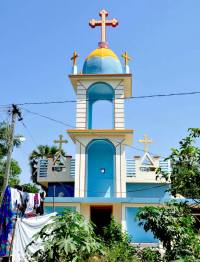
Velankani Matha Church  in Pedakakani, India

Velankani Matha Church in Pedakakani, India

Today Fr. Tom Cassidy writes about the blessing of the SCJs’ new church in Pedakakani, India, which took place on April 21:

The invitation said 5:30 pm, we all expected it to start at 6:30 pm, and once we got to Velankani Matha Church we were told that the ceremony really wouldn’t start until 7:00 pm as the stage crew was still putting the stage together. The church was too small to handle the crowd so the blessing would be in an outdoor Mass in a large field next to the church. I am not sure if it is church property or if it was borrowed for the evening. In any case, it was a nice spot, almost like a theater-in-the-round or an amphitheater.

The outdoor altar

The outdoor altar

Both Fr. Jesu and I were in the sanctuary with the bishop. Along with us were members of the district council plus Fr. Thomas Vinod, scj, our district superior. Back in the States you’d find the pastor up there as well but Fr. Dharma Raju Akula, scj, was busy behind the scenes making sure all would go according to plan while his associate Fr. Ravindra Moparthi, scj, directed the choir and musicians. I’m sure for both of them it was a bittersweet evening as the two have been transferred. Dharma will come to the US to study mass media and Loyola University in Chicago and Ravindra will become as assistant priest at Divine Mercy Parish in Vasai (Mumbai).

This being Andhra Pradesh the language of the Mass was Telugu. I could not understand Bishop Goli Bali’s homily but I was told afterwards it was a good one.

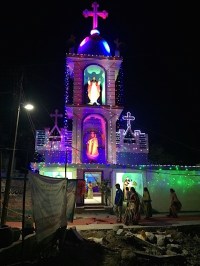
The church was lighted for the celebration

The church was lighted for the celebration

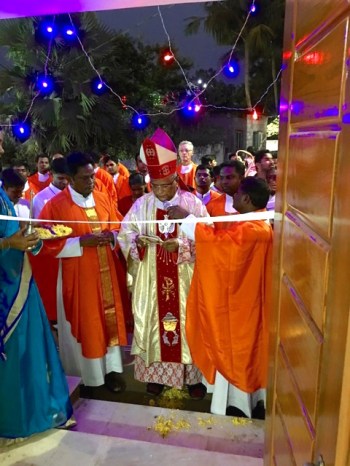
While I had expected to start at 7:00 pm according to our revised plan we actually began the procession to the stage at about 6:40 pm. Our first stop was the church so Bishop Goli Bali could bless it and cut the ribbon. The church is certainly very Indian in its design, colors and homage to the saints (both inside and outside the church). And plenty of lights for the evening, as well as fireworks.

The Mass finished around 9:15 pm. I’m pleased to report that the weather gods blessed us all last evening. We had a cool, gentle and persistent breeze and with the sun down, it was actually like being in mid-summer Milwaukee waiting for the Independence Day fireworks. Significant Indian events always include lots of fireworks and firecrackers.

Also standard is the need to feed any and all who come to the celebration. The usual custom has the priests and sisters going off to be seated and served by male members of the parish. The bishop eats in a place right next to where the priests and sisters are seated. I was all set to eat with a couple of Indian priests (one whom served for a time in the Springfield, Illinois Diocese) but got drafted to dine with the bishop. It was a party of three, my Springfield priest and I dined with His Lordship (the proper title in India for a bishop).

The church in the daylight, just prior to its completion

The church in the daylight, just prior to its completion

Both Frs. Dharma and Ravindra were our servers. I don’t know if we had the same food as served to the others but I really enjoyed the mutton. The few times I’ve been out in a restaurant I always order it as we never get it at home. Now I should point out that when Indians say “mutton” they really mean “goat” as lamb/sheep is very expensive. In fact mutton is on the menu for the celebration of First Professions on May 1. To use a biblical expression: “Fr. McQueen is going to kill the fatted calf (goat)”.

My cameramen for the evening were two of the novices who will make their first profession on May 1st. Chitti Babu Nandipamu and Maria Pavan Kumar Bandra Nadham. Between the two of them they took 300 photos. I ran into Chitti heading toward our car for a ride back to the novitiate and since he was still eating (using his hands in the Indian style) I said don’t bother with my phone, you can give it to me when you get back.

In bed I chuckled to myself, realizing that Chitti still had the phone; he was going to be in for a surprise when the alarm goes off at 5 am. As it turned out it was Fr. McQueen Winston Savio Mascarewhas, scj, who came knocking at my door at 5:00 am with a chiming iPhone.

Remembering those who came before us

Mausoleum flowers

Fr. Stephen Huffstetter, SCJ, our general councilor in Rome, writes about a recent visit to the city’s main cemetery, Campo Verano. Approximately 20 SCJs are interred there, including two former general councilors. Fr. Steve writes:

Since my days of parish ministry in South Dakota I have developed great appreciation for visiting cemeteries. When our Vicar General, Carlos Enrique Caamano Martin, invited me to go along to Campo Verano, Rome’s main cemetery, I was delighted to accept, and wondered what I would find. When I asked at table if anyone famous was buried there, one of the Italians remarked that most of the famous people are buried in churches!

We traveled by the city’s light rail line, my first time aboard. The trip takes longer than the underground metro, but allows for a scenic tour of the city. We passed many diverse neighborhoods, monuments, museums and parks.

Our first stop was the Church of San Lorenzo Fuori le Mura (outside the walls). The ancient church is much simpler than the gilded Baroque churches. There are of course beautiful pieces of art and mosaics. Here St. Lawrence was martyred by being roasted alive. A blood stained stone slab where his body was laid is preserved as a sign of his suffering and his faith. Near the altar was a picture depicting the grill he died upon. In addition to crucifixions, the authorities of the day were perversely cruel in their instruments of death.

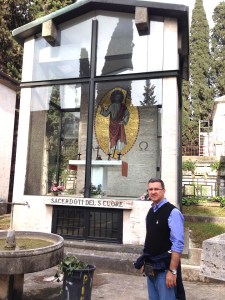
Carlos E and mausoleum

Fr. Carlos Enrique in front of the SCJs’ mausoleum

Outside the church at the cemetery entrance were rows of flower stalls, where vendors offered visitors the opportunity to purchase a bouquet to honor their loved ones. Campo Verano is several miles across, a city in its own right. The size and scope of the artful statues, the chapels and mausoleums absolutely astounded me and exceeded every expectation. When I saw the monuments that were the size of small houses, the scripture passage that came to mind was of the man Jesus cured who was living among the tombs, because someone actually could in a place like this. Smaller spaces for graves ringed the outside wall, with ladders strategically placed so visitors could add flowers and decorations to the highest areas.

The first section we came upon had porticos and frescos as lovely as any I’ve seen. The cemetery goes back 200 years to the time of Napoleon. One large monument commemorated the Roman Jewish victims of the Nazi Deportation. While the cemetery does hold its share of people mentioned in history books, this is mainly about the everyday people of Rome, who built the city, made it work, lived and loved, dreamt and struggled and now lie in a state of eternal rest.

Carlos Enrique led the way to our mausoleum, which held a small altar in a glass enclosed room in front of a mosaic of the Good Shepherd. Two of our Superior Generals, Fr. Lellig and Fr. Govaart, are buried here, along with 17 others who have died at the Generalate.

We opened the glass doors in the front and climbed down a steep ladder, looking at the stone slabs marking the places of our beloved dead as we descended about 30 feet. While I was looking at the names and dates on the stones, Carlos Enrique snatched a broom from the corner and handed it to me. It then dawned on me that it was our responsibility to clean and tidy up, which I did with a joy and prayerful spirit. As St. Benedict was fond of saying, “Ora et Labora.”

When I was making my good-bye rounds in the US last July, I realized there would be some members of the province I might be seeing for the last time, and that has proved to be the case. One of the adjustments to life in Rome is missing the chance to be with community when we celebrate a funeral liturgy and celebrate and remember the life of those who have shared so much with us along the way. I pray for all who have gone before us and built the foundations for what we are now able to do.

A room blessed and new possibilities opened

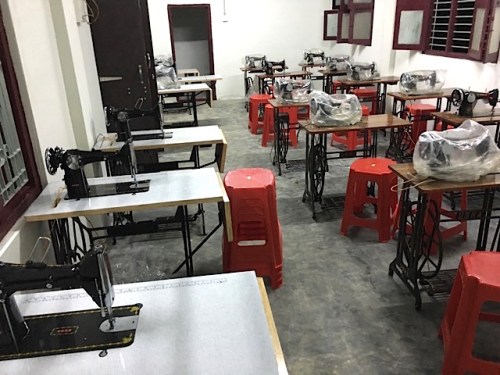
New sewing machines ready for classes in India

New sewing machines ready for classes in India

Fr. Tom Cassidy wrote that on March 31st SCJs in India blessed a newly finished classroom next to the community house in Vemapdu. The house has been under construction for the past few months but is also close to completion.

The classroom came about, wrote Fr. Tom, when  “Fr. Jojappa Chinthapalli  decided that he had sufficient funds to construct a small structure (he calls it a shed) to provide instruction to local girls and women in sewing. In addition to the sewing machines there was enough space to install a couple of computers that will be used by Fr. Suresh Gottom to teach computer skills to the youth of the parish.

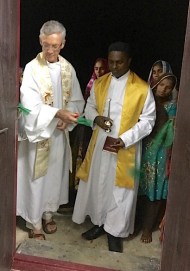
Fr. Tom cuts the ribbon while Fr. Thomas looks on.

Fr. Tom cuts the ribbon while Fr. Thomas looks on.

“The blessing was about 40 minutes behind schedule by the time it got underway. Many of the women, and it was mostly women and girls who showed up, had to come from work and would have been hard pressed to arrive at the stated time. We weren’t going anywhere so the delay was taken in good stride by all. Fr. Jojappa promised to take us out for pizza afterwards. The ‘we’ in this case were Fr. Thomas Vinod (district superior), Fr. Michael Benedict (district treasurer) and Fr. Anthony Sundar Raju Maallavarapu, who was kind enough to drive us to Vempadu from Eluru.

“Fr. Thomas did the bulk of the prayers. I did the reading and the ribbon-cutting. It was a simple ceremony very similar to a house blessing. The ladies all seemed happy and eager to get started. I was introduced to one of the two women who would be teaching the classes. As you might imagine, finding employment of any kind in rural India, or for that matter almost anywhere in the world, is not easy. Hopefully the skills learned in these sewing classes will be of some help, not just in employment, but in providing clothing for many families.”

Many local women took part in the blessing of the new classroom

Many local women took part in the blessing of the new classroom

Celebrating Triduum and Easter in India

Pilgrim 9

The “Pilgrim Nine”

The following are excerpts from Fr. Tom Cassidy’s daily journal covering the days of Triduum through Easter Vigil:

MARCH 24 – This evening we will join the Holy Family Brothers as we begin the great three days of the Easter Triduum starting with Holy Thursday’s Mass with its rite of the washing of the feet.

Mariano leads way of cAfter Mass and supper nine brothers will be walking 40 kilometers (24.8 miles) to the Gunadala Matha Shrine on the outskirts of Vijayawada._ They’ll leave after our evening meal, departing sometime after 8:30 pm. According to Br. Jesu Prasad Siddela, scj, it will take them between 12 and 15 hours. The brothers are all going barefoot. Pilgrims, both Hindus and Christians (and I’m going to guess Muslims as well) make pilgrimages in bare feet. This is done on a short journey or on even much longer ones than the 40 kilometers our brothers will be walking tonight.
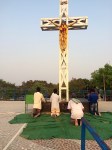
Here at Christu Dehon Nivas we kicked off the Easter Triduum last evening with the outdoor Stations of the Cross. Several of the brothers constructed a large wooden cross that the brothers and Fr. Louis Mariano Fernandes, scj, (our rector) took turns carrying from station to station. As Fr. Mariano wanted to take his turn carrying the cross he asked me to lead the stations.

MARCH 25 – After supper last evening we wished our nine pilgrims well as they began their 40 kilometer hike to Gunadala Matha Shrine. It’s now going on 11:00 am on Good Friday and since we have not heard anything we can presume that no news is good news since Br. Jesu Prasad Siddela, scj, has my iPhone and can call if they need assistance.

Pray before crossThrough the kind services of our novice master, Fr. McQueen Winston Savio Mascarewhas, scj, a community of sisters near the shrine has agreed to put our pilgrims up for the day. They’ll return tomorrow by bus and as our Holy Saturday service does not begin until 10:00 pm they’ve got plenty of time to make their way home.

Our Pilgrim Nine were not the only ones walking today. This morning the Carmelite community of the Edith Stein Monastery organized a walking Way of the Cross. Many of the religious communities, both men and women religious, chose to participate. Our local bishop, Jaya Rao Polimera, also took part, giving a brief opening meditation and prayer and then doing the same at the conclusion of the stations in front of the Carmelite chapel.

The stations began with someone dressed (including long hair, beard and crown of thorns) carrying the cross and from there, various individuals, including our own Fr. Mariano, carried it from one station to the next. The distance from the Holy Family Brothers to the Carmelites is about two miles (3.21 kilometers). It took us just over two hours to complete the journey.

MARCH 27 – Fr. Mariano and I, plus four of the brothers, took part in the Easter Vigil Service with the Holy Family Brothers community. The rest of our brothers were dispersed, a few at their ministry sites with the majority participating in the service at Amalodbhavi Matha Cathedral in Eluru.

Procession SatAfter the blessing of the fire and Easter (Pascal) Candle we processed to the room used on Holy Thursday for the altar of repose. Here we would hear the Exsultet, The Great Easter Proclamation, sung before the Easter Candle. I look foreword each year to this beautiful song, and especially its lyrics.

Next in the liturgy are the Old Testament readings recording the history of salvation starting with creation. From there we again processed to the chapel but before entering we would hear, or better said “watch,” the Holy Family postulants for a second time act out the testing of Abraham (Gen. 22:1-18). For the young seminarians this is one of the highlights of the evening. After a fine reenactment (especially by lamb and donkey!) we all proceeded into the chapel where the rest of the liturgy took place, including the renewal of our baptismal vows.

Following the service we were all invited for cake and soft drinks. I was asked to give a toast and what followed must be a house tradition. Part of taking a sip included four phrases that you might call a little ditty. What made it impressive was it was done in all the languages used in the house. I counted nine, starting with the common (house) language of English and then Spanish, the language of the Holy Family Brothers coming out of Spain, and on to at least seven Indian languages.