Summer update

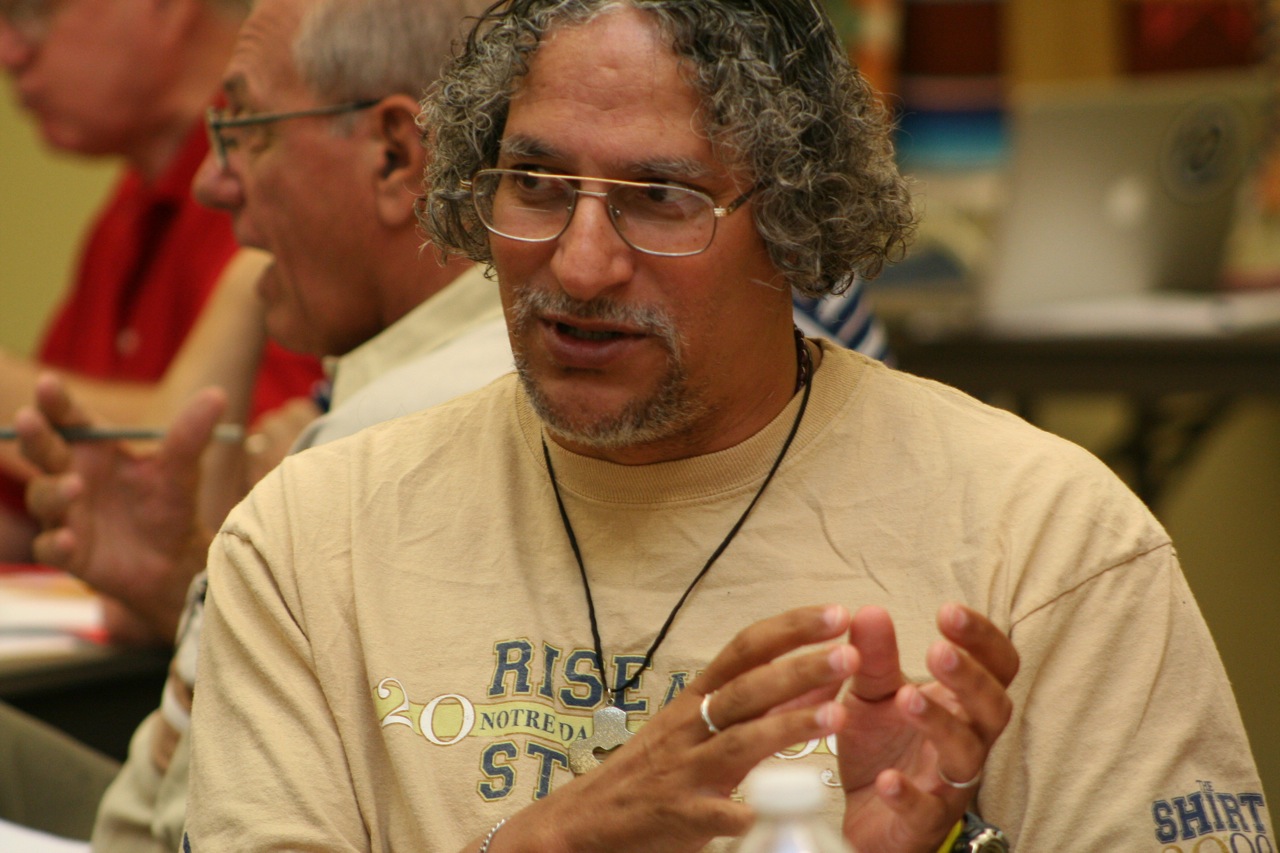
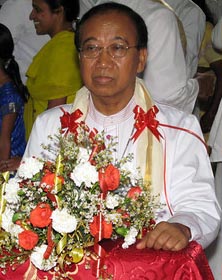
Br. Clay Diaz during the July province assembly.

Br. Clay Diaz, SCJ, is a theology student doing summer ministry in northern Mississippi.  He writes here with a quick hello and update:

Hello and many blessings to all! I am having a good summer so far. During the first part of the summer I have been working at Christ the King parish in Southaven, Miss. During the month of July I had a good summer and I truly enjoyed our province assembly. Now for August I will be working with Sacred Heart Southern Missions.

As of August 31 I will be back in Chicago, getting ready for my second semester at Catholic Theological Union.  My first semester at CTU provided me with a good learning experience and I am looking forward to my next semester. I am in the Master of Arts in Pastoral Studies program.

This week I will be renewing my vows at Christ the King on Thursday August 4 at 9:00 a.m. Fr. Bob Tucker is going to be the presider.

I hope to continue writing blog entries for our province site and encourage other young members to do so as well to keep others informed as to what is going on in our lives and ministries.  Actually, I wrote “young members” but I encourage all members of our community to contribute to our blog.

Peace to all,
Br. Clay Diaz, SCJ

Final week in the Philippines

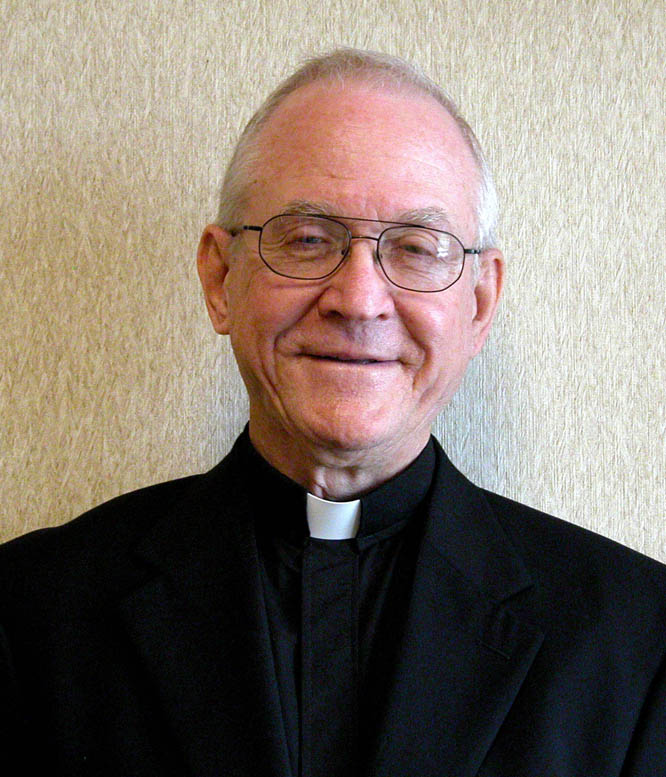
As we’ve noted previously, Fr. Bernie Rosinski, SCJ, is spending several weeks in the Philippines assisting the SCJ district with administrative duties as well as helping students in the international formation program with their English. Time is going quickly; he writes with just one week left to his stay.  

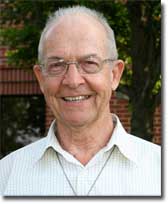
Fr. Bernie Rosinski, SCJ

I leave for the States a week from tonight and this Saturday will fly from Cagayan de Oro for Manila. I will stay in Manila at our Theologate (one-and-a-half hours away by plane) until Monday. Return will be through Seoul/Inchon and almost over the North Pole.

To confess the truth, I have enjoyed my stay in the Philippines though I will be processing all the things that have happened to me along with all the things I have seen. I have taken as many photos as I could to remind me of what I have seen.

Here in Aluba (Cagayan de Oro suburb), I shower every morning in unheated water.  Which is ok because at 5:30 AM when I shower, it’s already about 85F. I sleep without any blanket. Only two rooms here have “aircon,” which is the Filipino word for air-conditioning. One is the office of the fund-raiser and his secretary and the other is the library.

It would be unfair to leave the impression that showering with cold water is the norm. There are hot showers at the Novitiate in Dumalinao and in Manila. But since I spent most of my time here, I pretend to myself that I am a cold-water hero. We have one other vexation: sometimes there is no water, or else the faucet has a mere trickle. That’s why every shower has a large plastic bucket so that it can fill by catching water from the shower head when things are normal. If necessary, a small pot can be used to dip into the bucket and splash enough water to rinse off the soap or shampoo. It works; I know from first-hand experience.

I am here in the dry season. Yet I have witnessed a couple of monsoon-like rains (which the people say is unusual). It is the dry season that causes leaves to drop from trees, not the frost or cold that we are used to. Despite it being the dry season, the humidity is excessive.

What can I say about the people?  They win your heart so effortlessly you don’t even know they’ve got it.  They are so generous, so helpful, so thoughtful and considerate. I don’t know how many feasts and festivals I have gone to because some parish or organization or family was celebrating something and we were invited.
Rice is the food staple. It appears on the table at breakfast, lunch, and dinner. Always boiled and without any sauce or condiment. Never fried. There are OTC bottles of soy sauce and other sauces that are used to flavor  food according to individual taste. Filipinos like “hot” sauces. There is always a soup (usually highly salted) at lunch and dinner. The favorites are mushroom, egg, chicken, and fish. Fish and chicken appear at almost every midday and evening meal along with a cooked or uncooked vegetable. Recently I have been enjoying cucumber and cherry tomatoes. The table drink is water. It is always cold and filtered.

While the Vietnamese here (six) are rice-eaters, they are also noodle eaters. The understanding cook provides us with soup once or twice a week laden with rice noodles. She has endeared herself to Vietnamese hearts. Another person who is very endearing, to me at least, is Fr. Francis Pupkowski, SCJ, whom I met in Hales Corners in 1988-1989.  He was among the first group of missionaries destined for the Philippines. He was there to learn English along with a German, an Italian, a Brazilian, and a couple of Argentinians. It would be their common language (Oh, the price people have to pay to serve God as missionaries!).  Fr. Francis has a bread-making machine and every morning I would have a couple of slices of homemade bread with margerine and marmelade. Occasionally, the cook would surprise us with an omelet or some fried eggs and Spam (very popular here in the Philippines).

This week remaining I have four masses to celebrate here in community, one talk to give, and four homilies. I also have to go through a formation plan that the Philippine District is revising so that they can work toward becoming a region. It is 46 pages long and I proofed it and made a number of corrections and some editorial suggestions. I have already done as much with their District Directory and Chapter Rules and some correspondence. I knew there was some reason why I came here; it is like I never left my administrative work even though I was here to teach English pronunciation. Even there I think I did pretty well; at least I haven’t left my students angry at me. Yet?  🙂

-Fr. Bernie Rosinski, SCJ

A few nuts and bolts about the Philippine District

This time I’d like to share some nuts and bolts about the Philippine District –– how many SCJs and students are here and a bit about what the district does.

Already the Philippine District has 50 men in vows. They also have two men in Rome attending the year-long formation program for formation directors. Other Filipinos have taken this course in the past.

Their scholasticate (in Manila on the largest island of Luzon, a residence from which the men attend the two seminaries in the city) has a small number of SCJ priests who give specialized Dehonian formation and accompaniment. In residence there are also a few SCJ priests from other provinces who are attending university here to acquire advanced degrees. At the conclusion of their academic year on March 31, there were 19 in theological studies plus an additional five who were making their apostolic year.

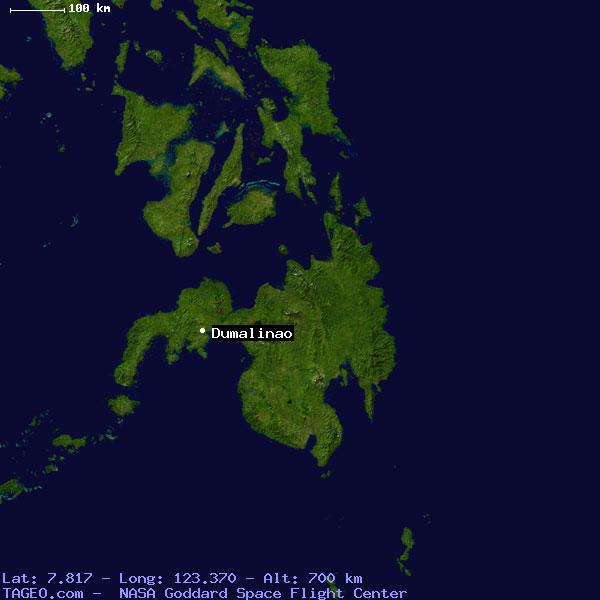
The Philippine novitiate is located in Dumalino on the island of Mindanao.

At the novitiate in Dumalinao (on Mindanao, a large island in the south of the Philippine archipelago), there are five SCJs on staff and 15 novices (eight Filipino and seven Indian).  The SCJs include an Indonesian superior and a Brazilian novice master, as well as the former superior of India, Fr. Martin van Ooij.  The novitiate team also has responsibility for the local parish.

At Cagayan de Oro (on the northern edge of Mindanao), the SCJs have a college level seminary whose students must qualify for (as a condition for admission to the seminary) and then attend the nearby Jesuit-run Xavier University.

The local superior, who also serves as district superior, is Fr. Bene Machado. He is assisted by two formation directors. There are two other priests in residence who have responsibilities connected with parishes and other ministries, including the shelter for abused women which was begun by Fr. Eduardo Agüero). Finally, there is Fr. Francis Pupkowski who runs the district fund-raising effort. The lay staff consists of the English teacher, the librarian, and the assistant in the fund-raising work.

The SCJs here have many responsibilities – not just a single ministry or job. I was the only priest present here today at Sunday Mass for the English and university summer school students. All the other priests, including Fr. Bene, were out helping in the parishes by celebrating masses at various chapels or missions.

It boggles my American mind to learn that a “parish” may consist of a primary church and up to 90 mission out-stations. These mission churches are visited on occasion by one of the priests who always notifies the mission president in advance, usually by sending a text message (Filipinos are said to send more text messages in one day than most countries do in a year — it is less expensive than calling). When the priest comes, he celebrates mass, baptizes, hears confessions, aids and assists the people with the help of a catechist, and conducts business with a mission “president” who is responsible for the upkeep of the mission.

When the priest is not there, the mission president leads the people in prayer and the rosary, the catechist gives a lesson, and the choir practices hymns. No matter how poor and simple a mission chapel may be, it always seems to have an amplifier that can either play religious music or serve with a microphone as a loudspeaker. The people are extremely devout and respectful. Children and young people come up to the priest, grab his hand, and touch it to their foreheads in blessing, an expression of supreme trust.

These are just a few of my observations so far during my weeks here in the Philippines.

–Fr. Bernie Rosinski, SCJ

Filipino field trip

Fr. Bernie Rosinski, SCJ, is spending several weeks in the Philippines assisting the SCJ district with administrative duties as well as helping students in the international formation program with their English.  He continues to share his experiences in the province blog:

Cagayan de Oro

Instead of class this morning, my Filipina teacher counterpart (grammar) and I (pronunciation) went with our students to Xavier University (Jesuit) in downtown Cagayan de Oro to visit a museum on campus. The museum is hosting an exhibit on the culture of Mindanao island.  It was the equivalent of a “field trip” and I felt very much like a little boy.

Don’t misunderstand that last statement. I was not patronized or treated like a little boy. It was simply that every part of this experience was entirely new to me, as if I were a little boy. I had, for example, my first trip in one of those contraptions I wrote about earlier: the motorbike sidecar vehicle (except that the sidecar was not at the side but in the rear);  it took about half our crowd of 15 or so people so we went in two “motorella” (yep, that’s its name). It operates like a taxi and takes you where you want to go. It took us 15 minutes to get to the university.

There I learned a number of interesting facts: that the “George Washington” of Philippine indepence was born on Mindanao, that early on there were conflicts between “Moros” and Filipinos, that there were also serious and lasting conflicts between the Catholic religious orders that helped colonize the Philippines originally (and I haven’t been able to learn if they have ceased. . .), that weaving was an island industry and the colors, fabrics, and designs were very original. Beadwork was imployed in making clothing and I saw a woman’s blouse that took two years to make. I was reminded of the psalm that speaks of the wedding of Ahaz and Jezebel, noting the “pearls embroidered” into her wedding gown.

Then we visited the beautiful chapel on campus. A large painting of Christ leaving his tomb was featured on the wall behind the altar. The roof was high, the sides were totally open to the breeze, the pews had some people scattered about, praying I can only assume — though they might have simply been resting. From the chapel, where I took some photos, we left to have a “snack” — something the students had asked for in their evaluations which we got the day before: (1) outing; (2) snack; — both of which made me feel again like a little boy. The snack consisted of a sugared donut and a coke.

While walking to the donut shop the students walked around me like a bodyguard and even when I finished my snack and wanted to go outside and take pictures, two of them accompanied me. This was something else that contributed to my feeling like a little boy (I haven’t felt this good in years).

Finally, we were ready to return to the SCJ house. “Ma’am Jo,” (all Filipinos seem to have a single name by which they are called) and I were steered to a jipney (pronounced “jeep knee”) and we were home in about 10 minutes. What it cost and who paid for this venture I never learned. Still one more factor that left me feeling like a little boy.

-Fr. Bernie Rosinski, SCJ

The problem with English…

As noted previously, Fr. Bernie Rosinski, SCJ, is spending several weeks in the Philippines assisting the SCJ district with administrative duties as well as helping students in the international formation program with their English.  After a few days of teaching English he shares the following observations:

With my degree in applied linguistics in hand, I have felt for a number of years that teaching English as a second language faces a huge obstacle. That obstacle comes in the form of the Latin alphabet writing system.

It’s not the writing system itself; rather it is the fact that most languages that make use of it find an almost perfect one-to-one correspondence between the written Latin alphabet system symbols and their language sounds. Languages with written accents like French and Portuguese are able to modify that one-to-one correspondence to accommodate their additional sounds. When the following vowel sounds are written in the Latin alphabet, i.e., A, E, I, O, U, virtually all Western languages, except English, pronounce them identically.

Let me state as a given that English does a very, very poor job in making the Latin alphabet correspond with their spoken sounds. George Bernard Shaw recognized that and offered a monetary prize, still unclaimed, for anyone to come up with a system that would equate one English sound with one written symbol. Instead, all kinds of esoteric phonetic spelling systems exist that are too complex for anyone to learn properly.

To get to the point, because other languages are so successful in making their written symbol correspond to their spoken sound symbol, early on their speakers acquire a facility, a disposition, a tendency, a psychology (?) that leads them into thinking and acting that the way to learning a language, any language, is through reading, through the written Latin alphabet symbol. They actually believe that they can learn English in this way. What they don’t realize is that English is notoriously poor at making writing correspond to the spoken sound. Let me illustrate with an example. One sound (which I will not attempt to “write” here) has 12 different ways of appearing in written English (and I urge you to consider the contradictory patterns of writing): people vs amoeba; either vs niece; suite and sweet; key and sea; chamois and chassis; marry and she. Non-English people go nuts trying to learn to speak English from way it’s written. The problem is:  from their prior experience with their native language their very bones scream out to them that this is the only way to go.

The answer: repeating English sounds; learning English like babies do — by hearing, by using analogy for similar sounding words, by making mistakes in analogy application; by being corrected, either by oneself or by others. And after the sound system and sound patterns are learned, attempting to join the spoken word to the written word.

That’s the way I am working in the Philippines. We use the breviary with its cycle of morning and evening prayer psalms. I ask the students not to look at the book but to listen to what I am saying. I repeat several times and then I ask the students collectively to repeat what I said by picking up their psalm books. Then I will ask individuals to repeat the verse. Where pronunciation mistakes are made, I correct them. Oftentimes, the mistakes that are made result from applying native language reading patterns to the English sound; e.g. seeing “will” in writing, they will pronounce it “wee-l” because that’s the way the “i” is pronounced in their language: one letter, one sound.

With Vietnamese and Filipino speakers, I have two different groups because each comes from a different linguistic background. In attempting to speak English, they do so differently and thus reveal different problems. Here, I bless God for my linguistics training at Georgetown. In fact, I was able to discern two different dialects among the Vietnamese. When I asked them whether two individuals who were making the same English pronunciation mistakes came from the same area, they were able to say “yes” and I think my professionalism impressed them.  Hopefully, that will translate into greater cooperation.

I have learned that both Vietnamese and Filipinos have already studied English for a minimum of 10 years and some as many as 12 years. English is not one of their favorite subjects; there are other more important subjects in their curriculums and they devote limited time to these. Why squander precious time on English? Yet, they have to pass an English language exam to get into Xavier University here in Cagayan de Oro. They realize that and are extremely cooperative during this summer program.

-Fr. Bernie Rosinski, SCJ

Easter in the Philippines

Fr. Bernie Rosinski, SCJ, is spending several weeks in the Philippines assisting the SCJ district there with administrative duties as well as helping students in the multi-national formation program with their English.  He recently shared the following:
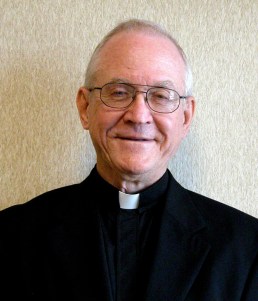
Fr. Bernie Rosinski, SCJ

On Easter Sunday, I went by car from Cagayan de Oro to our novitiate in Dumalinao, about 200 miles away; a five hour trip that took closer to eight. We traveled west along the northern coast of Mindanao. We stopped at a hospital, privately owned (this is possible in the Philippines), where the owner — a doctor — hosted us, together with his wife. I actually ate whole roast pig and a number of other delicacies. So this stop was part of the delay.

The Philippines sunrise is about 6:10 a.m. and sunset is about 6:30 p.m. daily. The islands are so close to the equator so day and night are almost equal. Part of our travel took place after dark. Fr. Bene Machado, SCJ, was the driver. He is Brazilian and Brazilians are great racing car drivers.

The entire highway was concrete. Except for one large industrial city, it was two lane. Let me describe the highway a little more. It has no shoulder. The highway is used by: (1) people who walk (usually in their “floppies” or flip-flop sandals) on either side of the highway, whether with or against traffic, and sometimes people sit on the side of the highway which, with a shoulder, resembles a seat or step on which to sit; (2) people with simple bicycles; (3) cyclists with racing bikes; (4) small motorbikes; (5) small motorbikes with side cars for transporting goods or passengers (usually without lights); (6) motorcycles; (7) motorcycles with sidecars for transporting goods or passengers; (8) “jipneys,” which are elongated Jeeps used for transporting people and goods [in this category are also SUV’s which are converted to the same purpose] and which make frequent “bus” stops along the highway; (9) large buses, which also make frequent stops along the highway; (10) big Kawasaki and Honda motorcycles, which can speedily weave in and out of traffic; (11) big trucks carrying cement, goods, gas and oil, and grain; and (12) cars, like the one we were in.

The faster vehicles overtake and pass the slower vehicles as you may well imagine. I am sure that if a helicopter were above us, the pilot would think the entire state of Mindanao was inebriated because there was so much weaving in and out of traffic. Nighttime made it worse. I couldn’t even see the pedestrians and bikes that we were passing. How Fr. Bene managed to drive without killing people, I’ll never know.  We did see two accidents. In both cases, a car struck a motorcycle.

The entire trip reminded me greatly of an event from my past when Fr. Bourgeois [former superior general of the Priests of the Sacred Heart], having just recently learned to drive, drove down the middle lane of a three lane highway. I saw cars pulling into that passing lane and then, just as quickly, returning to their regular lane. Fr. Bourgeois had the center track and he (we!) weren’t going to give it up. When we got to where we were going, I remembered that I lost my stomach.

After an equally crazy drive in the Philippines, I wondered if I would do the same. This time, I didn’t.

The novitiate was quite nice, quite scenic, and the people were exceptionally hospitable.

In the time I have been here I traveled to see Kumalarang and Margosatubig places where the SCJs have ministered, and witnessed a final vow ceremony. All in all, my stay was very pleasant.

Our return trip was no less chaotic, but at least it was in the daylight and took about two-and-a-half fewer hours.

Upon my return, I finally began teaching English. I have two groups: one is made up entirely of Filipinos and one is primarily Vietnamese.

So much for week one in the Philippines!

-Fr. Bernie Rosinski, SCJ

Ash Wednesday, a time to be sensitive to words

Reflecting on Ash Wednesday, Fr. Cassidy writes the following:

Today marks the start of the great season of Lent as Christians throughout the world seek to purify their hearts in preparation for the drama of Holy Week culminating in the celebration of the Resurrection. Lent is traditionally a time of prayer, fasting and penance. Vatican Council II changed our sense of fasting and penance. Wisely, I think, the emphasis has been placed on our personal responsibility to practice prayer, fasting and penance as suits our personal circumstances, rather than on a mandated set of practices. It has not eliminated them, and I would argue that today, more then ever, there is a great need for Christians to practice even more fervently prayer, fasting and penance during this Lenten season.

I would like to spend a moment with you meditating on the first aspect of these pillars of Christian Lenten spiritually. A few days ago Inward/Outward, an e-mail service providing brief meditations from the Church of the Saviour, sent this meditation by Abraham Joshua Heschel out to its subscribers:

“One of the major symptoms of the general crisis existent in our world today is our lack of sensitivity to words. We use words as tools. We forget that words are a repository of the spirit. The tragedy of our times is that the vessels of the spirit are broken. We cannot approach the spirit unless we repair the vessels.

“Reverence for words — an awareness of the wonder of words, of the mystery of words —  is an essential prerequisite for prayer. By the word of God the world was created.”

Wordsmiths we are well aware of the power of words. Frequently at our council meetings I am reminded that “words do matter.” Words can heal as well as hurt. Words can forgive or condemn. Words can uplift or tear down. Words can be tender or harsh. Words are at the very heart of human communication.

I was struck with Herschel’s phrase “words are a repository of the spirit.” Words, of course, come in as many languages as human beings speak. I have no idea how many there are, but I do recall reading a number of years ago that on any given day over 600 languages and dialects are spoken in California.  The Bible’s story of the tower of Babel blames man’s hubris as the source of the multiplicity of languages. I like to think that if words are indeed a repository of the spirit then perhaps we need all of humanity’s languages and dialects to come to a fuller understanding and reverence of the WORD. For John tell’s us: “In the beginning was the Word, and the Word was with God, and the Word was God.”

Spiritual writers tell us that as we progress up the ladder of prayer our need for words lessens and our ability to abide in the presence of the WORD increases. Most of us never reach that level of prayer where words are unnecessary. But if we are ever to achieve that level of contemplation then we better take to heart what Herschel has to say that words are wonder, words are mystery and if we can reverence words then we can begin to reverence the WORD.

Maybe this Lent, when around us we see so many examples in our society of men and women using words to preach hate, prejudice, selfishness and countless other attitudes that tear down individuals and our society, we can, as our president has called us to be, more civil in our personal, political and societal discourse. Perhaps our use of words can be for us an act of penance as we take the time to think before we speak and reverence our neighbors by reverencing the words we use when we speak to them or about them.

Perhaps our use of words can be for us acts of prayer, penance and fasting. I suppose it’s a stretch to say our use of words can be an act of fasting. But doesn’t fasting mean to refrain from something, most often food? Refraining from ill speech that hurts another seems to me to be a great way to honor the season of Lent.

This Lenten season I hope we all will find ways to prepare ourselves for the great drama of Holy Week and the joy of Easter. Using those tried and true pillars of spiritual growth, prayer, fasting and penance, certainly bear the test of history as a worthwhile means of moving forward in our spiritual life. Recognizing the power of words come Easter morning may we all have on our lips these words: Christ has risen.

Fr. Tom Cassidy, SCJ
Provincial Superior, U.S. Province

20 Minutes at the Rec Center

Note:  Mike Tyrell is executive director of Child Services at St. Joseph’s Indian School in Chamberlain, SD.  Periodically he sends reflections to the St. Joe’s staff with  “a note of thanksgiving, because we are all very lucky to be working with our mission here at St. Joseph’s Indian School,” he said.

The Rec Center at St. Joseph’s Indian School provides recreation, athletics, and other activities for students and staff.  The facility houses a gymnasium, exercise room, student game room and an indoor pool.  Three Rec Center staff and a custodian oversee programming and facility upkeep.

Mike Tyrell

On Saturday morning I happened to find myself in one of those unique but fun 20 minutes in our Rec Center.  As I was winding down my workout, a houseparent came into the workout room with one of the boys from his home.  He was working with the student teaching him to properly lift weights.  It was nice to see the mentoring going on and the student following the houseparent’s lead.

As I left the workout room, I found the Ambrose Home students waiting rambunctiously to go to wresting practice.  We have not had a wrestling program in a few years and it was their first practice.  As we do not have a wrestling mat, the kids and houseparents were waiting for the mini-buses to take them to the public school’s wrestling room.  The boys looked as if they were on tender hooks as they waited to get going.

I then wandered into the Rec Center gym where two houseparents were setting up an Archery Course for the students.  Today was the first day of training our students on how to safely shoot a bow and arrow.  The staff, who were recently certified in archery training, were eagerly awaiting the students’ arrival.  In talking with the staff, you could tell they were excited by their enthusiasm for the activity.

As I left the gym, I noticed two students reading books.  Apparently these students were in trouble and reading was part of their discipline.  One boy showed me that he was reading The Prince of Egypt and I wondered if I could get an oral book report down the road.  Both boys were also watching the archery range being set up with great interest.  If this was discipline, they appeared to be having a good time.

As I was leaving the facility, the second of two Rec Center staff showed up.  They were looking forward to a busy morning followed by an afternoon of bowling.  As I left the building, the snow was falling heavily and piling up.  It was surreal as I thought of all that was going on at the Rec Center and across campus on this cold, snowy January day.  It made me thankful for the fact that we are fortunate in what we are able to provide for our students.

Mike Tyrell

Indonesia celebrates ordinations in new chapel

Archbishop Aloysius Sudarso, SCJ, of Palembang, ordains three men to the priesthood and four to the diaconate on January 25.

Today, on the Feast of St.Paul’s Conversion (January 25), the Indonesian Province is celebrating ordinations in the big new chapel of St.Paul Minor Seminary.

First, a bit about the seminary.  It was built in 1947, occupying a corner of a piece of land that was close to 10 acres in size, a marshy area that easily absorbed excessive amounts of rain.  Over the years, more landfill has been brought in to keep the buildings and their inhabitants dry.  It is now a quite elegant and suitable place, able to accommodate the more than 100 seminarians who regularly occupy it, plus the staff, which presently includes four SCJ priests, two Franciscan sisters and three full-time lay teachers.

The chapel easily seats 400 people, but tents have been set up on one side and in front of the entrance so that up to 2,000 people can be seated for the occasion.  I have been here for about a week and have seen the progress of the preparation committee as they go about their business; I am truly impressed.

Archbishop Al Sudarso will be in his glory when officiating at today’s afternoon service surrounded by more than 100 priests in the sanctuary with him, the majority of whom will be SCJs but a significant number priests of this diocese as well.

Those to be ordained to the priesthood will include two SCJs and one diocesan man.  Receiving diaconate ordination will be two SCJs and two diocesan men.  The two new SCJ deacons, by the way, hail from the Indian District.  Rinu and Hrudayaraj have been learning the Indonesian way of doing ministry for almost  two years now.  The two new Indonesian priests are Indri Irianto and Tri Mardhani.

There was a grand rehearsal last evening conducted by our learned and dedicated liturgist-in-residence, Fr. Agus Setyoaji, an SCJ graduate from a Manila university with a master’s degree in liturgy.  He has composed several booklets and many hymns for divine worship.  For the choir we have Miss Lena, who for the last 20 years has been praised for the perfectionist way she trains groups of singers for polyphonic music.  We already have heard what she and her high school singers will be rendering for us this evening since their practice sessions were carried our in the Xaverius school next door to our seminary.

I will try to send a little follow-up after the event, which most appropriately would be accompanied with some photos.  Who knows what might develop.  Even with the tents in place, we are still praying that it won’t rain.  Yours truly,

Fr. Tom Fix

School days in India

Originally from the U.S. Province, Fr. Tom Fix, SCJ, has been a missionary in Asia for most of his priesthood.  Now a member of the Indonesian Province, he often works for extended periods of time with the formation program in India.  He wrote the following from Aluva, India:

Fr. Tom Fix, SCJ

It’s a bright sunny morning here in Aluva, just like it was yesterday. But yesterday afternoon and evening turned up something else: an electrical storm with lots of rain.  The monsoon is taking leave of us with more than a whimper.  However, our students have a different kind of storm occupying their minds –– exam time has arrived.

At table the students ask me if I had much “symbolic logic” in my day, or what I thought of “aristotelian metaphysics.”  I can wiggle out of these two, but not when they ask how much Indian Philosophy we had.  No fair!  But we have a nice library, so I can catch up if I so wish (just like I can learn the Malayalam language, yes, “if I so wish!”  but I think I’ll go back to reading what the Packers did last Sunday…).

All of which points to the things that keep one young while residing in a place monopolized by “yoot” (the way those from my hometown of Milwaukee often pronounce “youth”). We have 40  here this year.  After these first semester exams there will be a break of only six days, during which the two upper classes will go on retreat while the the youngest will take a course on the psychology of personalities (or what we used to call ‘temperaments’).

The larger picture — what the Indian District is up to — has us preparing for the final vows ceremony on December 8 and ordination to diaconate on January 2.  The former will be here in our philosophy house in Aluva, while the latter will move to the theologate in Eluru.  Between the two houses is a train ride of a day-and-a-night.  Already we are booking tickets both ways.  Unfortunately, I’ll have to miss both, since it will be my time to return to Indonesia, where I must wait a two-month interval before applying for my next six-month visa back here.

We are grateful that the young Indian priests are now stepping into roles of leadership and formation, easing the pressure on the missionaries.  Fr. Sunil Roman, for example, just came back from Ireland after finishing coarses in spirituality, coupled with assistance in one of our parishes in Scotland.

That’s all that comes to mind at the moment.  Every best wish and regards to everyone nearby.

Fr. Tom Fix, SCJ